The 9 most promising interstellar destinations
Where to send the first probes, and what to measure before choosing
We compare nine confirmed exoplanets as destinations for interstellar missions. Proxima b is the nearest, 4.24 light-years away. The choice also depends on what a mission could do there and how much we can learn about the planet before sending it.
Nine destinations at a glance
The planets are listed by distance. None has a confirmed atmosphere. A probe that flies past to take pictures can be useful with less advance knowledge than a ship sent to establish a settlement.
Swipe to compare all columns →
| Destination | Distance (light-years) | Reason to consider it | Main open question |
|---|---|---|---|
| Proxima b | 4.24 | Shortest journey for a first probe | Does it have air? |
| GJ 887 d | 10.72 | Calm star; accessible to future imaging | Is it rocky or a small gas planet? |
| Ross 128 b | 11.01 | Calm star; low estimated mass | Can it retain water with its extra starlight? |
| GJ 1061 d | 11.98 | Its mass is known | How active is its star? |
| Teegarden's Star b | 12.49 | Starlight close to Earth's | Can it retain water this close to its star? |
| GJ 1002 b | 15.81 | Calm star; low estimated mass | What is its atmosphere? |
| HD 20794 d | 19.58 | Sun-like star; easiest of the nine to image | Is it rocky or a small gas planet? |
| TRAPPIST-1 e | 40.54 | Size and mass measured; air under study | Bare rock or a nitrogen atmosphere? |
| LHS 1140 b | 48.88 | Size and mass measured; possible water world | How much water does it contain? |
The planet profiles explain the evidence behind this shortlist. We then widen the comparison to 2,686 nearby star systems and ask which telescope observations are worth funding while the ships are being developed.
How to pay for exploration
In 1469 the Portuguese crown made exploration part of a five-year trading contract with Fernão Gomes. The contract paid for progress along an unknown coast, one stretch a year.
Gomes leased the crown's trade with the Guinea coast of West Africa for 200,000 réis a year, in the Portuguese money of the time. The crown's revenue in 1473 was about 47 million réis, so by our arithmetic the rent was about 0.4% of its annual revenue.
Choose a place on the map to see what happened there.
The lease had an unusual clause that gave Gomes a duty to explore. Every year Gomes had to add at least 100 leagues of coast that no Portuguese ship had seen, starting from Sierra Leone, and 500 leagues over the five years. The crown kept a few things for itself, among them the trading post at Arguim and the right to resell ivory at a fixed price, and it charged extra for the malagueta pepper trade.The league was a measure of distance with no fixed length in the sources, so it cannot be turned into an exact number of kilometres. Portuguese pilots of the time counted 16⅔ leagues to one degree of latitude, and by the end of the century 17½ (Estácio dos Reis, 2002). A degree of latitude is about 111 kilometres, so a league was about 6.3 to 6.7 kilometres, and 100 leagues about 650 kilometres.
Ships sailing under the lease reached the gold trade at Shama in January 1471 and found the islands of São Tomé and Príncipe. Farther on they crossed the equator to Cape Santa Catarina, about one degree south. In all they added more than 600 leagues of coast (roughly 4,000 kilometres), exceeding the 500 leagues the contract required.
In 1474 the crown took the gold trade back for itself. Trade in gold, pepper and ivory helped pay for the voyages. So did the trade in enslaved Africans, whom Portuguese ships had been carrying to Portugal since the 1440s.
The crown could not see where the coast of Africa ended. It could nevertheless set a price and a distance for the next year of exploration. We propose a similar arrangement for interstellar travel, paying for measurements of nearby stars while the ships are being developed.
In our 2023 article we wrote one possible answer to how to go interstellar. In it, a ship slower than light stops in a nearby star system, and machines build a large antenna there from the metal of an asteroid. Earth then transmits copies of human minds to that antenna as data.
That proposal left the destination open. Here we compare nearby stars by what a mission could give back, then ask which measurements are worth buying before choosing one.
Why interstellar travel keeps being put off
As of 2026, discussion of interstellar travel often leaves both the destination and the date undecided. Naming Proxima b as a favourite does not explain why a mission there would be worth more than one to another star. Placing the trip centuries ahead leaves the work to be paid for this year unspecified. Without a comparison of destinations or a next step to fund, postponing the project is an easy decision.
Breakthrough Starshot was announced on 12 April 2016 with a pledge of $100 million for research. Its proposed probes would weigh about a gram each and travel to Alpha Centauri, the star system nearest the Sun, on thin sails pushed by a large array of lasers. The pledge covered research only. The announcement said the mission itself would need "a budget comparable to the largest current scientific experiments".
The programme has been on hold since 2024, and estimates of how much of the pledge was spent differ. Philip Lubin estimates that about $4.5 million was spent, while James Benford puts the figure at about $25 million, with about 50 research papers produced. So between about a twentieth and a quarter of the money promised was spent.
Starshot's donor pledged money for initial research. Developing the spacecraft and operating it during the flight would need further funding commitments lasting several decades.
Money from a government is not much steadier, because a government votes on its budget every year. NASA's Habitable Worlds Observatory is an example. It is a planned space telescope designed to take spectra of Earth-sized planets around stars like the Sun (a spectrum is light spread out colour by colour, as a rainbow spreads out sunlight). Each gas absorbs its own colours, so the colours missing from a planet's spectrum show what its air is made of.
Congress gave the observatory $150 million for 2026. For 2027 the President's budget request asked for $5 million, a thirtieth as much. A research programme planned across decades would have to survive changes of that size in its annual funding.
A telescope can answer a question about a destination before an interstellar spacecraft is ready. Several of the telescopes and small spacecraft discussed below could report results by 2032. An interstellar programme could fund each measurement separately and use its answer to decide what to pay for next.
Cologne Cathedral provides an example of a long project whose completed parts could be used while construction continued. Building it took from 1248 to 1880. Its choir (the part around the altar) was in use from 1322.
We can compare destinations with what is known today: what a mission could find there, how long its return would take and which measurements could change the choice. Comparing the cost of actual spacecraft comes later, when each design specifies its payload, propulsion and braking.
The stars near the Sun
Distances to the stars are measured in light-years (the distance light travels in a year), and they are hard to picture. The Parker Solar Probe, the fastest spacecraft ever built, would need about 6,600 years to cover the 4.24 light-years to the nearest star (if it travelled towards it at its top speed).
The nearby population is counted in a census that Kirkpatrick and colleagues published in 2024. It lists about 3,600 stars and brown dwarfs within about 65 light-years. A brown dwarf is a ball of gas too small to shine as a star. Several stars can belong to one system, so this count is larger than the 2,686 systems we score below.
For a search for another home, our first filter is a planet in its star's habitable zone. That is the range of distances from a star where a rocky planet with an atmosphere could keep liquid water on its surface: closer in, the water would boil away, and farther out it would freeze.
Nobody agrees exactly where the zone starts and ends, so we used two versions of it, both published by Kopparapu and colleagues in 2014. The conservative zone is narrower, drawn with cautious assumptions. The optimistic zone extends farther, using Venus and Mars to set its edges. Both planets may once have had liquid water on their surfaces, though neither could keep any today.
Some of these planets are far more certain than others, because of the way most of them were found. As a planet goes round its star, its gravity pulls the star a little to and fro, and telescopes can measure that wobble. But dark spots and other activity on a star's surface can make the same signal with no planet there at all.
We separate detections from expectations using three categories.
We'll consider a planet confirmed when it is in the NASA Exoplanet Archive (NASA's public list of planets around other stars) and its discoverers call it a planet, with no later study we could find disputing it.
A candidate is a signal that falls short of that, because its discoverers call it only a candidate or because a later study doubts it. We also count as a candidate a planet that rests on one team's analysis that no other team has confirmed. Gliese 48 b, 26.85 light-years away, is one of these: the archive lists it as a planet, but it comes from a single new analysis of old measurements (Conzo and colleagues, 2026).
A hypothetical planet is one that nobody has detected at all, and the only reason to think it exists is how often stars of its kind turn out to have planets.
Barnard's Star was a proposed destination decades before its known planets were confirmed. In the 1970s the British Interplanetary Society designed a fusion-powered starship called Daedalus to fly past it. When Martin ranked thirteen nearby star systems in 1976 for that project, Barnard's Star came second, after Alpha Centauri.
A planet reported there in 2018 turned out in 2021 to be a false signal made by the star's own activity. Then in 2025 Basant and colleagues confirmed four small planets there, all too close to the star to be in its habitable zone. Nearly fifty years separated Martin's ranking from the confirmation of those four planets.
When we went through the archive on 7 October 2026, we counted 27 planets reported in a conservative habitable zone within 65 light-years. Of those, 20 are confirmed and seven are candidates, and another 13 confirmed planets are in the wider, optimistic zone only. Nearly all of these 40 planets orbit red dwarfs (stars smaller and dimmer than the Sun).
A planet is named after its star with a small letter added, and most star names here, such as GJ 887, are catalogue numbers. The nearest of these planets, Proxima b, orbits Proxima Centauri, a red dwarf 4.24 light-years away that is the third and outermost star of the Alpha Centauri system. The next nearest in a conservative zone is GJ 887 d (confirmed in 2026), at 10.72 light-years, two and a half times as far as Proxima. Farther away, at 19.58 light-years, is HD 20794 d, the only confirmed planet in the conservative zone of a star like the Sun.

- Confirmed
- Candidate, drawn in clear glass
Choose a globe for its name, distance and star.
All 40 planets, with their stars and masses
| Conservative habitable zone | |
|---|---|
| Proxima bred dwarf (M5.5), at least 1.05 Earth masses | 4.2 ly |
| GJ 887 dred dwarf (M1), at least 6.1 Earth masses | 10.7 ly |
| Gl 725 B cred dwarf (M4), at least 3.4 Earth masses | 11.5 ly |
| GJ 1061 dred dwarf (M5.5), 1.67 Earth masses | 12.0 ly |
| Teegarden's Star cred dwarf (M7.0), at least 1.05 Earth masses | 12.5 ly |
| GJ 1002 bred dwarf (M5.5), at least 1.08 Earth masses | 15.8 ly |
| GJ 1002 cred dwarf (M5.5), at least 1.36 Earth masses | 15.8 ly |
| GJ 682 b (candidate)red dwarf (M3.5), at least 4.4 Earth masses | 16.3 ly |
| GJ 251 c (candidate)red dwarf (M3.0), at least 3.88 Earth masses | 18.2 ly |
| HD 20794 dSun-like star (G6), at least 5.82 Earth masses; HD 20794 f in the archive | 19.6 ly |
| HN Lib bred dwarf (M4.0), at least 5.46 Earth masses | 20.4 ly |
| GJ 667 C cred dwarf (M1.5), at least 3.8 Earth masses | 23.6 ly |
| GJ 667 C e (candidate)red dwarf (M1.5), at least 2.7 Earth masses | 23.6 ly |
| GJ 667 C f (candidate)red dwarf (M1.5), at least 2.7 Earth masses | 23.6 ly |
| GJ 514 bred dwarf (M0.5), at least 5.2 Earth masses | 24.9 ly |
| GJ 3378 bred dwarf (M4), at least 2.3 Earth masses | 25.2 ly |
| Gliese 48 b (candidate)red dwarf (M3.5), at least 8.11 Earth masses | 26.9 ly |
| GJ 433 dred dwarf (M2V), at least 5.22 Earth masses | 29.6 ly |
| GJ 357 dred dwarf (M2.5), at least 6.1 Earth masses | 30.8 ly |
| Wolf 1069 bred dwarf (M5.0), at least 1.26 Earth masses | 31.3 ly |
| GJ 180 c (candidate)red dwarf (M3), at least 6.4 Earth masses | 39.0 ly |
| TRAPPIST-1 ered dwarf (M8.0), 0.692 Earth masses | 40.5 ly |
| TRAPPIST-1 fred dwarf (M8.0), 1.04 Earth masses | 40.5 ly |
| TRAPPIST-1 gred dwarf (M8.0), 1.32 Earth masses | 40.5 ly |
| 55 Cnc B cred dwarf (M4.5), at least 5.3 Earth masses | 40.7 ly |
| HD 40307 g (candidate)orange dwarf (K2.5), at least 7.1 Earth masses | 42.2 ly |
| LHS 1140 bred dwarf (M4.5), 5.6 Earth masses | 48.9 ly |
| Optimistic habitable zone only | |
| Ross 128 bred dwarf (M4), at least 1.4 Earth masses | 11.0 ly |
| GJ 1061 cred dwarf (M5.5), 1.81 Earth masses | 12.0 ly |
| GJ 273 bred dwarf (M3.5), at least 2.89 Earth masses | 12.4 ly |
| Teegarden's Star bred dwarf (M7.0), at least 1.16 Earth masses | 12.5 ly |
| Wolf 1061 cred dwarf (M3.5), at least 3.41 Earth masses | 14.0 ly |
| GJ 367 dred dwarf (M1.0), at least 6.03 Earth masses | 30.7 ly |
| L 98-59 fred dwarf (M3), at least 2.8 Earth masses | 34.6 ly |
| Ross 508 bred dwarf (M4.5), at least 4 Earth masses | 36.6 ly |
| TRAPPIST-1 dred dwarf (M8.0), 0.388 Earth masses | 40.5 ly |
| GJ 163 cred dwarf (M), at least 6.8 Earth masses | 49.3 ly |
| HIP 38594 bred dwarf (M0), at least 8.1 Earth masses | 58.0 ly |
| GJ 3998 dred dwarf (M1), at least 6.07 Earth masses | 59.2 ly |
| HD 216520 corange dwarf (K2), at least 9.44 Earth masses | 63.8 ly |
A red dwarf that is calm today may have removed a planet's water when it was young. Young red dwarfs shine brighter than they will later, for hundreds of millions of years. In that time, as Luger and Barnes showed in 2015, they can remove several times the water in Earth's oceans from the planets in their habitable zones. Whether such planets keep an atmosphere through this early period is unknown. As of October 2026, no temperate rocky planet around a red dwarf has a confirmed atmosphere; temperate means neither too hot nor too cold for liquid water.
Nine nearby exoplanets to consider
From these planets we picked nine confirmed ones for a shortlist. We chose them by distance, by how certain each planet is, by how its star behaves and by whether telescopes can study it before anyone launches anything. Alpha Centauri A and B (the two Sun-like stars of Alpha Centauri) are left out, because no planet has been confirmed around either. Eight of the nine orbit red dwarfs. Each account below identifies what is known and the main obstacle to learning more or living there.
The overview also shows ratings used later in the comparison. The Earth Similarity Index compares size and starlight with Earth's; the twin chance estimates the probability of a world with about Earth's size and water. The four mission rankings are explained after the shortlist.
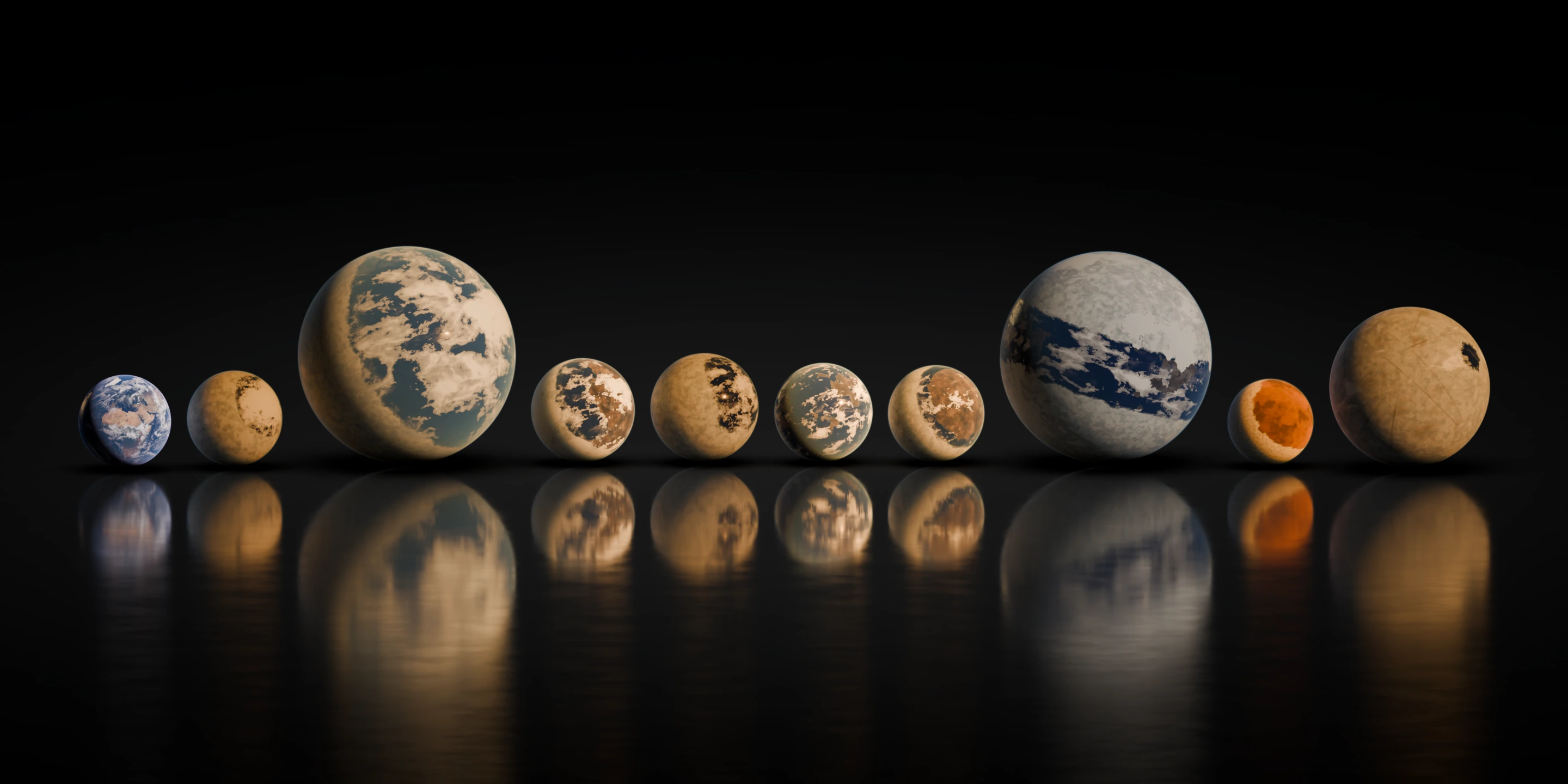
This row is to scale, with most diameters estimated from mass. Each listing below shows its planet large.
Earth
the Sun, G2
- Distance
- 0
- Cruise years at 0.2c
- –
- Diameter
- 1.00×
- measured
- Starlight
- 1.00×
- ESI
- 1.00
- Twin chance
- –
Not scored
Proxima b
Proxima Centauri, red dwarf M5.5
- Distance
- 4.24 ly
- Cruise years at 0.2c
- 21
- Diameter
- 1.02×
- estimated
- Starlight
- 0.64×
- ESI
- 0.85
- Twin chance
- 0.018
Rank among these 9
- Knowledge1
- Scouting1
- Settlement1
- Strategy1
Superflares; the planet does not transit
GJ 887 d
GJ 887, red dwarf M1
- Distance
- 10.72 ly
- Cruise years at 0.2c
- 54
- Diameter
- 2.34×
- estimated
- Starlight
- 0.81×
- ESI
- 0.71
- Twin chance
- 0.018
Rank among these 9
- Knowledge2
- Scouting2
- Settlement5
- Strategy2
Minimum mass at the limit for a rocky planet
Ross 128 b
Ross 128, red dwarf M4
- Distance
- 11.01 ly
- Cruise years at 0.2c
- 55
- Diameter
- 1.11×
- estimated
- Starlight
- 1.38×
- ESI
- 0.88
- Twin chance
- 0.0091
Rank among these 9
- Knowledge5
- Scouting6
- Settlement7
- Strategy7
Warmer than Earth
GJ 1061 d
GJ 1061, red dwarf M5.5
- Distance
- 11.98 ly
- Cruise years at 0.2c
- 60
- Diameter
- 1.16×
- estimated
- Starlight
- 0.60×
- ESI
- 0.82
- Twin chance
- 0.018
Rank among these 9
- Knowledge3
- Scouting4
- Settlement3
- Strategy3
Planets too close to the star to image
Teegarden's Star b
Teegarden's Star, red dwarf M7.0
- Distance
- 12.49 ly
- Cruise years at 0.2c
- 62
- Diameter
- 1.05×
- estimated
- Starlight
- 1.08×
- ESI
- 0.97
- Twin chance
- 0.0091
Rank among these 9
- Knowledge4
- Scouting8
- Settlement4
- Strategy4
Very small, cool star
GJ 1002 b
GJ 1002, red dwarf M5.5
- Distance
- 15.81 ly
- Cruise years at 0.2c
- 79
- Diameter
- 1.03×
- estimated
- Starlight
- 0.67×
- ESI
- 0.86
- Twin chance
- 0.018
Rank among these 9
- Knowledge6
- Scouting7
- Settlement6
- Strategy6
Hard to image
HD 20794 d
HD 20794 (82 Eridani), Sun-like star G6
- Distance
- 19.58 ly
- Cruise years at 0.2c
- 98
- Diameter
- 2.28×
- estimated
- Starlight
- 0.38×
- ESI
- 0.58
- Twin chance
- 0.17
Rank among these 9
- Knowledge7
- Scouting3
- Settlement2
- Strategy8
Orbit far from circular; minimum mass 5.8 Earths
TRAPPIST-1 e
TRAPPIST-1, red dwarf M8.0
- Distance
- 40.54 ly
- Cruise years at 0.2c
- 203
- Diameter
- 0.92×
- measured
- Starlight
- 0.65×
- ESI
- 0.85
- Twin chance
- 0.018
Rank among these 9
- Knowledge8
- Scouting5
- Settlement8
- Strategy5
Ten times farther than Proxima; the star flares
LHS 1140 b
LHS 1140, red dwarf M4.5
- Distance
- 48.88 ly
- Cruise years at 0.2c
- 244
- Diameter
- 1.73×
- measured
- Starlight
- 0.43×
- ESI
- 0.66
- Twin chance
- 0.0091
Rank among these 9
- Knowledge9
- Scouting9
- Settlement9
- Strategy9
More than eleven times as far as Proxima
Proxima b
Proxima Centauri, red dwarf M5.5, 4.24 light-years away, 21 cruise years at 0.2c
Diameter, to one scale
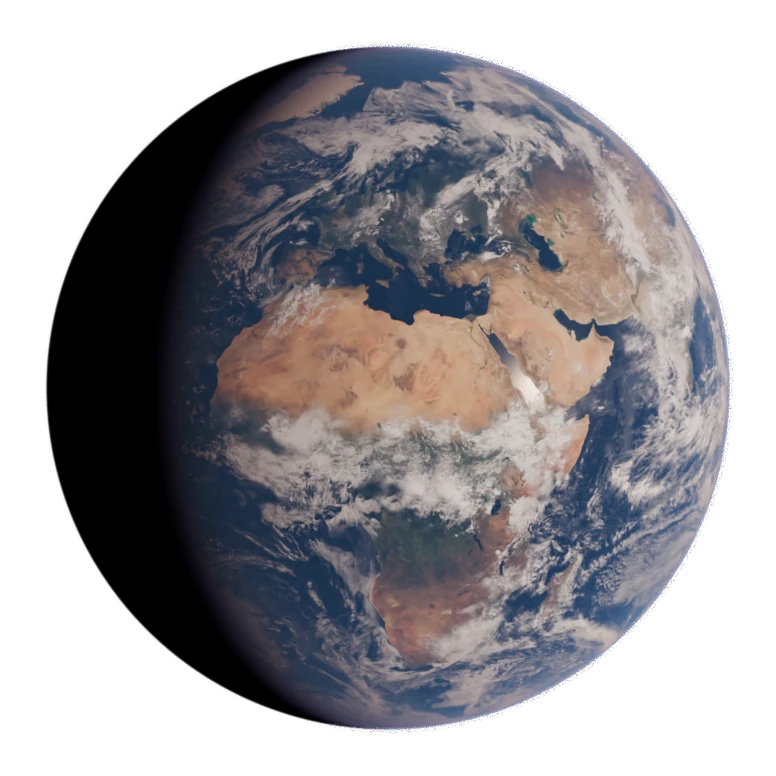
Proxima b
Earth
The star against the Sun
The Sun
Proxima Centauri
The orbit seen from above
- Conservative zone 0.041 to 0.081 AU
- Optimistic zone 0.032 to 0.085 AU
- Proxima b's orbit
- Other known planets
- Year
- 11.2 days
- Distance from its star
- 0.0485 AU
- Earth: 1 AU
- Starlight
- 0.64× Earth's
- in the conservative zone
- Mass, at least
- 1.05× Earth's
- Diameter
- 1.02× Earth's
- estimated from its mass
- Orbit shape
- circle, assumed
- Star
- 2,900 K
- 0.14× the Sun's width
Against the Solar System, drawn to one scale
Solar System
Proxima Centauri system
The outermost known planet here orbits at 0.0485 AU from its star. Mercury orbits the Sun at 0.387 AU.
Proxima b is the nearest confirmed planet in a habitable zone, 4.24 light-years away. It goes round its star every 11.2 days, at about a twentieth of Earth's distance from the Sun. The star is so dim, though, that even that close the planet gets only 0.64 of the starlight Earth gets (about two thirds). So close to its star, the planet either keeps one side always facing it, as the Moon does with Earth, or spins three times for every two orbits (Ribas and colleagues, 2016).
A telescope measures only the part of Proxima's wobble that points towards Earth or away from it. Working out the full motion requires the tilt of the planet's orbit, which is unknown. The wobble therefore gives a lower limit for the planet's mass, called its minimum mass. For Proxima b that limit is 1.05 times Earth's mass.
Proxima b's size is unknown because the planet does not transit. A planet transits when it passes in front of its star as seen from Earth. It then blocks a little of the starlight, and how much it blocks gives its size. Some of the starlight also shines through the planet's air on the way, and that is how the James Webb Space Telescope studies the air of planets today. With no transit, nobody knows whether Proxima b has air or water.
Proxima's flares expose the planet to sudden outbursts of radiation. At least five a year are superflares, far stronger than the rest (Howard and colleagues, 2018). In 2019, for example, one flare made the star more than 14,000 times brighter in far-ultraviolet light than before the flare. The eye cannot see this light (MacGregor and colleagues, 2021). Nobody knows how much of a planet's air would survive outbursts like these so close to the star.
GJ 887 d
GJ 887, red dwarf M1, 10.72 light-years away, 54 cruise years at 0.2c
Diameter, to one scale
GJ 887 d
Earth
The star against the Sun
The Sun
GJ 887
The orbit seen from above
- Conservative zone 0.20 to 0.38 AU
- Optimistic zone 0.16 to 0.40 AU
- GJ 887 d's orbit
- Other known planets
- Year
- 50.8 days
- Distance from its star
- 0.212 AU
- Earth: 1 AU
- Starlight
- 0.81× Earth's
- in the conservative zone
- Mass, at least
- 6.10× Earth's
- Diameter
- 2.34× Earth's
- estimated from its mass
- Orbit shape
- not measured
- Star
- 3,688 K
- 0.47× the Sun's width
Against the Solar System, drawn to one scale
Solar System
GJ 887 system
The outermost known planet here orbits at 0.212 AU from its star. Mercury orbits the Sun at 0.387 AU.
GJ 887 d is the second-nearest planet in a conservative habitable zone, 10.72 light-years away, and Hartogh and colleagues confirmed it in 2026. Its star, GJ 887 (also called Lacaille 9352), is the brightest red dwarf in our sky, and the planet gets 0.81 of the starlight Earth gets. Unlike Proxima, the star is also unusually calm, with little of the magnetic activity that causes spots and flares (Jeffers and colleagues, 2020).
At a minimum mass of 6.1 times Earth's mass, GJ 887 d may be a small gas planet, which astronomers call a mini-Neptune. Its size and atmosphere have not been measured, so neither can settle whether it is rocky. Seen from Earth, it sits far enough from its star for the giant telescopes now being built to photograph it separately from the star (astronomers call this imaging a planet).
Ross 128 b
Ross 128, red dwarf M4, 11.01 light-years away, 55 cruise years at 0.2c
Diameter, to one scale
Ross 128 b
Earth
The star against the Sun
The Sun
Ross 128
The orbit seen from above
- Conservative zone 0.063 to 0.12 AU
- Optimistic zone 0.049 to 0.13 AU
- Ross 128 b's orbit
- No other planet is known
- Year
- 9.87 days
- Distance from its star
- 0.0496 AU
- Earth: 1 AU
- Starlight
- 1.38× Earth's
- in the optimistic zone only
- Mass, at least
- 1.40× Earth's
- Diameter
- 1.11× Earth's
- estimated from its mass
- Orbit shape
- eccentricity 0.12
- Star
- 3,192 K
- 0.20× the Sun's width
Against the Solar System, drawn to one scale
Solar System
Ross 128 system
The outermost known planet here orbits at 0.0496 AU from its star. Mercury orbits the Sun at 0.387 AU.
Ross 128 b orbits a calm red dwarf about 5 billion years old, 11.01 light-years away, and has a minimum mass of 1.4 times Earth's mass (Bonfils and colleagues, 2018). It gets 1.38 times Earth's starlight, which puts it in the optimistic zone but too close to the star for the conservative one. That extra heat may prevent it from keeping its water. Seen from Earth it is also too close to its star to image easily.
GJ 1061 d
GJ 1061, red dwarf M5.5, 11.98 light-years away, 60 cruise years at 0.2c
Diameter, to one scale
GJ 1061 d
Earth
The star against the Sun
The Sun
GJ 1061
The orbit seen from above
- Conservative zone 0.043 to 0.086 AU
- Optimistic zone 0.034 to 0.090 AU
- GJ 1061 d's orbit
- Other known planets
- Year
- 13.1 days
- Distance from its star
- 0.054 AU
- Earth: 1 AU
- Starlight
- 0.60× Earth's
- in the conservative zone
- Mass
- 1.67× Earth's
- Diameter
- 1.16× Earth's
- estimated from its mass
- Orbit shape
- eccentricity 0.040
- Star
- 2,953 K
- 0.16× the Sun's width
Against the Solar System, drawn to one scale
Solar System
GJ 1061 system
The outermost known planet here orbits at 0.054 AU from its star. Mercury orbits the Sun at 0.387 AU.
The red dwarf GJ 1061, 11.98 light-years away, has three planets of about Earth's mass. Each takes about twice as long to go round the star as the one inside it, and they pull on one another as they go. By measuring those pulls, Dreizler and colleagues worked out the planets' true masses, which no other nearby system without transits has. The outermost, d, has about 1.6 times Earth's mass and gets 0.6 of Earth's starlight, which puts it in the conservative zone.
Seen from Earth, these planets appear so close to their star that telescopes have difficulty separating their light from the star's. Little has been recorded about the star's flares, either.
Teegarden's Star b
Teegarden's Star, red dwarf M7.0, 12.49 light-years away, 62 cruise years at 0.2c
Diameter, to one scale
Teegarden's Star b
Earth
The star against the Sun
The Sun
Teegarden's Star
The orbit seen from above
- Conservative zone 0.028 to 0.056 AU
- Optimistic zone 0.022 to 0.059 AU
- Teegarden's Star b's orbit
- Other known planets
- Year
- 4.91 days
- Distance from its star
- 0.0259 AU
- Earth: 1 AU
- Starlight
- 1.08× Earth's
- in the optimistic zone only
- Mass, at least
- 1.16× Earth's
- Diameter
- 1.05× Earth's
- estimated from its mass
- Orbit shape
- eccentricity 0.030
- Star
- 3,034 K
- 0.12× the Sun's width
Against the Solar System, drawn to one scale
Solar System
Teegarden's Star system
The outermost known planet here orbits at 0.0791 AU from its star. Mercury orbits the Sun at 0.387 AU.
Teegarden's Star b, 12.49 light-years away, has a minimum mass of 1.16 times Earth's mass and gets 1.08 times Earth's starlight. On those two numbers it is the closest match to Earth on the shortlist (Dreizler and colleagues, 2024). Its star is a red dwarf of about a tenth of the Sun's mass. The planet orbits so close to this small star that it is expected to keep one side always facing it, with permanent day on that side and permanent night on the other (Barnes, 2017).
It also falls outside the conservative zone, even though its starlight is close to Earth's. Around a star this cool, that zone starts at a little less starlight than Earth gets, so a planet that gets as much as Earth is already too close. Like Ross 128 b, it sits too close to its star, as seen from Earth, to image easily.
GJ 1002 b
GJ 1002, red dwarf M5.5, 15.81 light-years away, 79 cruise years at 0.2c
Diameter, to one scale
GJ 1002 b
Earth
The star against the Sun
The Sun
GJ 1002
The orbit seen from above
- Conservative zone 0.039 to 0.078 AU
- Optimistic zone 0.031 to 0.082 AU
- GJ 1002 b's orbit
- Other known planets
- Year
- 10.3 days
- Distance from its star
- 0.0457 AU
- Earth: 1 AU
- Starlight
- 0.67× Earth's
- in the conservative zone
- Mass, at least
- 1.08× Earth's
- Diameter
- 1.03× Earth's
- estimated from its mass
- Orbit shape
- not measured
- Star
- 3,024 K
- 0.14× the Sun's width
Against the Solar System, drawn to one scale
Solar System
GJ 1002 system
The outermost known planet here orbits at 0.0738 AU from its star. Mercury orbits the Sun at 0.387 AU.
GJ 1002 is a calm red dwarf 15.81 light-years away with two planets of about Earth's mass, b and c, both in the conservative zone (Suárez Mascareño and colleagues, 2023). Planet b has a minimum mass of 1.08 times Earth's mass and gets 0.67 of Earth's starlight, numbers close to Proxima b's but around a calmer star. Reaching it would require travelling nearly four times as far as Proxima, and its light will also be hard to separate from its star's in a telescope.
HD 20794 d
HD 20794 (82 Eridani), Sun-like star G6, 19.58 light-years away, 98 cruise years at 0.2c
Diameter, to one scale
HD 20794 d
Earth
The star against the Sun
The Sun
HD 20794
The orbit seen from above
- Conservative zone 0.81 to 1.4 AU
- Optimistic zone 0.64 to 1.5 AU
- HD 20794 d's orbit
- Other known planets, with years of 18, 90 and 147 days; the 147-day one is disputed
- Year
- 647.6 days
- Distance from its star
- 1.35 AU
- Earth: 1 AU
- Starlight
- 0.38× Earth's
- in the conservative zone
- Mass, at least
- 5.82× Earth's
- Diameter
- 2.28× Earth's
- estimated from its mass
- Orbit shape
- eccentricity 0.45
- Star
- 5,368 K
- 0.93× the Sun's width
Against the Solar System, drawn to one scale
Solar System
HD 20794 system
The known planets here orbit from 0.126 to 1.35 AU from their star. Mercury to Mars orbit the Sun from 0.387 to 1.52 AU.
HD 20794 d is the only planet on the shortlist around a star like the Sun. Its star (also called 82 Eridani) is 19.58 light-years away, calm and a little cooler than the Sun. Nari and colleagues confirmed the planet in 2025 with a minimum mass of 5.82 times Earth's mass and an orbit that takes 647.6 Earth days (the archive lists it as HD 20794 f).
HD 20794 d follows a stretched oval orbit that carries it in and out of the habitable zone. It spends only about 38% of its year in the conservative zone and about 59% in the optimistic one. Like GJ 887 d, it may also be heavy enough to be a mini-Neptune. Its apparent separation from its star makes it the easiest of the nine to image from Earth.
TRAPPIST-1 e
TRAPPIST-1, red dwarf M8.0, 40.54 light-years away, 203 cruise years at 0.2c
Diameter, to one scale
TRAPPIST-1 e
Earth
The star against the Sun
The Sun
TRAPPIST-1
The orbit seen from above
- Conservative zone 0.025 to 0.050 AU
- Optimistic zone 0.019 to 0.053 AU
- TRAPPIST-1 e's orbit
- Other known planets
- Year
- 6.10 days
- Distance from its star
- 0.0293 AU
- Earth: 1 AU
- Starlight
- 0.65× Earth's
- in the conservative zone
- Mass
- 0.69× Earth's
- Diameter
- 0.92× Earth's
- measured from its transits
- Orbit shape
- eccentricity 0.005
- Star
- 2,566 K
- 0.12× the Sun's width
Against the Solar System, drawn to one scale
Solar System
TRAPPIST-1 system
The outermost known planet here orbits at 0.0619 AU from its star. Mercury orbits the Sun at 0.387 AU.
The star is 34 K cooler than the 2,600 K the zone formula was fitted to.
TRAPPIST-1 is a very small red dwarf 40.54 light-years away (about 9.6 times as far as Proxima), with seven planets of about Earth's size. All seven transit, so their sizes are known. Their masses are known too, because their pulls on one another shift the times of their transits a little (Agol and colleagues, 2021). So planet e has a diameter 0.92 times Earth's and a mass 0.69 times Earth's, and it gets 0.65 of Earth's starlight.
TRAPPIST-1 e is one of the two planets on the shortlist whose air Webb is testing now. The four transits Webb has watched rule out an atmosphere rich in hydrogen, but the measurements fit two different kinds of planet. It may be bare rock, or it may have air made mostly of nitrogen (as Earth's is) with a trace of carbon dioxide (Espinoza and colleagues, 2025; Glidden and colleagues, 2025). On the neighbouring planet d, Webb has ruled out cloud-free air like Earth's (Piaulet-Ghorayeb and colleagues, 2025). The star flared during every one of Webb's observations, complicating the measurement of the planet's atmosphere.

LHS 1140 b
LHS 1140, red dwarf M4.5, 48.88 light-years away, 244 cruise years at 0.2c
Diameter, to one scale
LHS 1140 b
Earth
The star against the Sun
The Sun
LHS 1140
The orbit seen from above
- Conservative zone 0.064 to 0.13 AU
- Optimistic zone 0.051 to 0.13 AU
- LHS 1140 b's orbit
- Other known planets
- Year
- 24.7 days
- Distance from its star
- 0.0946 AU
- Earth: 1 AU
- Starlight
- 0.43× Earth's
- in the conservative zone
- Mass
- 5.60× Earth's
- Diameter
- 1.73× Earth's
- measured from its transits
- Orbit shape
- eccentricity 0.043
- Star
- 3,096 K
- 0.22× the Sun's width
Against the Solar System, drawn to one scale
Solar System
LHS 1140 system
The outermost known planet here orbits at 0.0946 AU from its star. Mercury orbits the Sun at 0.387 AU.
LHS 1140 b is the farthest planet on the shortlist, 48.88 light-years away (more than eleven times as far as Proxima), but it is also the best measured. It transits, so its diameter is known (1.73 times Earth's), and its mass has been measured at 5.6 times Earth's mass. Diameter and mass together give its density, which shows roughly what it is made of. For LHS 1140 b the density allows two possibilities: a water world, 9 to 19% water by mass, or a mini-Neptune with about a thousandth of its mass in hydrogen and helium (Cadieux and colleagues, 2024).
Webb has ruled out an atmosphere rich in hydrogen there and found a weak sign of nitrogen (Cadieux and colleagues, 2024). It is also watching the planet pass behind the star in nine planned observations. The star flared during both of the two made by October 2026, interfering with the light being measured.
Only the two farthest planets on the shortlist, TRAPPIST-1 e and LHS 1140 b, have a measured size. True mass is known for those two and GJ 1061 d. None of the nine has a confirmed atmosphere, so the comparison must work with those gaps in the measurements.
Four ways a planet could be useful
A destination can be useful for different reasons. We compare four kinds of return, each requiring its own mission and its own measure of value.
The first kind of mission is a science flyby, and its return is knowledge. A probe crosses the target system without stopping and sends home what it saw. Fusion rockets and craft pushed by an external beam could both do this. The British Interplanetary Society's Daedalus study proposed a fusion-powered flyby of Barnard's Star; Starshot proposed much smaller probes driven by lasers. Neither design has flown.
For one concrete cost example, Parkin's 2018 Starshot model prices a laser system at $8.0 billion, eighty times the original research pledge. It assumes that lasers become ten thousand times cheaper than they were in 2018. This is a price for that design's launch equipment, not for every kind of flyby or for a complete mission.
The second kind of mission is scouting, and its return is information. A telescope on Earth or in orbit measures a world before anyone pays for a trip there. We would pay for a measurement if its answer could change the destination or the decision to launch. For example, TOLIMAN, a small space telescope that costs about $5 million, will look for planets around Alpha Centauri A and B.

The third kind of mission is colonisation, and its return is a new human settlement. It needs a ship that can stop and a world where people could survive. That world does not have to be a copy of Earth.
Earth itself has changed a lot since our species appeared about 300,000 years ago: 21,000 years ago the sea stood 134 metres lower than today, because so much water was locked in ice on land. People lived through all of it, and today they live from the Arctic to the deserts, and as high as 5,100 metres in the Peruvian Andes, where the air's oxygen pressure is about half that at sea level. How far gravity, oxygen and oceans could differ from Earth's before people could no longer live there is not known.
For the settlement scores we estimate the chance of finding a twin of Earth. We define a twin as a planet of about Earth's size in a habitable zone, with about as much water as Earth. People might also be able to live on worlds outside that definition, so our scores count only a narrower set of possible homes.
Stopping is a separate engineering requirement. A rocket can carry propellant for a braking burn; a magnetic sail can push against charged gas; a light sail can use the destination's starlight. These methods need different equipment and do not share a universal arrival-speed limit. NASA's review of interstellar propulsion considers rockets, directed energy and combinations of them. For our comparison we choose a cruise speed of 5% of light speed, written 0.05c, without choosing how the ship stops. At that speed, the cruise to Alpha Centauri takes about 87 years, before allowing for acceleration and braking.

The fourth kind of mission is an industrial staging post (a base from which ships go on to other places), and its return is strategy. We judge it by the places ships could reach from the base and the raw materials available there. More stars and planets give more places to visit next. A belt of dust and small rocks could supply machines that build copies of themselves, like the ones in our 2023 essay.

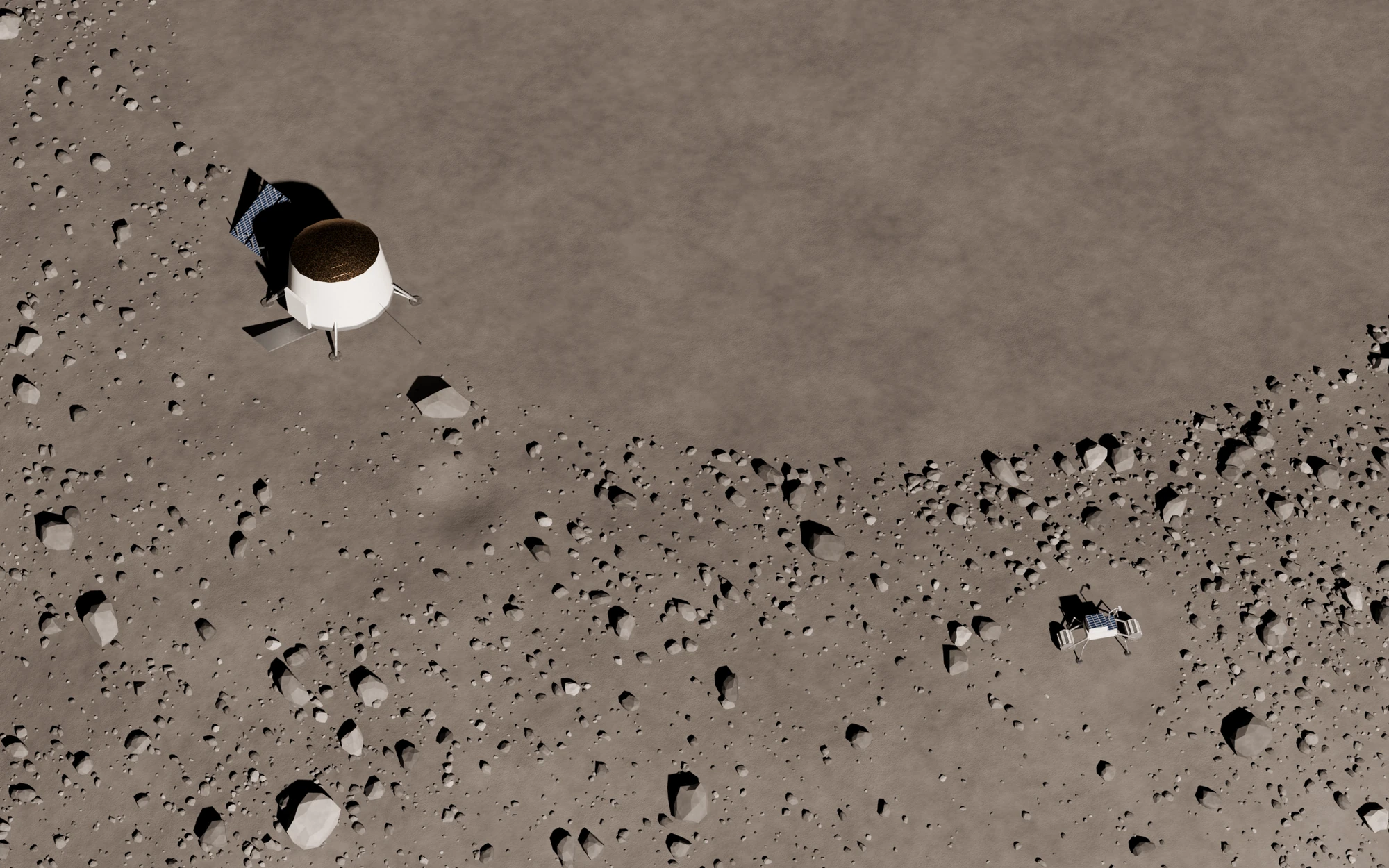
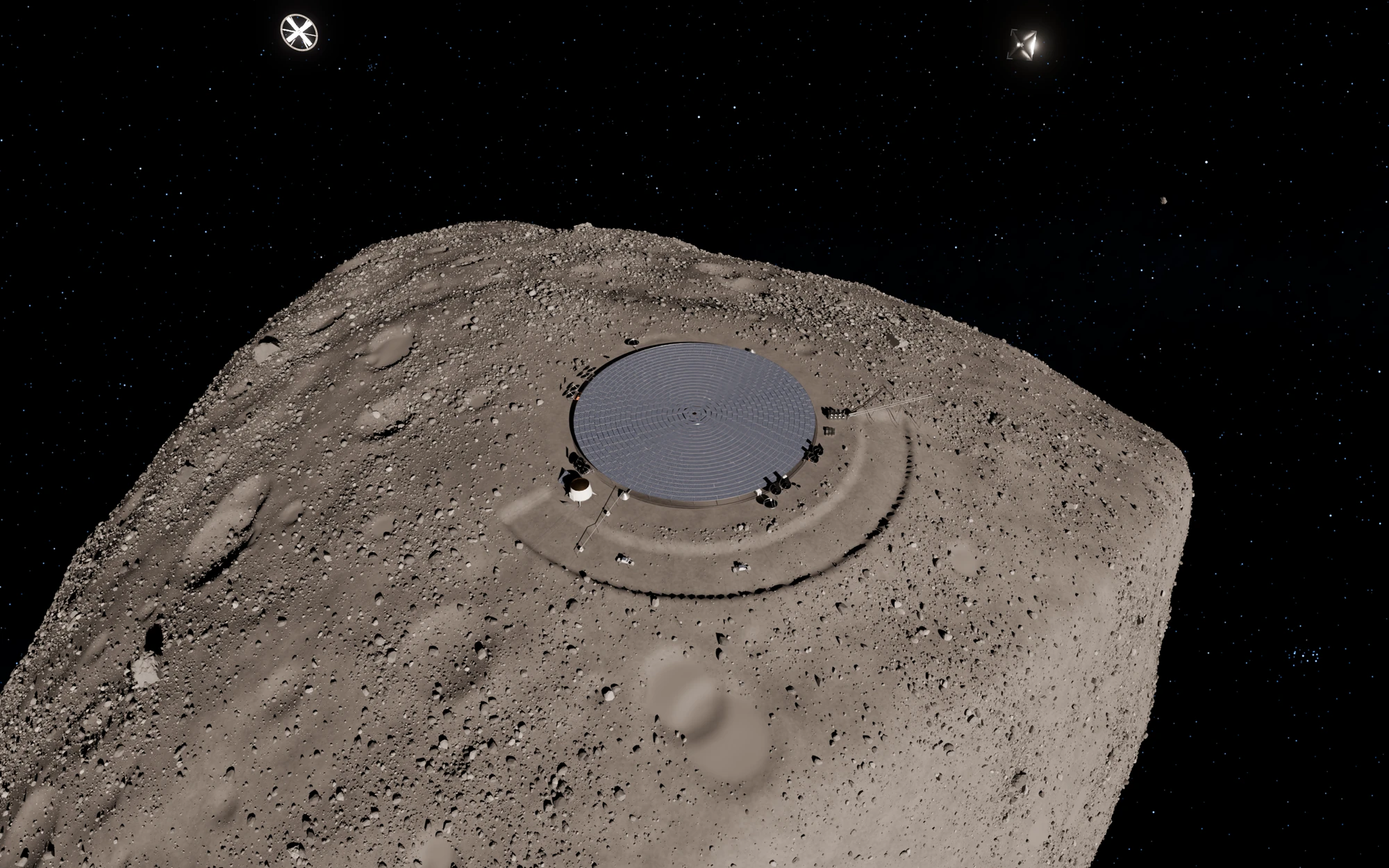
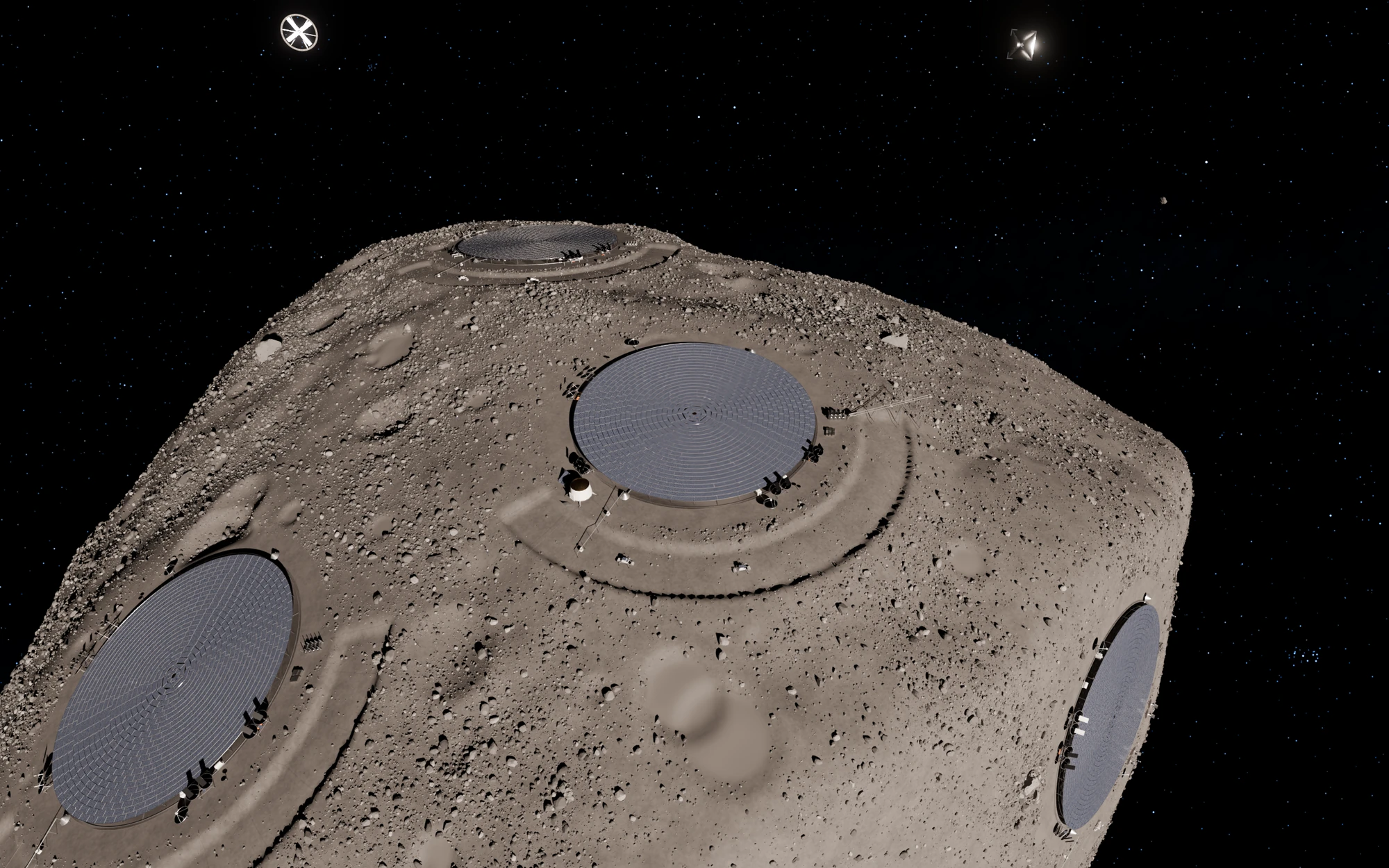
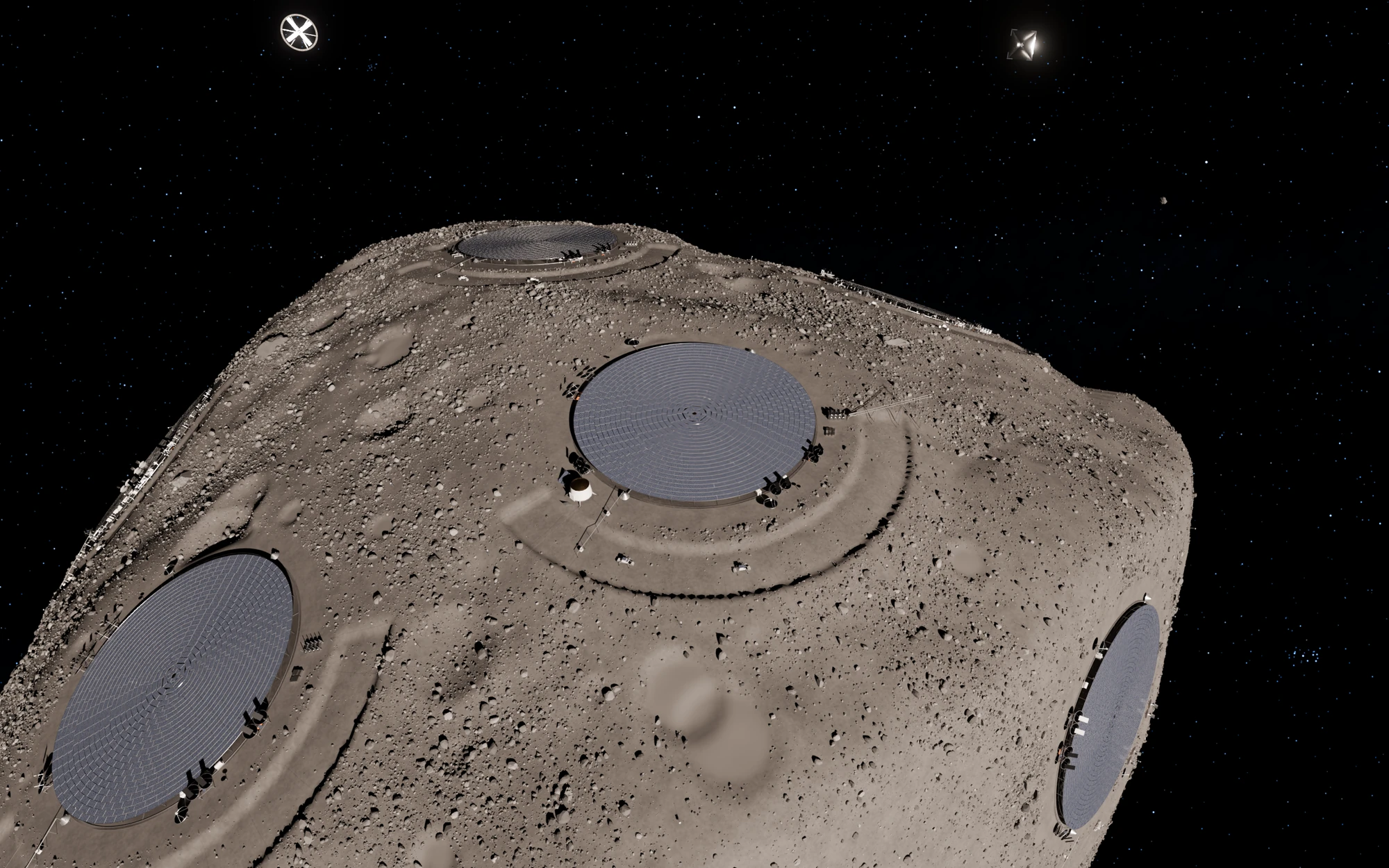
A staging post needs material that its machines can reach and use, and enough power to process it. A bright star would help a craft that brakes against starlight, but an arriving rocket would face a different fuel and braking problem. Our strategy score therefore counts the system's bodies and documented debris, with a preference for nearer systems. The count is a first estimate of opportunities: it does not measure usable metal, available fuel or the engineering needed to build a base.
The big picture: scoring 2,686 star systems
We scored the whole 2024 census to see how the nearby destinations compare with the rest: 2,686 systems, all those whose distance is known well enough to use. These are destination priorities under a stated travel scenario. On each return the best system gets 100 points and the others get points in proportion, so half its calculated return gives 50 points.
We keep the four scores separate. Adding them would hide the mission each destination suits. A world excellent for a flyby and worthless for settlement could end up with a middling total.
The baseline allows 20 years to develop a mission, then a flyby cruising at 0.2c or a settlement ship cruising at 0.05c. These speeds are comparison assumptions, not claims that those spacecraft are available. We hold mission cost equal across destinations, keep the same communications equipment for each flyby and apply no starlight-braking requirement. Acceleration and stopping would add time and energy; their calculation needs a particular spacecraft design.
For knowledge, scouting and settlement, we reduce the score according to how long it takes to receive the return. The people paying today would value €100 received now more than €100 received in thirty years. Economists call the reduction in present value discounting. The discount rate sets how much value is lost for each year of waiting.
We use the rates that Freeman and Groom recommended to the British Treasury in June 2026, which start at 3% a year and fall in steps to 2.25% a year. For settlement we use the lower rates that the same review allows for "social insurance", meaning projects that protect a whole society against disaster.
Standard rates, 3% falling to 2.25% a year
Social insurance rates, 1.5% falling to 0.75% a year
cents per dollar of return
A more distant flyby sends home a weaker signal if we keep its transmitter, Earth's receiver and the transmission energy the same. Doubling the distance spreads that signal over four times the area. We use this inverse-square loss as a relative communications factor, with Proxima set to one. A larger antenna, more power or a relay could change the result. Messerschmitt, Lubin and Morrison's 2023 downlink design gives one detailed example for gram-scale probes; its absolute data rate does not apply to every spacecraft.
percent of the factor at Proxima
The settlement and scouting scores use our estimate of the probability that a system holds a twin of Earth. We call it the twin chance. For a system with a confirmed planet in a habitable zone, we estimate the chance from that planet's properties. For a star without one, we use the average chance for its kind of star, based on how often such stars have planets. A high score can therefore come from a measured planet or from an expectation based on similar stars; we keep those two cases separate in the rankings below.
Water makes the biggest difference to the twin chance. In Tian and Ida's 2015 simulations of how planets form, roughly two in three of the Earth-mass planets in the habitable zone of a Sun-like star ended up with about as much water as Earth. Around a red dwarf of about a third of the Sun's mass, fewer than one in fifty did, and our scoring uses that share for smaller red dwarfs too.
Earth-mass planets with about Earth's water
Twin chance in our scoring
share or chance, from 0 to 1
The planets on the shortlist also carry a second rating, the Earth Similarity Index (ESI) of Schulze-Makuch and colleagues and the Planetary Habitability Laboratory. It scores from 0 to 1 how close a planet's size and starlight are to Earth's. We do not rank by it, because it takes no account of water or of the kind of star (Tasker and colleagues, 2017). Teegarden's Star b has the highest ESI near the Sun but one of the lowest twin chances. HD 20794 d is the reverse, with the lowest ESI on the shortlist and the highest twin chance of any confirmed planet, about one in six.
from 0 to 1
Knowledge
A reference flyby cruising at 0.2c
Counts
Potential scientific targets in the system; a rocky habitable-zone planet gets five times an ordinary planet's credit
Distance
The signal home fades with the square of the distance
Waiting
Years until the data reach Earth
Cost
Held equal across targets; no propulsion chosen
Kept if the system were farther away
Scouting
A telescope check before any launch
Counts
The part of the twin chance an existing or planned telescope could test
Distance
The settlement wait, and whether a telescope can resolve the planet
Waiting
As for settlement
Cost
The price of the test
Kept if the test cost more
Settlement
A ship that stops and stays
Counts
The twin chance
Distance
Raises the wait at the same cruise speed
Waiting
Development and cruise years; acceleration and braking omitted
Cost
Held equal across targets; an actual cost needs a ship design
Kept if the system were farther away
Strategy
An industrial staging post
Counts
The stars and reported planets, plus credit for documented debris
Distance
A nearer post counts for more
Waiting
Left out
Cost
Left out
Kept if the system were farther away
score kept, out of 100
How the scores are worked out
Our scoring uses the rates that Freeman and Groom recommended to the British Treasury in June 2026. They are 3.0% a year for the first 30 years, 2.5% a year from there to year 75, and 2.25% a year from there to year 125.
Here is how that works for a flyby of Alpha Centauri, 4.34 light-years away. We allow 20 years of development. After that, a cruise at 0.2c takes 4.34 divided by 0.2, or 21.7 years, and the signal needs another 4.3 years to come home at the speed of light. So the data arrive about 46 years after the work begins, ignoring acceleration time. For the first 30 of those years the rate is 3%. Growing by 3% a year for 30 years multiplies a sum by 2.43, so waiting 30 years reduces a dollar to 1 divided by 2.43, or 0.412 of a dollar. The other 16 years at 2.5% multiply to 1.48, which reduces what is left to 0.674 of itself. Then 0.412 times 0.674 is 0.28, so data worth a dollar on the day they arrive are worth 28 cents on the day the work begins.
For knowledge, we give points to each star and each reported planet in a system. A candidate counts a half or a quarter as much as a confirmed planet, and a rocky planet in a habitable zone five times as much as a planet outside that category. These weights are our choices, and the system's inventory is not a promise that one flyby could visit every body. We multiply the points by the relative communications factor and the discount until data reach Earth. Mission cost is held equal across targets. Payload size, antenna size, beam equipment or engine type must be specified before this becomes a comparison of actual mission costs.
For settlement, two things can lower the twin chance. A second star closer than 47 astronomical units (47 times Earth's distance from the Sun) cuts the chance to about a third (Kraus and colleagues, 2016). We also assume that an ageing main star cuts it to zero, because as a star ages its habitable zone moves outwards and the star has little time left.
For settlement, the reference cruise speed is 0.05c. The cruise to Alpha Centauri takes 87 years, or 107 years including development, with acceleration and braking time omitted. The settlement discount rates fall from 1.5% a year to 1.0% a year and then 0.75% a year over the same spans as before; we hold 0.75% after year 125. The baseline score is the twin chance times that discount, with mission cost held equal across destinations. At a fixed mass and speed, kinetic energy does not grow with distance. Holding journey time fixed would require a faster ship for a farther star, but that is a different scenario. Longer flights may still cost more through fuel, maintenance and reliability requirements; those costs need a spacecraft design. We test increasing-cost assumptions separately.
For scouting, we ask whether an existing or planned telescope can test each system's twin chance. Each testable contribution to that chance is multiplied by the settlement discount and by how completely the telescope could answer the question, then divided by the test's estimated cost. We add the contributions across the system. This is a measurement-priority score, not a full economic value-of-information calculation: it does not simulate each possible result and the decision it would change.
For strategy, we count the stars, brown dwarfs and reported planets in the system, using the same confidence weights for planets as before, and add two points for a documented belt of dust and small bodies. We multiply the count by 4.24 light-years divided by the system's distance. This is our preference for a base nearer Earth. We apply no stellar-brightness or sail-braking multiplier, and do not price construction, fuel or the routes onward to other systems.
The settlement scores can also be converted into amounts of money. In 1986 McDonald and Siegel analysed how waiting for information affects irreversible investment. We use a threshold of expected benefits worth twice the mission's cost, drawn from that analysis. Under this assumption, a twin is worth settling only if its value, reduced twice, still comes to twice the cost of the mission. The first reduction is the twin chance, and the second is the discount for the years until arrival.
Take Alpha Centauri A and B, where the twin chance is 0.076. Over the 107 years until arrival, the settlement rates multiply to about 3.1, so the discount is 1 divided by 3.1, or 0.32. Then 0.076 times 0.32 is 0.0243, and 2 divided by 0.0243 is about 82, so a twin there must be worth 82 times the cost of the mission that settles it. For every other system in the table below, the value needed is higher.
| System | Light-years | Twin chance comes from | Twin chance | Value a twin must have, as a multiple of the mission's cost |
|---|---|---|---|---|
| Proxima | 4.24 | a confirmed planet | 0.018 | 336 |
| HD 20794 | 19.58 | a confirmed planet | 0.17 | 356 |
| TRAPPIST-1 | 40.54 | confirmed planets | 0.054 | about 26,000 |
| LHS 1140 | 48.88 | a confirmed planet | 0.0091 | about 525,000 |
| Alpha Centauri A and B | 4.34 | averages only | 0.076 | about 82 |
| Epsilon Eridani | 10.45 | averages only | 0.072 | 216 |
| Tau Ceti | 11.75 | averages only | 0.060 | 322 |
| Barnard's Star | 5.96 | averages only | 0.0029 | about 2,700 |
Nobody has published what a second home for humanity would be worth, so no row can be checked against a real price. What the table does show is which twins would be easiest to justify.
The settlement scores are sensitive to assumptions that no propulsion choice can resolve. Removing Tian and Ida's water fractions changes eight of the top ten destinations when Alpha Centauri is split, as red-dwarf systems move up. Reducing settlement cruise speed from 0.05c to 0.02c changes five of that top ten. Assuming mission cost grows with distance squared also changes five. These are separate scenarios, not laws linking cost to distance. Our twin estimates also omit a quantitative penalty for stellar flares, which could lower the red-dwarf scores. The full scores, method and sensitivity results make those assumptions available alongside the rankings.
We show confirmed habitable-zone planets and expectations about undiscovered worlds in separate rankings. There are 27 destinations with a confirmed planet in either habitable zone. The other 2,660 have no confirmed habitable-zone planet; their settlement and scouting scores can include statistical expectations or candidate planets. Splitting Alpha Centauri puts Proxima in the first group and A and B in the second, making 2,687 destinations from 2,686 census systems. Both groups use the scale on which the whole Alpha Centauri system scores 100.
Confirmed worlds: systems with a confirmed planet in a habitable zone
Knowledge
- 1Proxima67
- 2GJ 8874.1
- 3GJ 10613.8
- 4Teegarden's Star3.3
- 5Gl 7252.6
Scouting
- 1Proxima19
- 2GJ 8871.1
- 382 Eridani (HD 20794)0.84
- 4Gl 7250.44
- 5GJ 10610.36
Settlement
- 1Proxima20
- 282 Eridani (HD 20794)19
- 3GJ 10619.3
- 4Teegarden's Star8.6
- 5GJ 8877.4
Strategy
- 1Proxima60
- 2GJ 88739
- 3GJ 106126
- 4Gl 72526
- 5Teegarden's Star25
score on one scale for both lists, where the whole Alpha Centauri system scores 100
Stars with no confirmed planet in a habitable zone yet
Knowledge
- 1Alpha Centauri A and B37
- 2Barnard's Star18
- 3Lalande 211854.3
- 4Luhman 162.8
- 5Luyten 726-82.3
Scouting
- 1Alpha Centauri A and B81
- 2Epsilon Eridani0.34
- 3Tau Ceti0.23
- 436 Ophiuchi0.18
- 561 Cygni0.18
Settlement
- 1Alpha Centauri A and B82
- 2Epsilon Eridani31
- 3Tau Ceti21
- 436 Ophiuchi18
- 561 Cygni16
Strategy
- 1Barnard's Star66
- 2Alpha Centauri A and B41
- 3Lalande 2118531
- 4Epsilon Eridani30
- 5YZ Ceti26
score on the same scale
Among the confirmed worlds, Proxima comes first on all four returns in the baseline. HD 20794 comes second for settlement, at about 19 points against Proxima's 20: its higher twin chance nearly offsets the longer wait once mission cost is held equal. GJ 887 comes second for knowledge, scouting and strategy, but fifth for settlement. Each comparison therefore points to a different reason for taking the next measurement.
Among the destinations with no confirmed habitable-zone planet, Alpha Centauri A and B come first for knowledge, scouting and settlement. Barnard's Star leads strategy because four confirmed planets and its short distance give it more nearby bodies to visit, although none of those planets is in a habitable zone. A and B score about 82 for settlement, against Proxima's 20, because their combined twin chance is 7.6%, even after a cut for their close orbit, against 1.8% for Proxima b.
Epsilon Eridani and Tau Ceti follow A and B for settlement and scouting in this group. The next places include 36 Ophiuchi and 61 Cygni. Their scores depend on expectations about planets still to be found. A high settlement score identifies an observation to pursue; it does not establish that a habitable world exists there.
We also scored every system under 22 alternative sets of assumptions, varying cruise speed, mission-cost growth, communications, discount rates and planet properties. Taken as one system, Alpha Centauri stayed first on all four returns in those tests. That result applies to the scenarios we tested. A specific spacecraft could change the ordering through payload, fuel and braking requirements that this destination comparison does not model.
There is probably a Planet B: we just haven't found it yet

The confirmed planets tell us where some worlds are. The census and the frequency of planets around each kind of star let us estimate how many Earth twins might exist within 65 light-years, including those nobody has detected. We call the nearest such twin Planet B. Its distance is an estimate from that population, so it stays outside the rankings of individual destinations above.
Astronomers sort stars by temperature into types named by letters: the Sun is a G star, F stars are a little hotter, K stars a little cooler, and red dwarfs are M stars. In the 2024 census we count 564 stars of types F, G and K within 65 light-years, about one in every cube of space 13 light-years on a side.
How many of these stars have an Earth-size planet in their habitable zone? Astronomers give the answer as an average per star, which they call eta-Earth. An eta-Earth of 1 would mean one such planet for every star, and 0.5 one planet for every two stars. The estimates still disagree widely: published values run from about 0.05, one planet for every twenty stars, to about 0.6, three planets for every five stars. Between those, the team planning the Habitable Worlds Observatory uses 0.24, about one planet for every four stars, and so does our scoring.
With 0.24 planets per star, those 564 stars should have about 135 Earth-size planets in their habitable zones. HD 20794 d is the only confirmed planet in the conservative zone of a Sun-like star in our census. It is much heavier than Earth, and its size is unknown, so it does not establish that one of those estimated Earth-size planets has been found.
We can estimate the distance within which there is an even chance of at least one Earth-size planet in a habitable zone. For F, G and K stars it is about 11 light-years (about as far as Ross 128). For red dwarfs, which are four times as common, it is about 8 light-years. We call this distance the Planet B horizon.How the horizon is worked out: the number of planets inside a sphere around the Sun grows with the cube of its radius, so a sphere twice as wide holds eight times as many. For things scattered at random, an average of about 0.7 inside gives even odds that at least one is there. To bring 135 down to 0.7, the volume must shrink about 195 times, so the radius must shrink 5.8 times (5.8 cubed is about 195), from 65 to 11.2 light-years.
Some Earth-size planets in habitable zones will be too dry to be twins. If only one in ten is a twin, the horizon for F, G and K stars moves to about 24 light-years. If only one in a hundred is a twin, it moves to 52 light-years.
Tian and Ida's simulations estimate the share of planets that keep enough water. With their figures the nearest twin around an F, G or K star is probably about 13 light-years away. Around a red dwarf it is 23 to 31 light-years away. Under those assumptions, the nearest twin is more likely to orbit a star like the Sun.
Every Earth-size planet in a habitable zone counts
1 in 10 counts as a twin
1 in 100 counts as a twin
1 in 1,000 counts as a twin
light-years to the nearest twin, at even odds
The 11 to 24 light-year range is conditional on at least one in ten of those planets being twins. The nearest stars that could have one are Alpha Centauri A and B, 4.34 light-years away. In August 2024 Webb photographed a possible giant planet, called S1, in the habitable zone of Alpha Centauri A, but it was not seen again in February or April 2025 (Beichman and colleagues, 2025). Even if S1 is real, a giant would not be a twin. Webb's images demonstrate that it can search within Alpha Centauri A's habitable zone.

Loading the stars
What we can know before launching a massive mission
The baseline rankings point to Alpha Centauri as the first place to measure. Proxima leads the confirmed worlds; A and B lead knowledge, scouting and settlement among the destinations without a confirmed habitable-zone planet. A small telescope can test the expectation behind their scores.
TOLIMAN is a small space telescope, with a mirror 12.5 centimetres across, that will cost about $5 million including its launch. It will watch Alpha Centauri A and B for the tiny shift in their positions that a planet's pull would cause. It should launch between April 2027 and December 2028, so its answer on whether either star has a temperate rocky planet should come around 2030 to 2032.
Next come the giant telescopes on the ground. From December 2030 the Extremely Large Telescope (ELT) in Chile, with a mirror 39 metres across, could photograph an Earth twin around Alpha Centauri A in 5 hours on its driest nights, with its METIS camera (Absil and colleagues, 2024).
From about 2035 the ELT's ANDES spectrograph could detect the light reflected from Proxima b in about 6 hours. The instrument splits that light into its colours to search for the signs of gases. Detecting oxygen would take about 180 hours in a model with oceans and an Earth-like atmosphere (Palle and colleagues, 2023). By our estimate, detecting GJ 887 d's reflected light would take about 4 nights of observing time.

Changes on TRAPPIST-1's surface can imitate signs of a planet's atmosphere. Webb reads atmospheric gases from the colours missing in starlight during a transit. Dark spots and bright patches on the star change those colours too. The measurement must distinguish what comes from the star from what comes from the planet's air.
To separate the two, a Webb programme that is running now, over several years, watches planet e cross the star 15 times, each time right after planet b, which has no atmosphere. Whatever shows up in b's light can only come from the star, so it can be subtracted from e's (Allen and colleagues, 2025). The first three of those 15, published in December 2025, showed one weakness: a strong flare between the two crossings can spoil the subtraction.
Epsilon Eridani and Tau Ceti follow Alpha Centauri A and B for settlement among destinations without a confirmed habitable-zone planet. Their scouting scores assume that NASA builds the Habitable Worlds Observatory. Of the telescopes in our comparison, only that planned observatory could test whether these stars have a twin before an interstellar mission.
The observatory would cost about $11 billion for spectra of at least 25 possible Earths. Dividing the total by 25 gives about $440 million per planet, 88 times the price of TOLIMAN. This is an average programme cost, rather than a price for each observation.
Suppose each system has a one-in-ten chance of holding a twin. Each probe then has a 0.9 chance of reaching a system without one. If the systems' chances are independent, the chance that all 22 probes miss is 0.9 multiplied by itself 22 times, about 0.1. Sending 22 probes therefore gives about a 90% chance of reaching at least one twin. For the same 90% chance of reaching at least one twin, a one-in-a-hundred chance per system requires 230 probes, and a one-in-a-thousand chance requires 2,302 probes (Elvis and Esty worked out the same arithmetic for asteroid miners in 2014).
Telescope measurements that improve the odds for a chosen destination could reduce the number of probes needed. A spectrum would cost far less than those extra launches.
What to fund, and in what order
We would fund telescope measurements before committing to an interstellar launch. The rankings identify the stars to measure first; the available telescopes determine which questions can be answered and at what cost.
| Stars | What to pay for | Why |
|---|---|---|
| Alpha Centauri A and B | TOLIMAN now (about $5 million), then time on METIS from 2030 | First for knowledge, scouting and settlement in their group, and almost as near as Proxima |
| Proxima b | ANDES time for its reflected light (about 6 hours) and for oxygen (about 180 hours), worth €0.1 million to €2.9 million of ELT time | The best confirmed world, and the quickest to reach: about 21 years at a fifth of the speed of light, against 54 years for GJ 887 d at the same speed |
| GJ 887 d and HD 20794 d | Reflected-light spectroscopy to test their nature (our estimate for GJ 887 d: about 4 nights of ANDES observing time) | GJ 887 is second for knowledge and scouting among the confirmed systems; HD 20794 is second for settlement, has the highest planet twin chance and is the easiest of the nine to image |
| TRAPPIST-1 e and LHS 1140 b | Nothing new: Webb is measuring them now | Too far to visit soon (203 years to TRAPPIST-1 e and 244 years to LHS 1140 b at a fifth of the speed of light), but they will show whether a temperate rocky planet around a red dwarf can keep its air, which decides the value of every red dwarf planet on the shortlist |
| Epsilon Eridani, Tau Ceti, 61 Cygni and Epsilon Indi | Keeping the Habitable Worlds Observatory in the budget ($150 million for 2026) | The nearest stars like the Sun after Alpha Centauri, and only that observatory could check them |
A costed design lets us make a more specific comparison. Using our twice-cost threshold drawn from McDonald and Siegel's analysis, an investment must promise about twice its cost after discounting. TOLIMAN reports about 3 years after launch, so it must promise about $11 million for its $5 million. A Starshot-style flyby at 0.2c would report about 25 years after launch and require at least $26 billion to $38 billion of return against its $8.0 billion laser equipment. The latter cost omits the spacecraft, receiver, research and operations. It cannot price a fusion mission or a larger probe.
These figures compare the value required to justify each investment. They do not assign a market price to a planet or to scientific knowledge.
| Field | Measure Alpha Centauri first | Starshot-style Proxima flyby |
|---|---|---|
| Target | Alpha Centauri A and B (TOLIMAN, then METIS on the ELT); Proxima b (ANDES on the ELT) | Proxima b |
| What flies or looks | a 12.5 cm telescope on a CubeSat; observing time on the ELT | a 1 gram probe, 3.6 grams with its sail |
| Earth-years from launch to first data | about 3 (TOLIMAN) | about 25 (21 out, 4 back) |
| Cost | about $5 million for TOLIMAN, launch and operations included; about €0.1 million to €2.9 million of ELT time for Proxima b; no published cost found for ANDES itself | $8.0 billion for the laser system alone, plus $6 million of electricity per launch; sail, chip, receiver, research and operations not costed in any source we found |
| Return needed to break even, as a multiple of cost | 1.06 at 2% a year; 1.11 at 3.5% a year | 1.65 at 2% a year; 2.4 at 3.5% a year |
| What comes back | whether temperate rocky planets orbit Alpha Centauri A or B; light reflected from Proxima b, then a test for oxygen in its air | data from about 1.4 hours within one astronomical unit of Proxima |
How the mission card's numbers are worked out
This card compares a telescope with one proposed laser-sail design, not with every interstellar mission. It uses two simple discount rates that stay the same every year. One is 2%, the middle answer in a 2018 survey of more than 200 experts by Drupp and colleagues, and the other is 3.5%, the rate the British Treasury's Green Book uses for the first thirty years. To break even, a mission has to give back its cost grown by the rate for every year until the return arrives. For TOLIMAN that is 3 years, which multiplies its cost by 1.06 at 2% and by 1.11 at 3.5%. For a laser probe it is 25 years (21 out and 4 back), which multiplies its cost by 1.65 and 2.4. Our twice-cost threshold then doubles these multiples. So TOLIMAN needs about $11 million of value, while the laser probe's multiples become 3.3 and 4.8, which on $8.0 billion means $26 billion to $38 billion.
For the ELT, we price an hour of its time at about €16,000, which is its building cost of €1.45 billion spread over an assumed 3,000 hours of observing a year for 30 years. So Proxima b's 6 to 180 hours come to between €0.1 million and €2.9 million.
| Mission | Years until the return | Break-even multiple at 2% | Break-even multiple at 3.5% |
|---|---|---|---|
| TOLIMAN | about 3 | 1.06 | 1.11 |
| Laser probe to Proxima | about 25 | 1.65 | 2.4 |
| Daedalus flyby of Barnard's Star | about 56 | 3.0 | 6.9 |
| Reference ship cruising at 0.05c to Alpha Centauri, then a signal home | about 91, excluding acceleration and braking | 6.1 | 23 |
Choosing which measurements to fund leaves the question of how to keep paying for them across decades. CERN, the European particle physics laboratory, is funded under a treaty. Its member countries pay shares set by their national income, totalling 1,232 million Swiss francs for 2026. This funding arrangement covered the cost overrun on the Large Hadron Collider.
The Superconducting Super Collider in Texas was costed at $8.25 billion in 1991 and voted one year at a time, and it was cancelled in 1993 with about $1.57 billion spent. The Habitable Worlds Observatory is paid for the same way as the Super Collider, one budget vote at a time.
Our proposal funds measurements and propulsion research side by side. The measurement programme would buy specific answers and update the destination rankings each year.
Countries would sign a treaty, as CERN's members did, committing them to annual contributions. Together those contributions would fund a programme of roughly $150 million a year, the amount the Habitable Worlds Observatory got for 2026. The programme would pay a fixed sum for each missing measurement made, such as a planet's size or what its air is made of. It would begin with the stars at the top of both rankings and score them again each year as the answers arrive.
The second part is sustained research on nuclear pulse and fusion engines, external laser and particle beams, and methods of braking. These approaches share work on materials, heat removal, guidance and communication, but require different spacecraft and infrastructure. Research can continue while telescope measurements change the destination choice. The series' episodes on propulsion and stopping will compare those designs in detail.
We think propulsion research could attract private investment through patents for materials and physics with uses near home. That is a possible source of income, rather than an established return from interstellar travel. Private money already plays a part: TOLIMAN is mainly paid for by the Breakthrough Initiatives, a private foundation, with Australian research grants on top.
Two kinds of work run side by side, measuring paid for by a treaty and research on propulsion, and the decision to launch a full mission to one star waits for the measurements.
Countries pay every year
A treaty would commit countries to annual contributions, funding a programme of roughly $150 million a year, the amount the Habitable Worlds Observatory got for 2026.
The money buys the measurements nobody has made
A fixed sum for each missing measurement made, starting with the stars at the top of both rankings, which are scored again every year.
| Size | True mass | Air | ||
|---|---|---|---|---|
| Proxima b | ||||
| GJ 887 d | ||||
| Ross 128 b | ||||
| GJ 1061 d | ||||
| Teegarden's Star b | ||||
| GJ 1002 b | ||||
| HD 20794 d | ||||
| TRAPPIST-1 e | ||||
| LHS 1140 b |
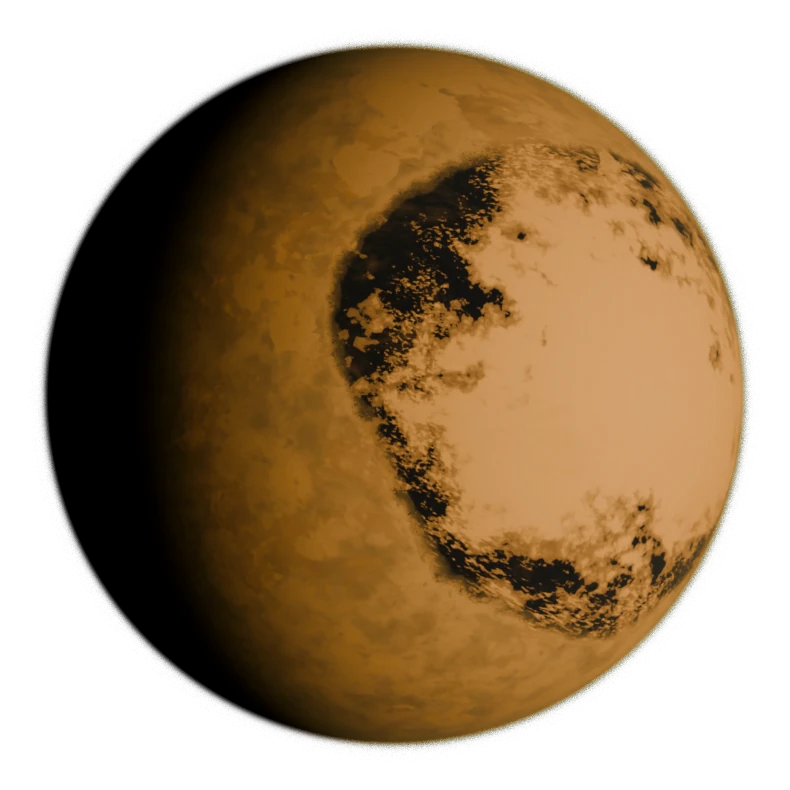
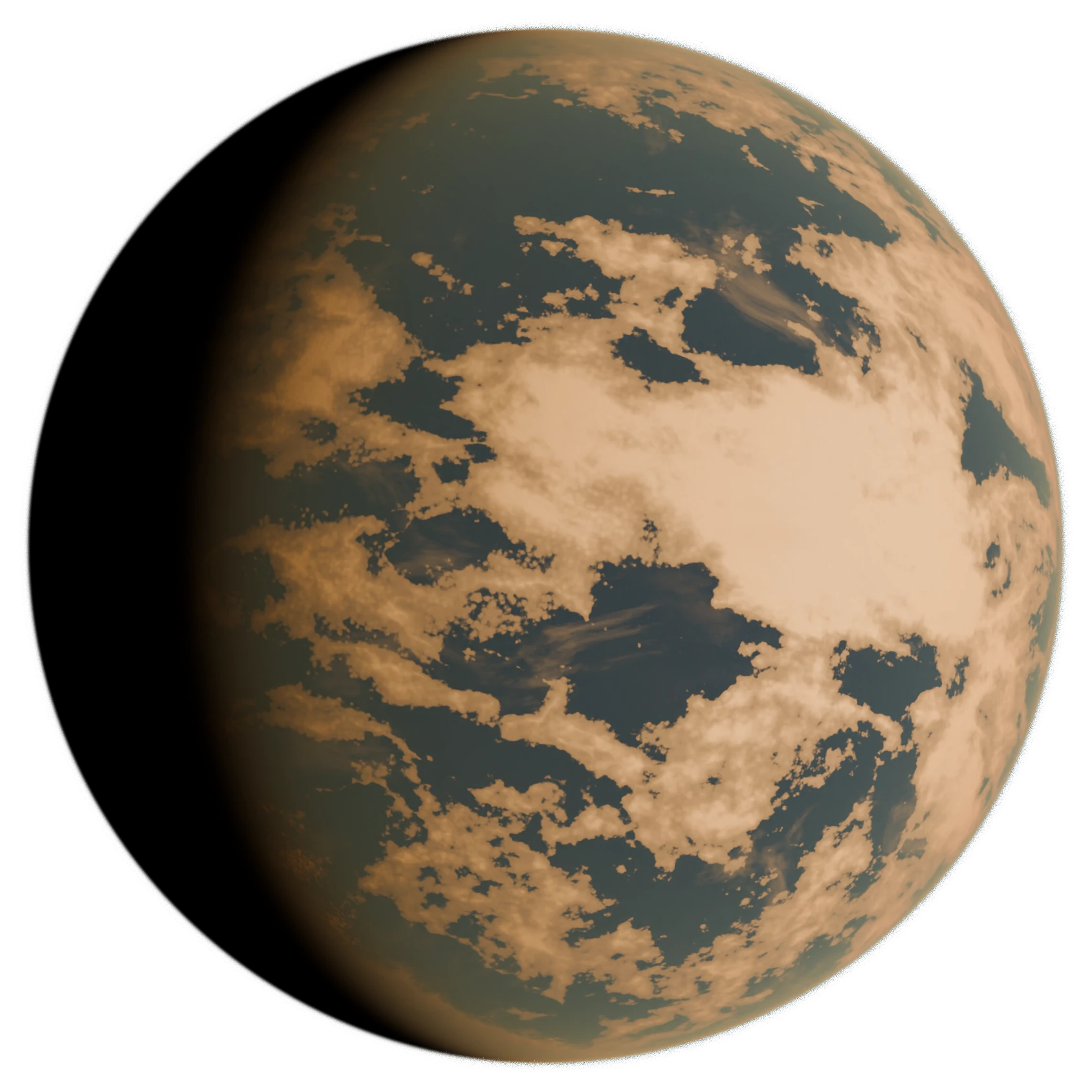
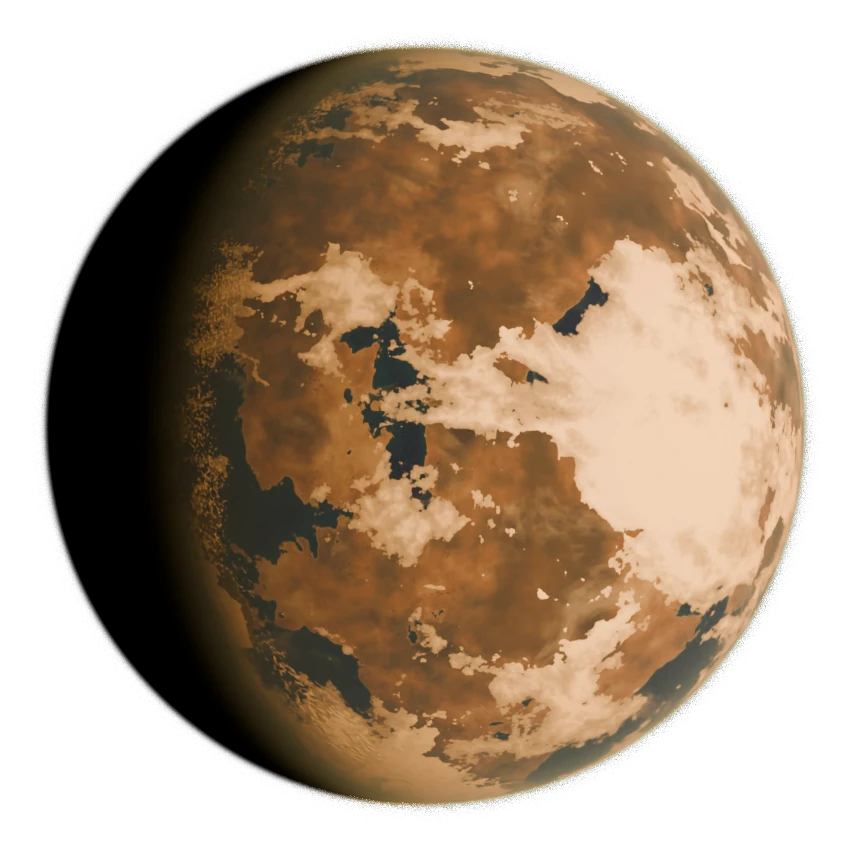
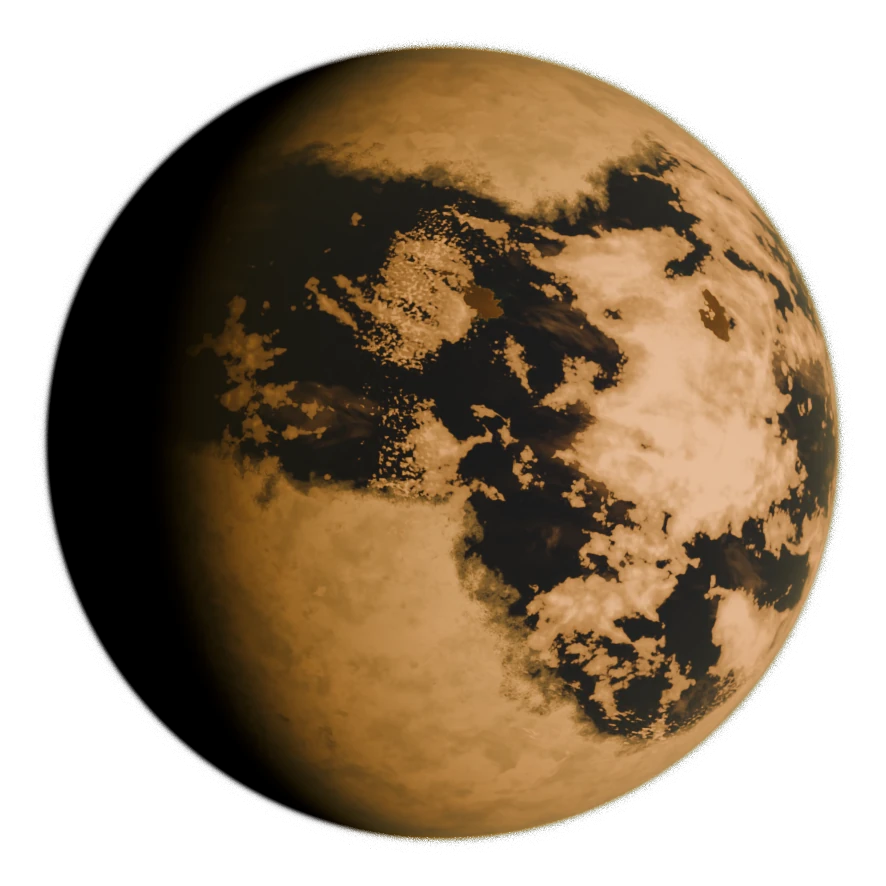
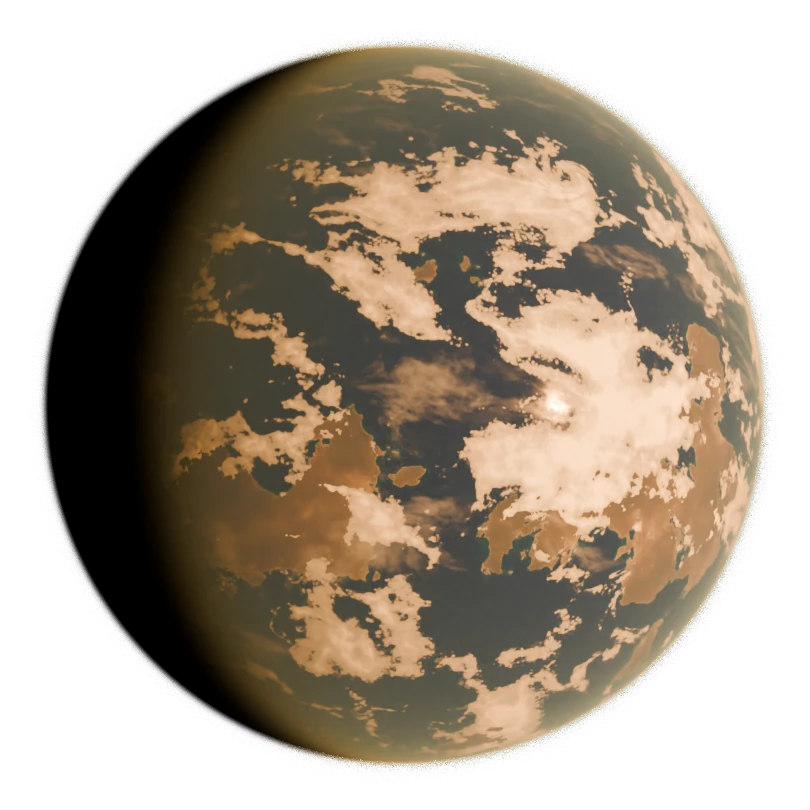
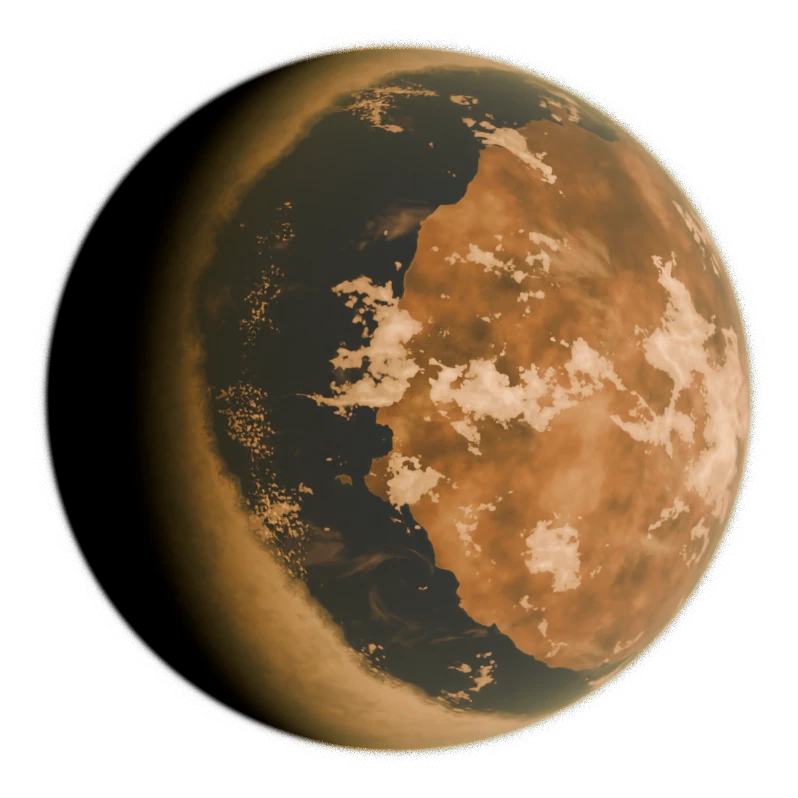
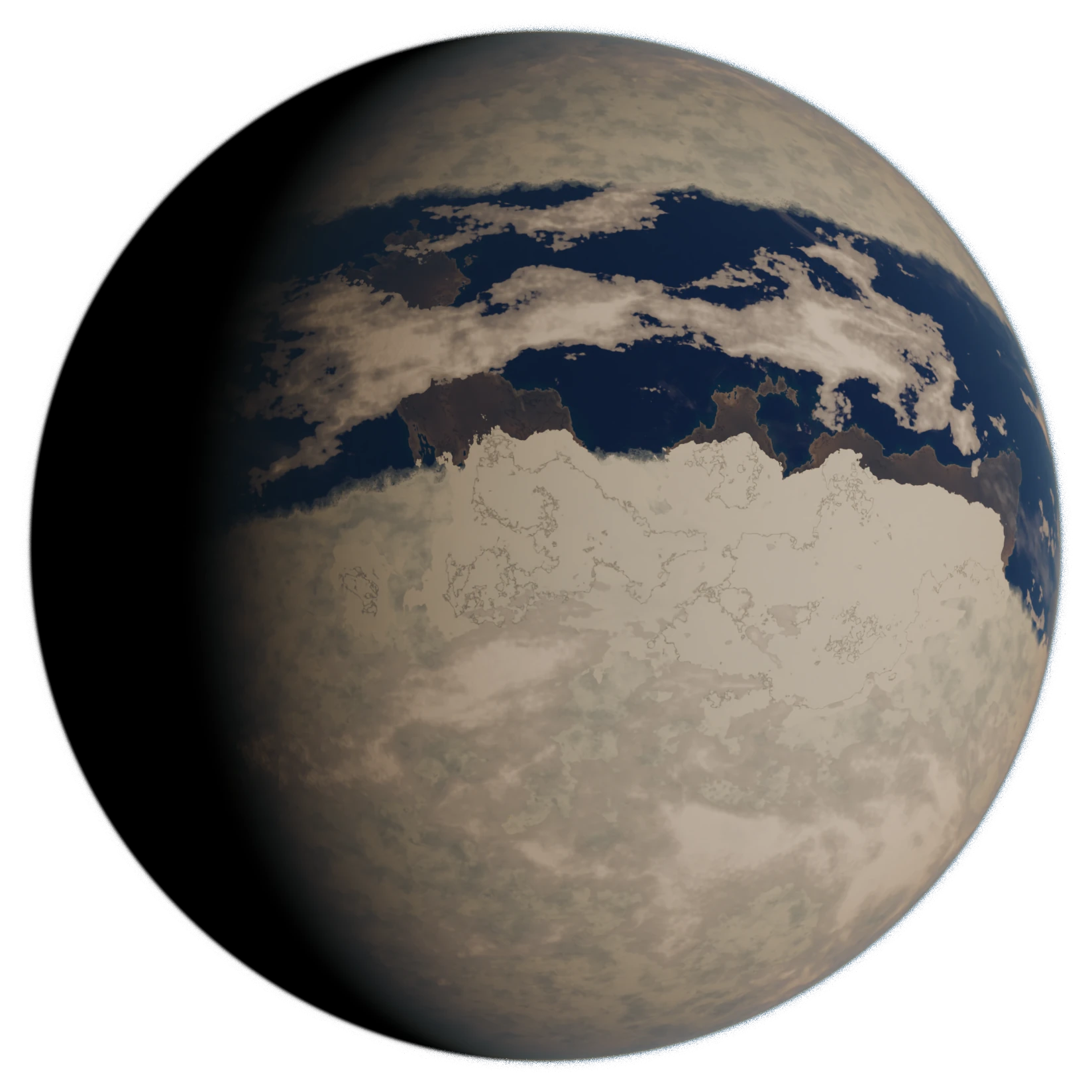
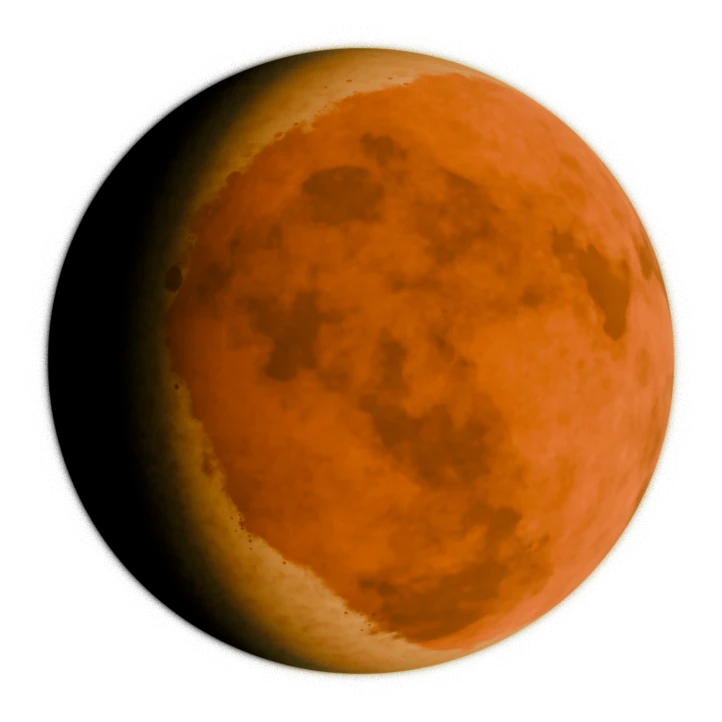
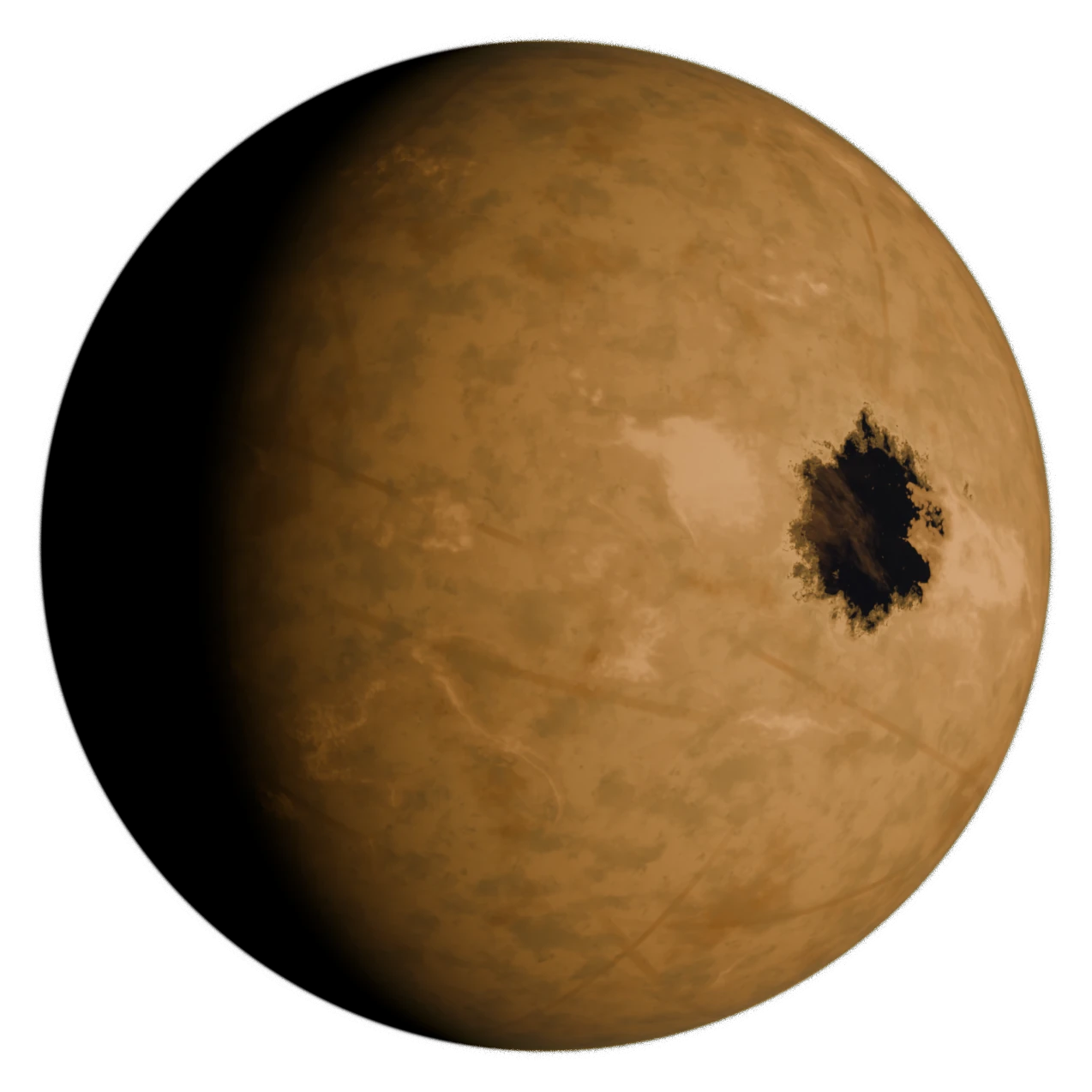
5 of 27 known. Webb has narrowed the possible atmospheres of two of the nine. No atmosphere has been confirmed.
When the first answers come
- Every yearStars scored again every year
- 2026 to 2032TOLIMAN, about $5 million: is there a temperate rocky planet at Alpha Centauri A or B?answer by about 2032
- 2030METIS on the ELT: observing time on Alpha Centauri A and B, from 2030
- 2035ANDES on the ELT: does Proxima b have air? From about 2035
- From now onPropulsion research, which never stops
TOLIMAN, about $5 million: is there a temperate rocky planet at Alpha Centauri A or B?answer by about 2032
METIS on the ELT: observing time on Alpha Centauri A and B, from 2030
ANDES on the ELT: does Proxima b have air? From about 2035
Propulsion research, which never stops
Research that could pay its way
Developing a probe or ship that can stop takes decades of experiments. Propulsion research would continue while measurements change the destination rankings.
The decision waits for the measurements
Whether to launch a full mission to one particular star.
We borrow the Gomes lease's annual payment for exploration. Its trading income has no direct equivalent between Earth and the stars.
There are also no national rights to a planet to sell under the Outer Space Treaty, which forbids national appropriation. The annual payment would have to fund the measurements without the trading monopoly that Gomes received. Income from patents would depend on the research producing something with uses near home.
The first payment would fund TOLIMAN's search for an Earth-sized planet where water could stay liquid around Alpha Centauri A or B, the two Sun-like stars nearest to us. The telescope costs about $5 million, and its answer should come around 2030 to 2032. That answer would replace an average chance in the rankings with evidence about those stars.
Sources
Stars and planets
- Kirkpatrick and colleagues (2024). The Initial Mass Function Based on the Full-sky 20 pc Census of ∼3600 Stars and Brown Dwarfs. The Astrophysical Journal Supplement Series. doi:10.3847/1538-4365/ad24e2
- Kirkpatrick and colleagues (2024). Table 4 of the 20 pc census, catalogue J/ApJS/271/55. VizieR. cdsarc.cds.unistra.fr
- NASA Exoplanet Archive (2026). Planetary Systems Composite Parameters table, queried 7 and 10 October 2026. exoplanetarchive.ipac.caltech.edu
- Kopparapu and colleagues (2014). Habitable Zones Around Main-Sequence Stars: Dependence on Planetary Mass. The Astrophysical Journal Letters. arXiv:1404.5292
- Howard and colleagues (2018). The First Naked-eye Superflare Detected from Proxima Centauri. The Astrophysical Journal Letters. doi:10.3847/2041-8213/aacaf3
- MacGregor and colleagues (2021). Discovery of an Extremely Short Duration Flare from Proxima Centauri Using Millimeter through Far-ultraviolet Observations. The Astrophysical Journal Letters. doi:10.3847/2041-8213/abf14c
- Ribas and colleagues (2016). The habitability of Proxima Centauri b. I. Irradiation, rotation and volatile inventory from formation to the present. Astronomy and Astrophysics 596, A111. arXiv:1608.06813
- Luger and Barnes (2015). Extreme Water Loss and Abiotic O₂ Buildup on Planets Throughout the Habitable Zones of M Dwarfs. Astrobiology. doi:10.1089/ast.2014.1231
- Hartogh and colleagues (2026). RedDots: Multiplanet system around M dwarf GJ 887 in the solar neighborhood. Astronomy and Astrophysics 707, A93. ui.adsabs.harvard.edu
- Jeffers and colleagues (2020). A multiplanet system of super-Earths orbiting the brightest red dwarf star GJ 887. Science 368, 1477. arXiv:2006.16372
- Bonfils and colleagues (2018). A temperate exo-Earth around a quiet M dwarf at 3.4 parsec. Astronomy and Astrophysics 613, A25. ui.adsabs.harvard.edu
- Dreizler and colleagues (2025). RedDots: Planetary masses in the GJ 1061 system from planet-planet interaction. Astronomy and Astrophysics 698, A114. ui.adsabs.harvard.edu
- Dreizler and colleagues (2024). Teegarden's Star revisited: A nearby planetary system with at least three planets. Astronomy and Astrophysics 684, A117. ui.adsabs.harvard.edu
- Barnes (2017). Tidal locking of habitable exoplanets. Celestial Mechanics and Dynamical Astronomy 129, 509. doi:10.1007/s10569-017-9783-7
- Suárez Mascareño and colleagues (2023). Two temperate Earth-mass planets orbiting the nearby star GJ 1002. Astronomy and Astrophysics 670, A5. ui.adsabs.harvard.edu
- Nari and colleagues (2025). Revisiting the multi-planetary system of the nearby star HD 20794: Confirmation of a low-mass planet in the habitable zone of a nearby G-dwarf. Astronomy and Astrophysics 693, A297. ui.adsabs.harvard.edu
- Agol and colleagues (2021). Refining the Transit-timing and Photometric Analysis of TRAPPIST-1: Masses, Radii, Densities, Dynamics, and Ephemerides. The Planetary Science Journal 2, 1. ui.adsabs.harvard.edu
- Cadieux and colleagues (2024). New Mass and Radius Constraints on the LHS 1140 Planets: LHS 1140 b Is either a Temperate Mini-Neptune or a Water World. The Astrophysical Journal Letters 960, L3. ui.adsabs.harvard.edu
- Cadieux and colleagues (2024). Transmission Spectroscopy of the Habitable Zone Exoplanet LHS 1140 b with JWST/NIRISS. arXiv. arXiv:2406.15136
- Ribas and colleagues (2018). A candidate super-Earth planet orbiting near the snow line of Barnard's star. Nature. arXiv:1811.05955
- Jack Lubin and colleagues (2021). Stellar Activity Manifesting at a One Year Alias Explains Barnard b as a False Positive. arXiv. arXiv:2105.07005
- Basant and colleagues (2025). Four Sub-Earth Planets Orbiting Barnard's Star from MAROON-X and ESPRESSO. The Astrophysical Journal Letters. doi:10.3847/2041-8213/adb8d5
- Conzo and colleagues (2026). Detection and characterization of the temperate super-earth Gliese 48 b. arXiv. arXiv:2605.11123
- Beichman and colleagues (2025). Worlds Next Door: A Candidate Giant Planet Imaged in the Habitable Zone of α Cen A. I. Observations, Orbital and Physical Properties, and Exozodi Upper Limits. The Astrophysical Journal Letters 989, L22. arXiv:2508.03814
- Tian and Ida (2015). Water contents of Earth-mass planets around M dwarfs. Nature Geoscience. doi:10.1038/ngeo2372
- Kraus and colleagues (2016). The Impact of Stellar Multiplicity on Planetary Systems. I. The Ruinous Influence of Close Binary Companions. The Astronomical Journal. doi:10.3847/0004-6256/152/1/8
- Heller and Hippke (2017). Deceleration of High-velocity Interstellar Photon Sails into Bound Orbits at α Centauri. The Astrophysical Journal Letters. doi:10.3847/2041-8213/835/2/L32
- Perakis and Hein (2016). Combining Magnetic and Electric Sails for Interstellar Deceleration. Acta Astronautica. doi:10.1016/j.actaastro.2016.07.005
- Schulze-Makuch and colleagues (2011). A Two-Tiered Approach to Assessing the Habitability of Exoplanets. Astrobiology. doi:10.1089/ast.2010.0592
- Planetary Habitability Laboratory, University of Puerto Rico at Arecibo (undated). Earth Similarity Index (ESI). Web page. phl.upr.edu
- Tasker and colleagues (2017). The language of exoplanet ranking metrics needs to change. Nature Astronomy. doi:10.1038/s41550-017-0042
- Glidden and colleagues (2025). JWST-TST DREAMS: Secondary Atmosphere Constraints for the Habitable Zone Planet TRAPPIST-1 e. arXiv. arXiv:2509.05407
- Espinoza and colleagues (2025). JWST-TST DREAMS: NIRSpec/PRISM Transmission Spectroscopy of the Habitable Zone Planet TRAPPIST-1 e. arXiv. arXiv:2509.05414
- Allen and colleagues (2025). JWST TRAPPIST-1 e/b Program: Motivation and first observations. arXiv. arXiv:2512.07695
- Piaulet-Ghorayeb and colleagues (2025). Strict Limits on Potential Secondary Atmospheres on the Temperate Rocky Exo-Earth TRAPPIST-1 d. The Astrophysical Journal. doi:10.3847/1538-4357/adf207
- João Montenegro (2026). Destination-priority scores for 2,686 star systems within 20 parsecs, revised 11 October. Method and sensitivity results. Spreadsheet file. scored-systems.csv
Costs and economics
-
Litchford and Sheehy (2020). Prospects for Interstellar Propulsion. NASA Technical Reports Server. ntrs.nasa.gov
-
Parkin (2018). The Breakthrough Starshot system model. Acta Astronautica. doi:10.1016/j.actaastro.2018.08.035
-
Messerschmitt, Lubin and Morrison (2023). Interstellar flyby scientific data downlink design. arXiv. arXiv:2306.13550
-
Freeman and Groom (2026). Green Book Discount Rate Review: Summary of Findings and Recommendations. Independent report commissioned by HM Treasury. assets.publishing.service.gov.uk
-
HM Treasury (2022). The Green Book.
-
Drupp, Freeman, Groom and Nesje (2018). Discounting Disentangled. American Economic Journal: Economic Policy. doi:10.1257/pol.20160240
-
McDonald and Siegel (1986). The Value of Waiting to Invest. The Quarterly Journal of Economics. doi:10.2307/1884175
-
Breakthrough Initiatives (undated). Breakthrough Starshot. Programme page. breakthroughinitiatives.org
-
Breakthrough Initiatives (2016). Announcement of Breakthrough Starshot, 12 April 2016. breakthroughinitiatives.org
-
Scoles (2025). The Quiet Demise of Breakthrough Starshot, a Billionaire's Interstellar Mission to Alpha Centauri. Scientific American. scientificamerican.com
-
Benford (2026). Starshot Is a Success: Part I. Centauri Dreams. centauri-dreams.org
-
CERN (2026). 2026 Annual Contributions to CERN budget. Finance and Administrative Processes Department. fap-dep.web.cern.ch
-
CERN (undated). The CERN Convention, English text. cds.cern.ch
-
CERN (2001). LHC Cost Review to Completion. Archived web page. web.archive.org
-
US Department of Energy, Office of Inspector General (1996). Summary Audit Report on Lessons Learned from the Superconducting Super Collider Project. energy.gov
-
US General Accounting Office (1993). Report RCED-93-87 on the Superconducting Super Collider. gao.gov
History
-
Hublin and colleagues (2017). New fossils from Jebel Irhoud, Morocco and the pan-African origin of Homo sapiens. Nature 546, 289 to 292. doi:10.1038/nature22336
-
Lambeck and colleagues (2014). Sea level and global ice volumes from the Last Glacial Maximum to the Holocene. Proceedings of the National Academy of Sciences 111, 15296 to 15303. doi:10.1073/pnas.1411762111
-
West (2002). Highest permanent human habitation. High Altitude Medicine and Biology 3(4), 401 to 407. doi:10.1089/15270290260512882
-
Champigneulle and colleagues (2024). Expedition 5300: limits of human adaptations in the highest city in the world. The Journal of Physiology. doi:10.1113/JP284550
-
João Montenegro (2023). How to go interstellar. monte-negro.space
-
Martins (2009). Fernão Gomes. Encyclopaedia of Portuguese Expansion. eve.fcsh.unl.pt
-
Russell (2000). Prince Henry 'the Navigator': A Life. Yale University Press. archive.org
-
Newitt (2005). A History of Portuguese Overseas Expansion 1400-1668. Routledge. archive.org
-
Diffie and Winius (1977). Foundations of the Portuguese Empire 1415-1580. University of Minnesota Press. archive.org
-
Vogt (1979). Portuguese Rule on the Gold Coast 1469-1682. University of Georgia Press. archive.org
-
Estácio dos Reis (2002). As escalas da Terra: latitude, longitude e navegação. Gazeta de Física 25, 1, Sociedade Portuguesa de Física. spf.pt
-
Zurara (1896 and 1899). Chronicle of the Discovery and Conquest of Guinea, volumes I and II. Hakluyt Society. gutenberg.org, archive.org
-
Natural Earth (undated). Land polygons at 1:50 million scale, public domain.
-
UNESCO World Heritage Centre (undated). Cologne Cathedral, list entry 292. whc.unesco.org
-
British Interplanetary Society (undated). Technical Projects. bis-space.com
-
Martin (1976). Project Daedalus: the ranking of nearby stellar systems for exploration. Journal of the British Interplanetary Society. ui.adsabs.harvard.edu
-
United Nations Office for Outer Space Affairs (undated). The Outer Space Treaty. unoosa.org
-
Watanabe and colleagues (2019). Hayabusa2 arrives at the carbonaceous asteroid 162173 Ryugu: a spinning top-shaped rubble pile. Science 364, 268 to 272. doi:10.1126/science.aav8032
Telescopes and missions
- NASA (2024). NASA Awards Advance Technologies for Future Habitable Worlds Mission. News release. nasa.gov
- NASA (2026). NASA's Fiscal Year 2027 Budget Request. nasa.gov
- NASA (2024). NASA's Parker Solar Probe Makes History With Closest Pass to Sun. science.nasa.gov
- Space Telescope Science Institute (undated). Rocky Worlds, the Webb and Hubble programme on rocky planets. rockyworlds.stsci.edu
- TOLIMAN (undated). TOLIMAN Space Telescope. toliman.space
- European Southern Observatory (undated). Extremely Large Telescope timeline. elt.eso.org
- European Southern Observatory (2024). Final design of the ELT's METIS instrument completed. eso.org
- Absil and colleagues (2024). METIS high-contrast imaging: from final design to manufacturing and testing. arXiv. arXiv:2407.10588
- European Southern Observatory (undated). ANDES. elt.eso.org
- Palle and colleagues (2023). Ground-breaking Exoplanet Science with the ANDES spectrograph at the ELT. arXiv. arXiv:2311.17075
- Elvis and Esty (2014). How many assay probes to find one ore-bearing asteroid? Acta Astronautica. doi:10.1016/j.actaastro.2013.11.027