Draco
A single-surface sports car body for Adamastor.
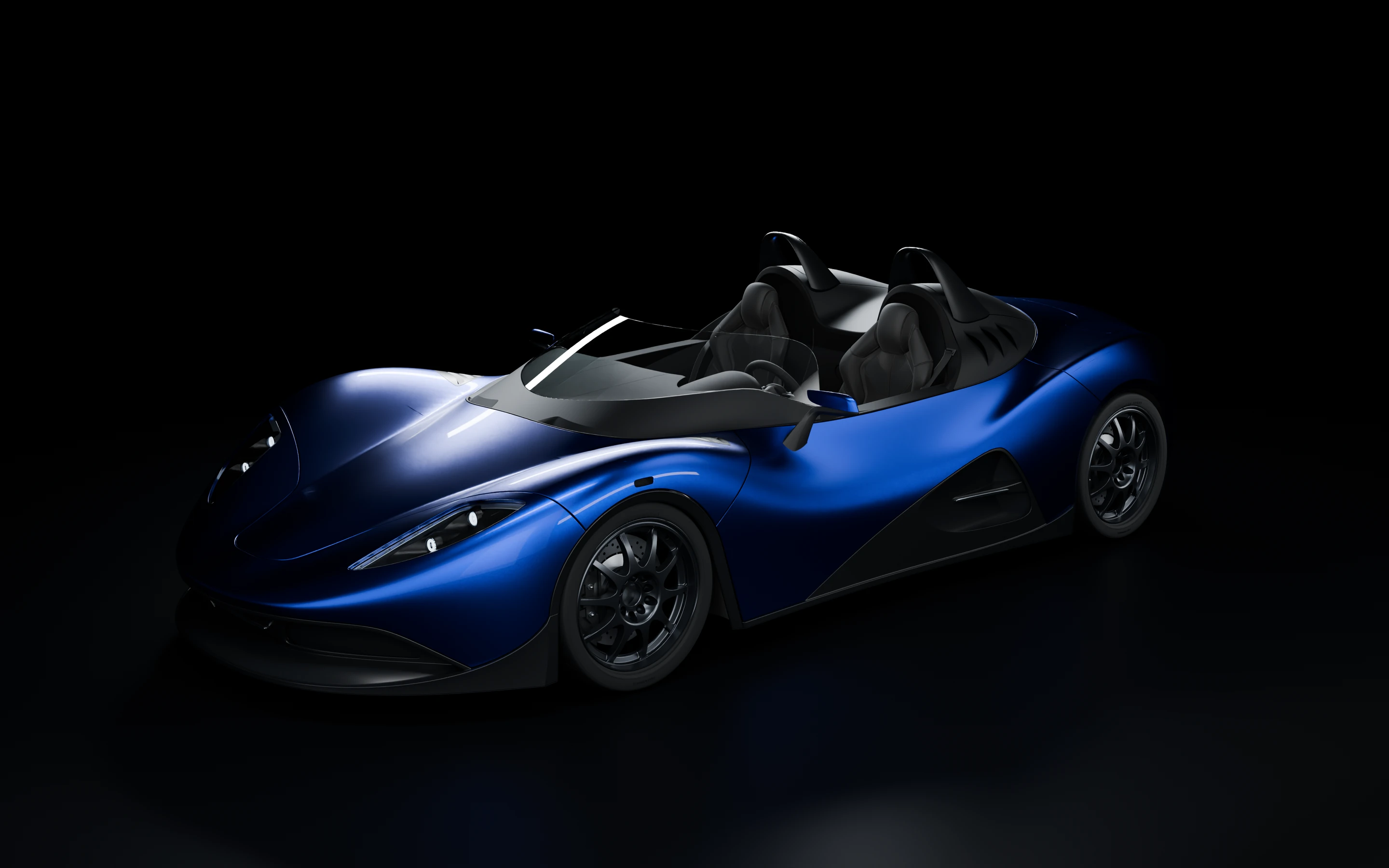
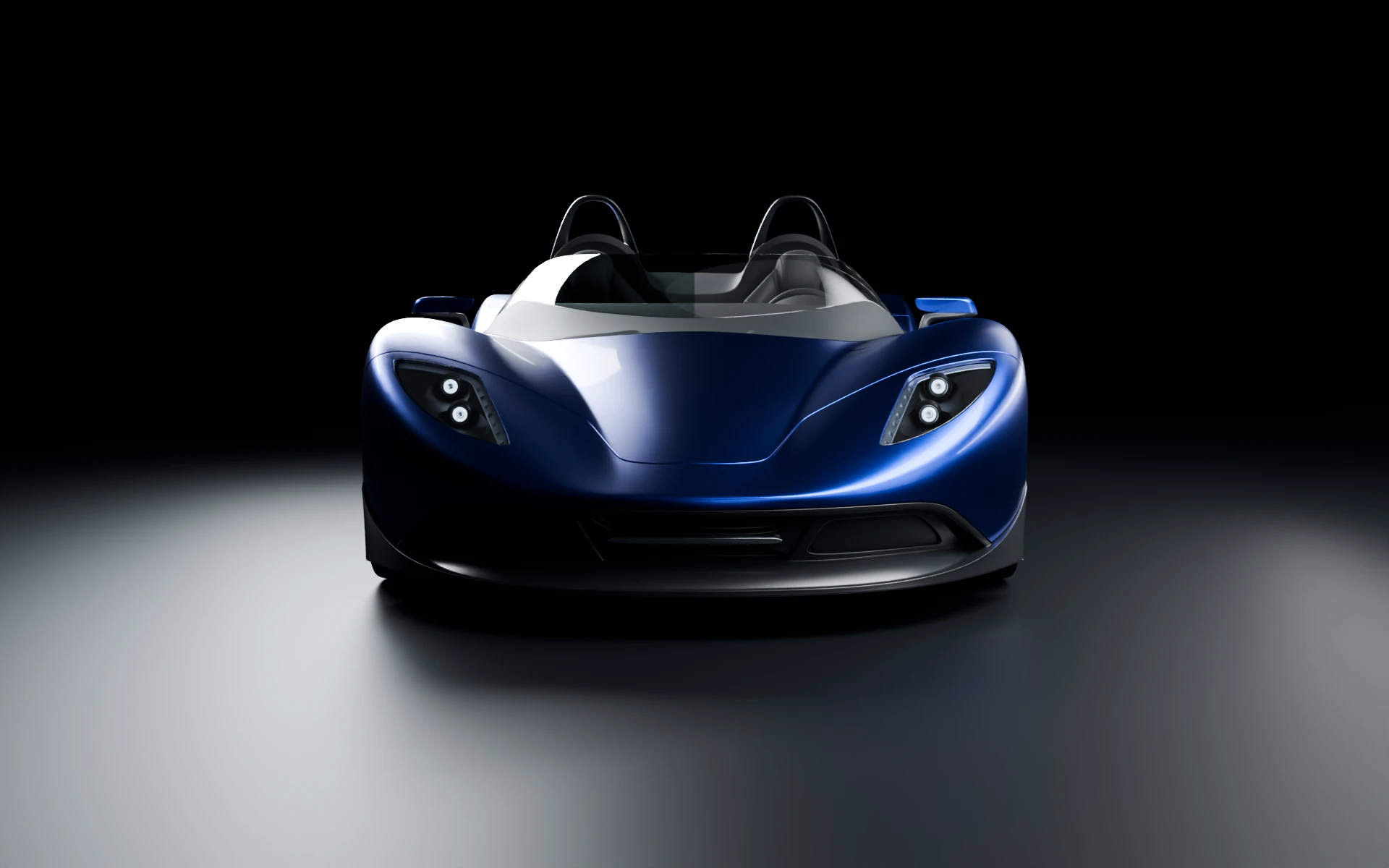
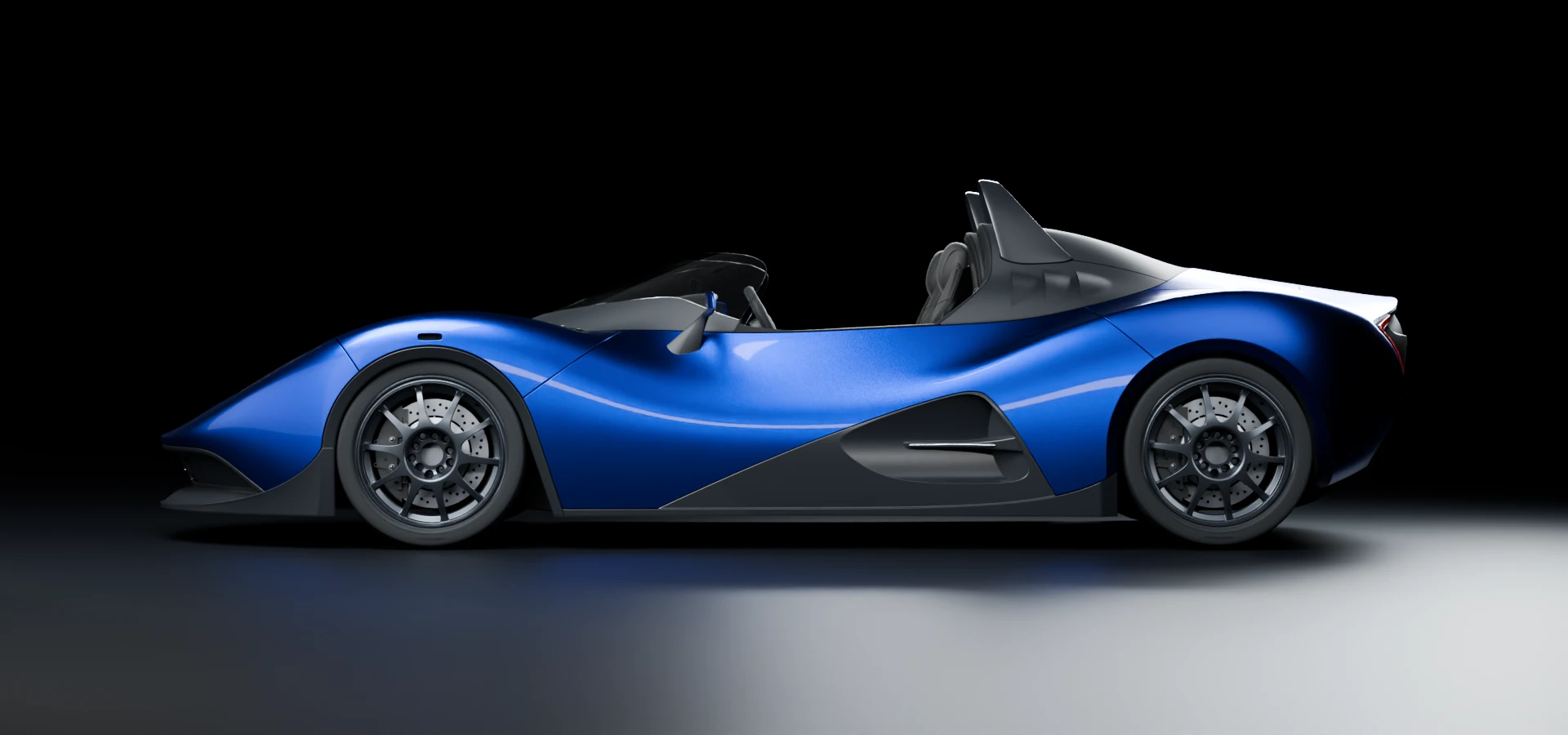
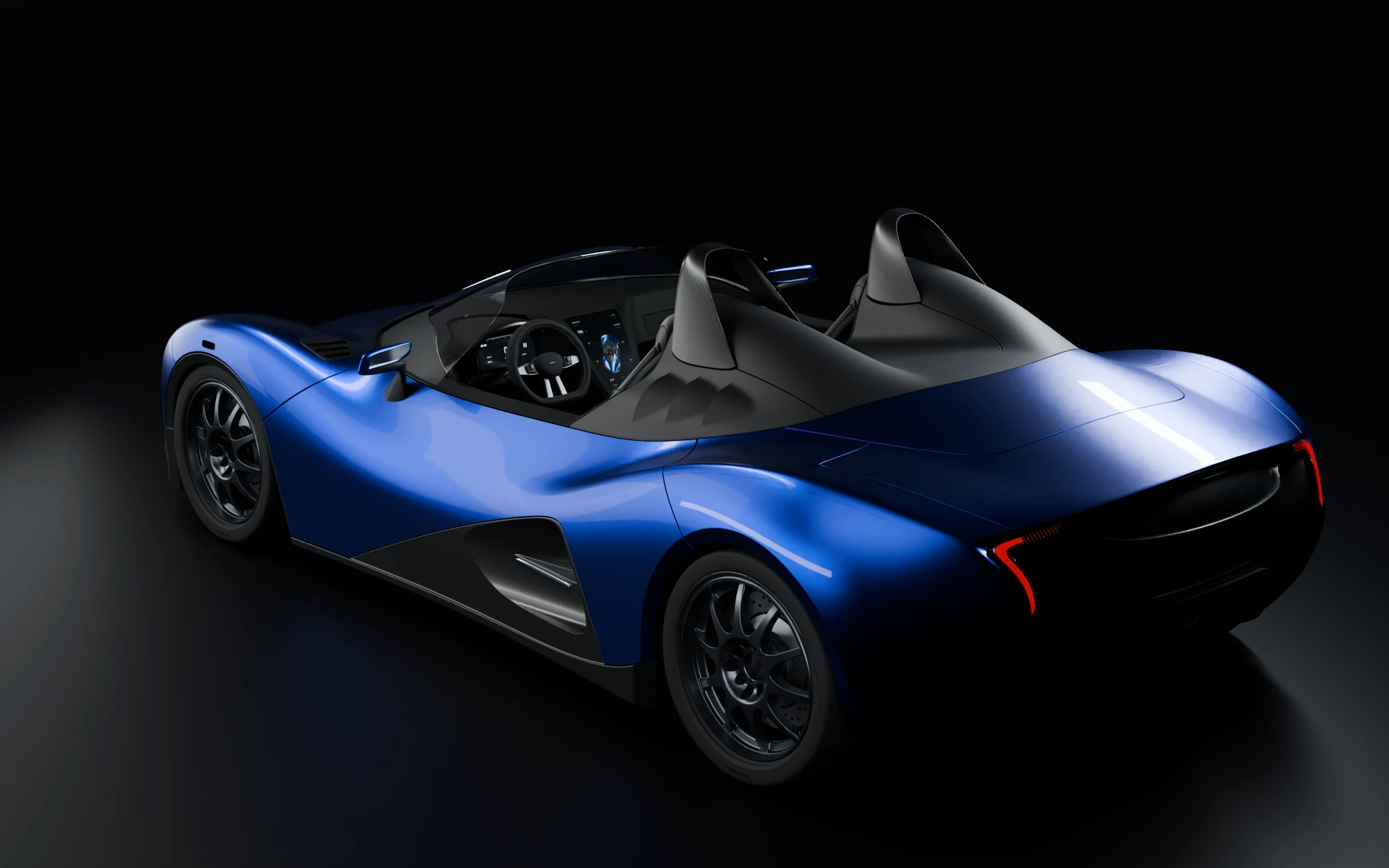
Draco is a sports car that draws on the 1960s races and pays attention to craftsmanship and details. I designed its body over a year with Adamastor’s engineering team, as one surface of glass and carbon fibre. The prototype was track tested.
- 21,479
- trimmed NURBS surfaces in the recovered model
- 29 M
- triangles in Blender, about
- 1 year
- of design with Adamastor’s engineering team
- 7
- paints, recoloured in the render
One surface, nose to tail.
The form attempts to make a car from a single surface, sculpted into a natural aerodynamic body.
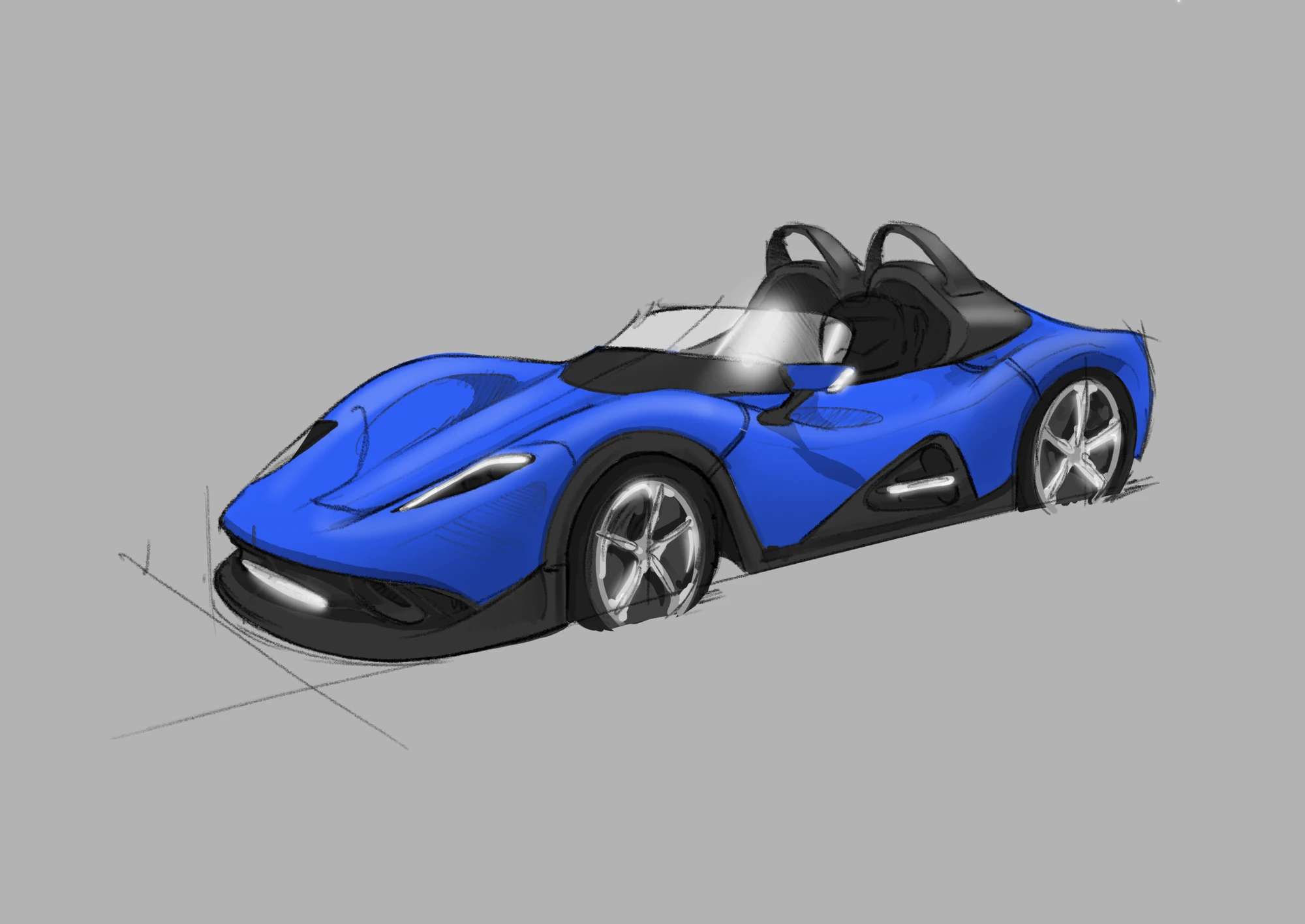
Illustration
Side elevation. Panels open.
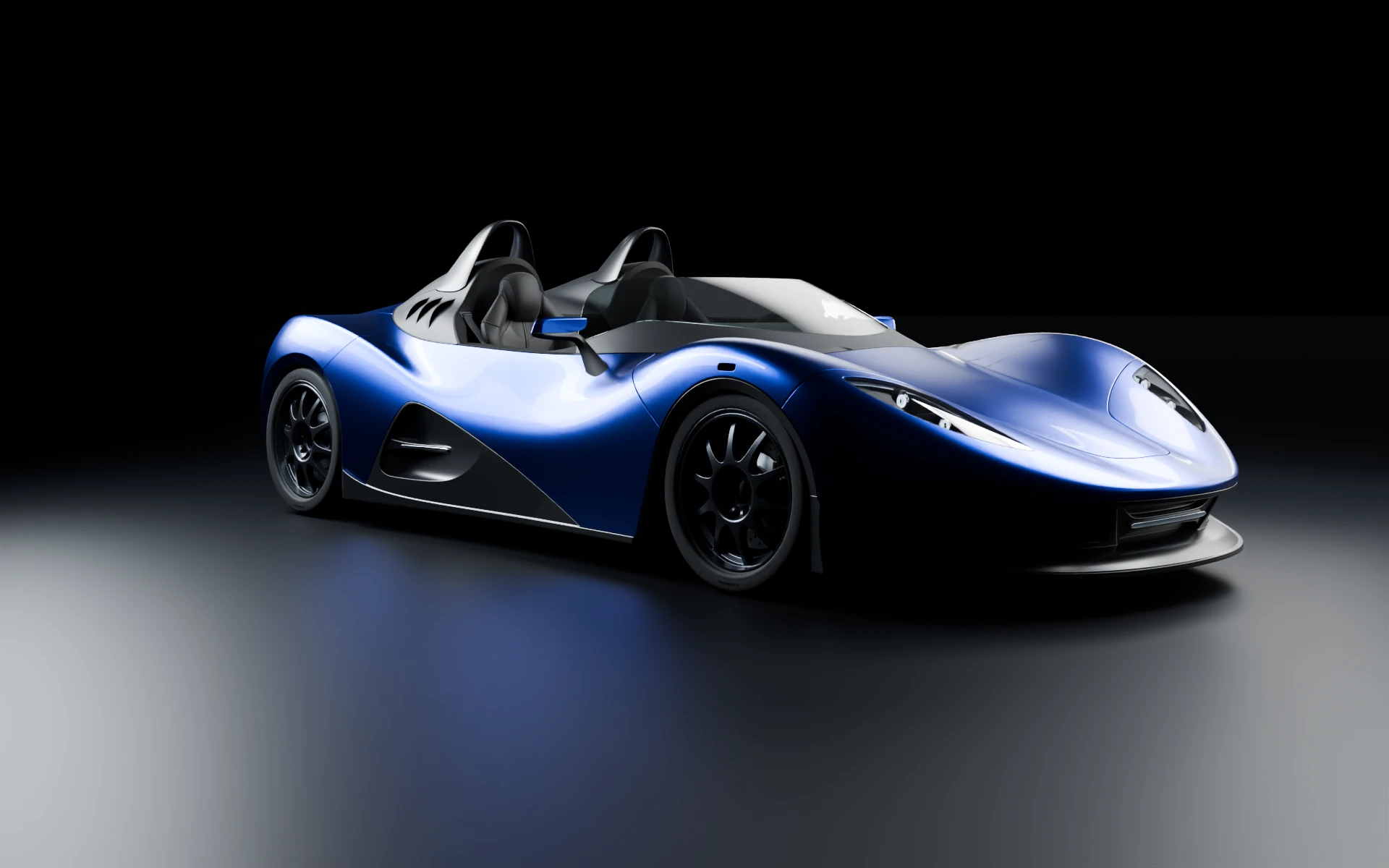
The original surface, unchanged
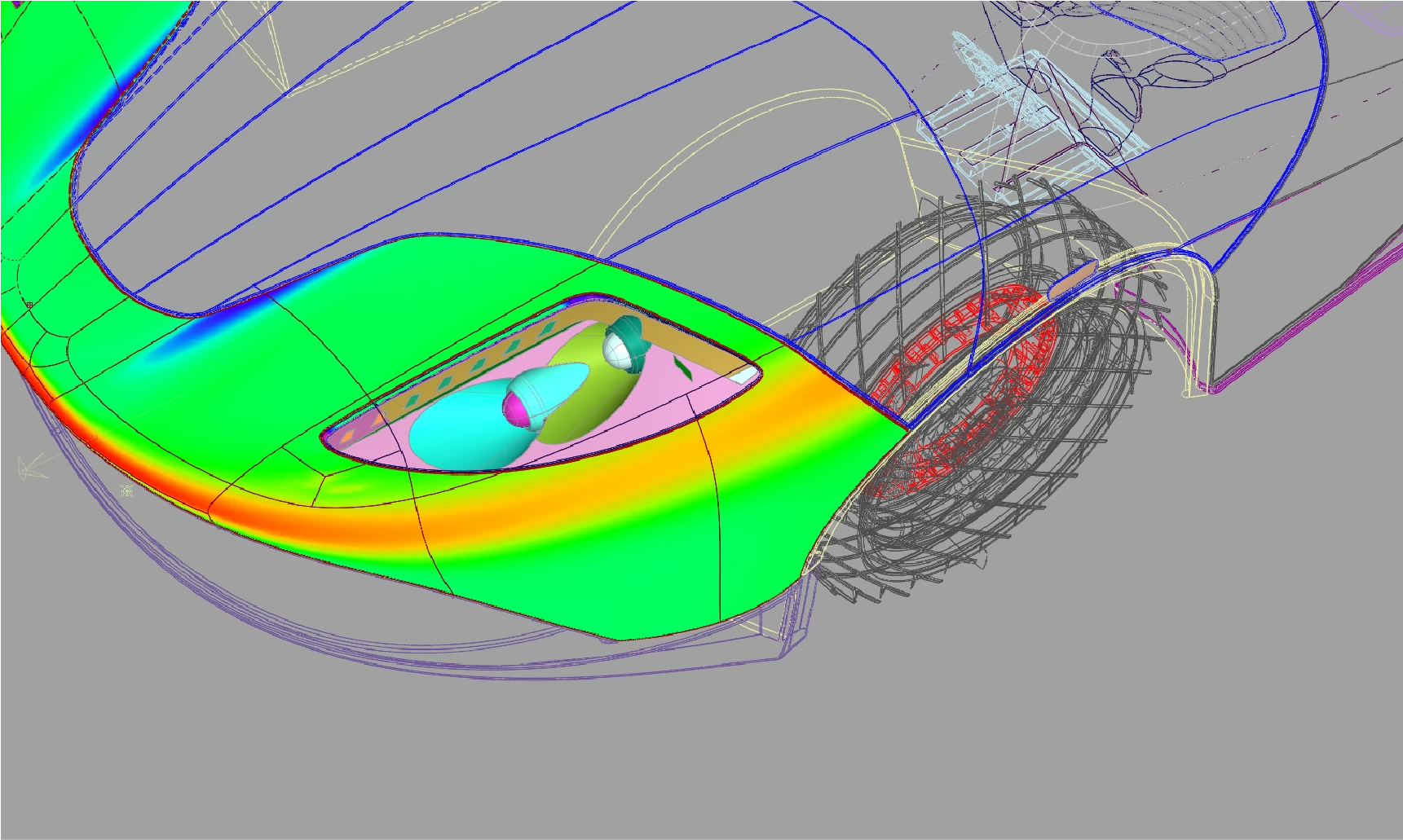
Curvature, checked. Front-light mount.
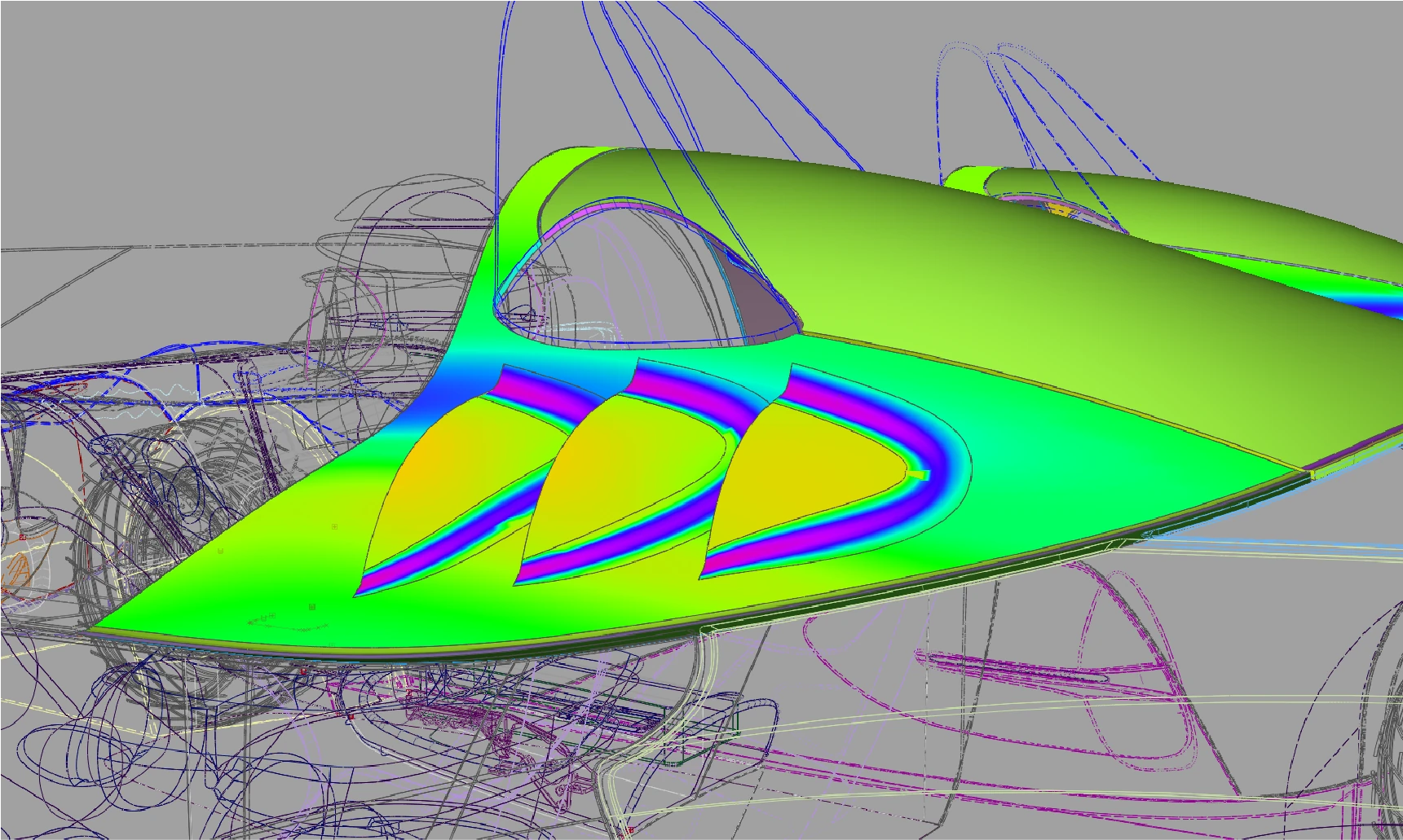
The air intake. Its curvature.
All the way round.
72 frames, every 5°, from the recovered model. Drag to turn it.
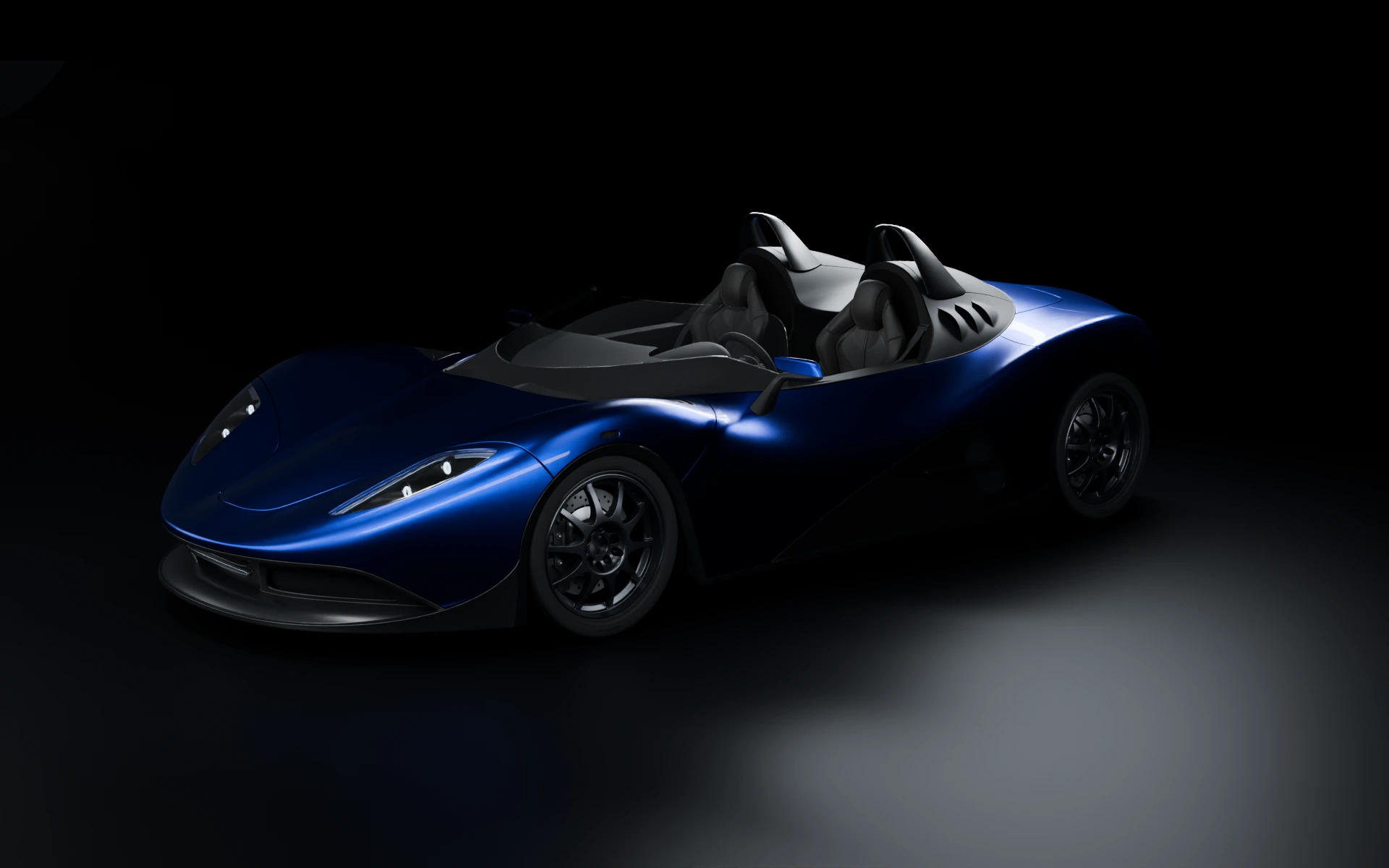
Loading Draco
Seven paints.
The same model under a fixed camera and light, recoloured in the render. None is a production colour.
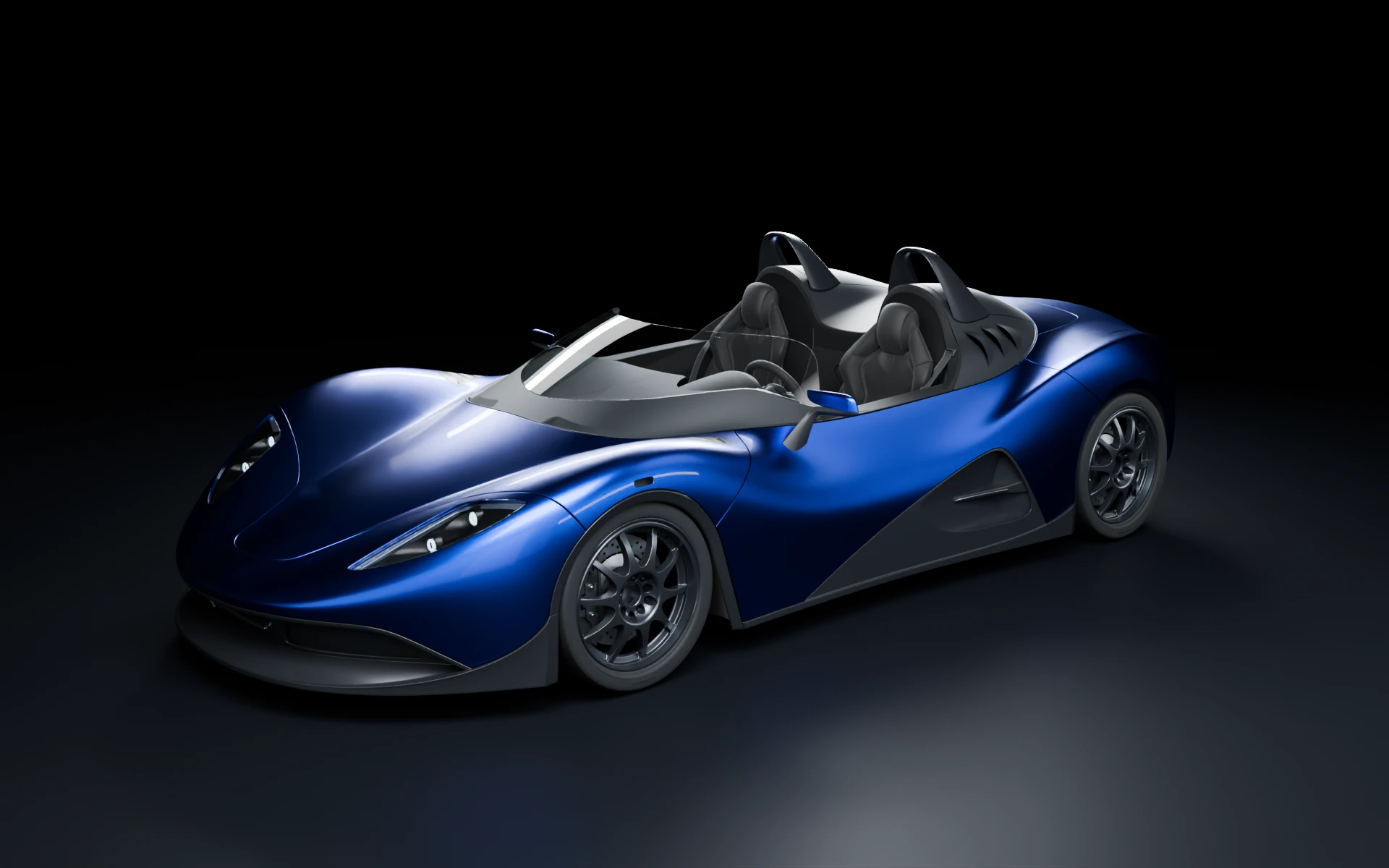
Built and track tested.
After this first proposition, which got track tested, Adamastor developed the product further.
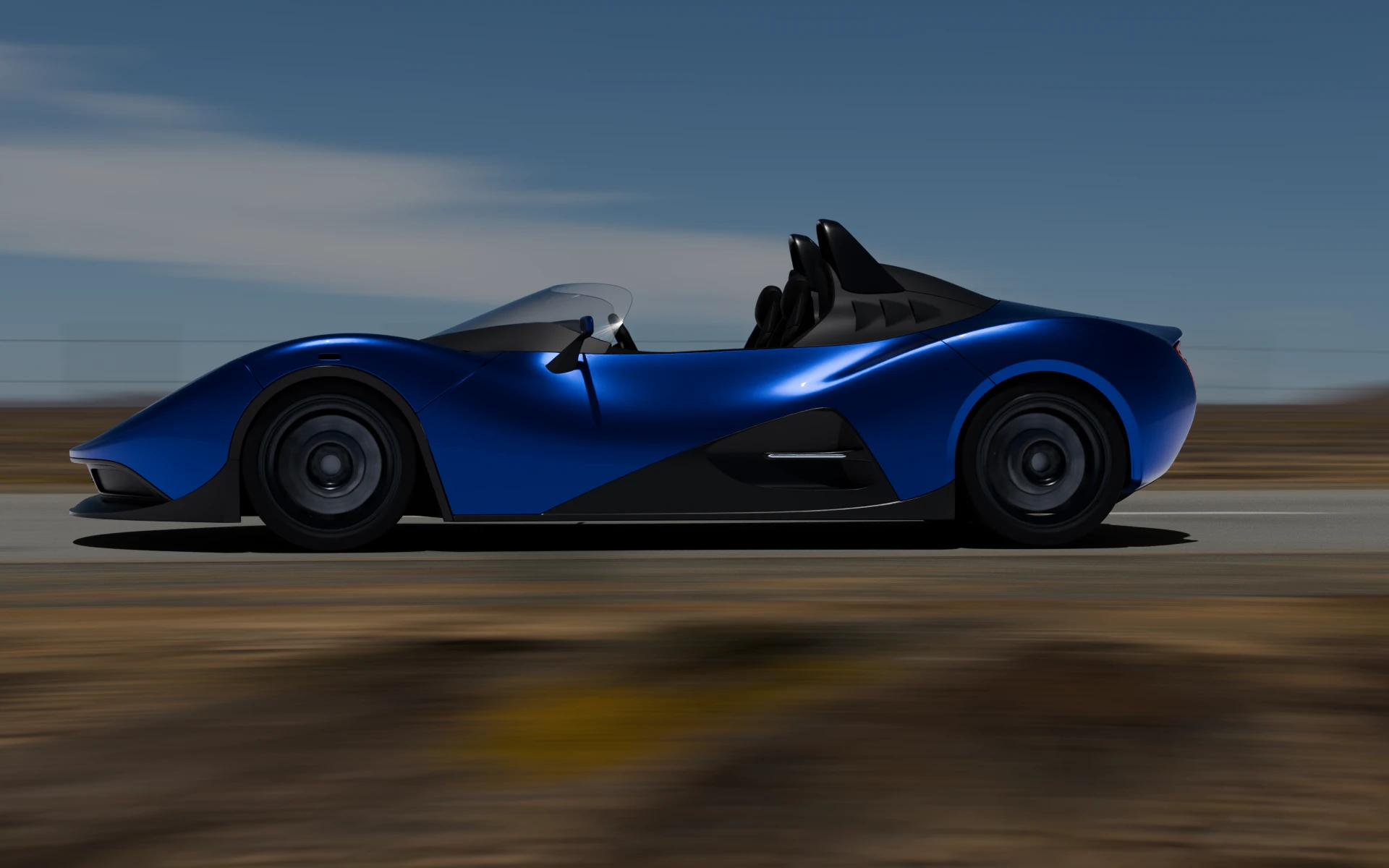
The open road. A 2026 render.
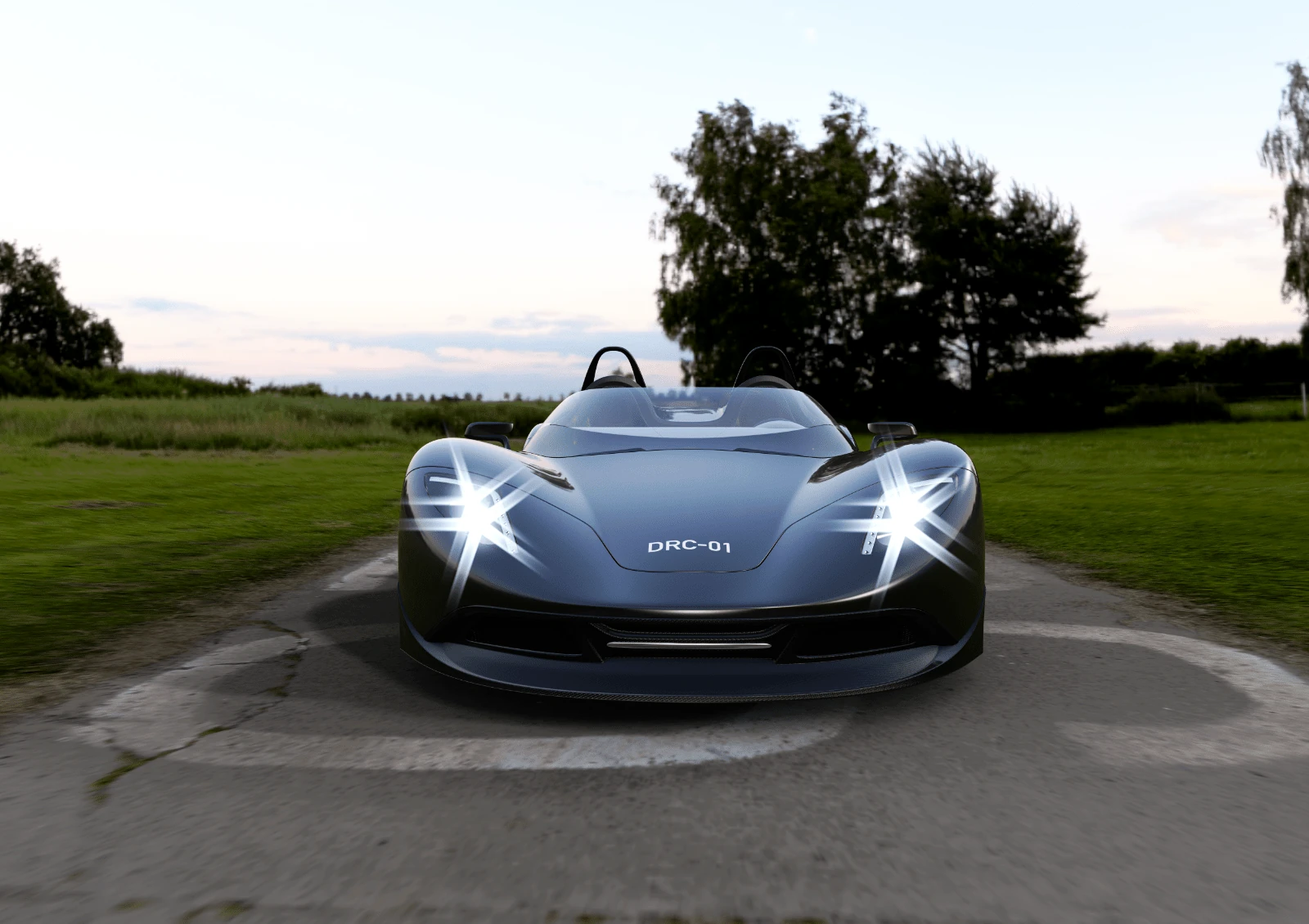
Head-on. A render.
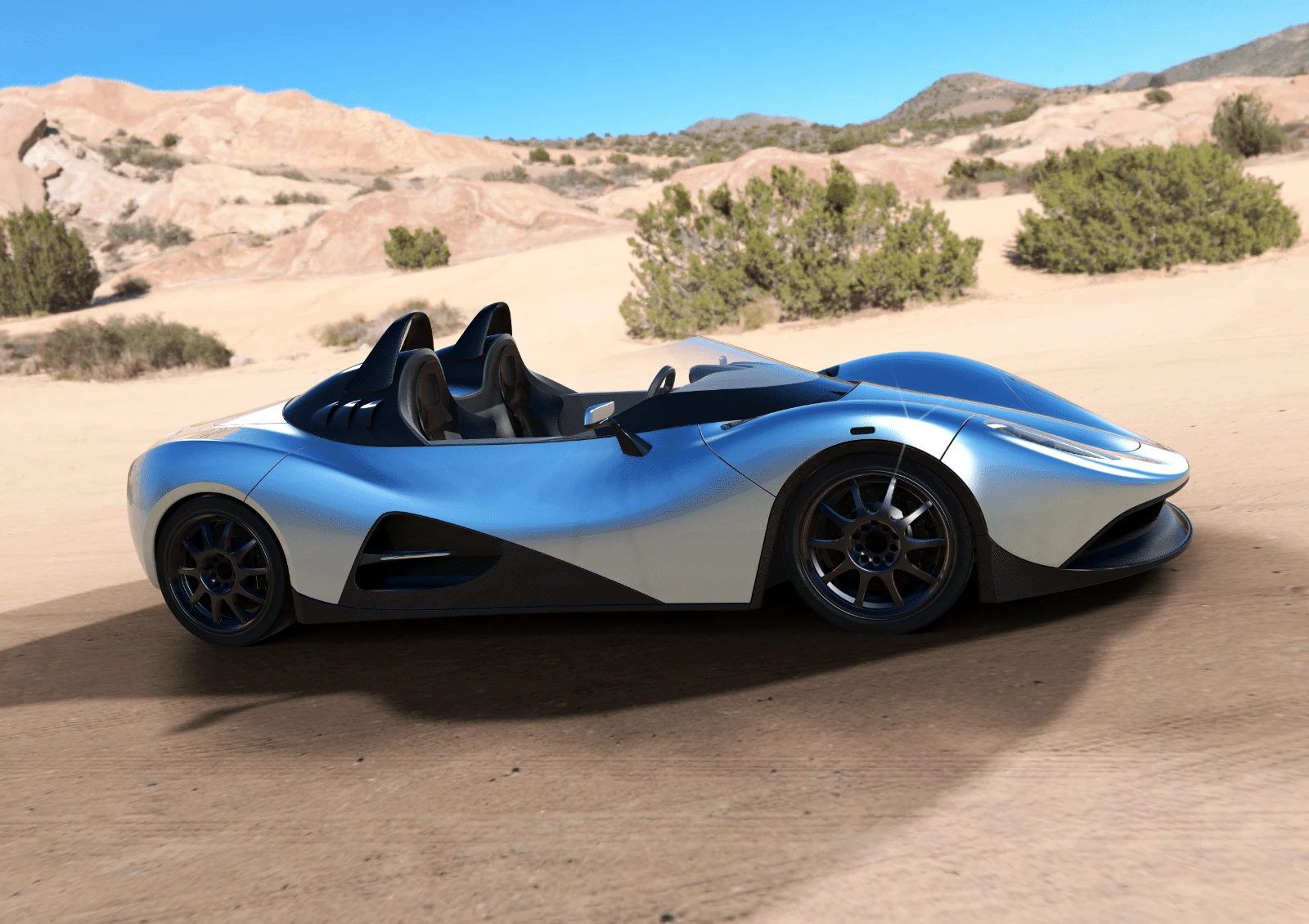
In the desert. A render.
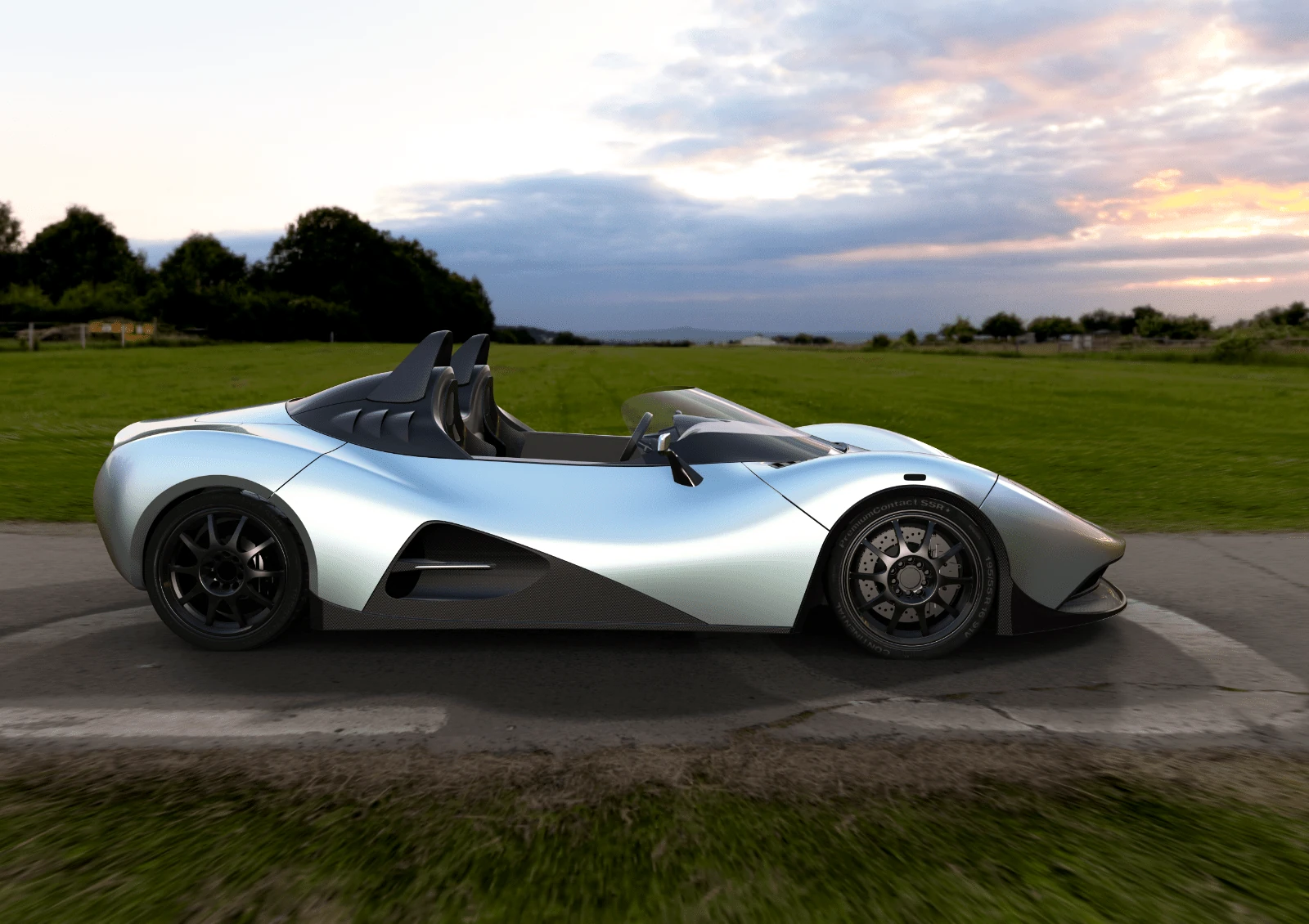
At dusk. A render.
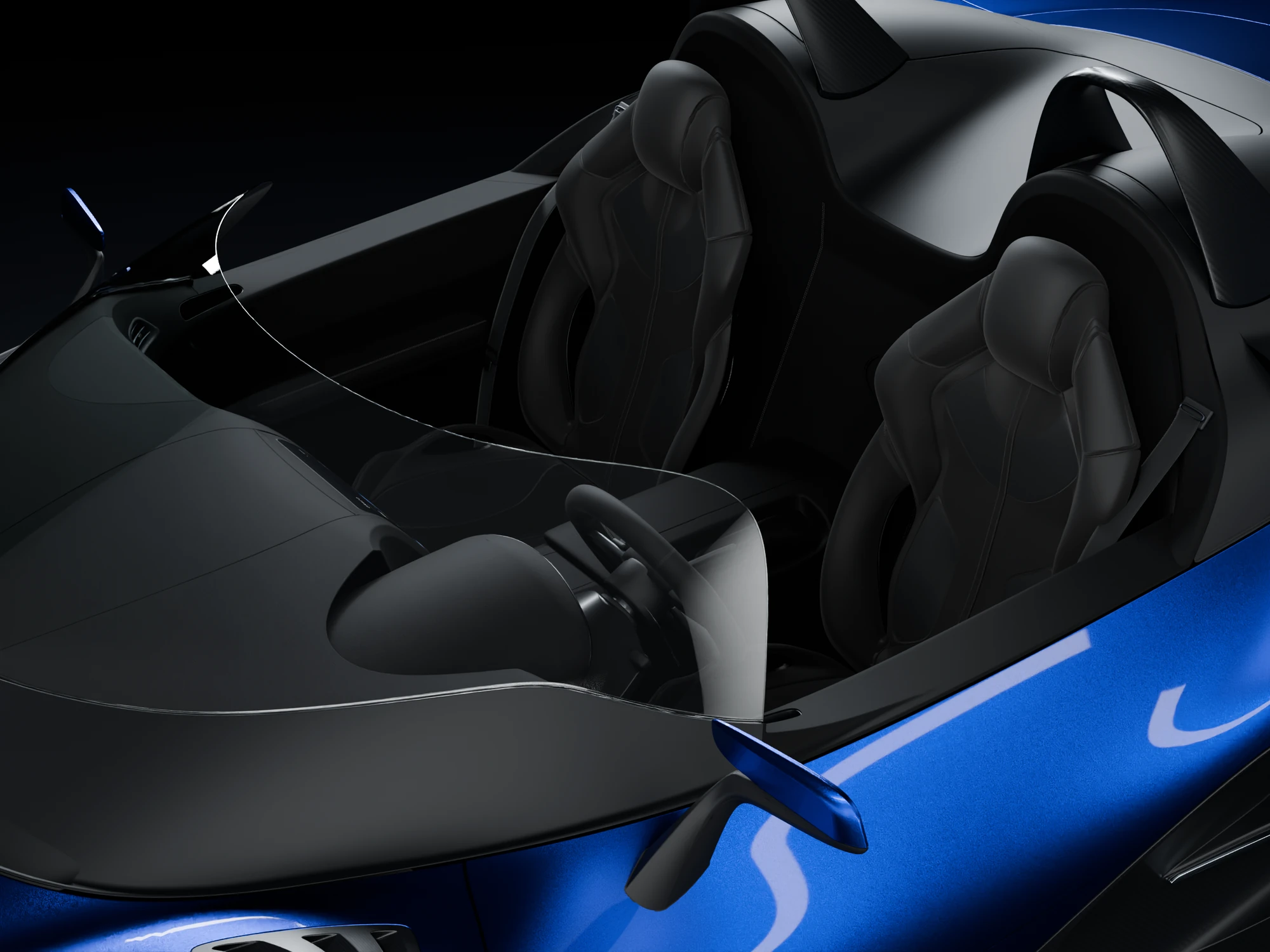
Inside the cockpit.
Sit in it and look around. The body around the cockpit is the recovered surface; the cockpit itself is new.
Loading the picture
Driver's seat
Drag to look around. Pinch, or hold Ctrl or Cmd and scroll, to zoom. Choose a part to turn to it.
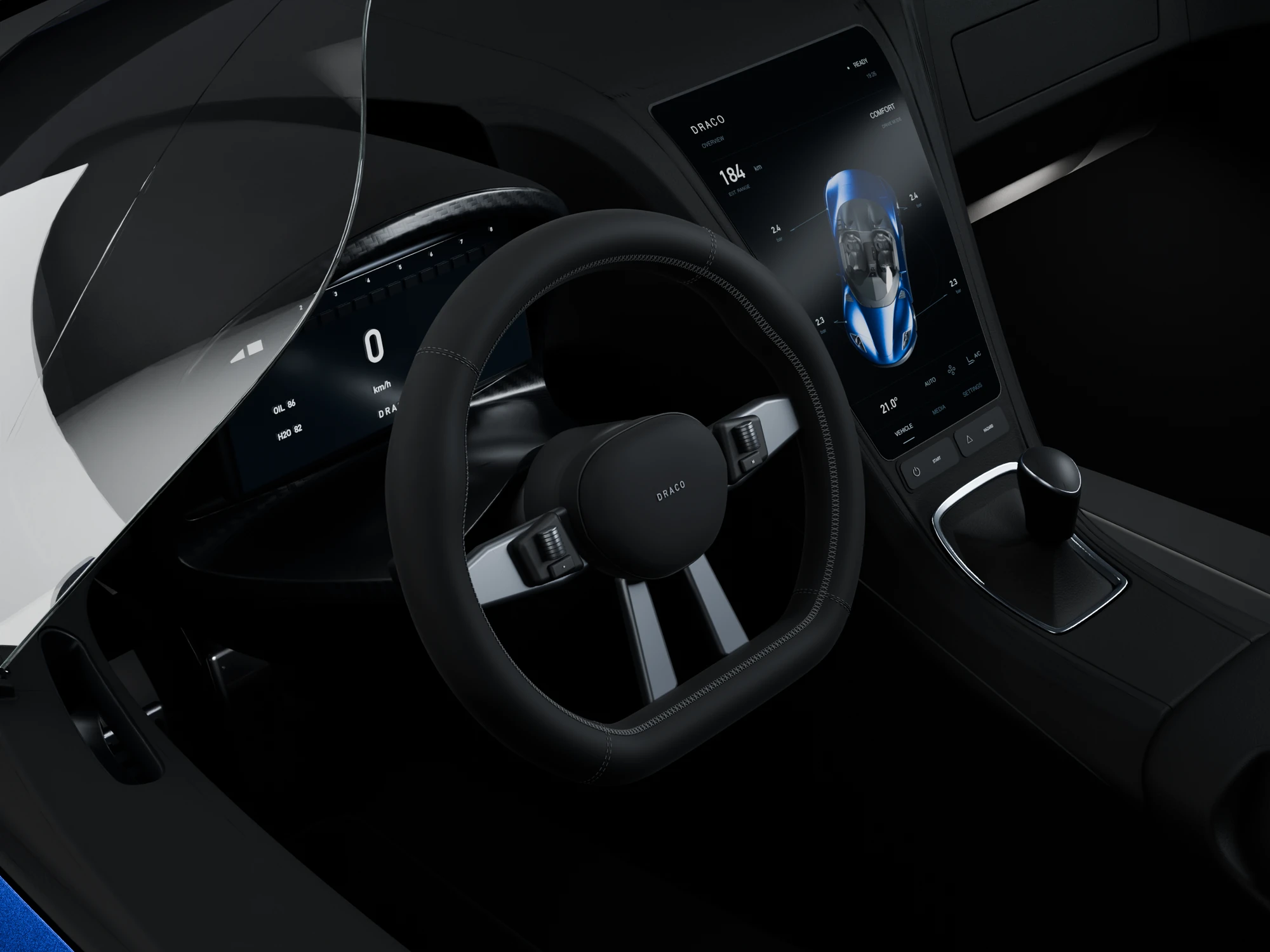
Wheel and instruments
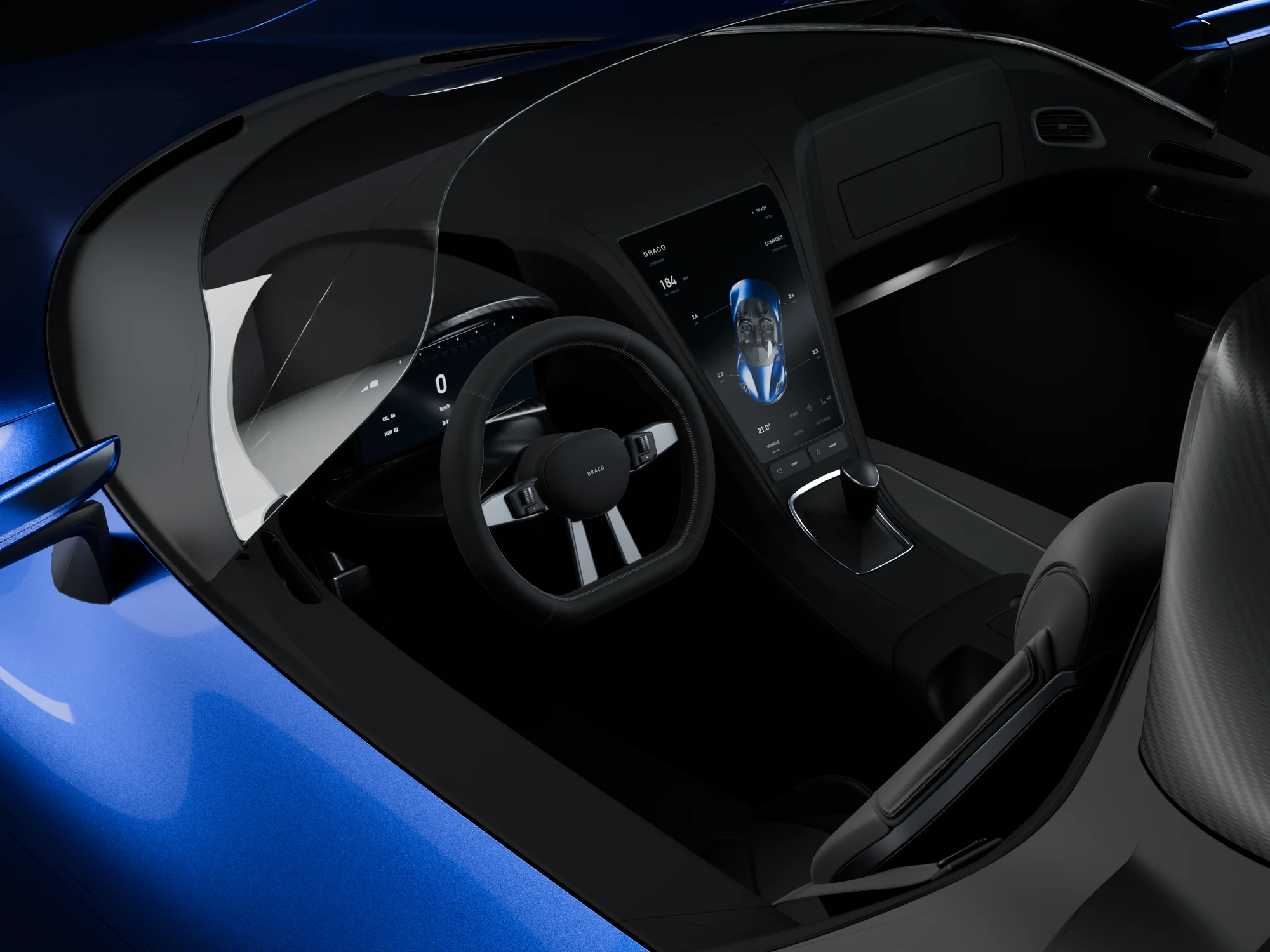
The console
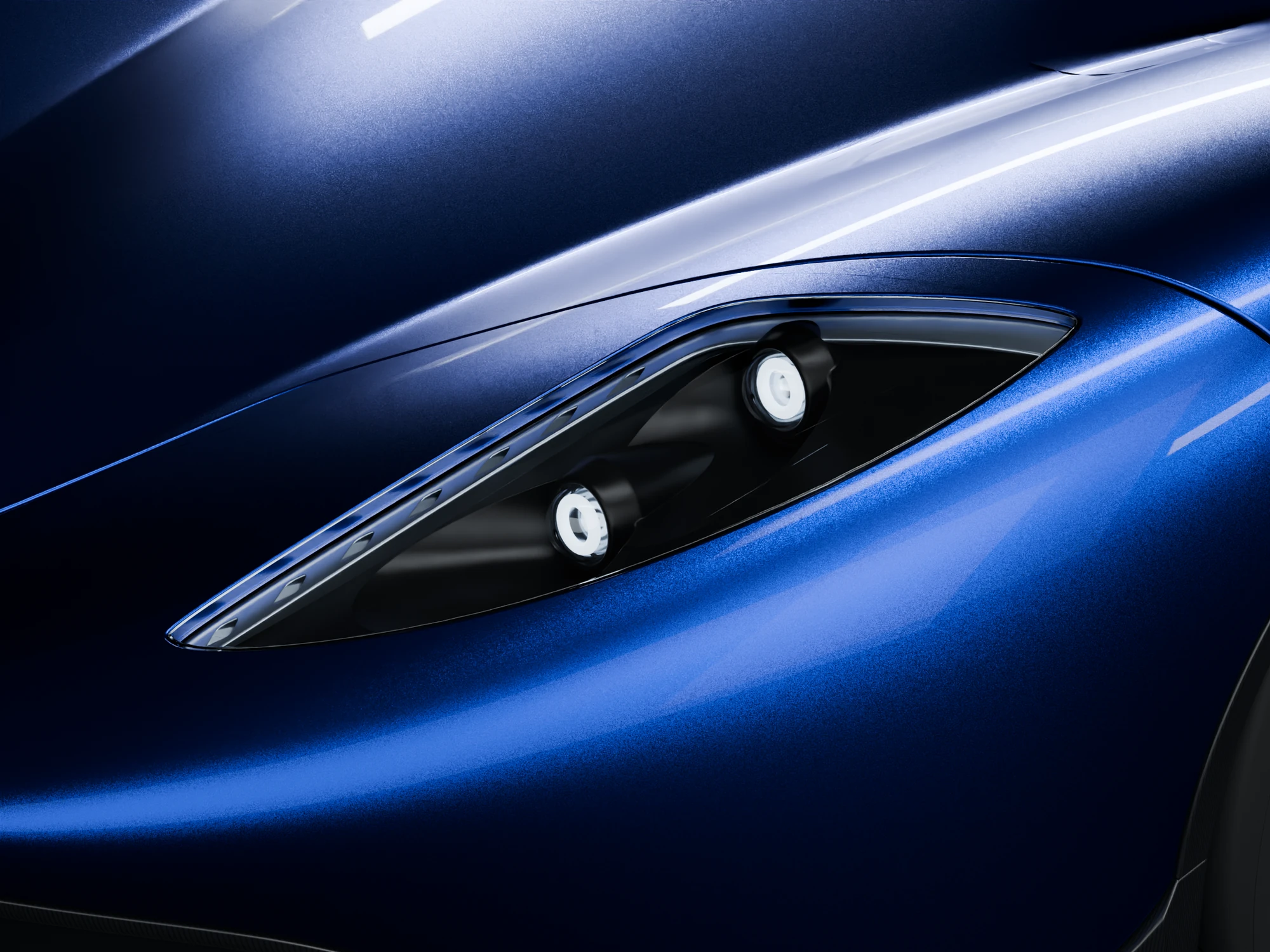
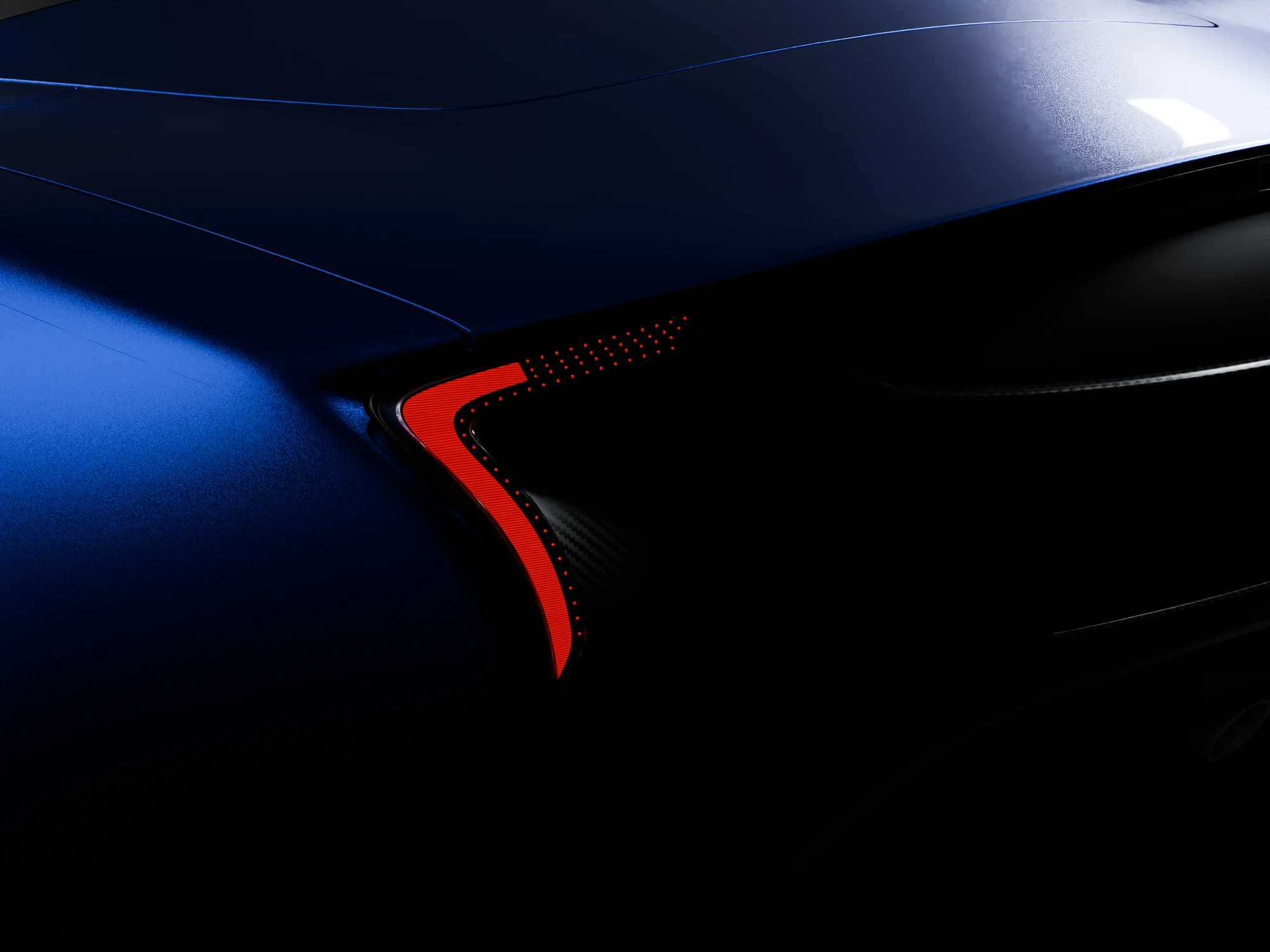
The front lamp
Race livery studies.
Drawn for these renders with made-up numbers.
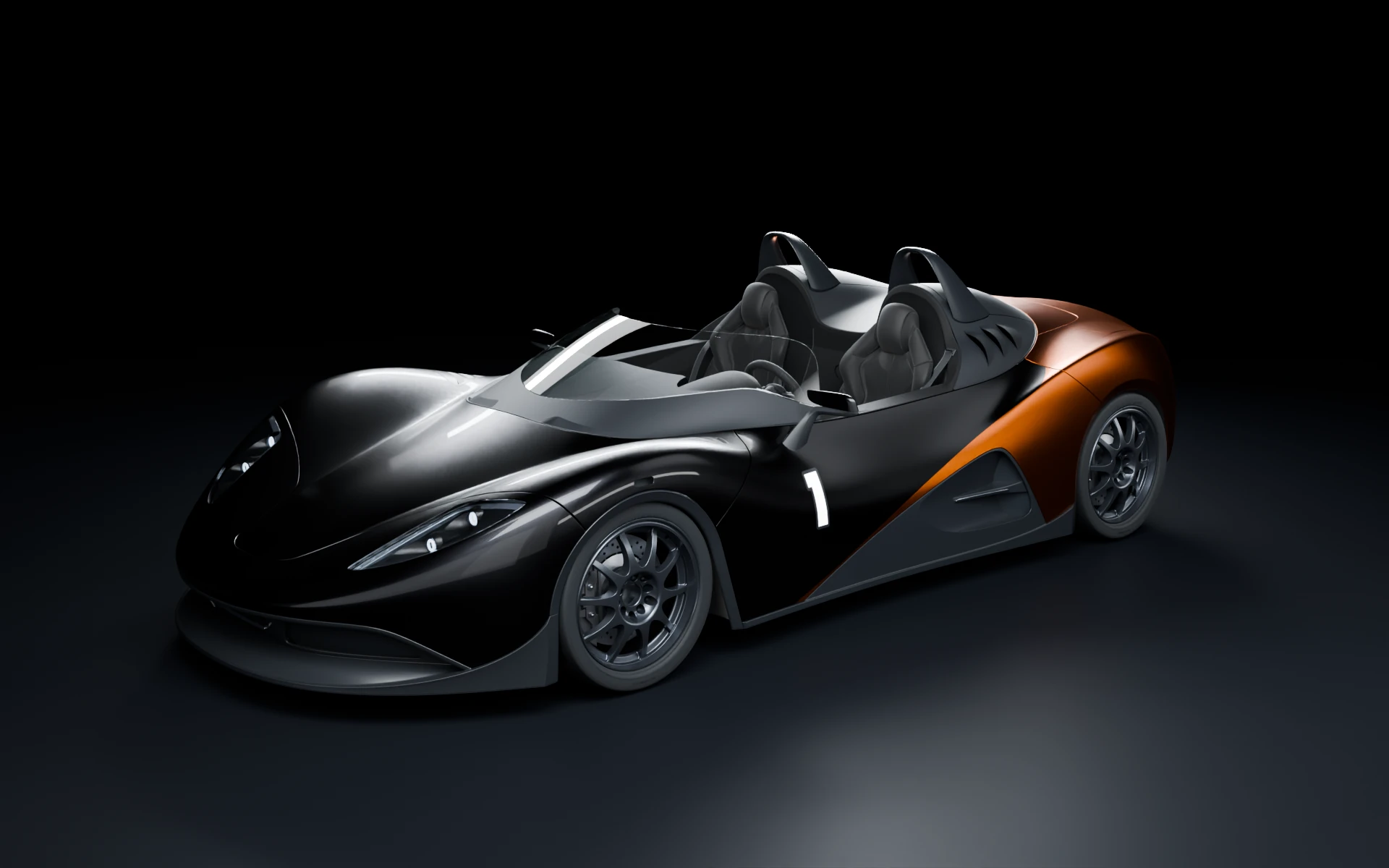
No. 1, black and orange
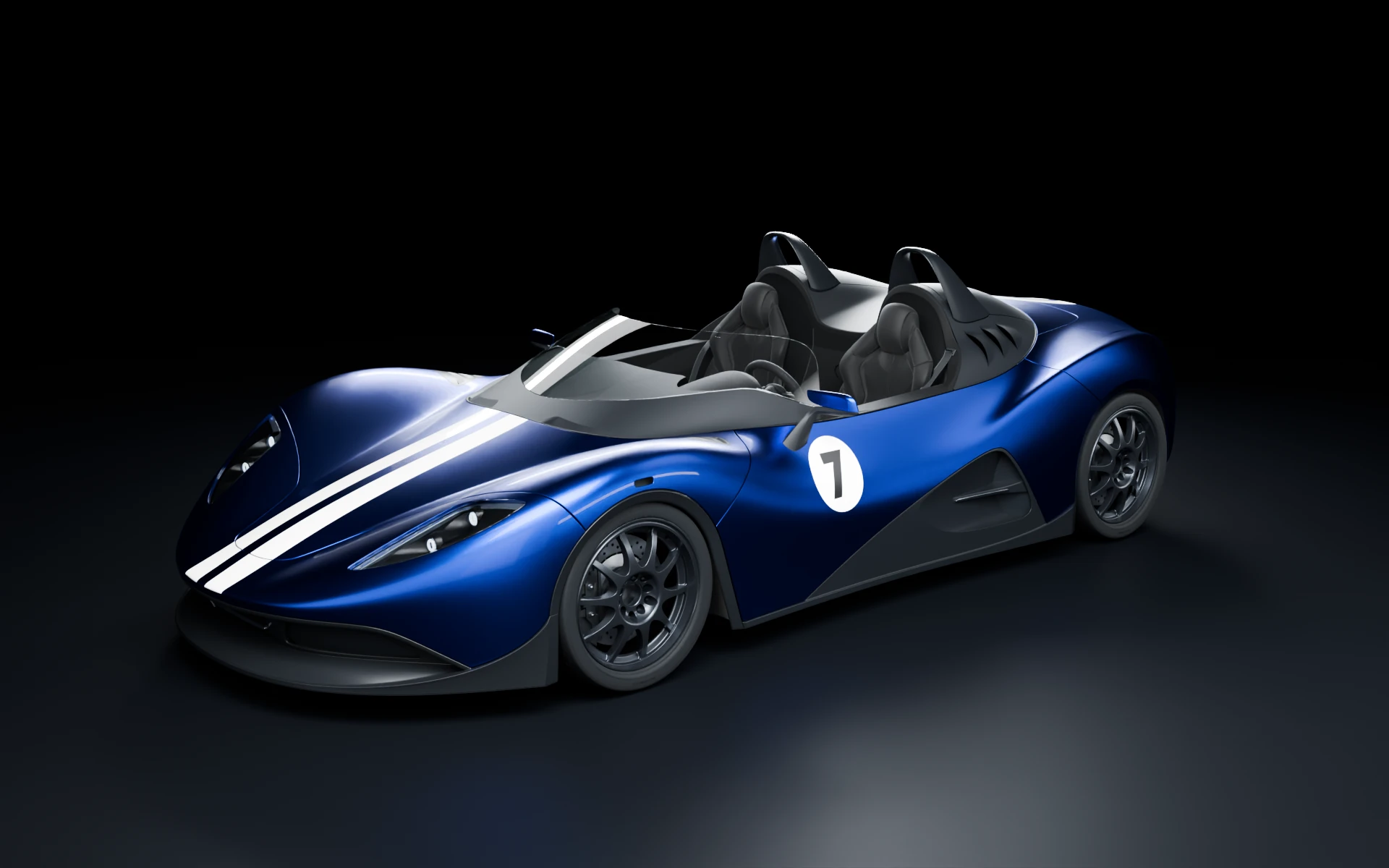
No. 7, cobalt
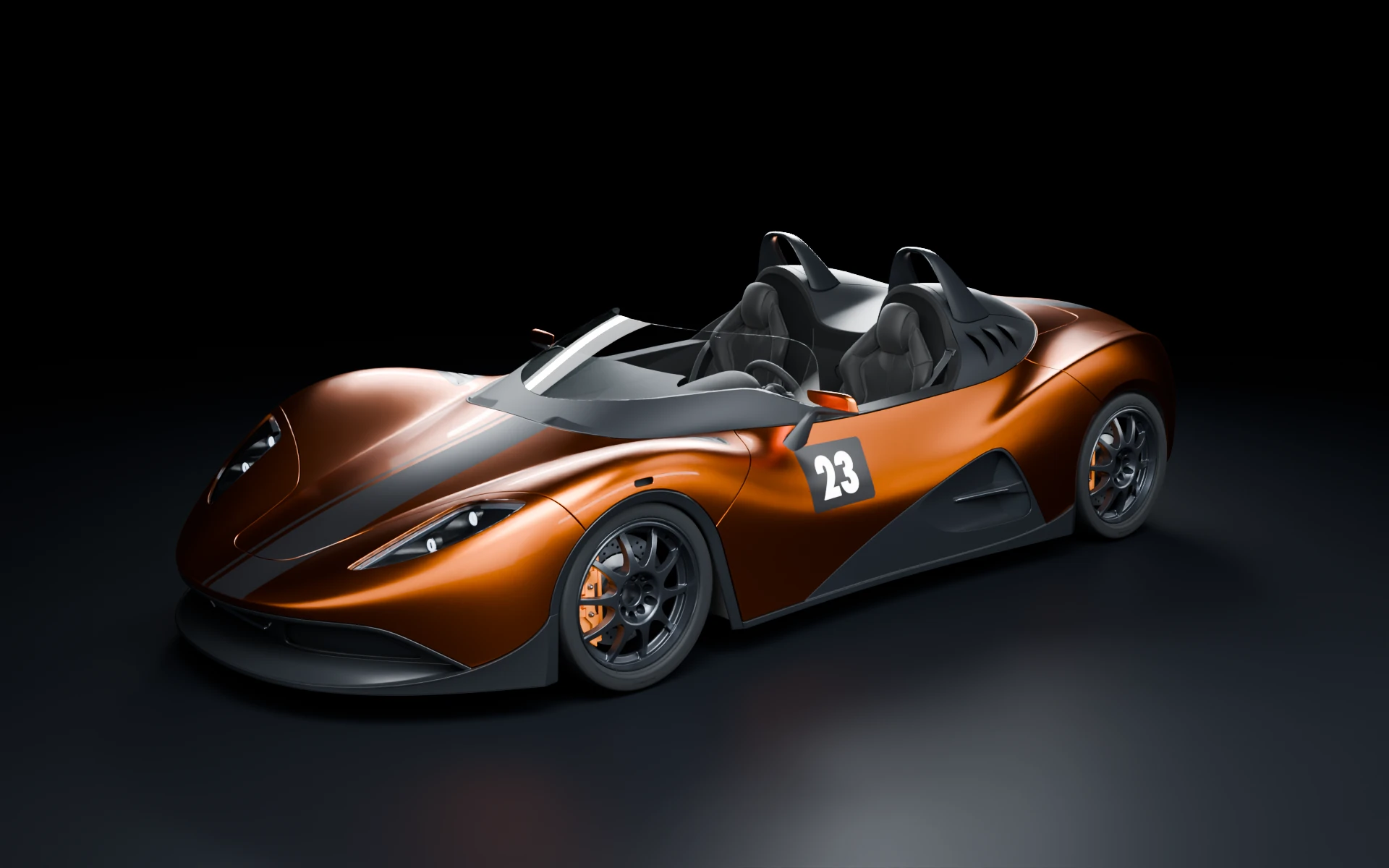
No. 23, orange
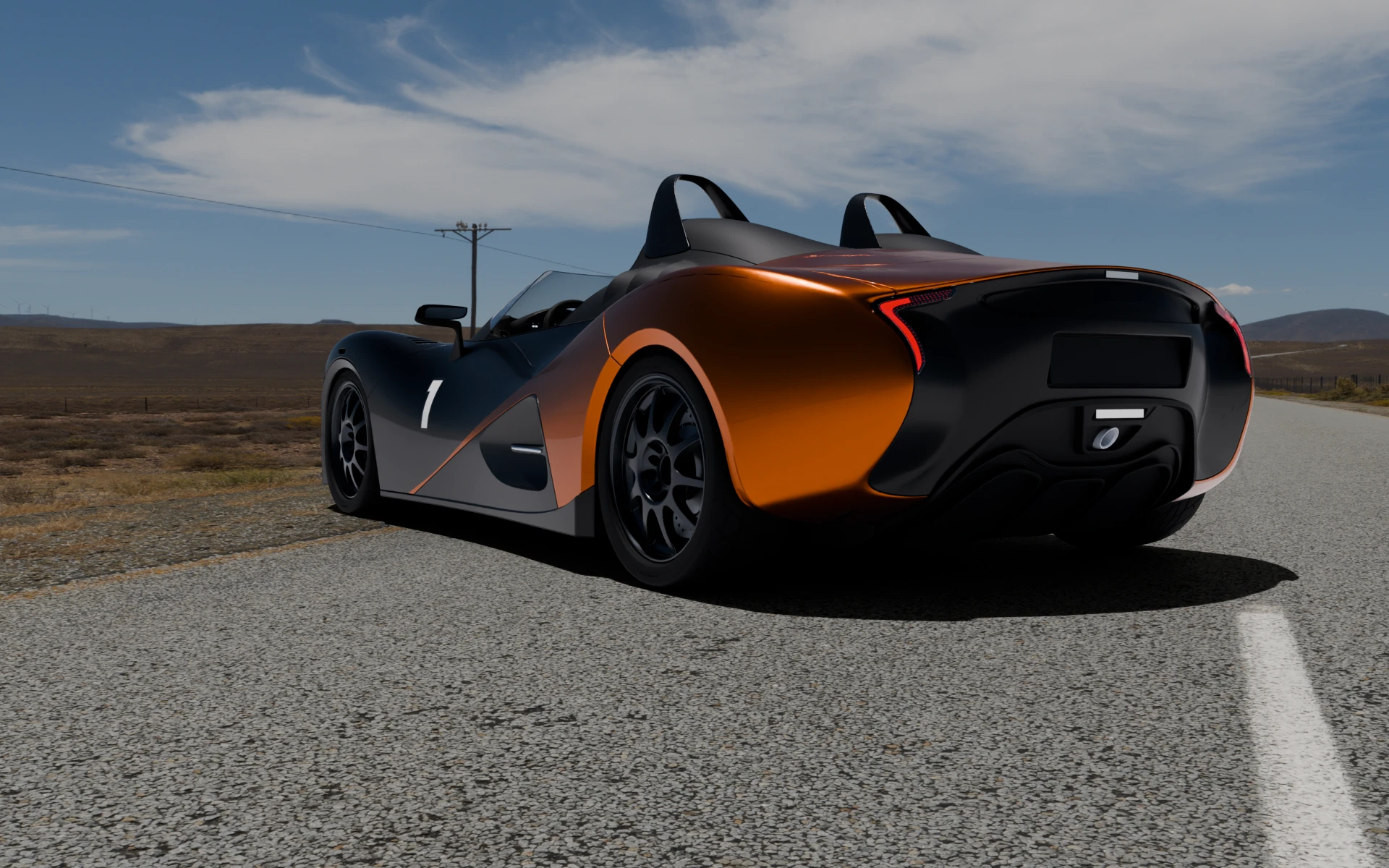
No. 1, on the road
Specifications
The car
- Year
- 2012–2015
- Body
- Glass and carbon fibre
- Prototype
- Track tested
The model, 2026
- Surfaces
- 21,479 trimmed NURBS surfaces
- Triangles
- About 29 million
- Mirror supports
- Original, with a 4 mm fillet
- Source
- VRED export of the original CAD model
How it was made
The design, the recovery of the original model and what happened next, at reading width.
Read the full study
The design

The shape came out of a year-long design process in collaboration with the Adamastor engineering team.
The form of Draco's design attempts to create an automobile from a single surface; this way, it is sculpted out into a natural aerodynamic body of glass and carbon fiber.
With a growing mass market of vehicles that take their drivers from point A to B, Draco is a car for the adventure of racing.
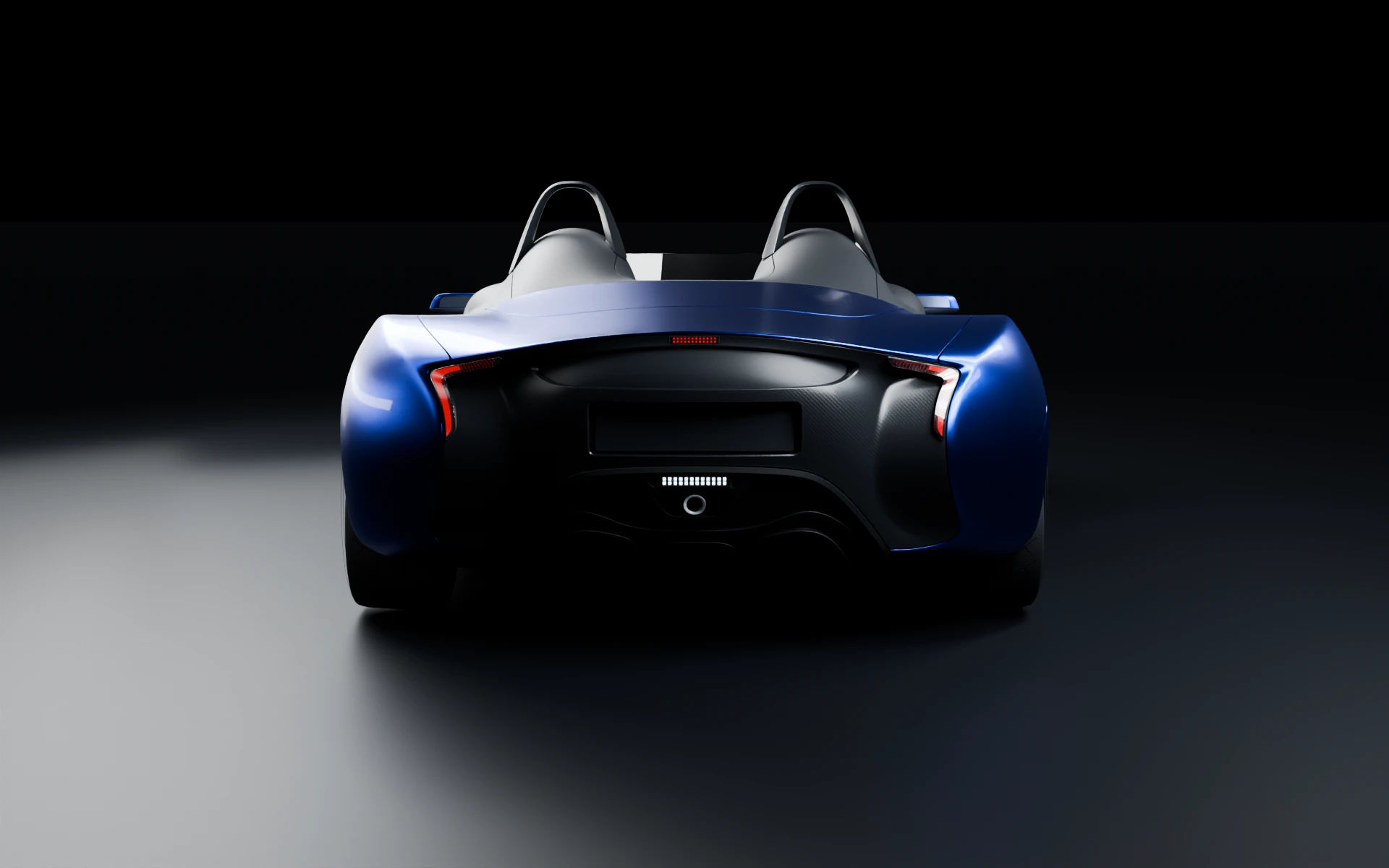
The model, rebuilt in 2026
The original CAD model survived as a VRED export. In 2026 I brought it back into Blender: 21,479 trimmed NURBS surfaces, converted to about 29 million triangles. The body in these renders is that original surface, unchanged. The mirror supports are the original ones too, with a 4 mm fillet where they meet the body.
I rebuilt the model in Blender in 2026 with two AI agents, Claude and Codex, which wrote the scripts. I checked every render against the original surface.
The cockpit is new. The seats are the Sport Seat PL model by Pierre-Louis Baril, from BlenderKit, fitted to the recovered cockpit; the steering wheel, the console and the screen were drawn for these renders. The screen shows a static design, not a working interface.
What happened next
After this first proposition, which got track tested, the company Adamastor developed the product further and eventually achieved new iterations of the design.
- Year
- 2012–2015
- Field
- Automotive
- Role
- Exterior design
- With
- Adamastor