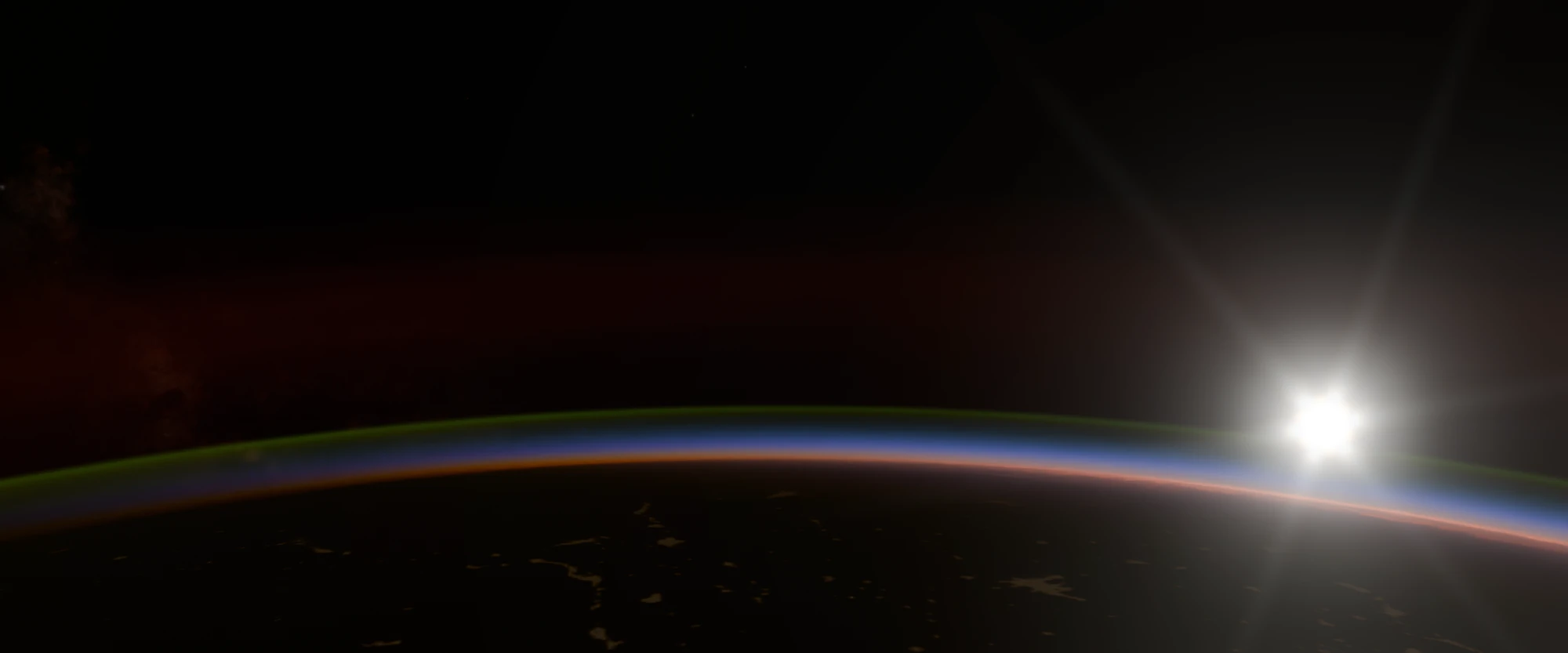
StarKnight
One of five winners of ESA’s 2023 spacesuit competition.
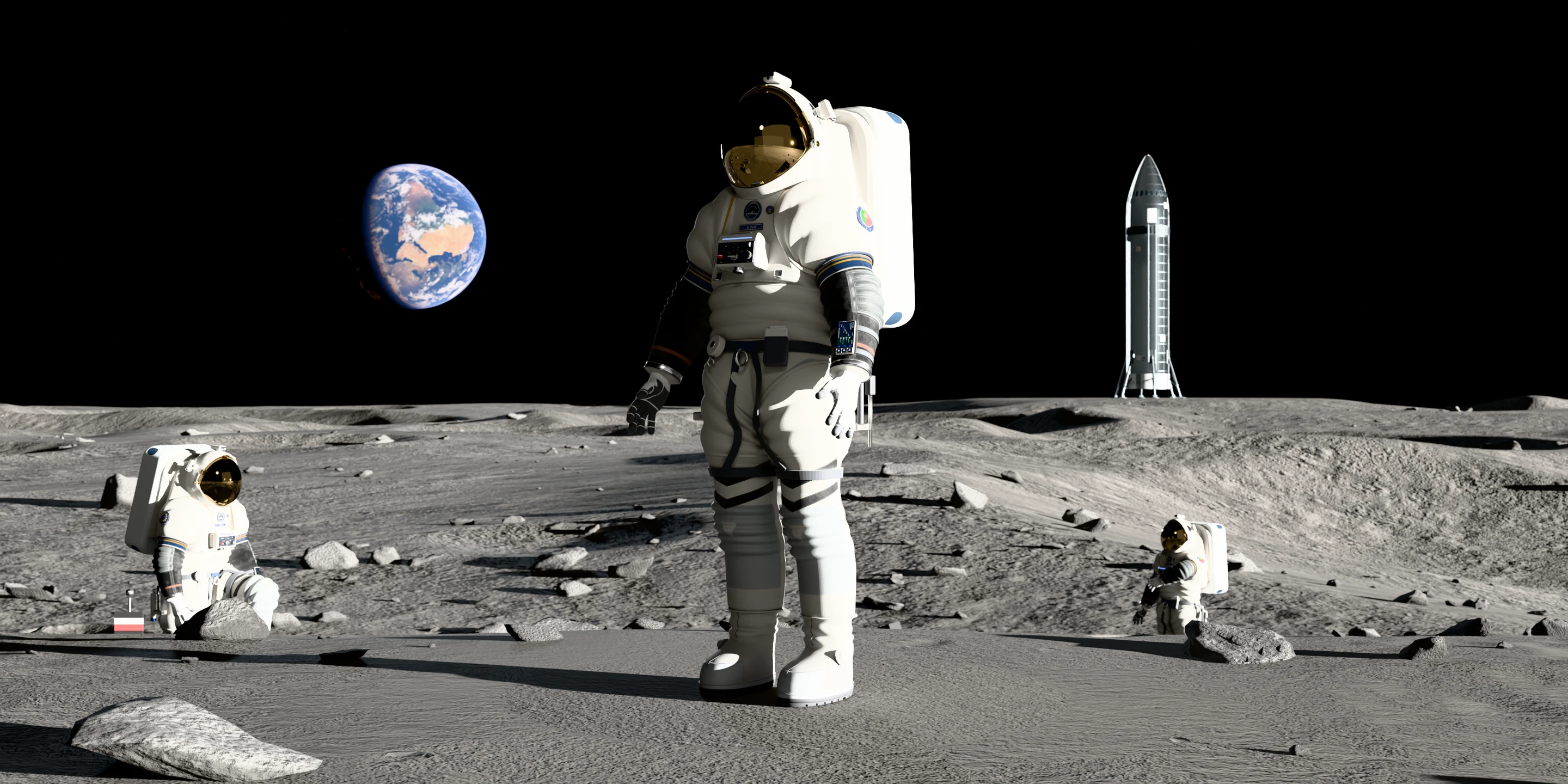
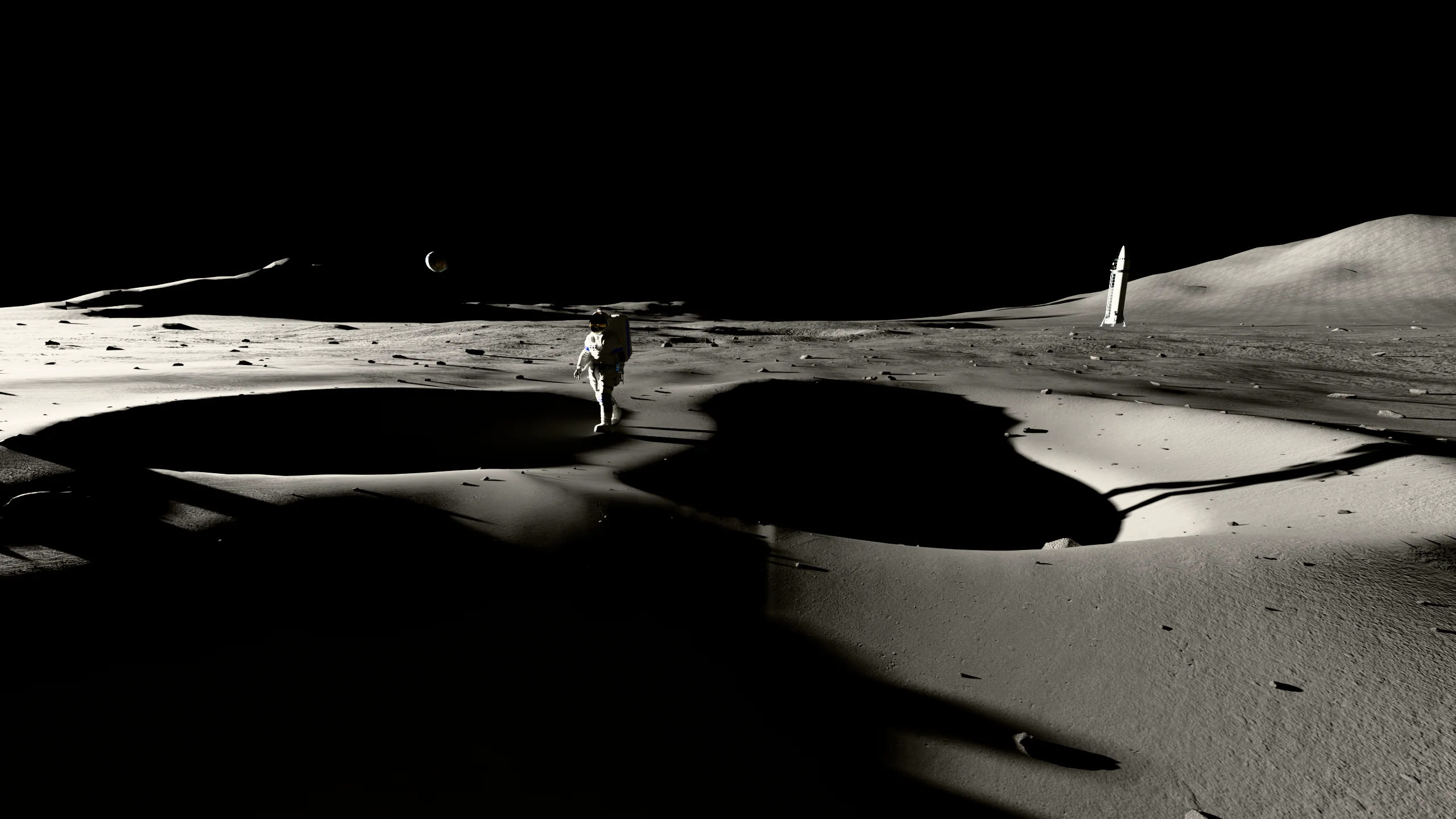
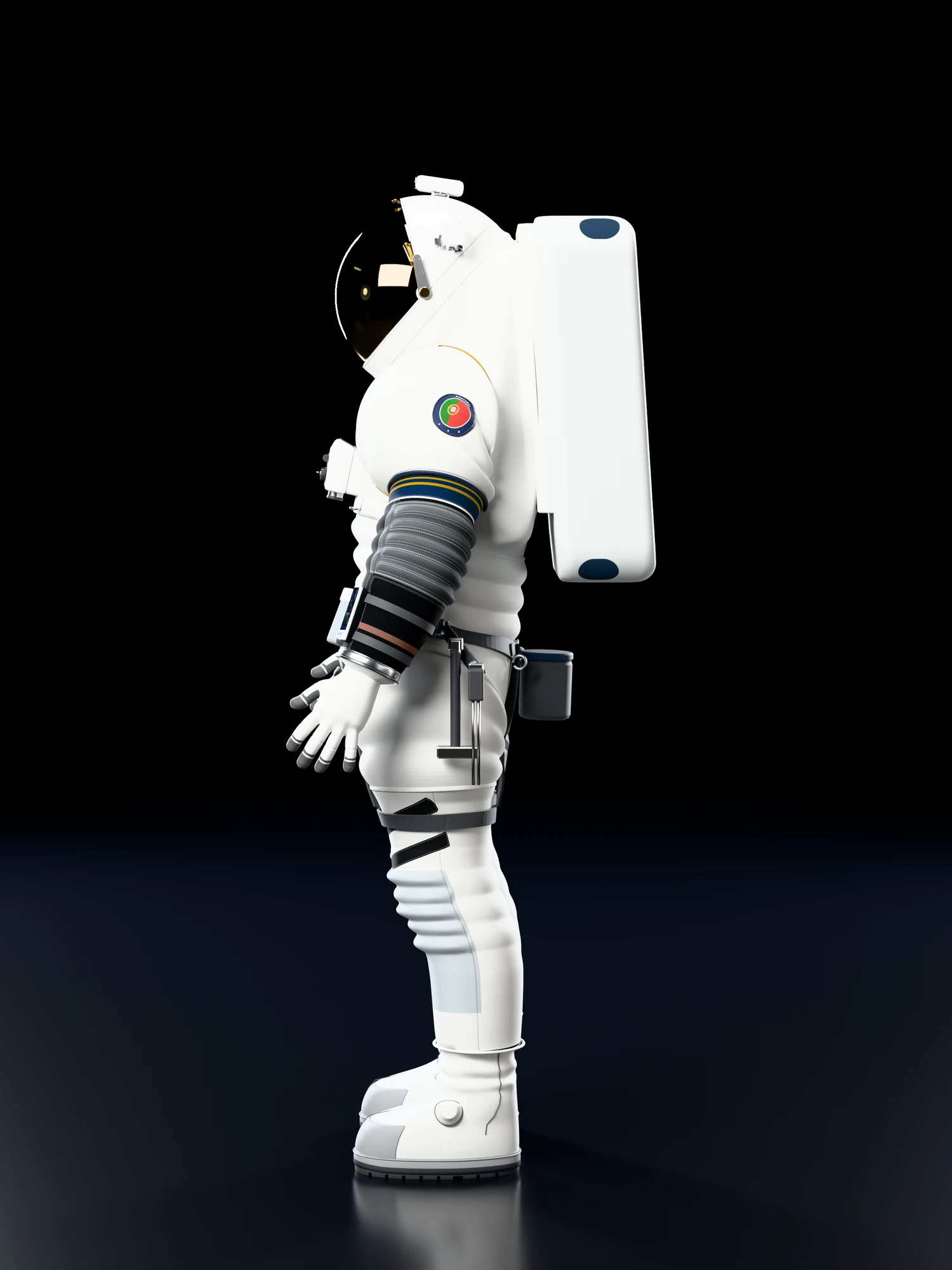
StarKnight is a spacesuit concept, one of the five winners of the ESA Space Suit Design Competition 2023. In 2026 I rebuilt it in Blender as a full 3D suit that moves, with fixed parts for six bodies, a rotating sun visor and a backpack whose door opens.
- 1 of 5
- winners of ESA’s 2023 spacesuit competition
- 6
- torso, arm and leg sets, for six bodies
- 1,680
- fixed meshes, no sizing morphs
- 0.96 kg
- of oxygen for eight hours, with a 20% margin
A suit made for all human bodies.
Every part is fixed geometry, swapped whole: a torso, arms and legs from six sets, gloves and boots from three sizes, all on one backpack.
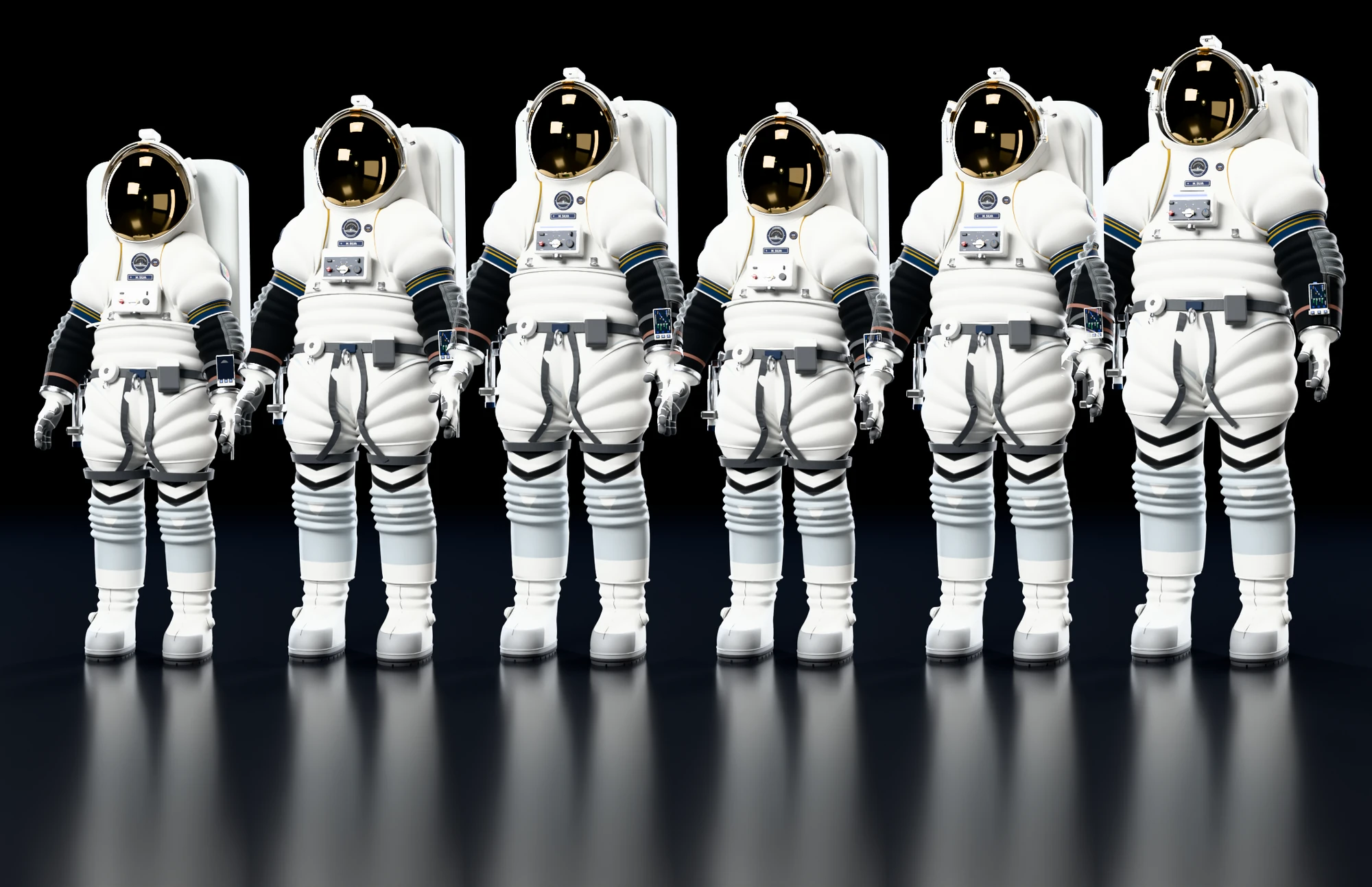
Six fitting cases. Shared datums.
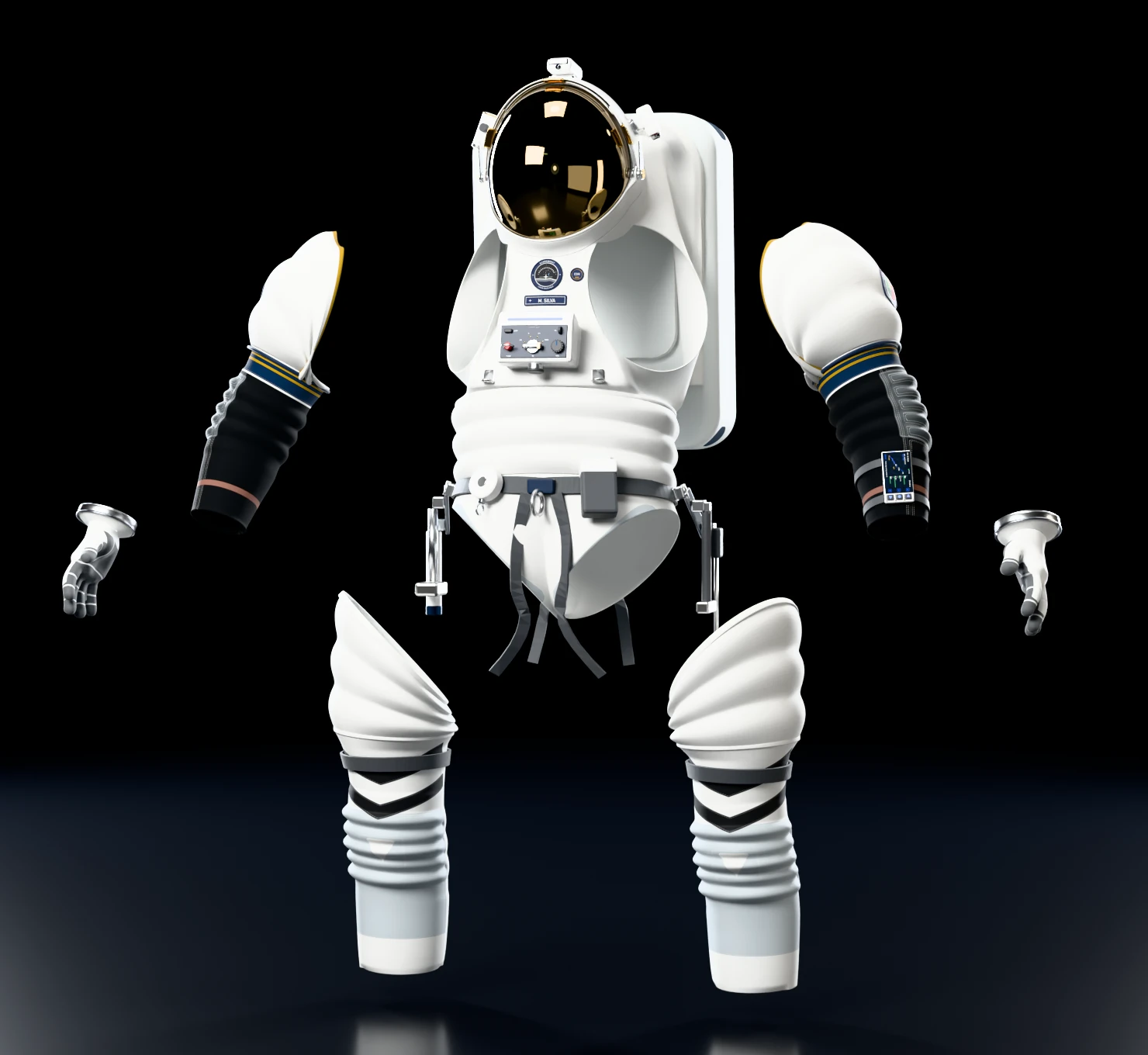
Swapped whole. At the joints.
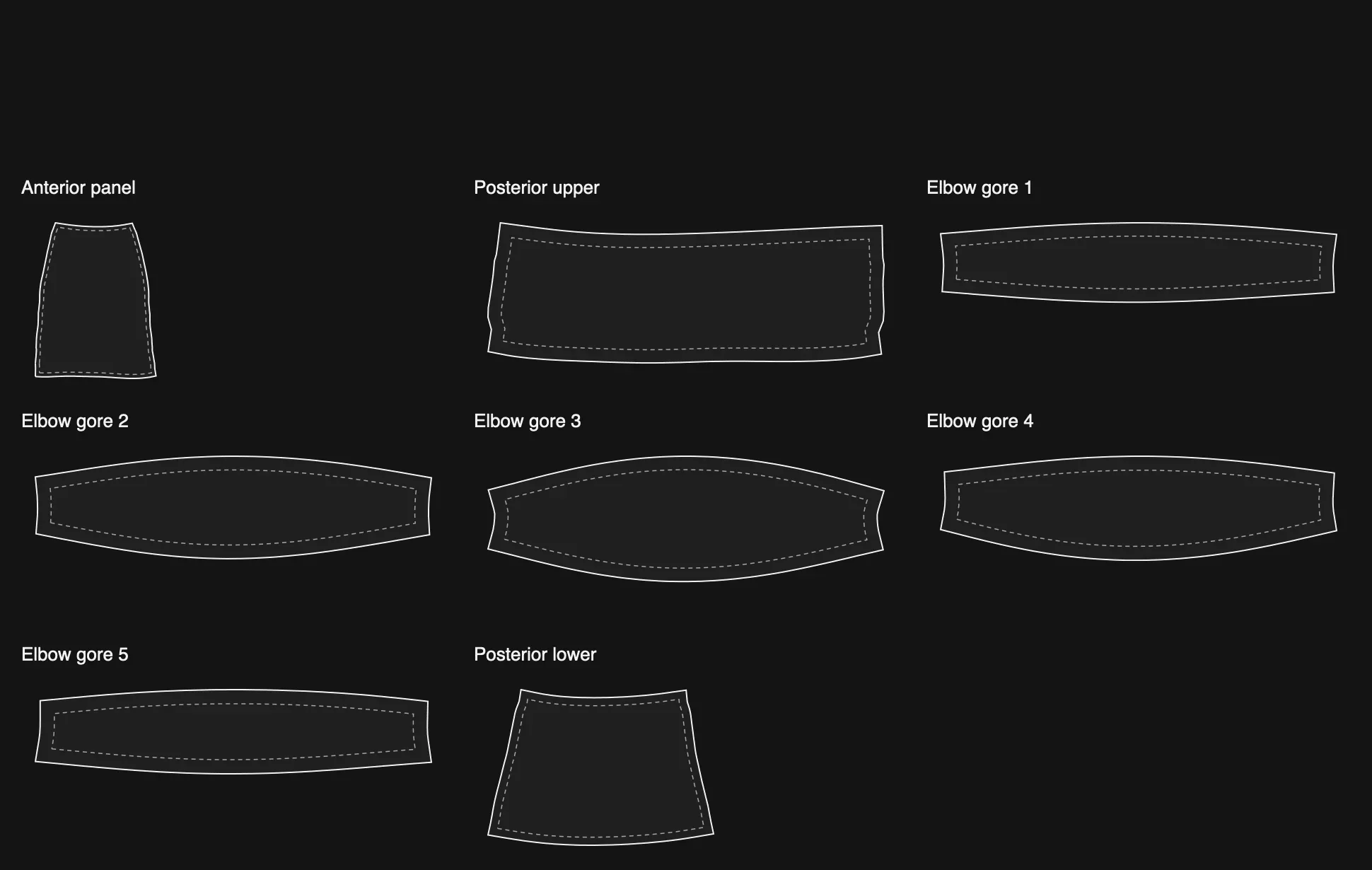
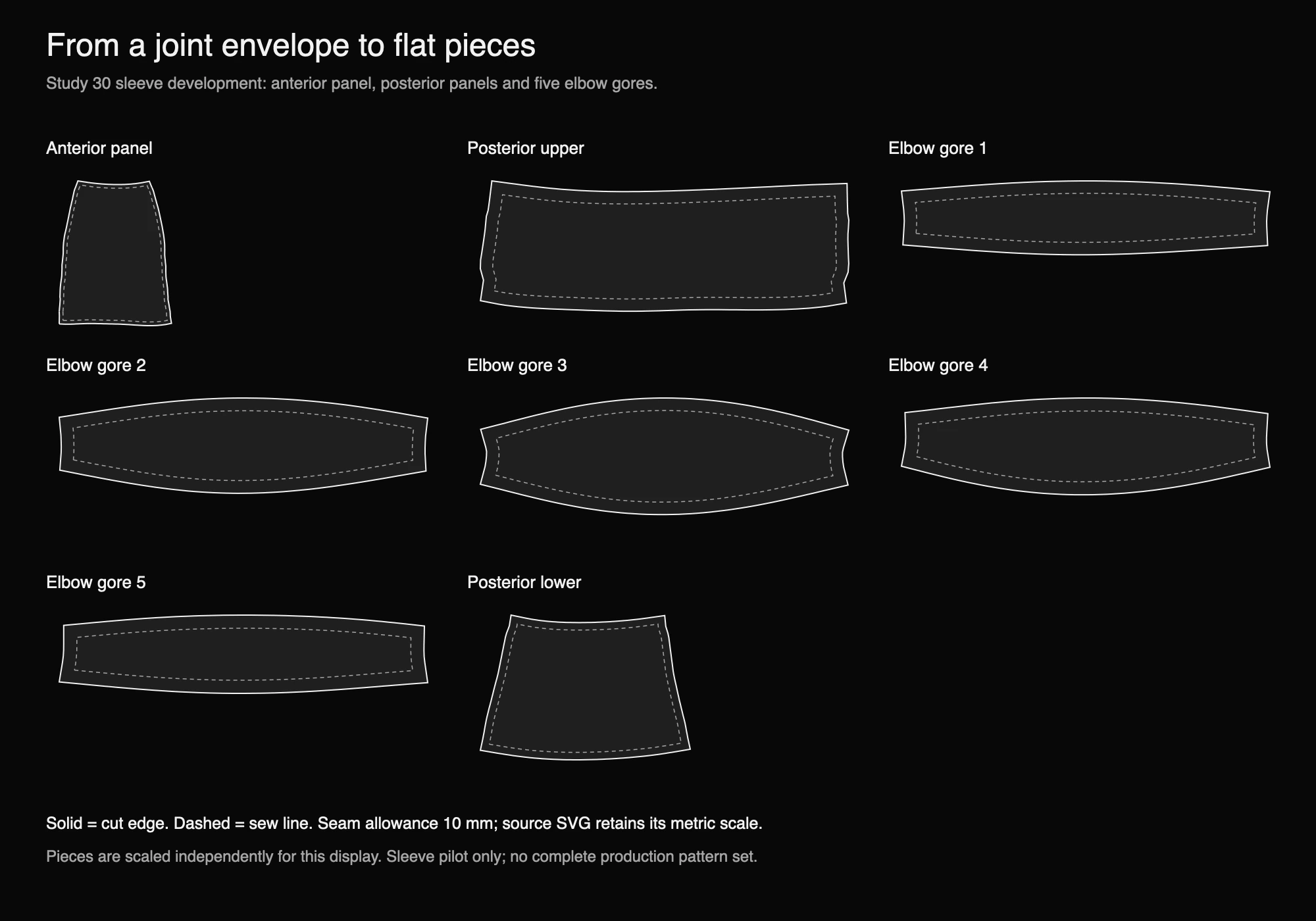
Cut like a garment. The sleeve, flat.
Walk. Kneel. Reach.
Gored sections at the knees and elbows, rolling sections at the shoulders and hips, a bellows at the waist.
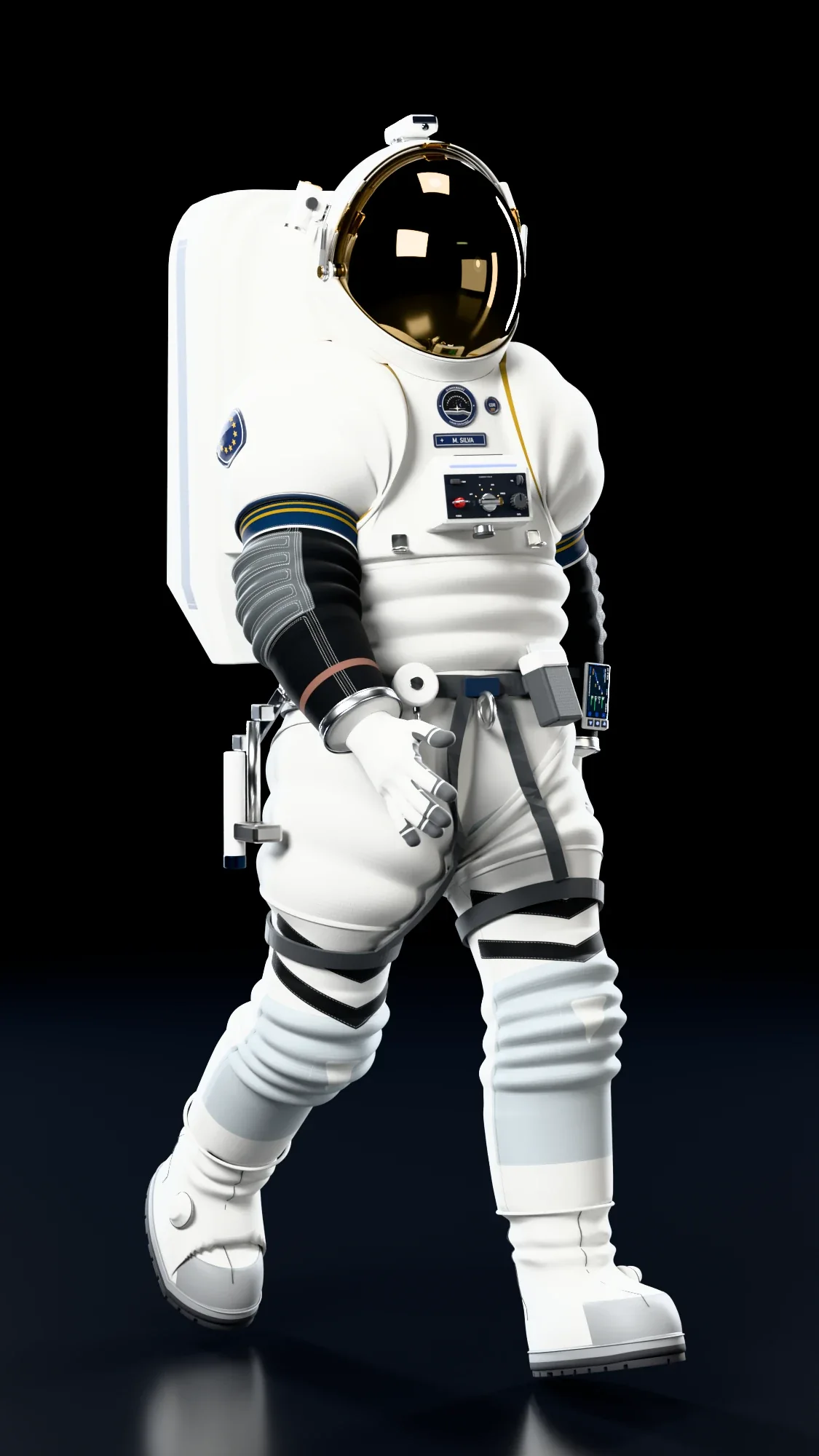
Walking
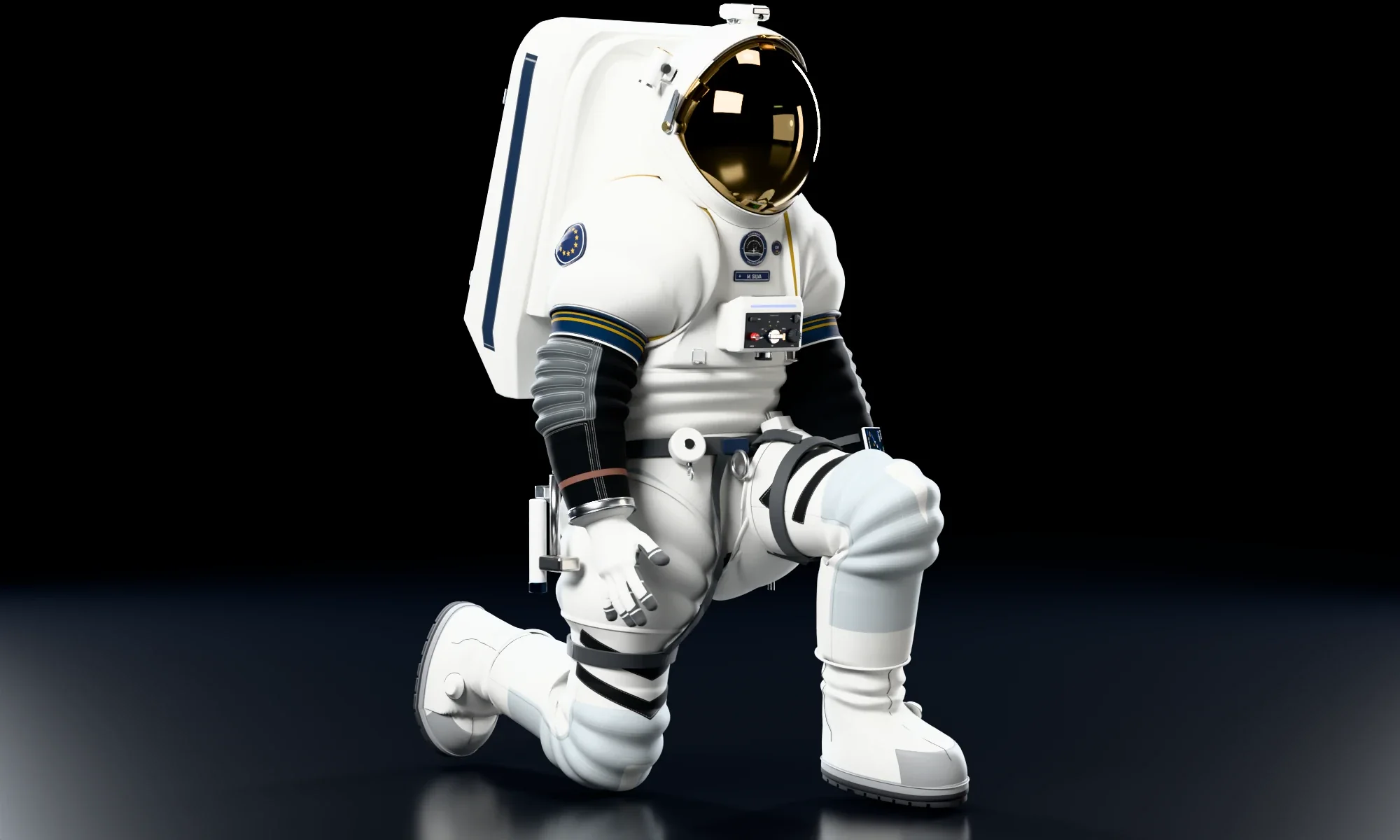
Kneeling for a sample
125°
elbow flexion, checked with a full human body inside
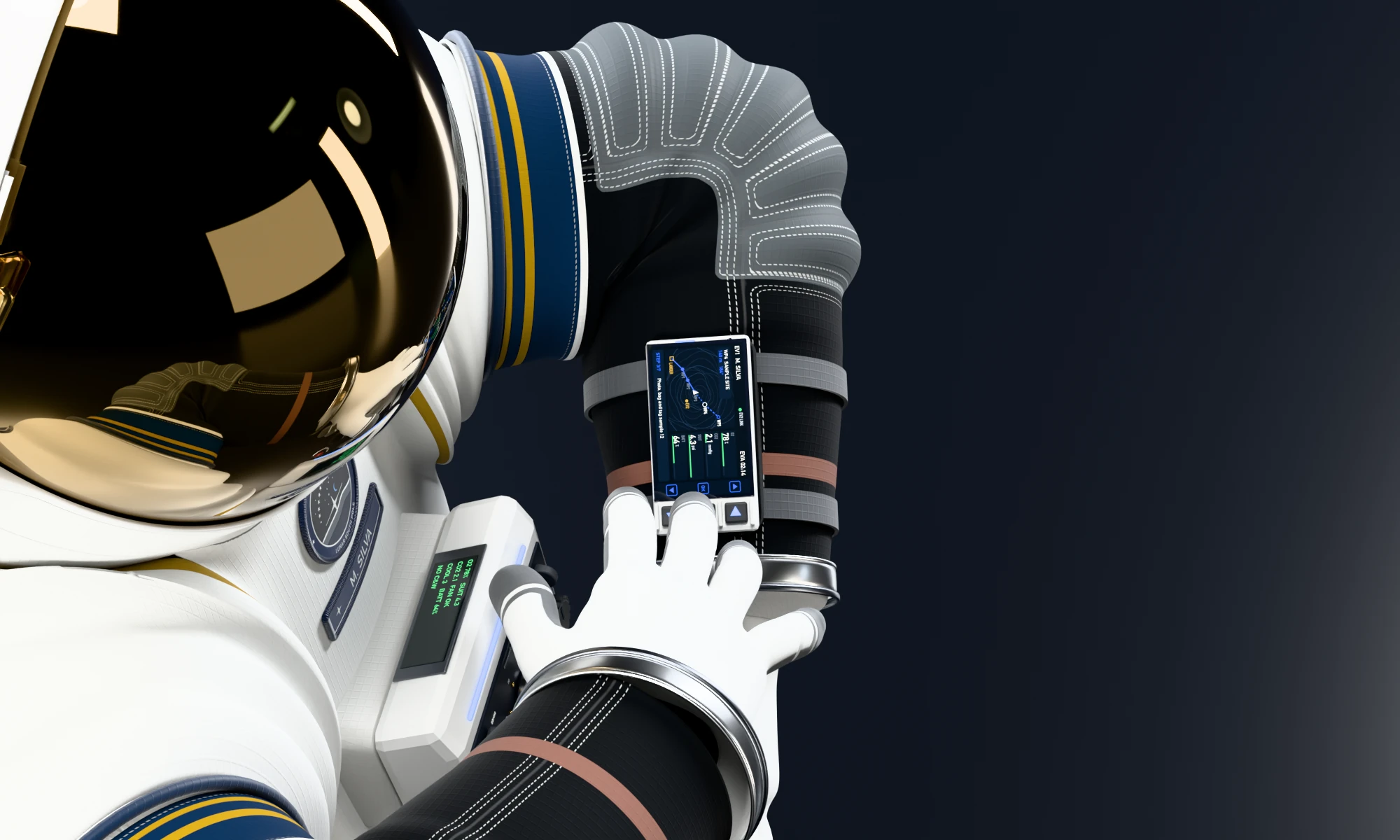
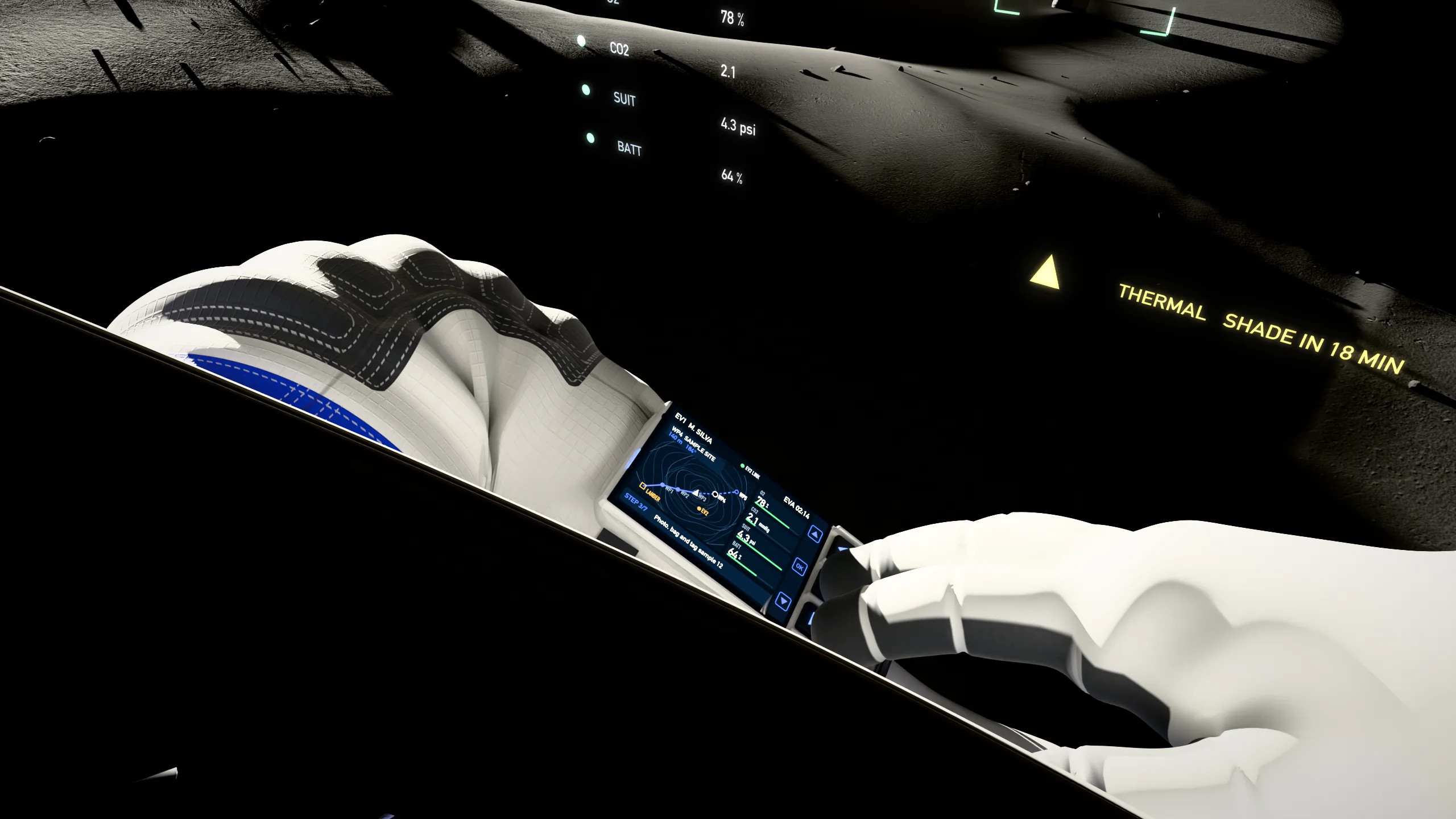
The forearm screen. Shows the route.
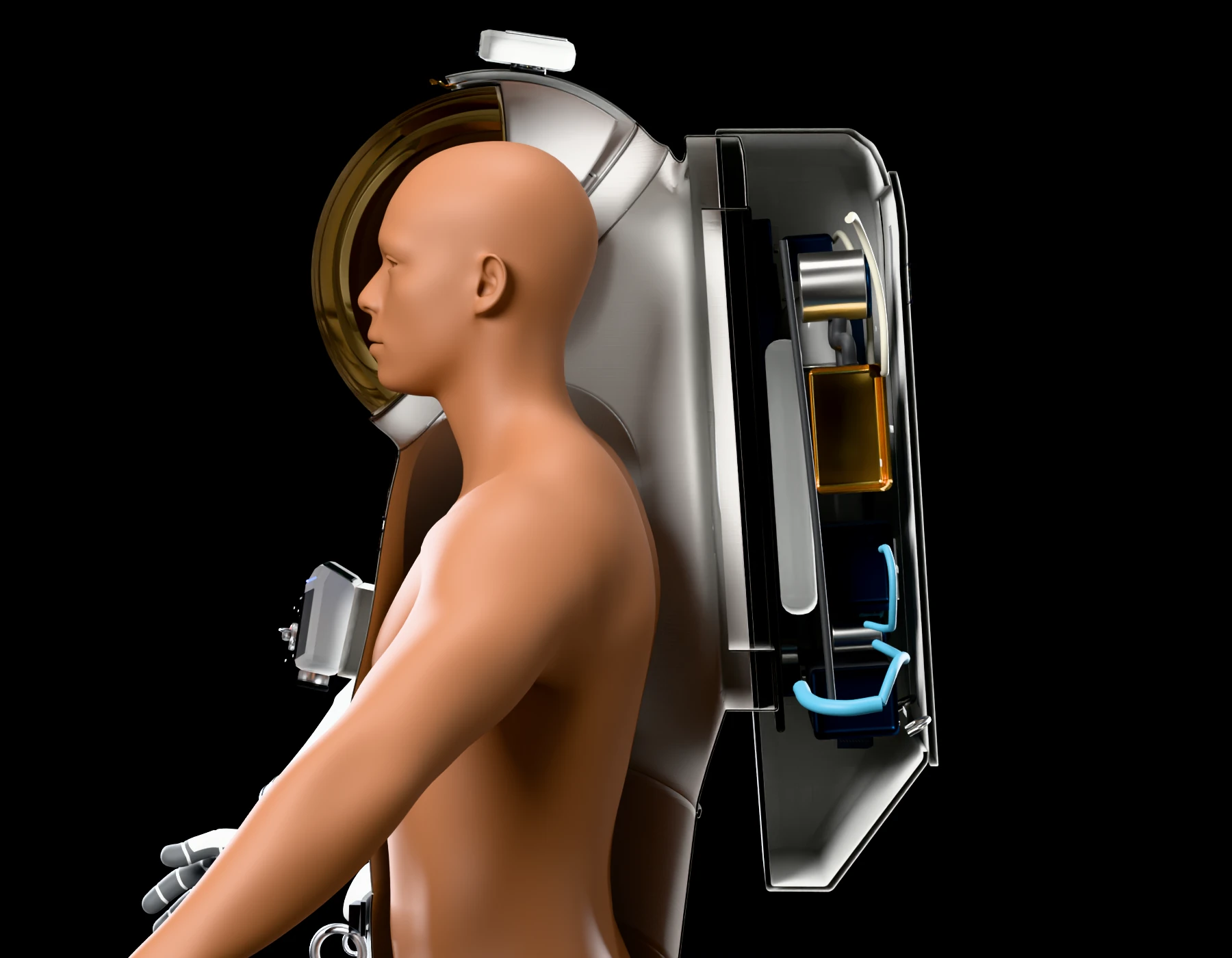
Fitted around a person. In section.
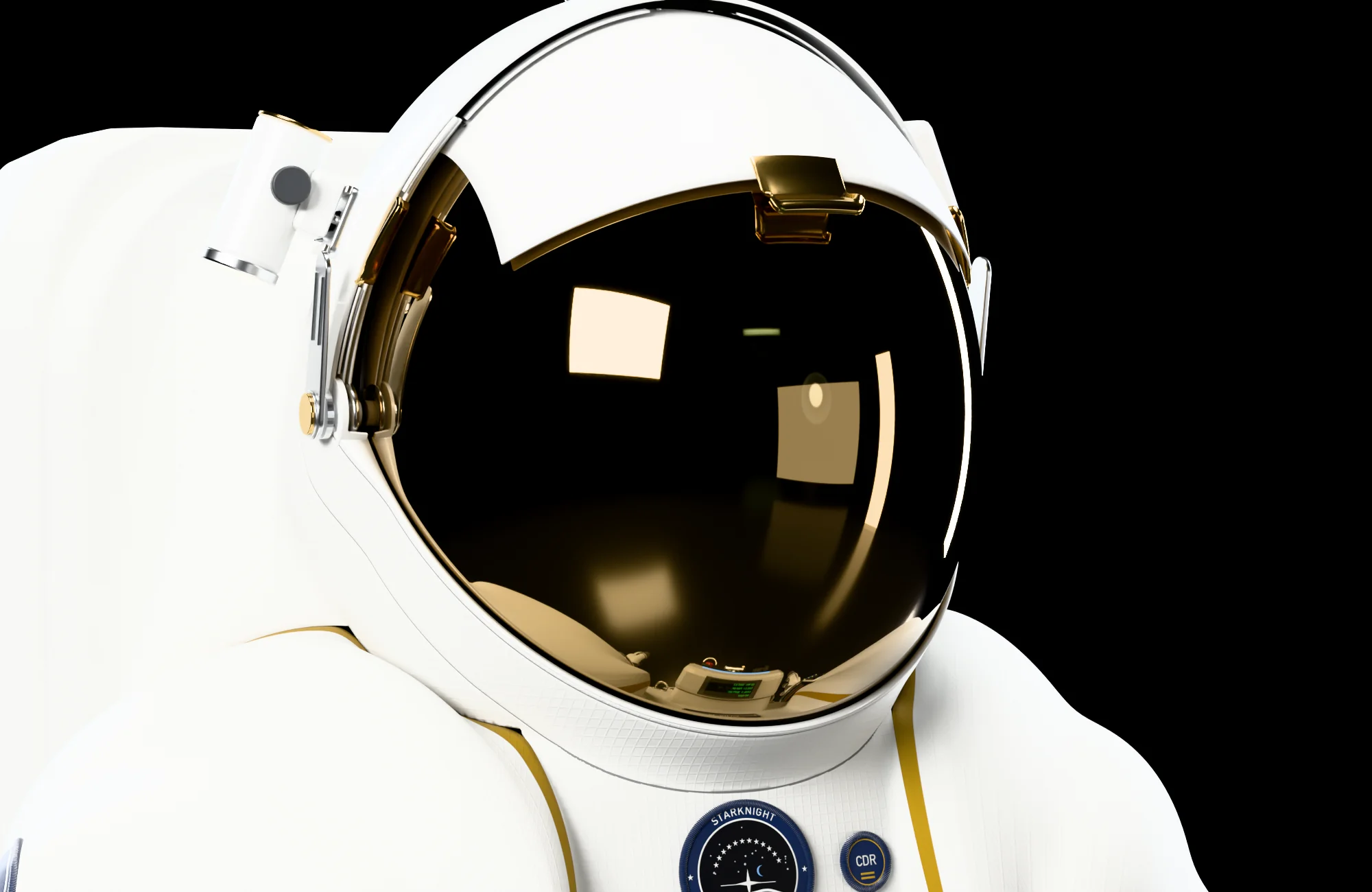
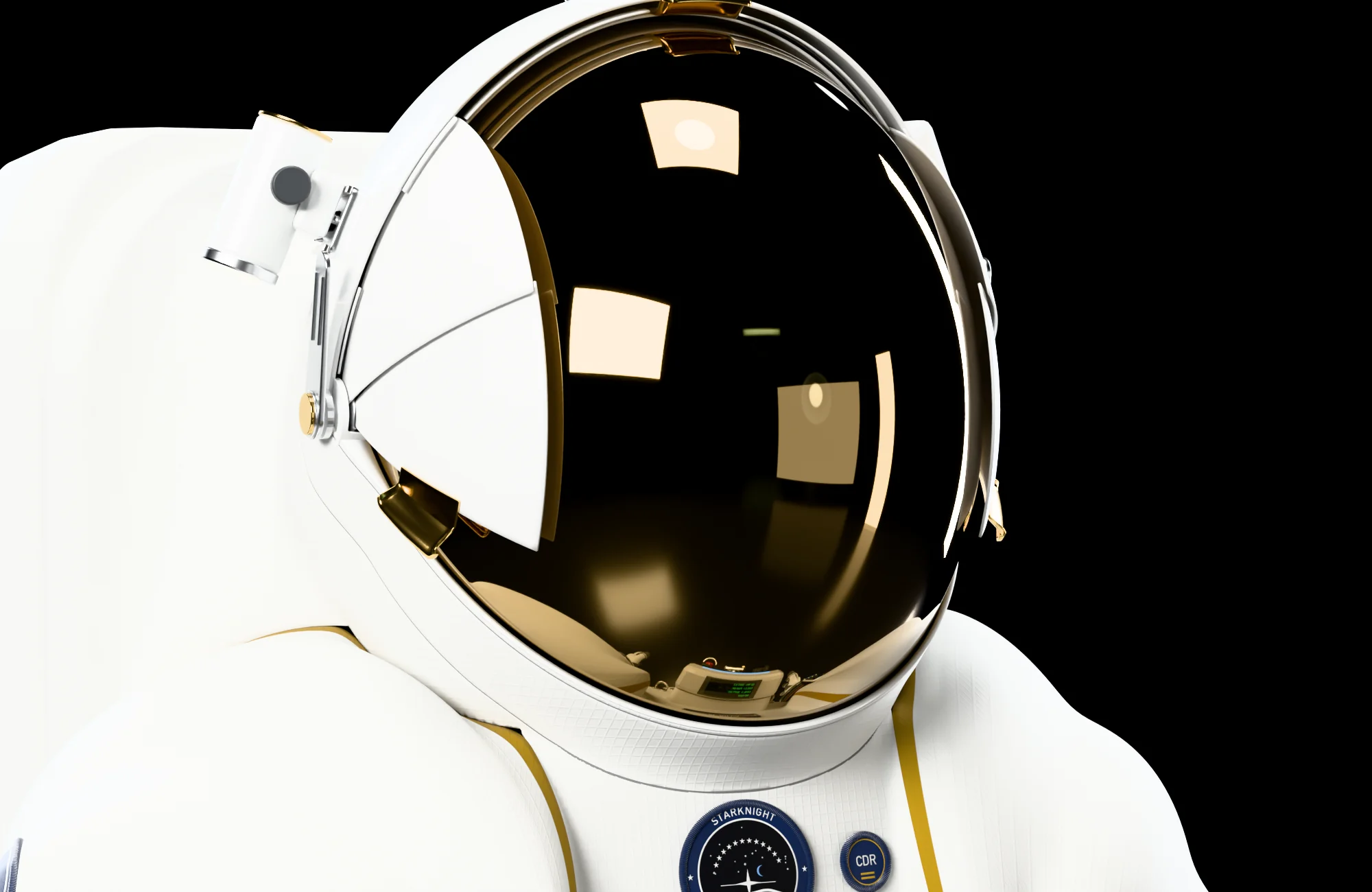
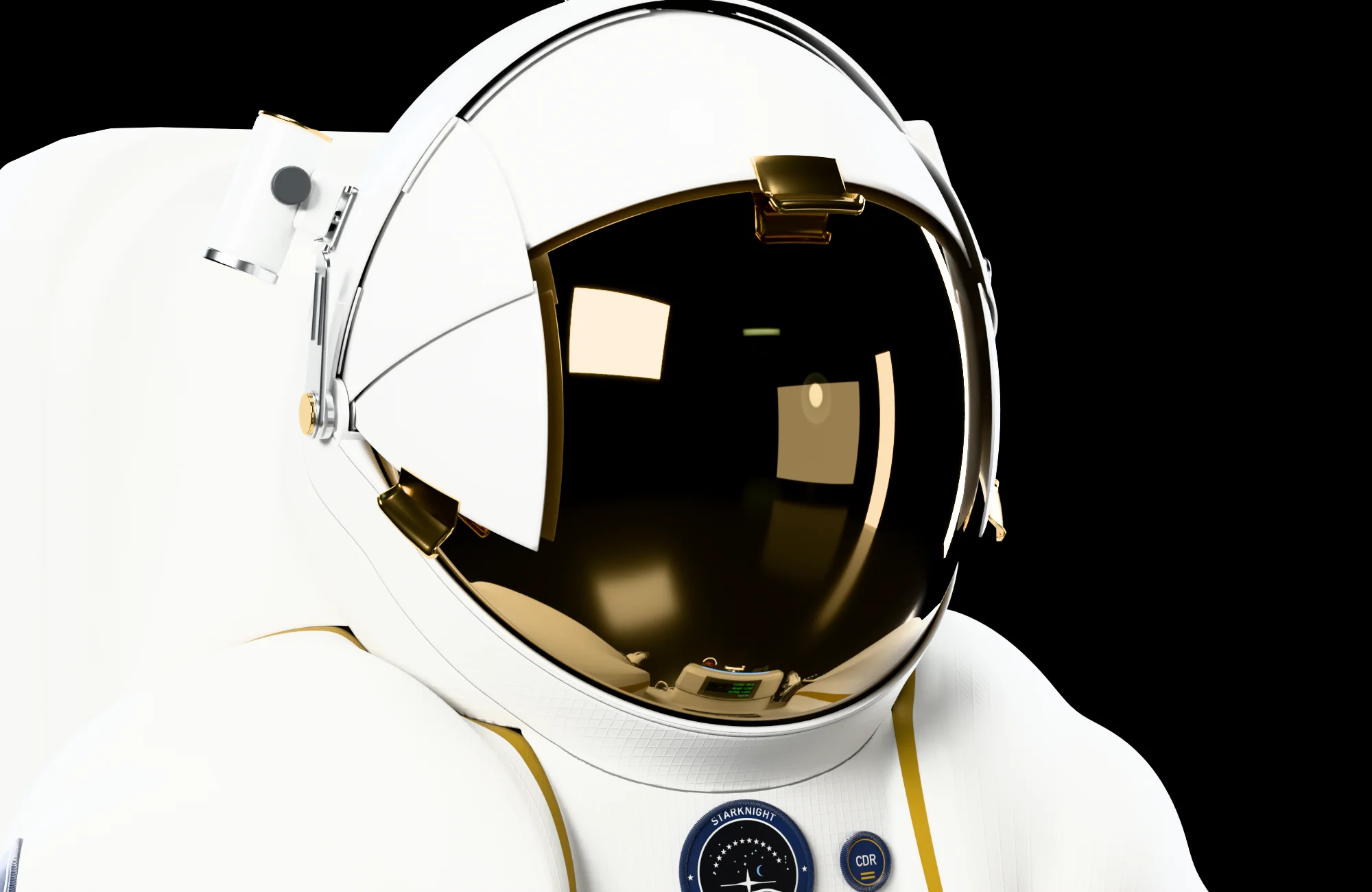
A gold visor that rotates up.
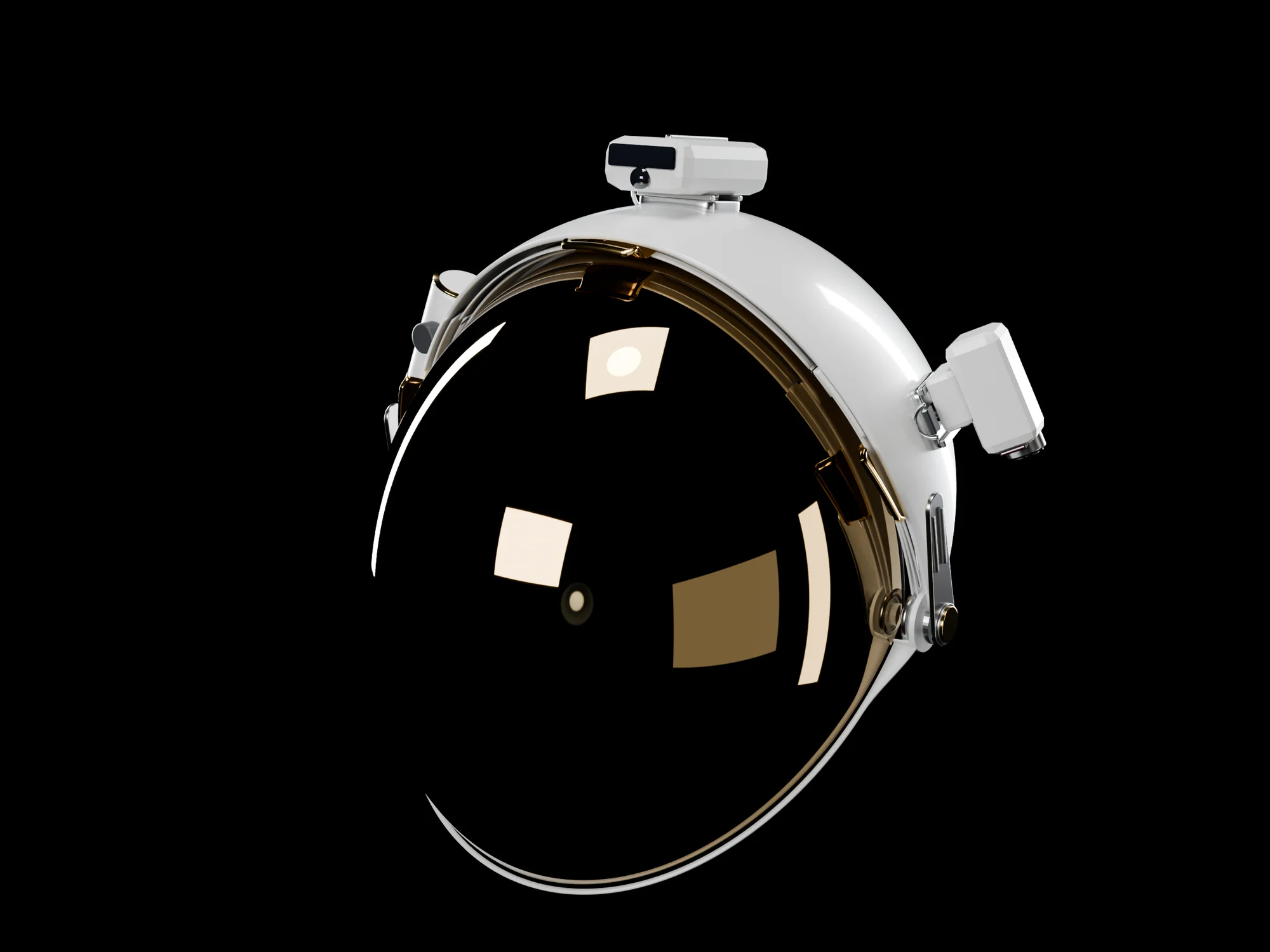
The helmet is a fixed shell with three stations for modules, a gold sun visor that rotates up and three covers that slide over it.
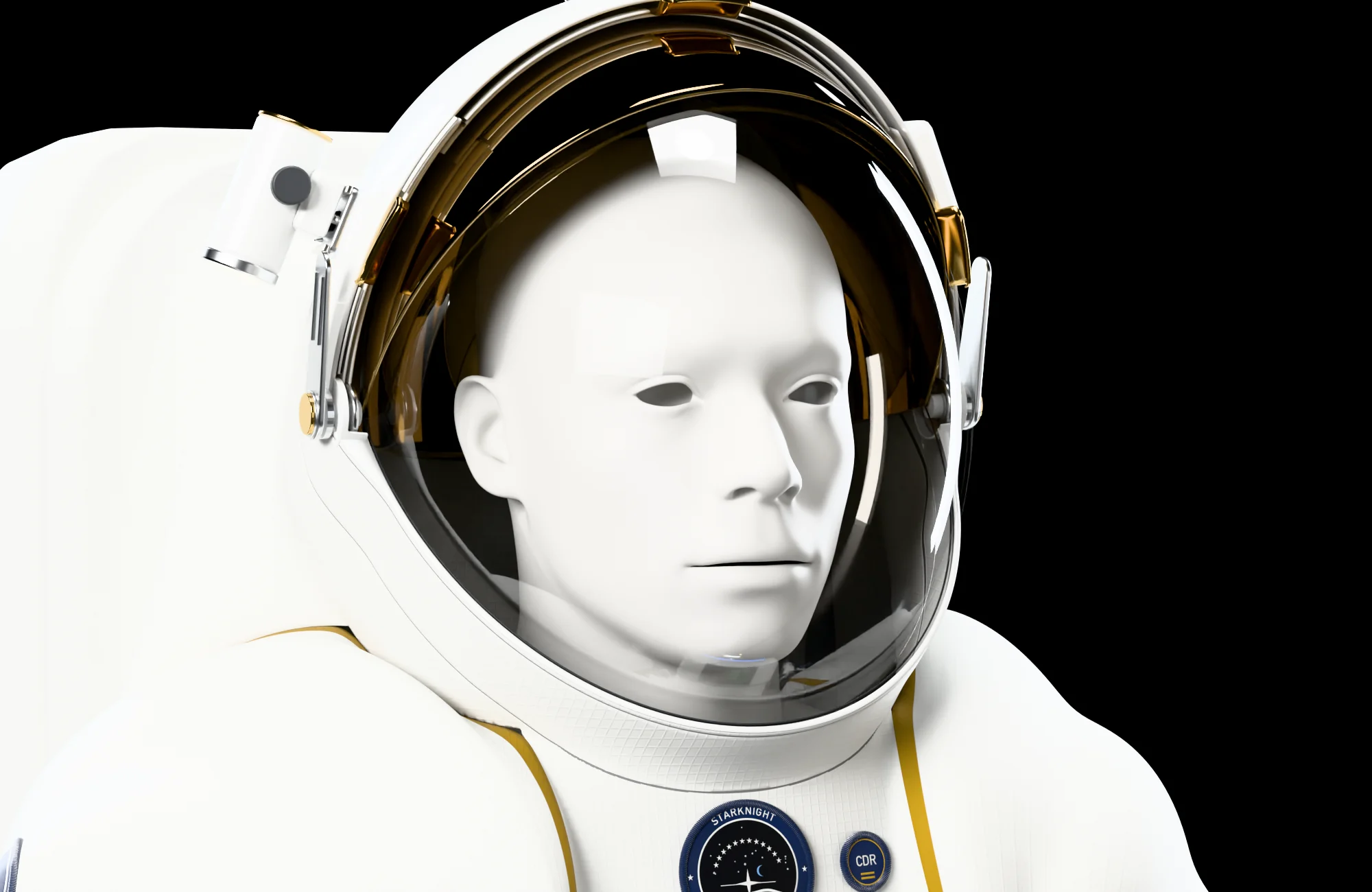
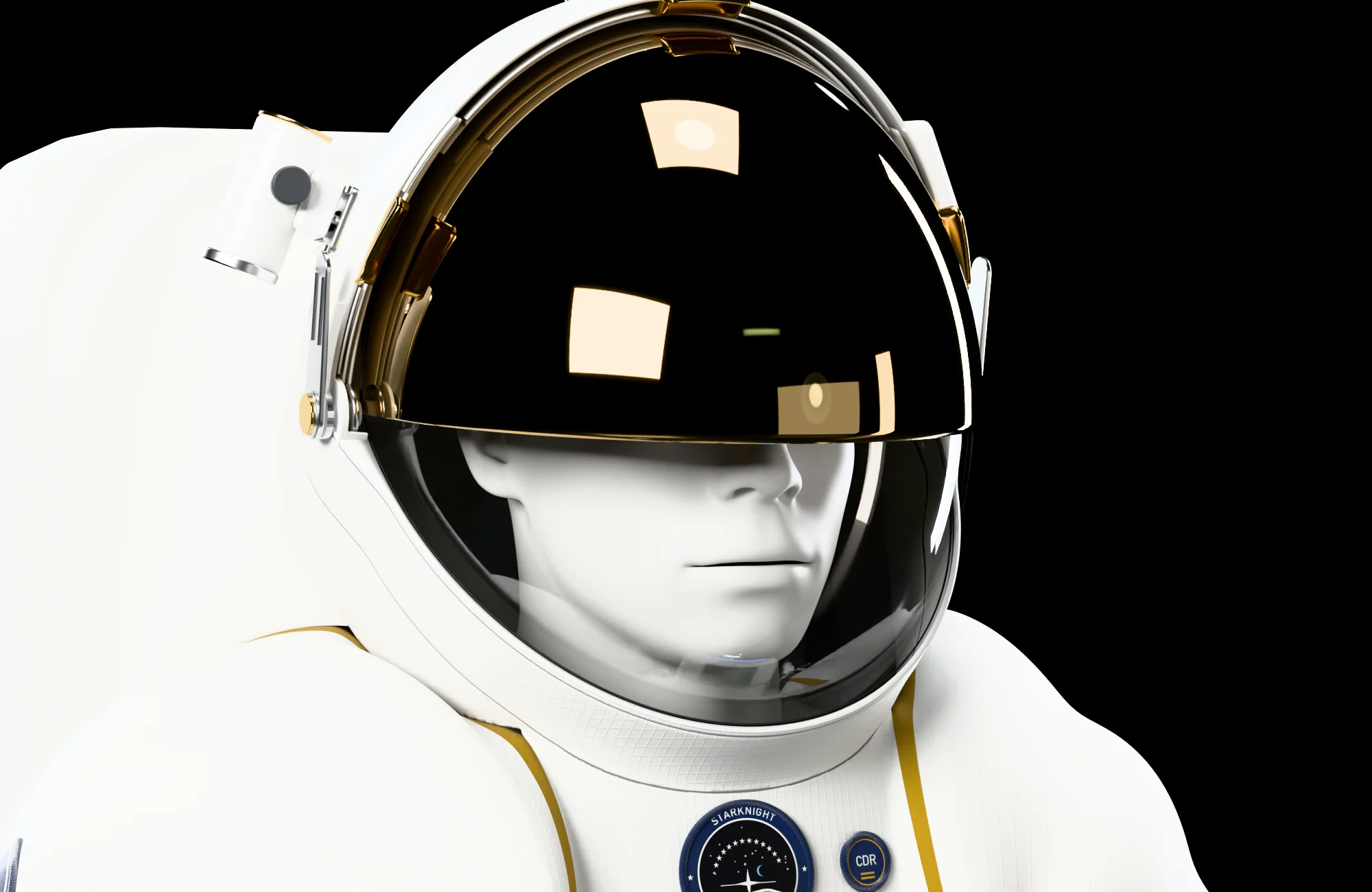
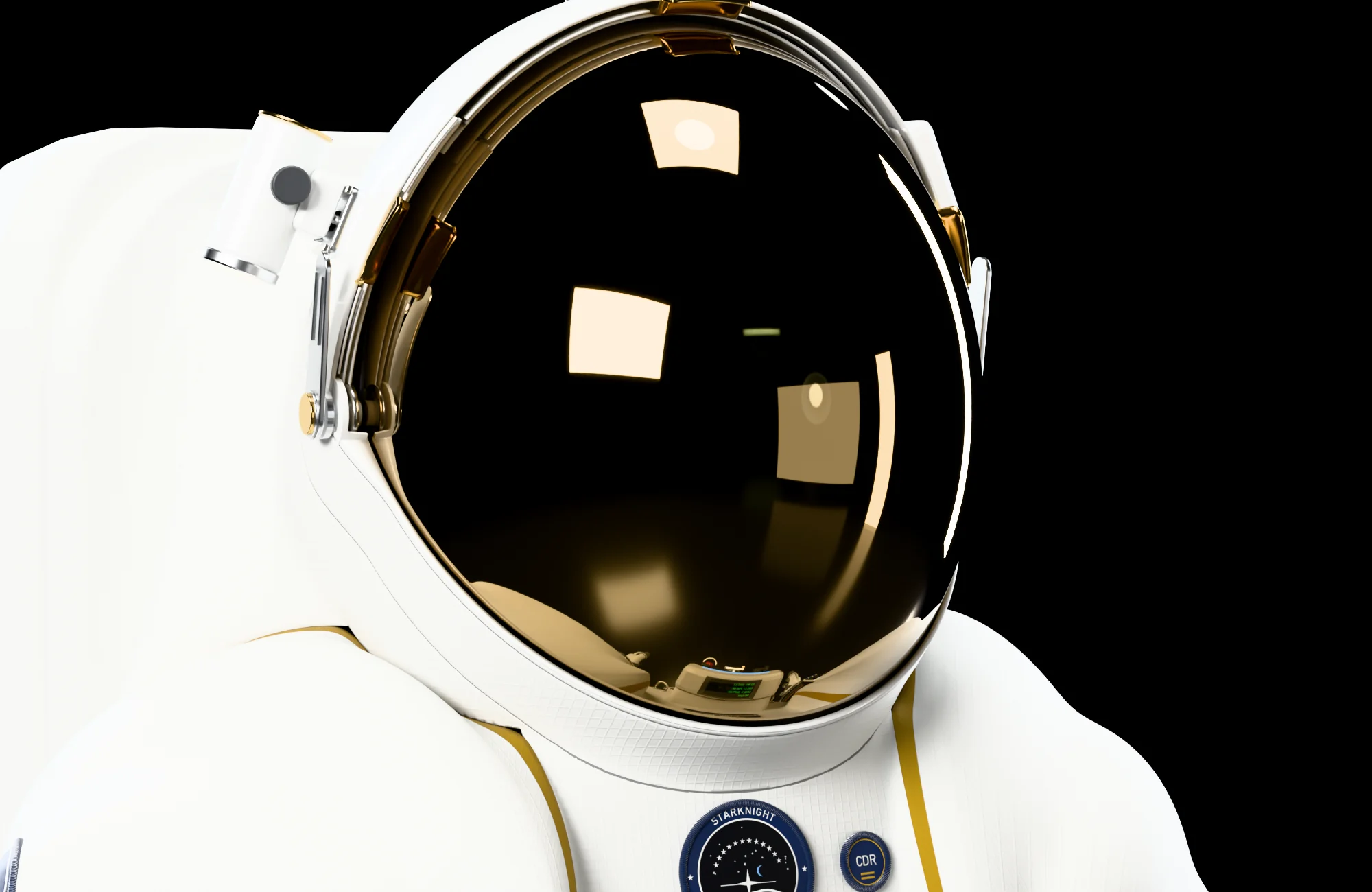
Three stations, one interface
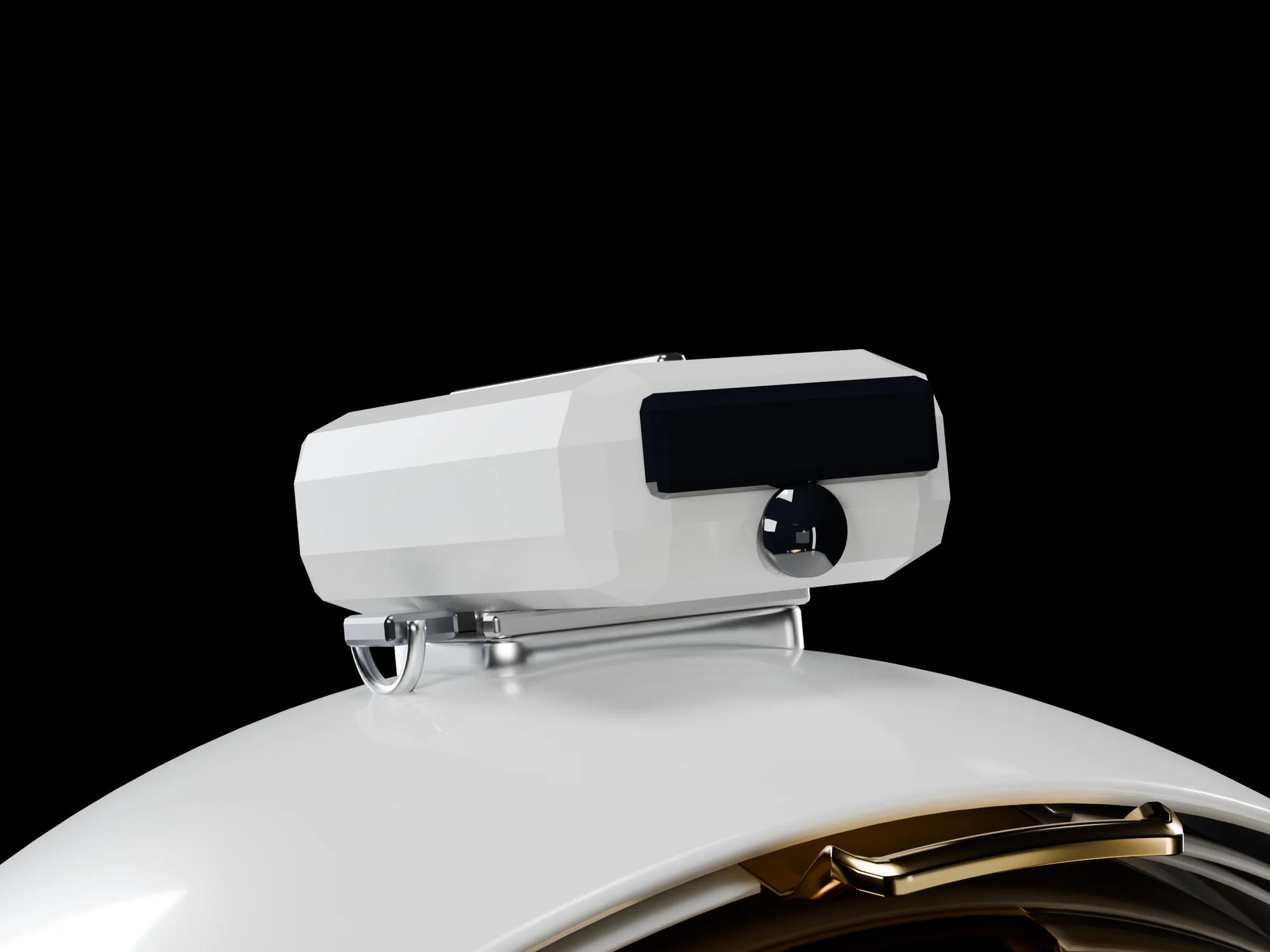
Lidar and camera on the crown
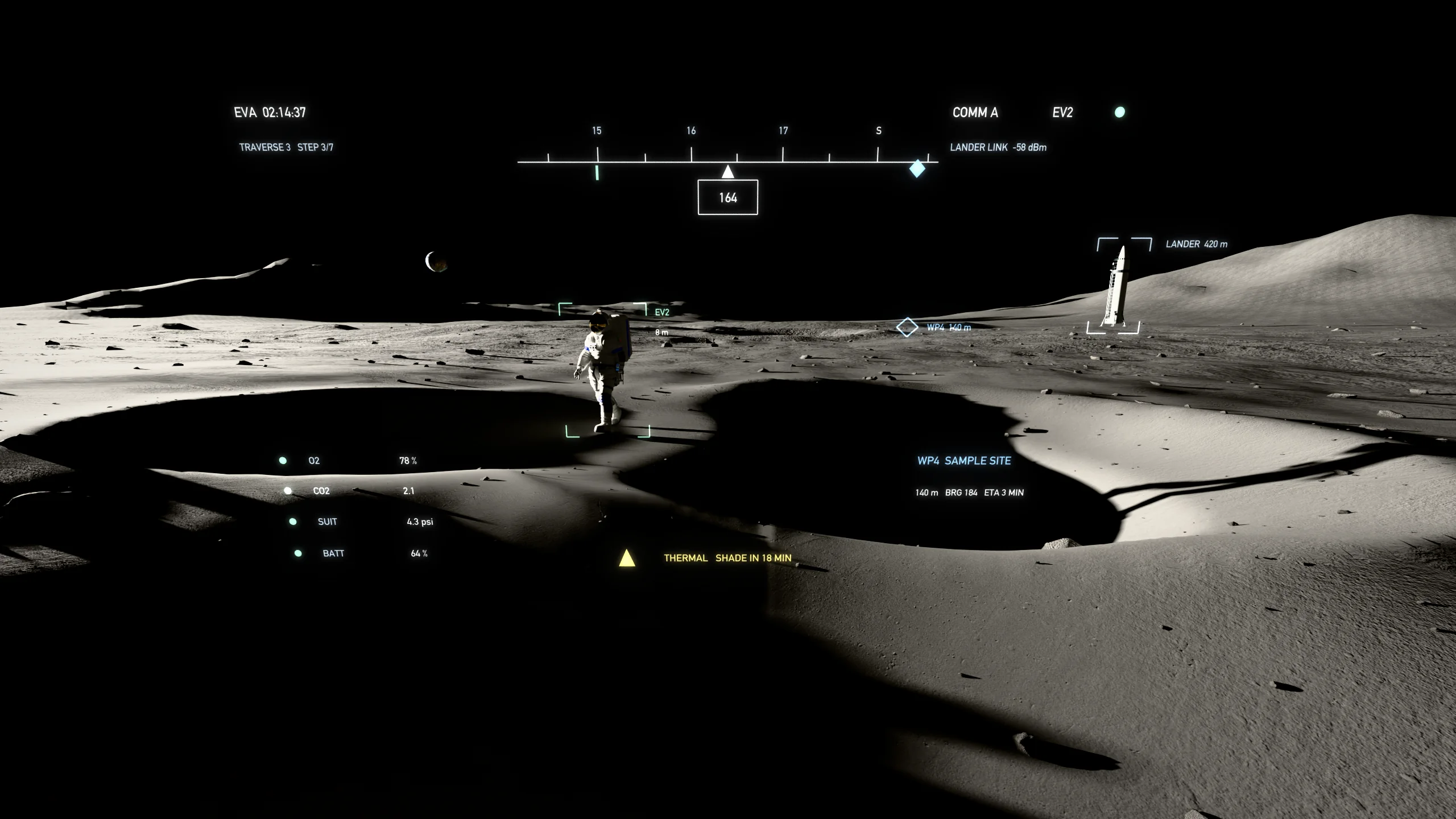
A display that stays put. At 1.2 m.
Eight hours of oxygen. And a reserve.
One rigid backpack, shared by all six sizes, holds the oxygen, the air-treatment and cooling hardware, and the power and radio electronics.
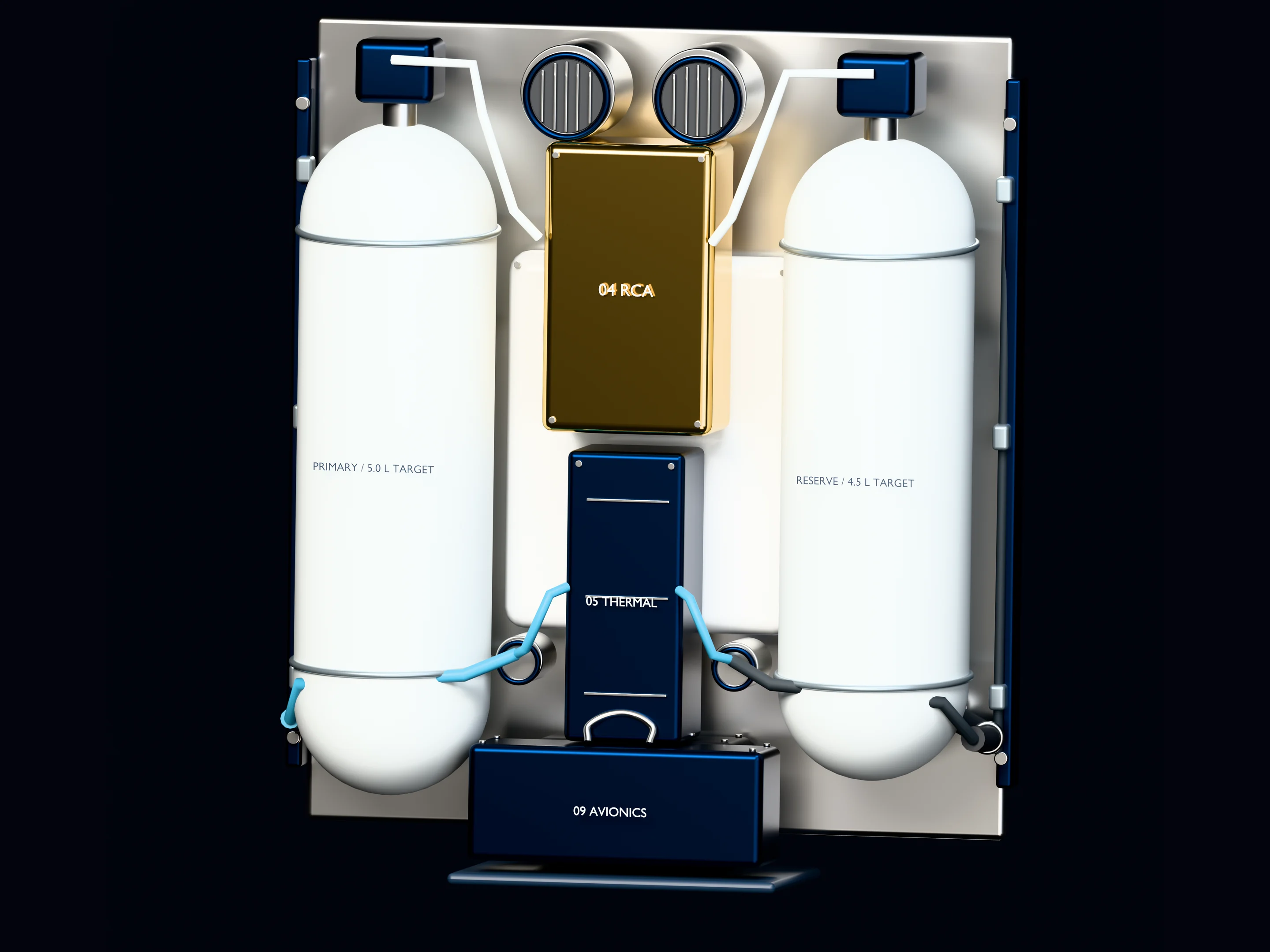
Everything on one backplate
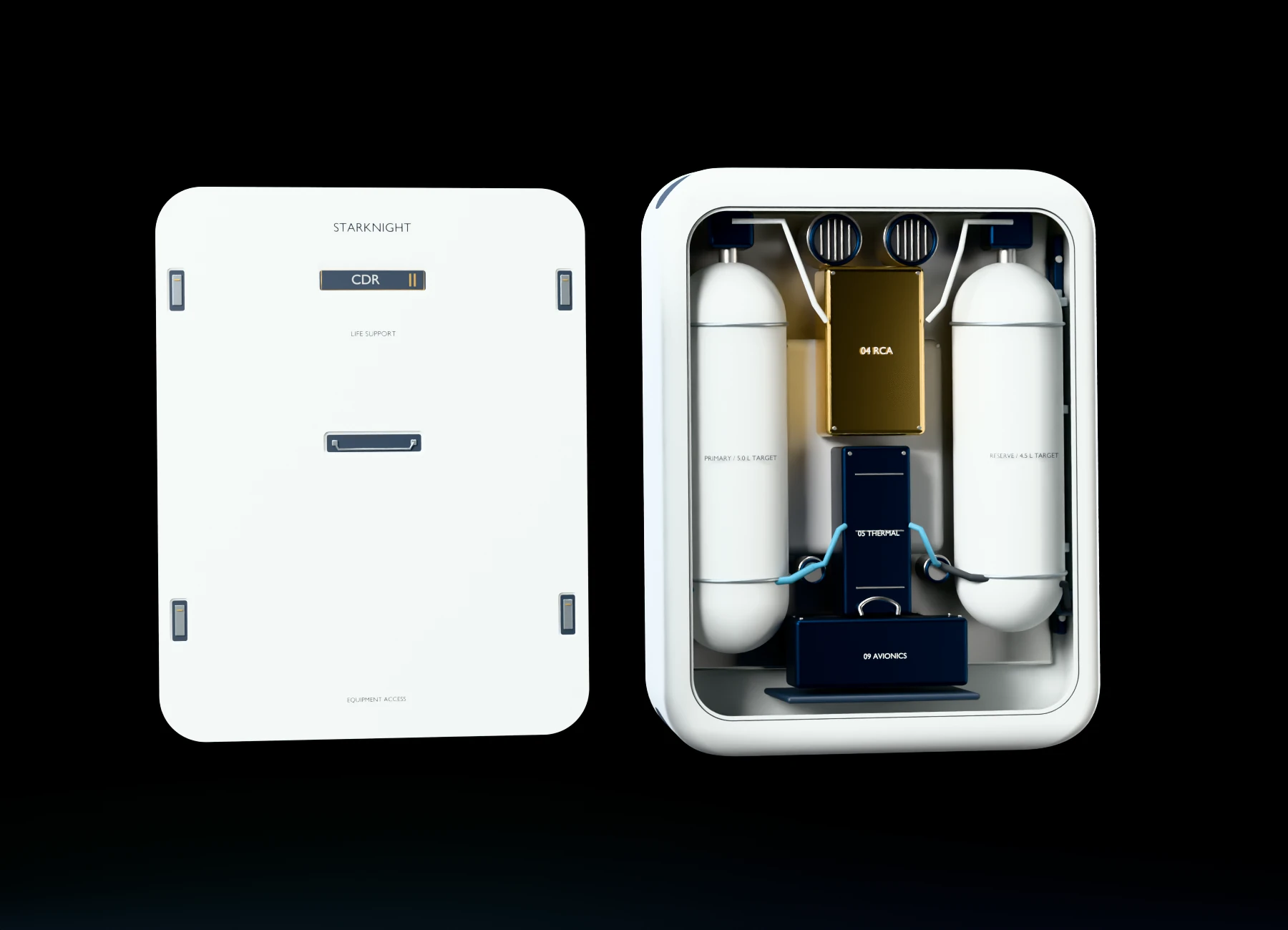
A door that separates. For inspection.
0.96 kg
primary oxygen for eight hours, at NASA’s 0.1 kg per crew-hour, with a 20% margin
5 L
primary tank, an internal-capacity target
4.5 L
reserve tank, for a 30-minute emergency at 0.9 kg per hour
Hands and feet.
The glove is one continuous cover on a rigid wrist ring. The boots follow NASA’s xEMU boot development photographs.
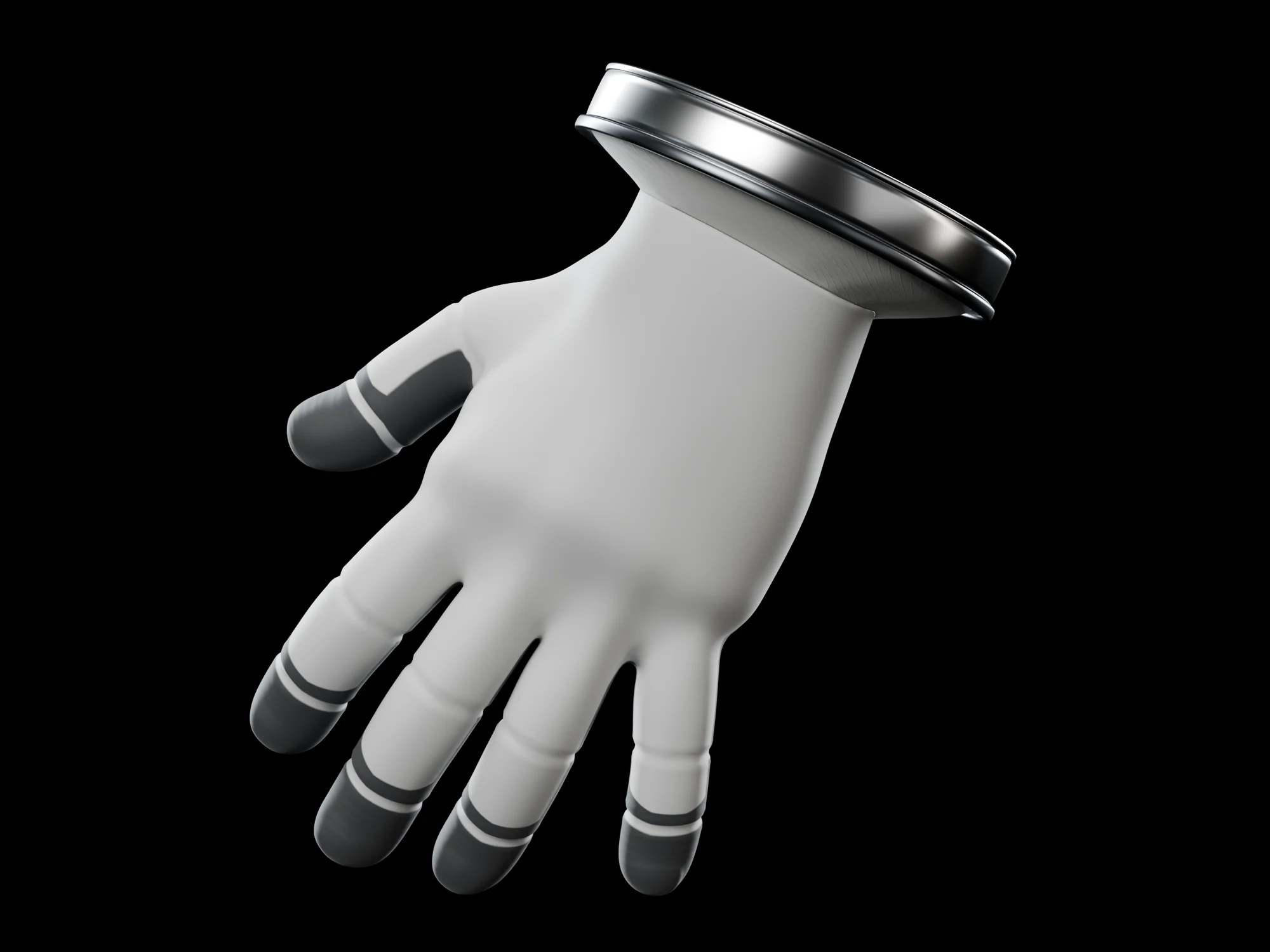
Grip, flex breaks, creases
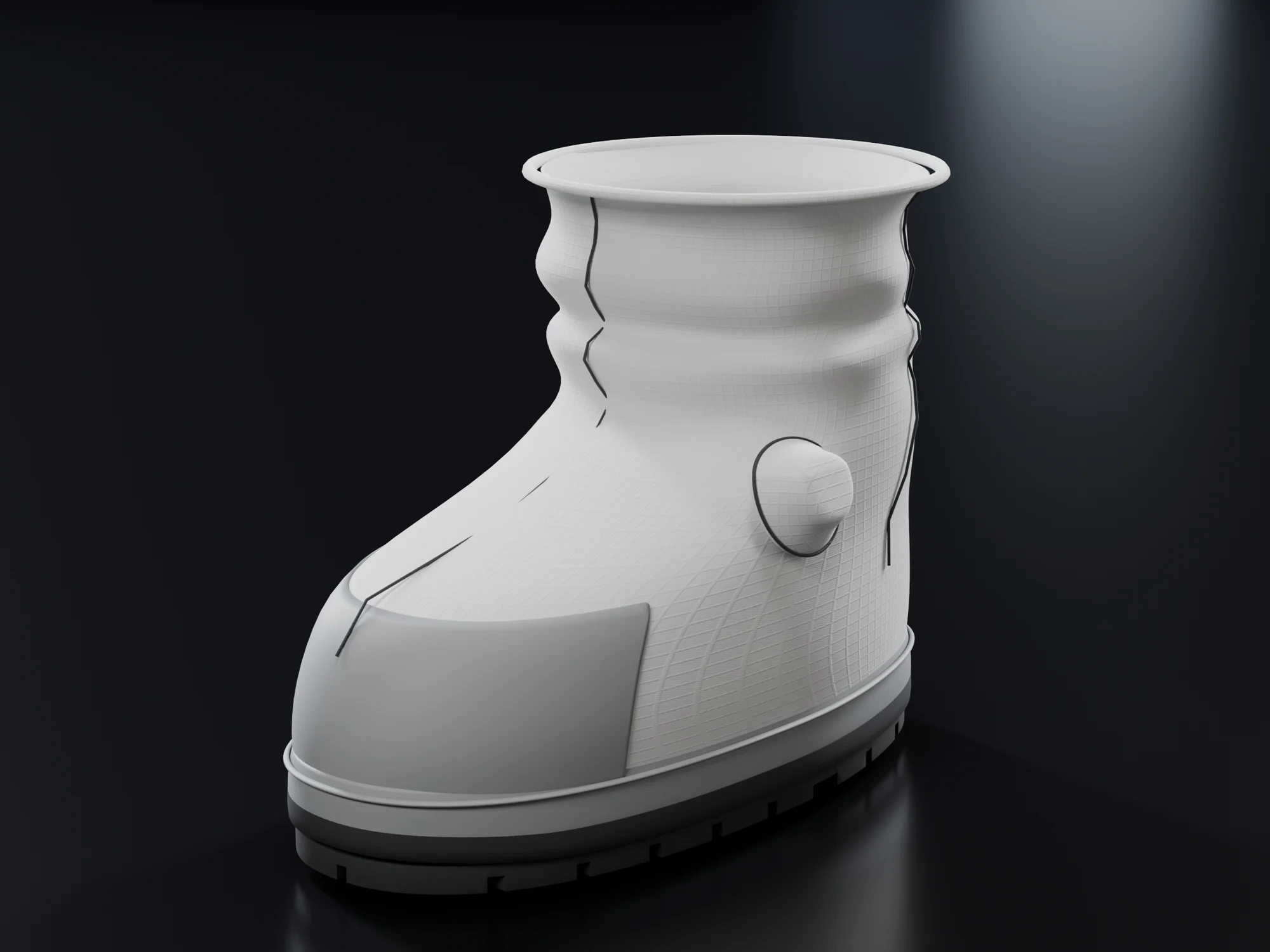
A tall padded cover. A 38 mm sole.
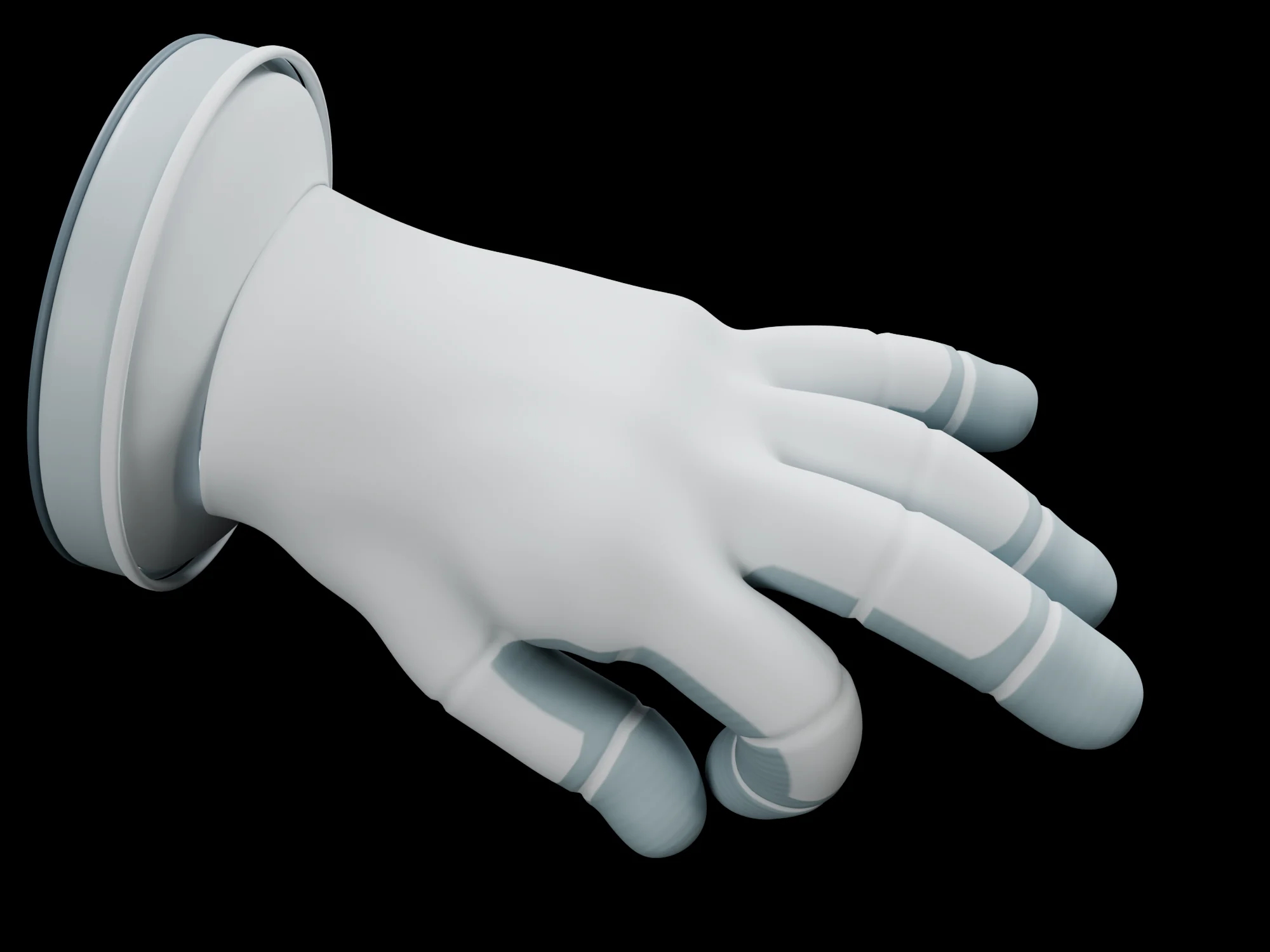
Pinch. About 1 mm short.
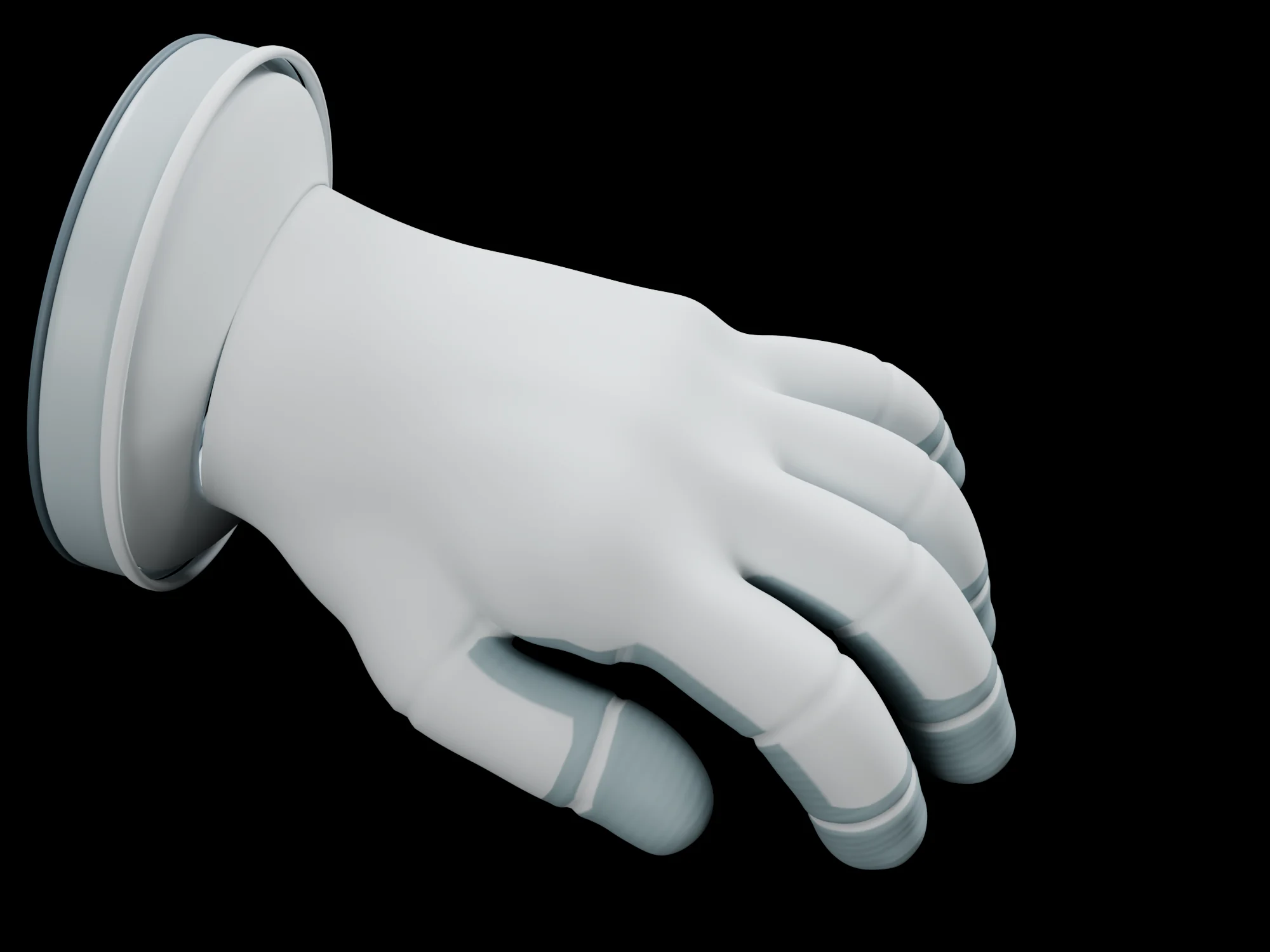
Tool curl. One of five grips.
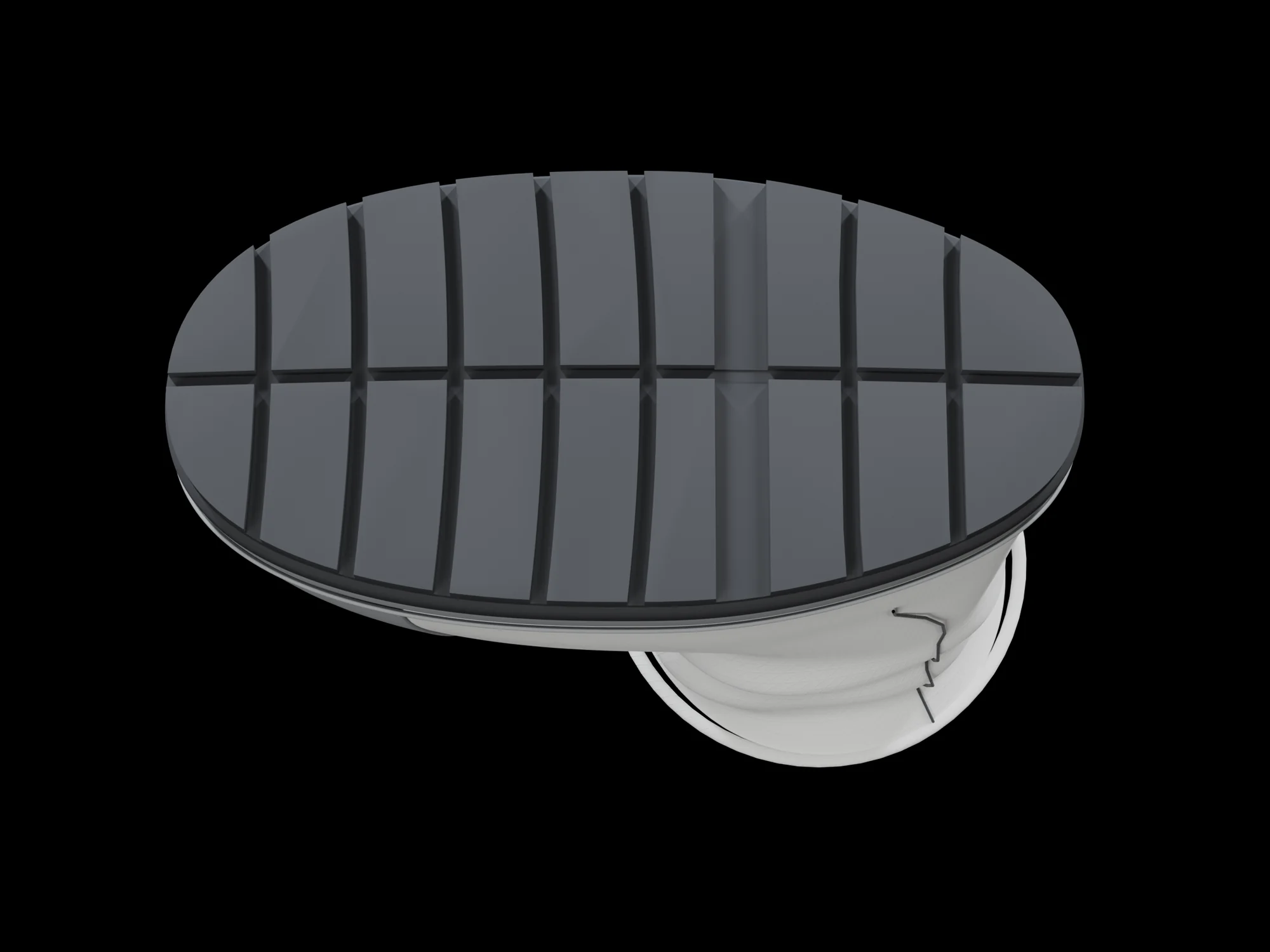
The outsole. A concept.
White for sunlit work.
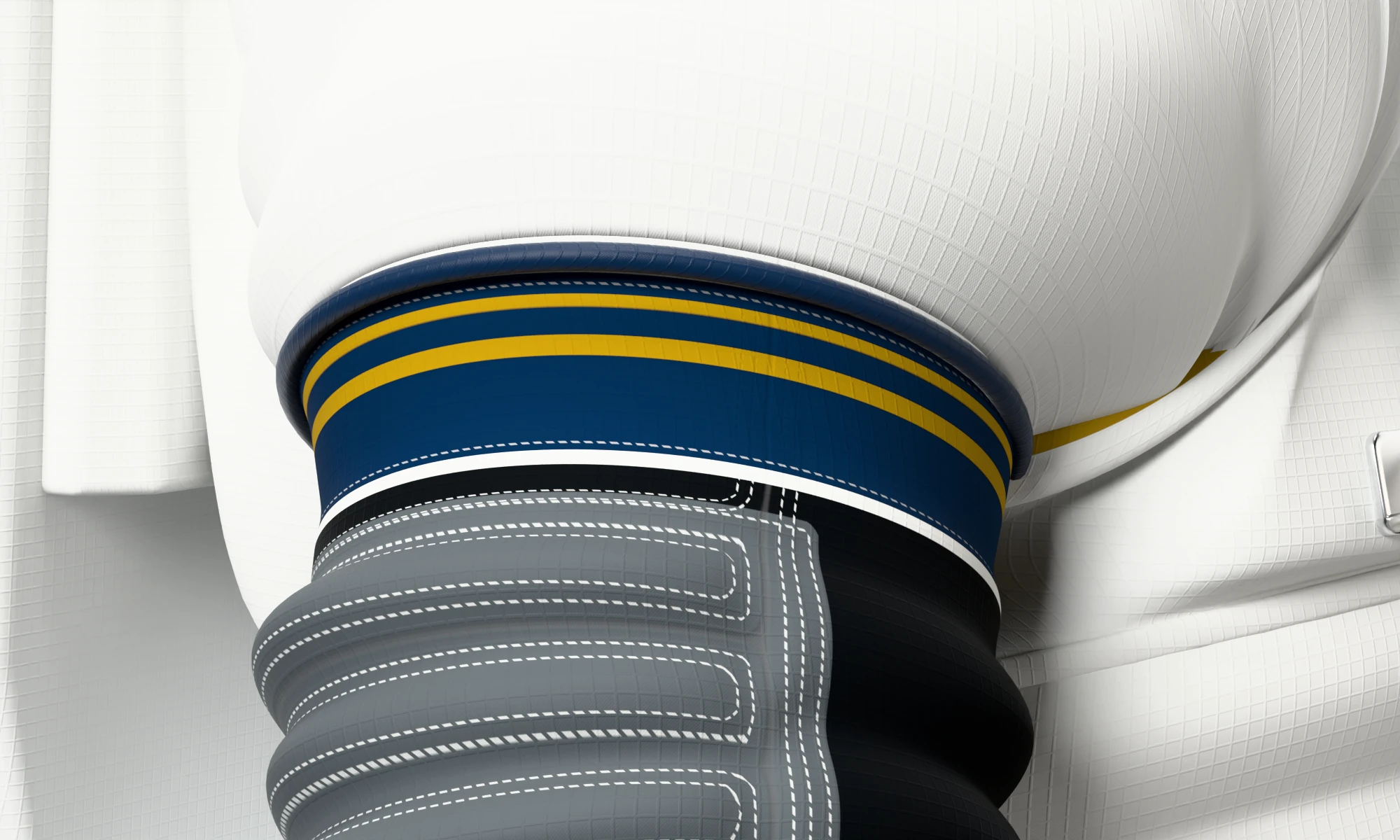
I made three colourways to judge colour on geometry. Crew roles are coded in three muted families and bars on the sleeve.
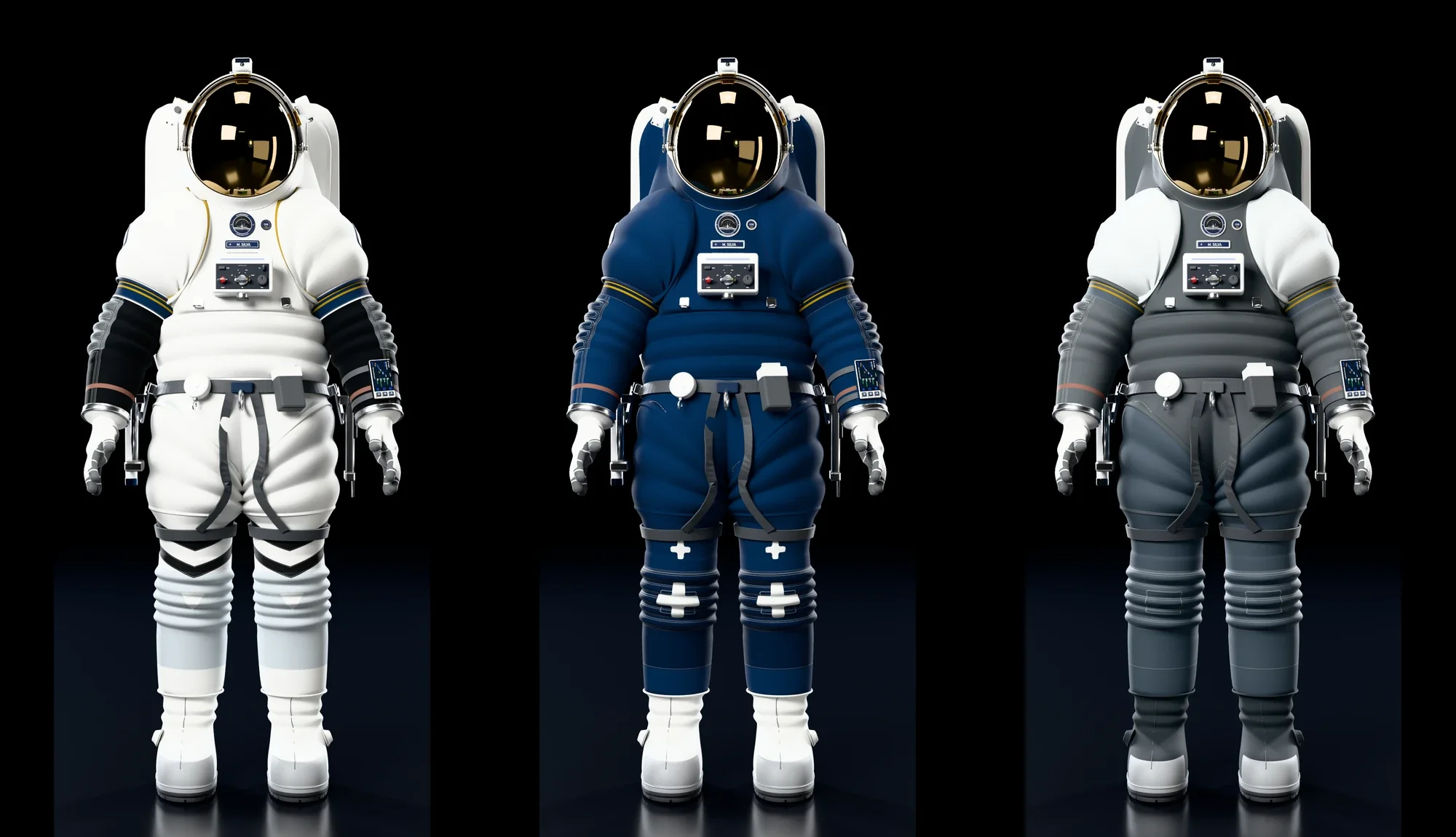
White, navy and grey
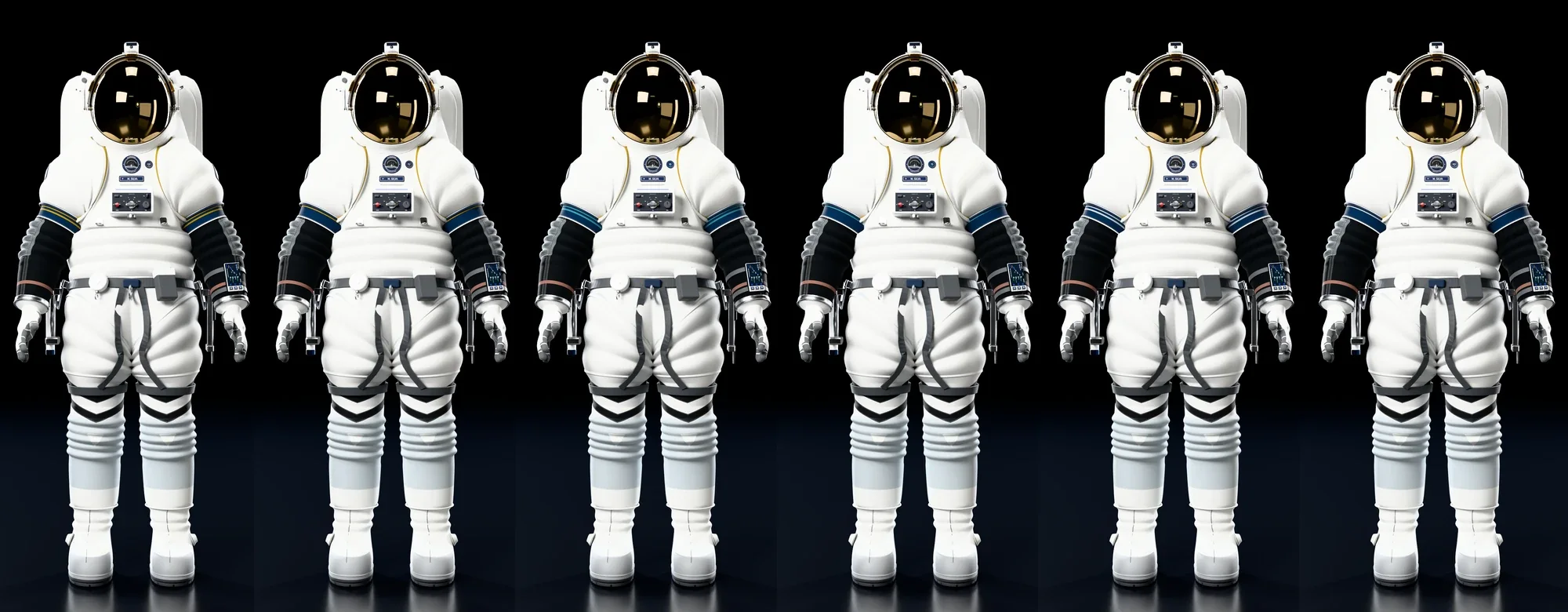
Six roles. A colour each.
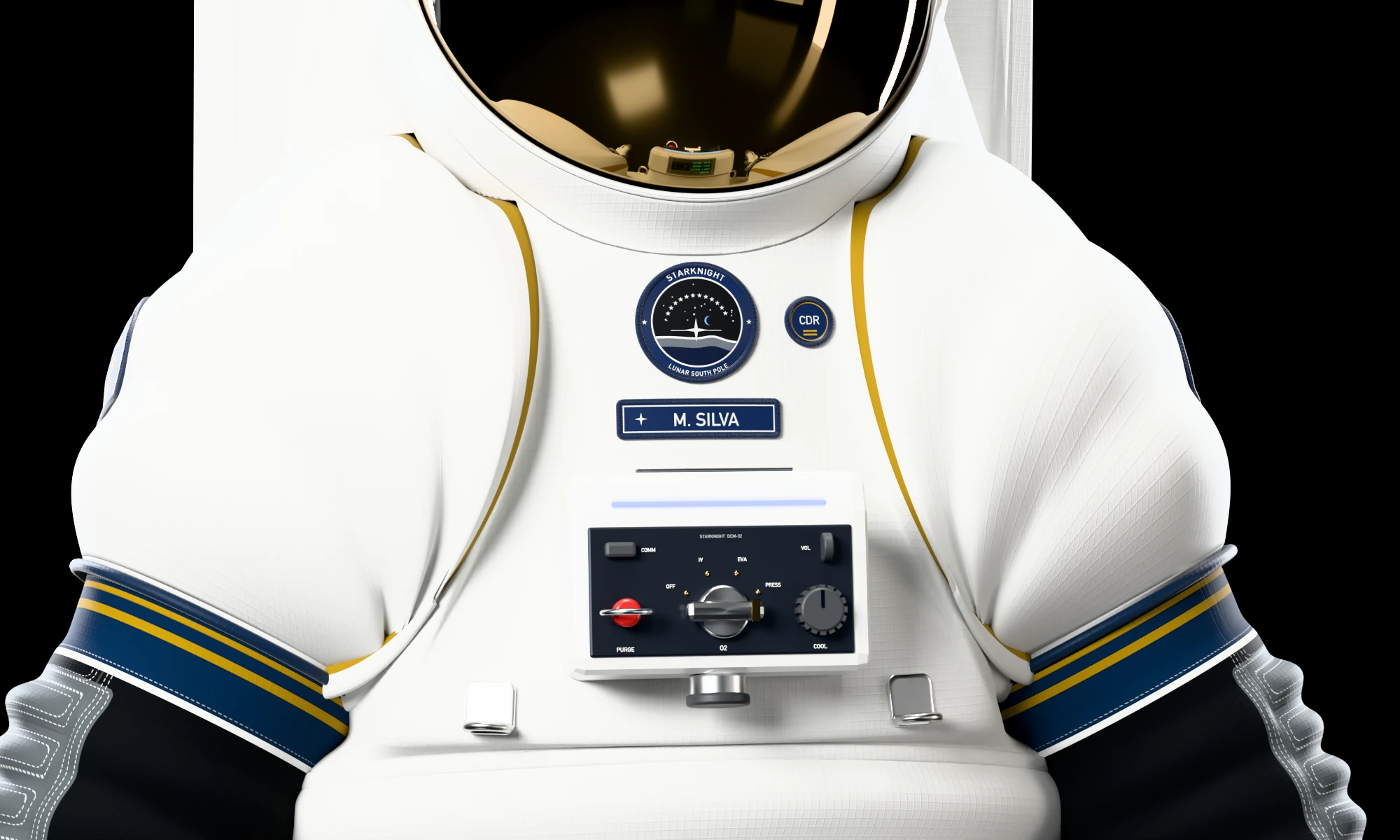
The chest. Patch and controls.
One of five.
StarKnight was one of the five winners of ESA’s 2023 spacesuit design competition, open to everyone in the member states.
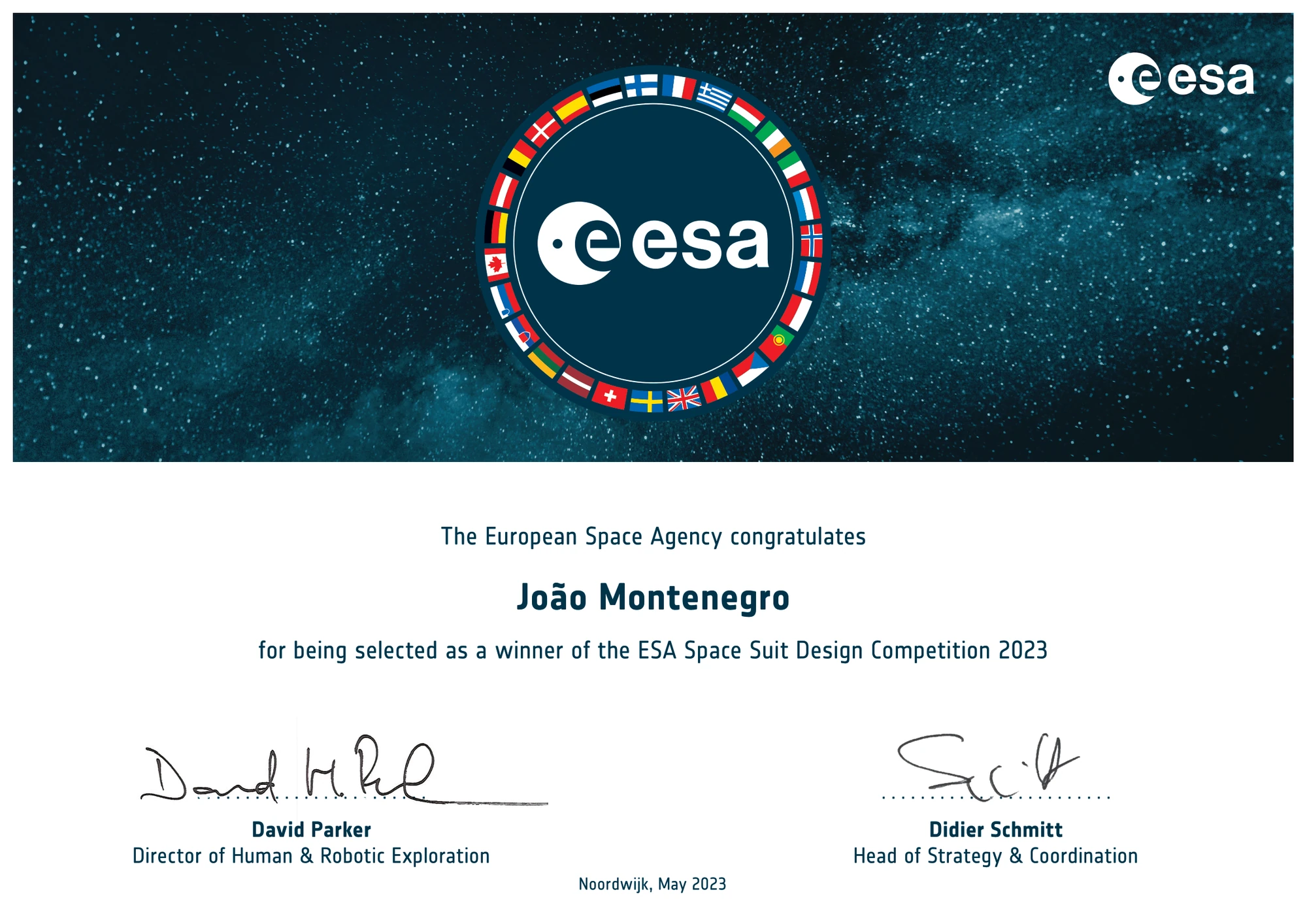
ESA’s certificate. 2023.
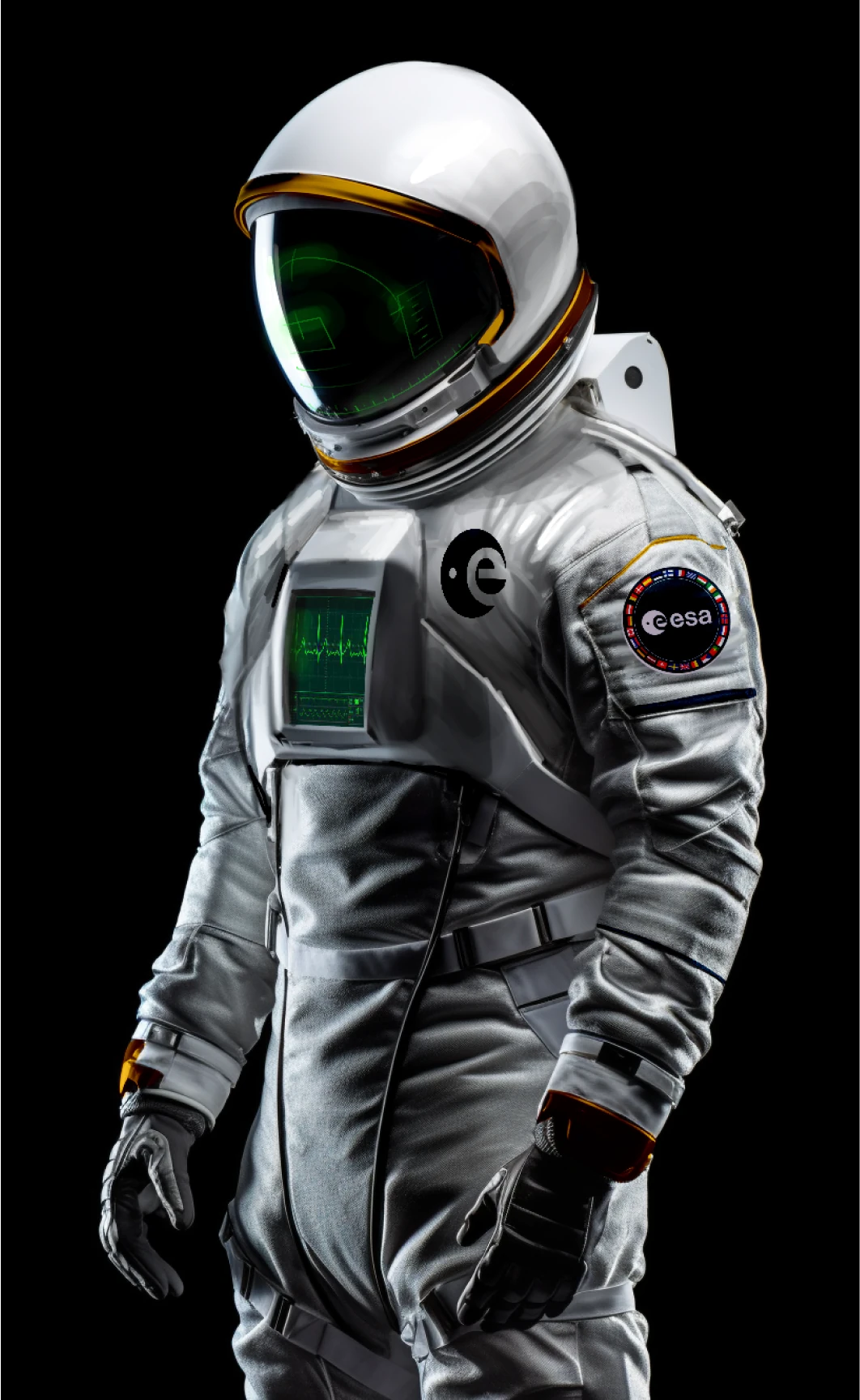
The 2023 concept. Before the 3D model.
Specifications
The model
- Software
- Blender 5.2.1 LTS, driven by Python scripts
- References
- NASA xEMU and Z2 models, Axiom AxEMU public photographs
- Body
- Blender Studio Human Base Meshes 1.4.1, CC0
- Suit
- 1,680 fixed meshes, no sizing morphs
Fit
- Fitting cases
- Six torso, arm and leg sets, three glove and boot sizes
- Elbow clearance
- Checked at 125° of flexion
Parts
- Helmet cowl
- 324 × 183 × 198 mm
- Backplate
- 474 × 507 mm, 42 mm deep
- Boot sole stack
- 38 mm
- Outsole footprint
- 164 × 329 mm
Backpack
- Oxygen
- 5 L primary and 4.5 L reserve, as internal-capacity targets
- Primary, 8 h with a 20% margin
- 0.96 kg
How it was made
The whole story at reading width: the 2023 concept, how the suit adapts, each part, and what the model does not cover.
Read the full study
How it was made
The 2023 concept was a set of images and sketches. It could not be fitted, posed or measured, so in 2026 I rebuilt it as geometry.
I worked with two AI agents, Claude and Codex, which wrote the Blender scripts. I set the references, looked at every render and rejected what looked wrong.
The work moved through these stages, roughly in this order:
- Real suit references were collected and measured.
- Each design choice was settled on a flat vector drawing before it was built in 3D.
- The suit was fitted around a full human body mesh.
- The joints, the chest module and the forearm screen were built, then the poses tested.
- The single suit was turned into fixed parts for six bodies.
- The sun visor, the visor covers and the life-support backpack were added, and what sits inside the backpack was checked.
What the model is made of
- Software
- Blender 5.2.1 LTS, driven by Python scripts
- References
- NASA xEMU and Z2 models, Axiom AxEMU public photographs
- Body
- Blender Studio Human Base Meshes 1.4.1, CC0
- Suit
- 1,680 fixed meshes, no sizing morphs
- Fitting cases
- Six torso, arm and leg sets, three glove and boot sizes
- Backpack
- 5 L primary and 4.5 L reserve oxygen, as internal-capacity targets
Where it started
The European Space Agency (ESA) is planning a new spacesuit for a new generation of crewed Moon missions.
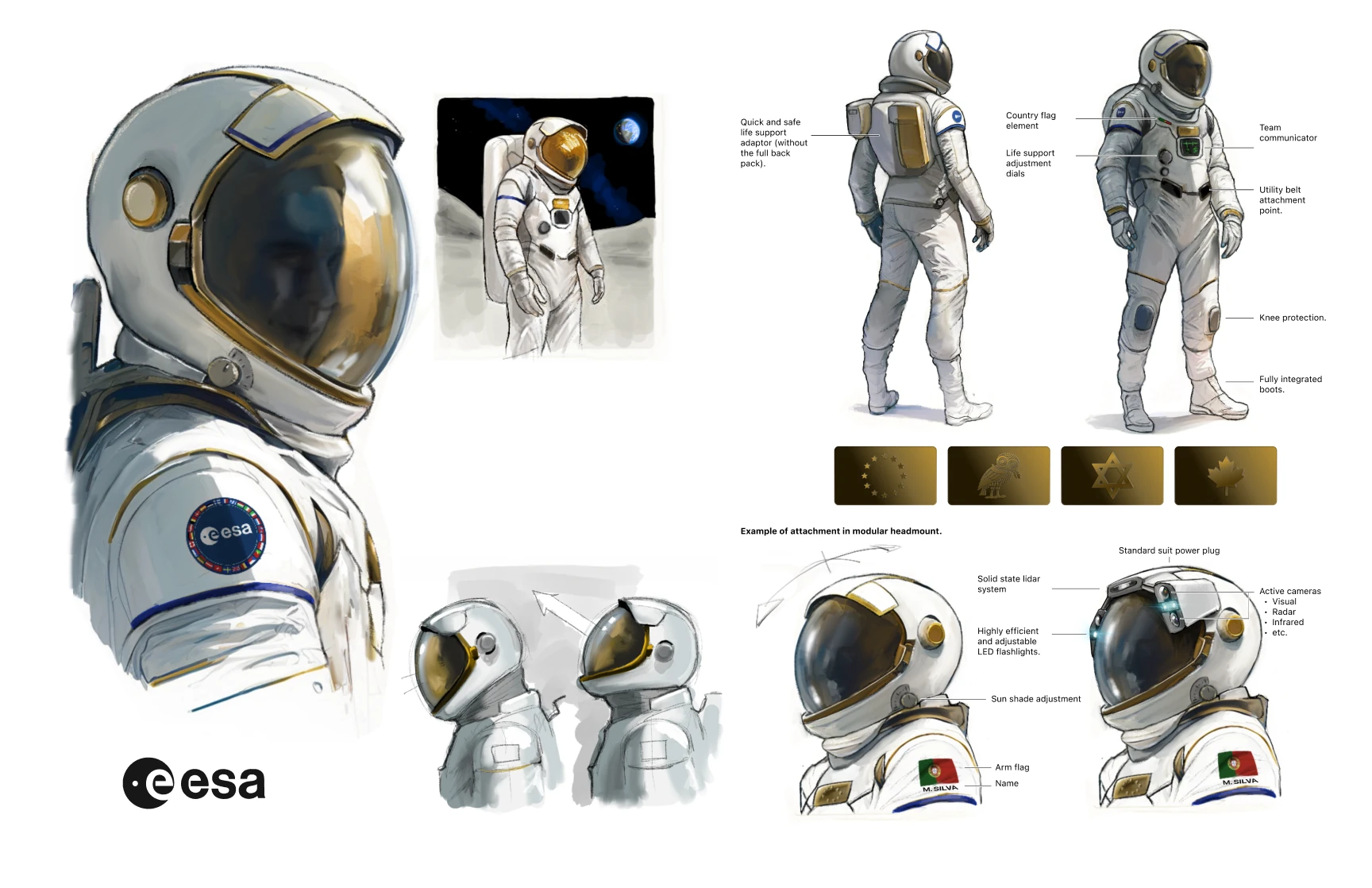
StarKnight is a concept selected in the ESA Space Suit Design Competition 2023, a competition open to everyone in the member states. The concept asks one question: can a spacesuit be something bigger than the sum of its parts?
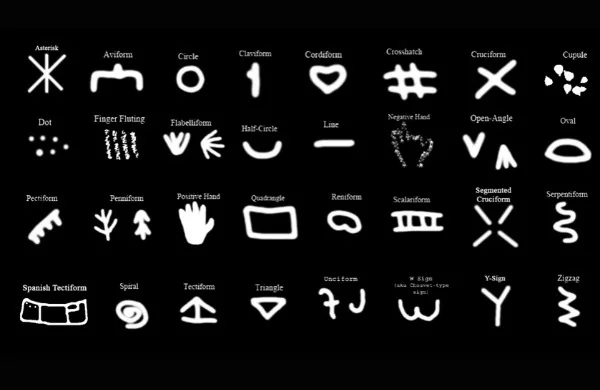
ESA unites 22 nations, each with its own history. The approach begins with a simple question: what is it that we bring with us? To understand this we must first gather images from the past.
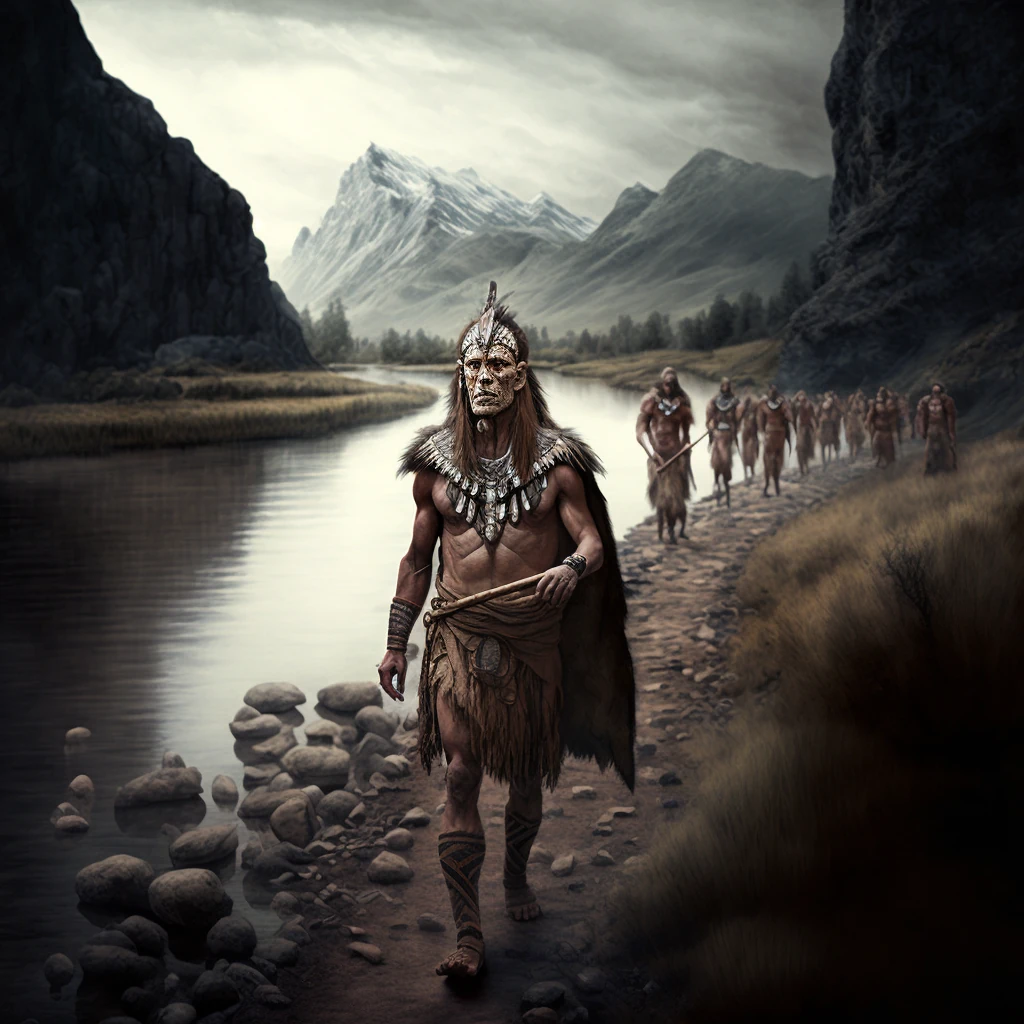
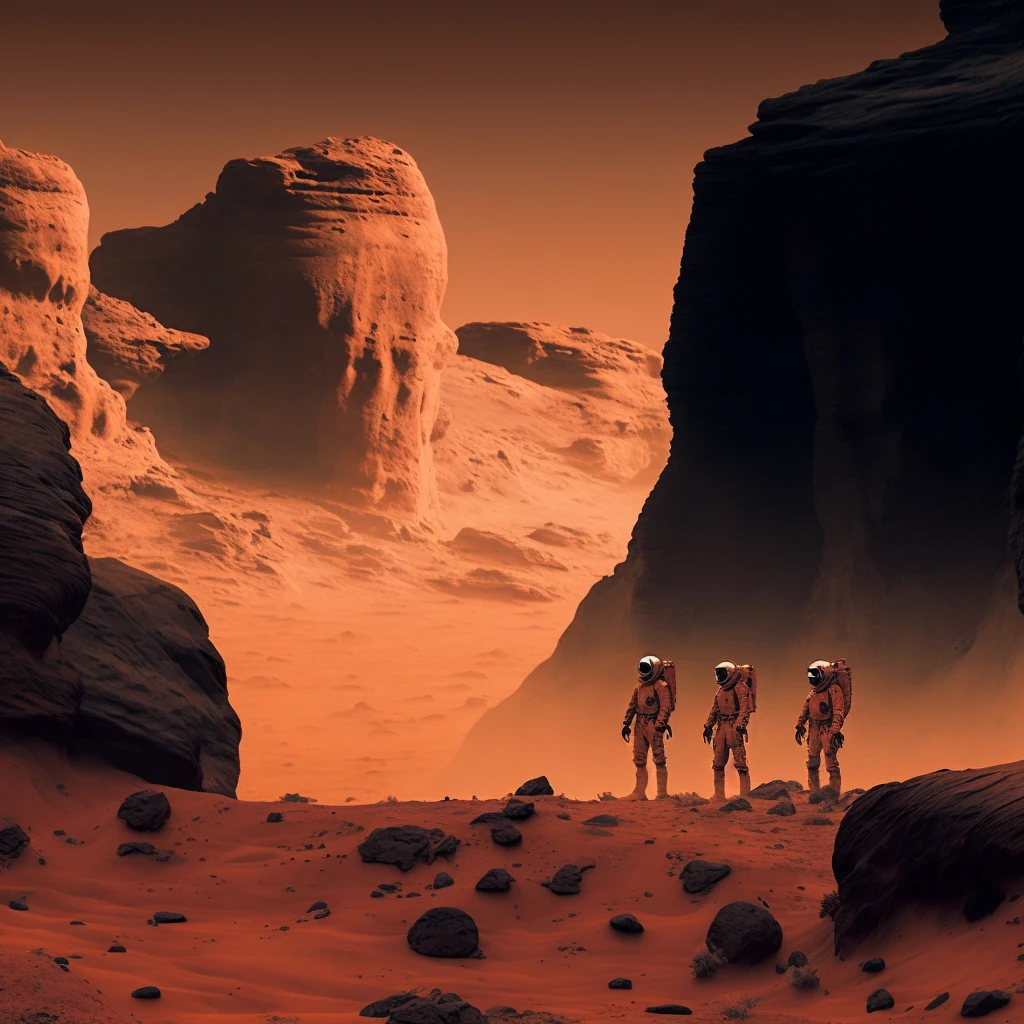
The generated images were tuned to incorporate many of the symbols and thus produced inspirational images, not a final product. From them it became possible to read the materials, colours and decorative elements that the design could use.

Sketches then settled the hard trade-offs.
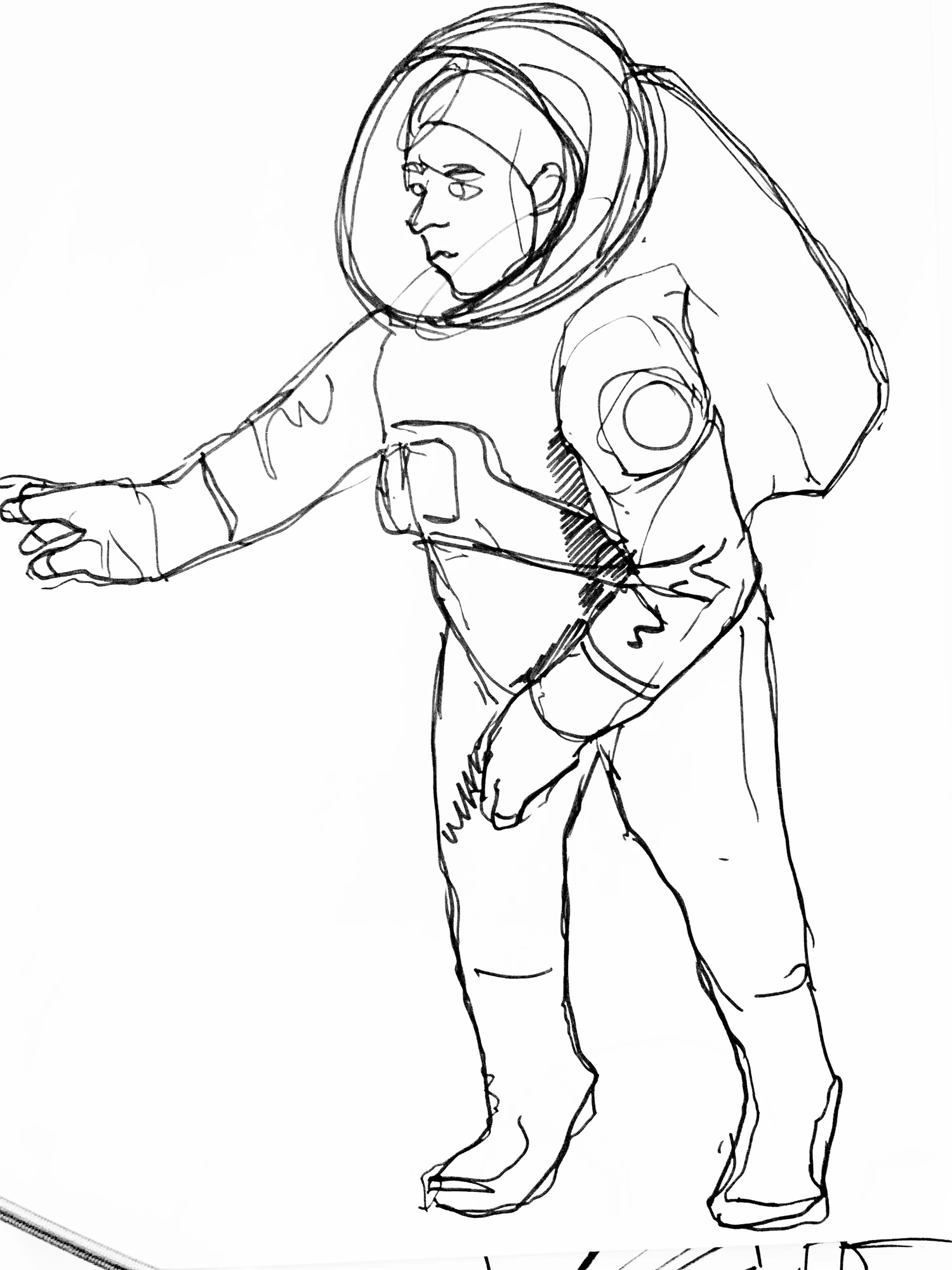
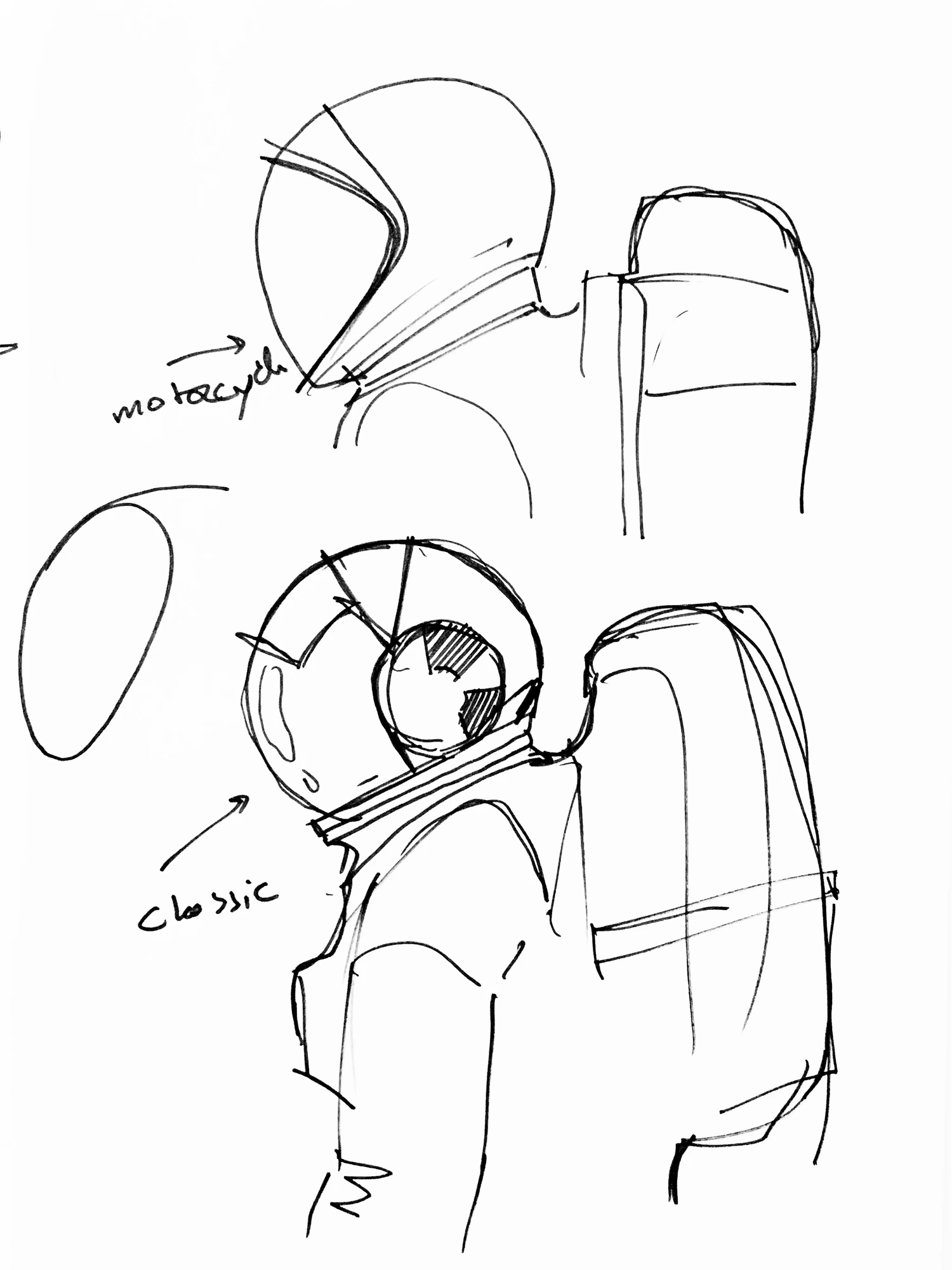
A helmet must provide visibility and also allow shading elements. A fixed helmet is less likely to fog the visor, leaves more volume inside for wearables, and allows drinking straws, a food supply or a Valsalva device.
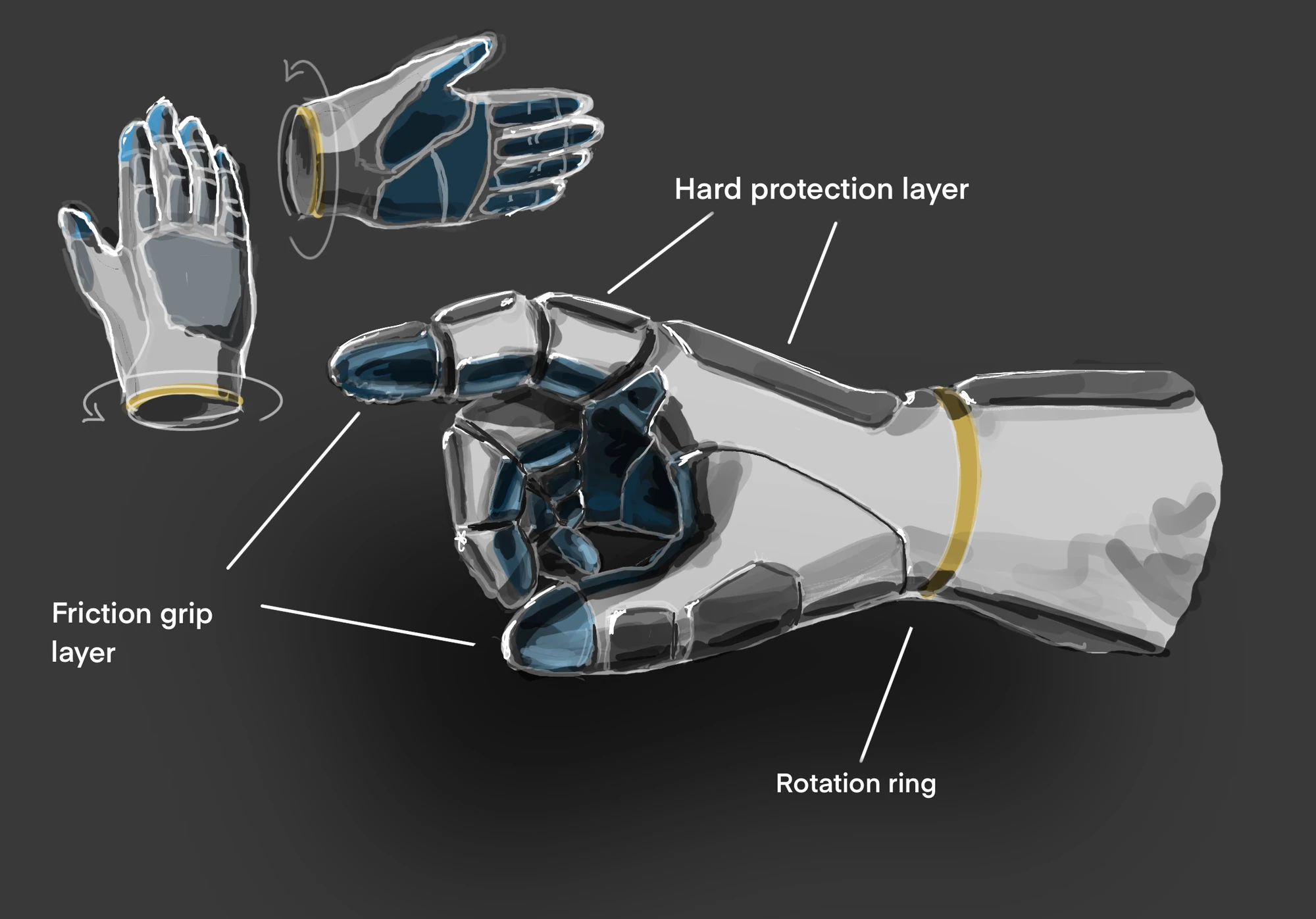
Gloves are one of the hardest parts of a suit. The sketch separates the grip layer, where wear happens, from a harder cover on the back of the hand that protects against impacts.
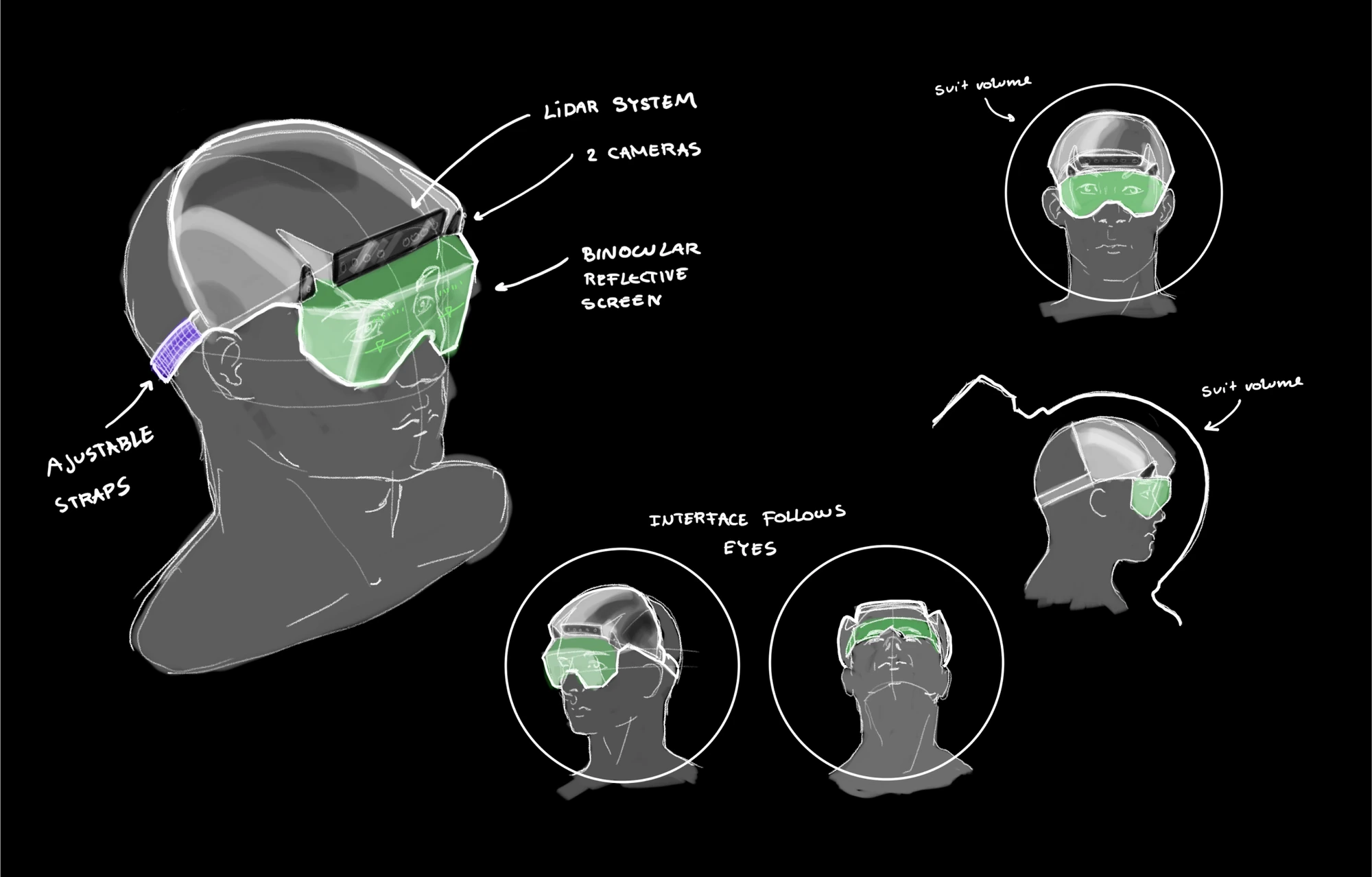
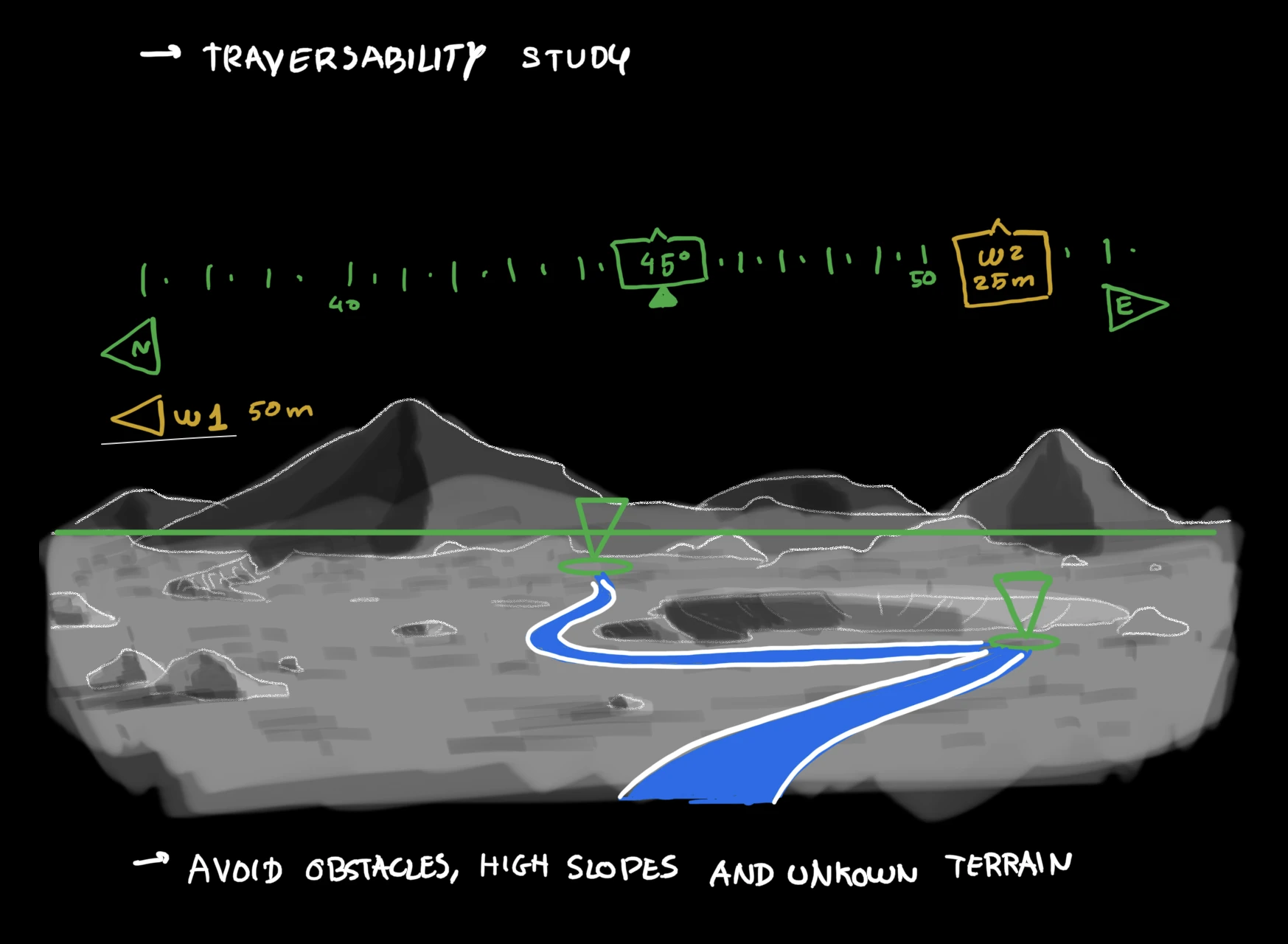
Astronauts have a hard time reading lunar terrain, because regolith reflects sunlight differently from most environments on Earth, and there is no lunar GPS. So the concept includes a helmet display. It helps with navigation, carries communication with other astronauts and mission control, and shows life-support metrics.
Communication is key for mission success. That means quickly explaining roles, indicating vital signs to team members, and expressing the astronaut’s personality and cultural heritage. I believe the last point is as important as the others, otherwise why send people to space at all?
How the suit adapts
A hard-shelled suit cannot stretch to fit different people, and the concept had to fit more than one. I first built one suit with a slider for every measurement. The final version has none: every part is fixed geometry, and parts are swapped whole.
A suit for a given body is a torso, a pair of arms and a pair of legs chosen from six sets, with gloves and boots chosen from three sizes. The parts meet at the shoulders, hips, wrists and ankles, and each joint has a datum position that every size shares. The six bodies are fitting cases I authored from Blender Studio’s body meshes.
| Case | Body |
|---|---|
| F155 | Female form, 155 cm |
| F168 | Female form, 168 cm, fuller torso |
| F180 | Female form, 180 cm |
| M165 | Male form, 165 cm |
| M180 | Male form, 180 cm, the reference size |
| M193 | Male form, 193 cm, broad build |
They are stress cases, not population percentiles and not six commercial sizes.
Attachment positions match their planned placements to 0.05 mm, and the reference size keeps its original joint geometry. That checks that the parts land where they should. It does not check that the suit fits a person: reach, joint effort under pressure, kneeling, walking, glove dexterity, boot fit and putting the suit on are all open. A rear hatch prototype exists as a separate study, and the way in is unresolved.
Ergonomics
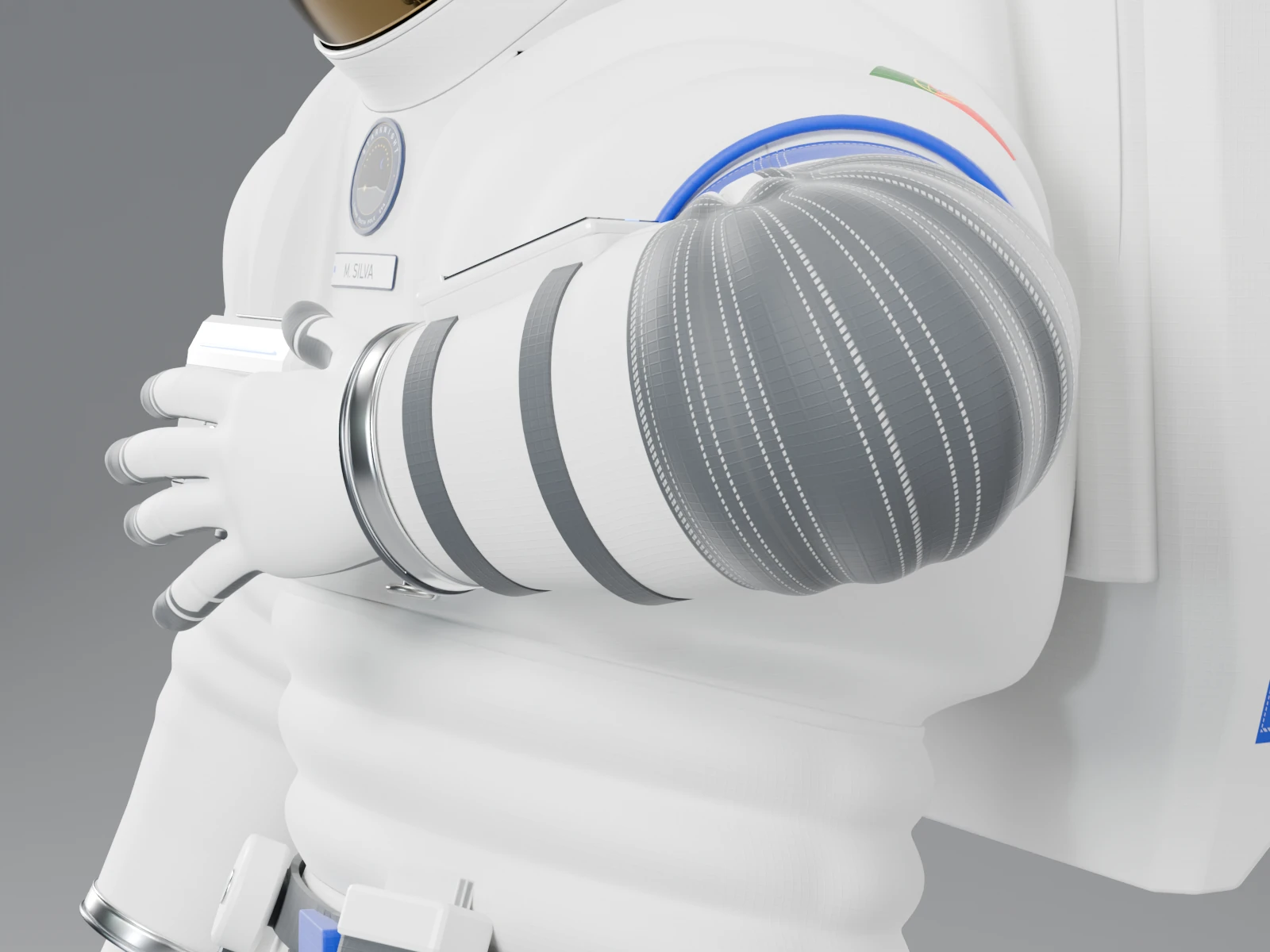
The joints keep the logic the concept was built around: gored sections at the knees and elbows, rolling sections at the shoulders and hips, and a bellows at the waist. The elbow was checked for clearance at 125 degrees of flexion, and the pose library covers walking, kneeling and using the forearm screen.
The suit was fitted around a full human body mesh instead of being placed over a picture. A section through the upper body, with the mesh inside, shows how the helmet, the chest module and the backpack sit around a person.
The sleeve is cut from flat pieces: an anterior panel, posterior panels and five elbow gores, each with a 10 mm seam allowance. That is a pilot for one sleeve, not a complete production pattern set.
The 3D suit adds a screen on the forearm, which is the way the astronaut interacts with the suit, and turns the concept’s helmet display into a head-up display on the visor. Display electronics, optics and thermal design are not modelled.
Inside the helmet
The head-up display is focused at 1.2 m and fixed to the helmet, so it stays put when the wearer looks around. It keeps the middle of the view clear: a heading tape at the top, time and comms in the upper corners, suit readings bottom left, the next waypoint bottom right and one caution line. Markers sit on the other crew member, the waypoint and the lander.
The forearm screen
Looking down, the display stays where it is because it follows the helmet. The forearm screen is part of the suit. It shows the route to the waypoint, the same readings and the next step of the traverse, and the other glove presses its buttons.
Aesthetics
To judge colour on geometry I made three colourways of the 3D suit: white, navy and grey. White stays the choice for sunlit work, as on EVA suits. Navy and grey absorb more sunlight, so they suit shadowed regions, training and ceremony.
Crew members need to tell each other apart at a distance. The coding uses three families in muted colours and bars on the sleeve. Gold is flight, for the commander and the pilot. Teal is science and payload. Silver is ground and medical. Two bars mark the lead of a family and one bar the support role. A small letter patch carries the code: CDR, PLT, MS, PS, DIR and MED. The first four follow standard NASA crew titles.
The chest patch was placed using measurements from ten poses, including reaches, kneeling and using the forearm screen. It almost always stays in view of a person facing the wearer and never comes within 6 cm of a moving glove or forearm.
Boots
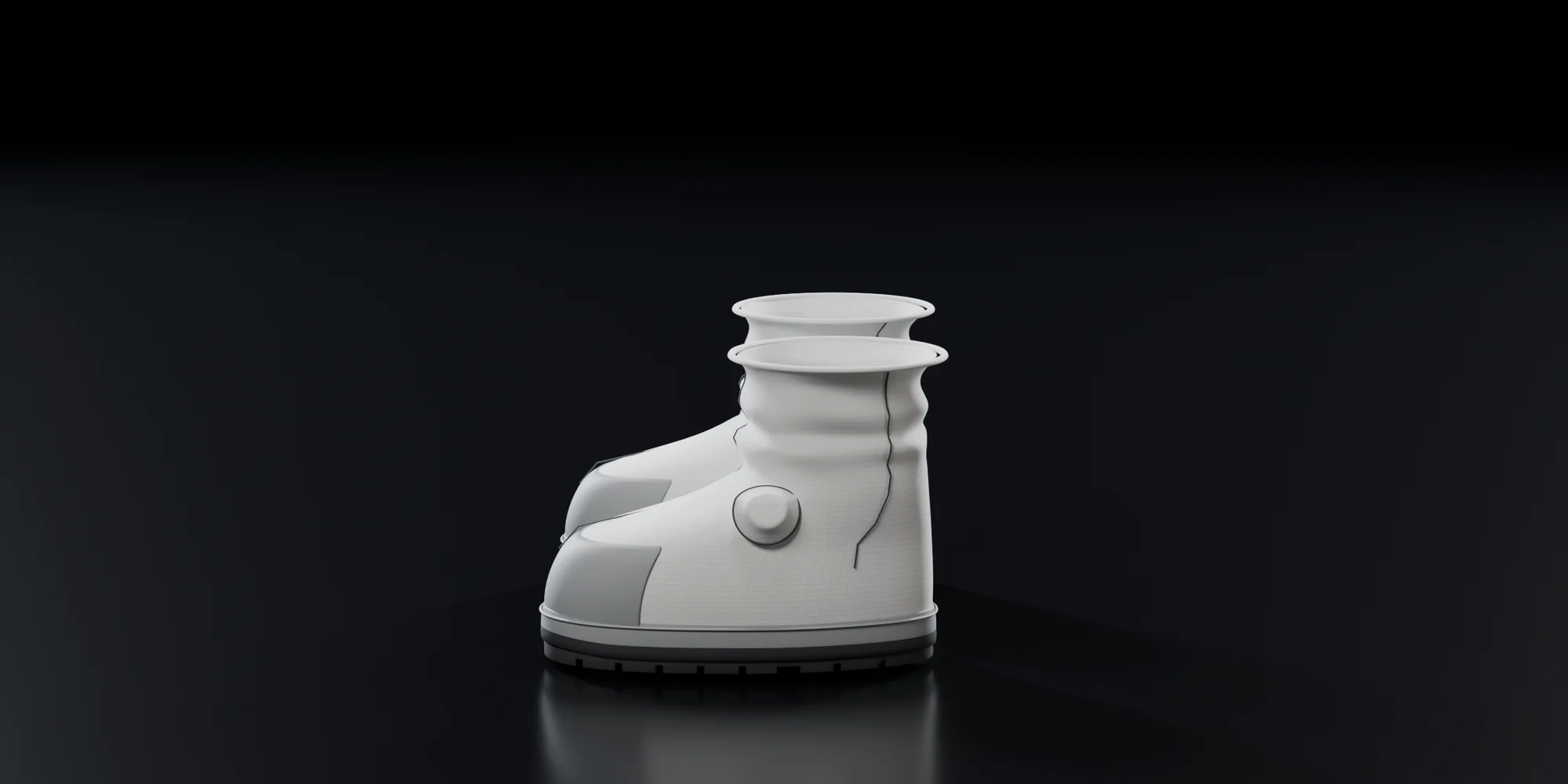
The boots follow NASA’s xEMU boot development photographs: a rounded forefoot, a tall padded cover, ankle flex folds, a molded outsole, a continuous rand and toe cap, and a covered tightening access. They are built around the feet of the same body mesh as the rest of the suit. The boot meets the leg 255 mm above the ground, and the sole stack is 38 mm thick. Those are proportions of the model, not thermal or stiffness figures.
The boot bends in two places. The upper hands over from foot to shin across an ankle band, and the front of the sole bends about a line through the ball of the foot. Only the standing fit has been checked against the wearer’s foot.
Gloves
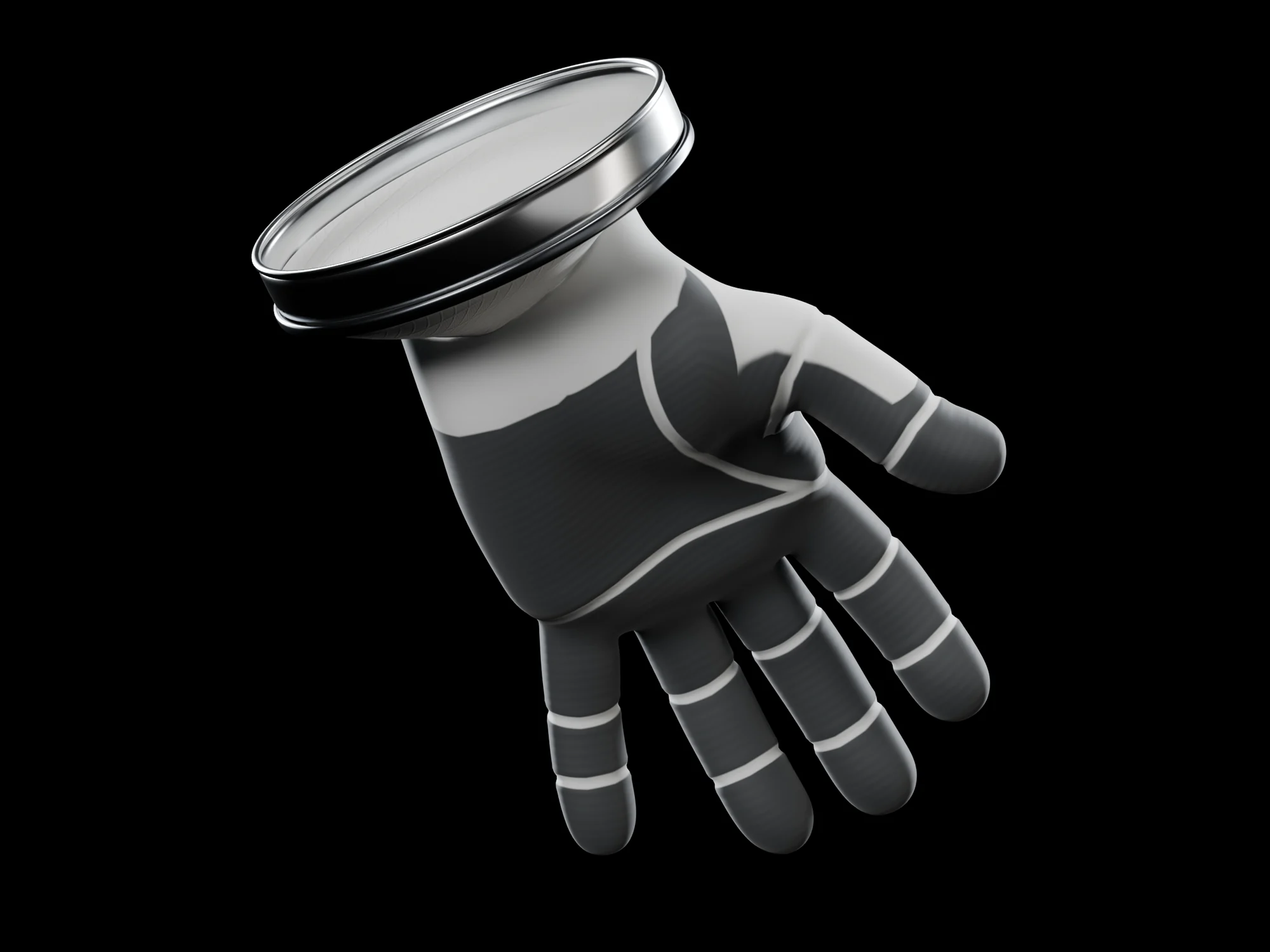
The 3D glove is one continuous cover on a rigid wrist ring. The grey zones are silicone grip, the palm has curved flex breaks and the finger joints have creases, and the creases are real geometry. The fine grip ribs are only shader detail.
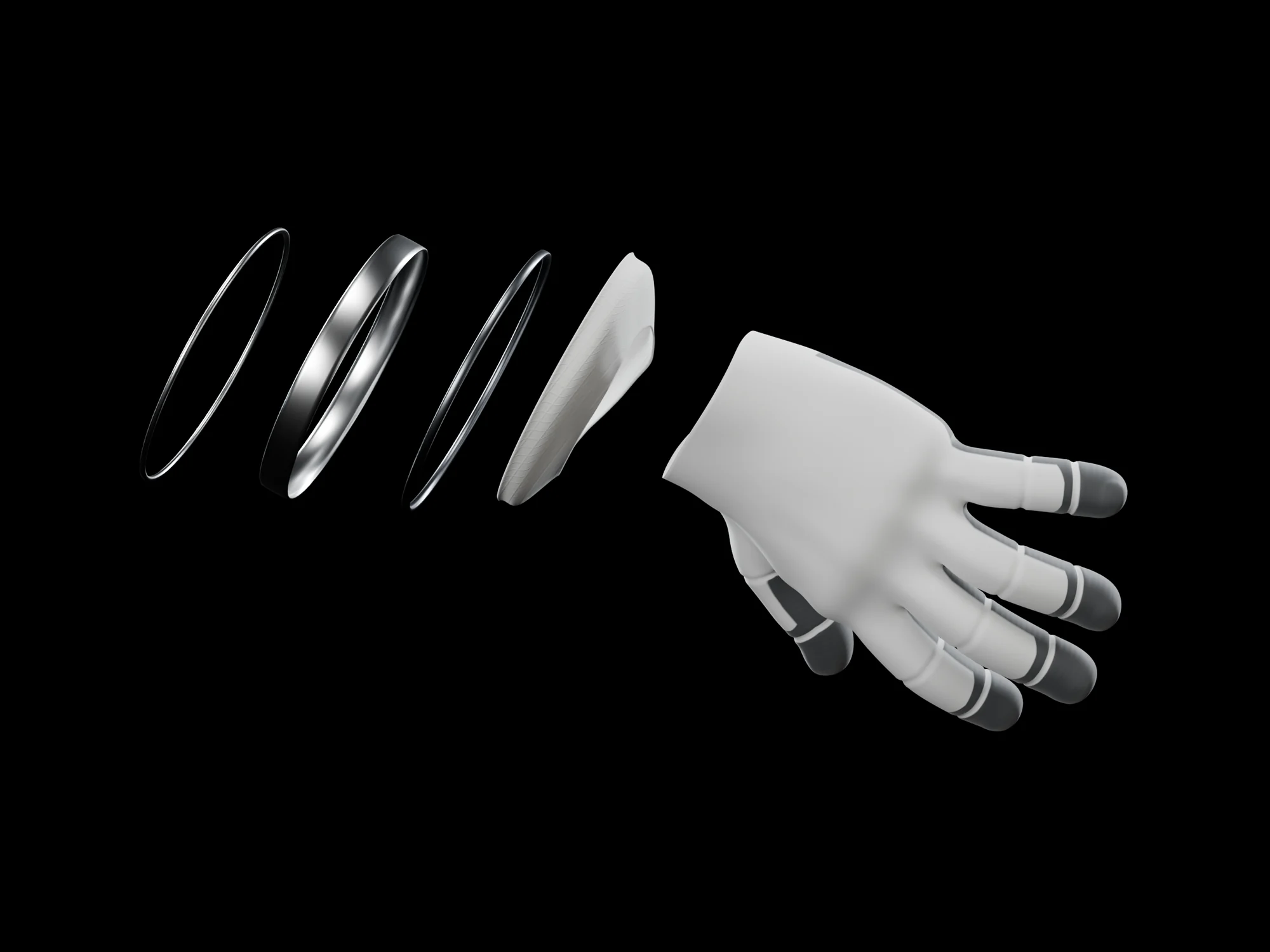
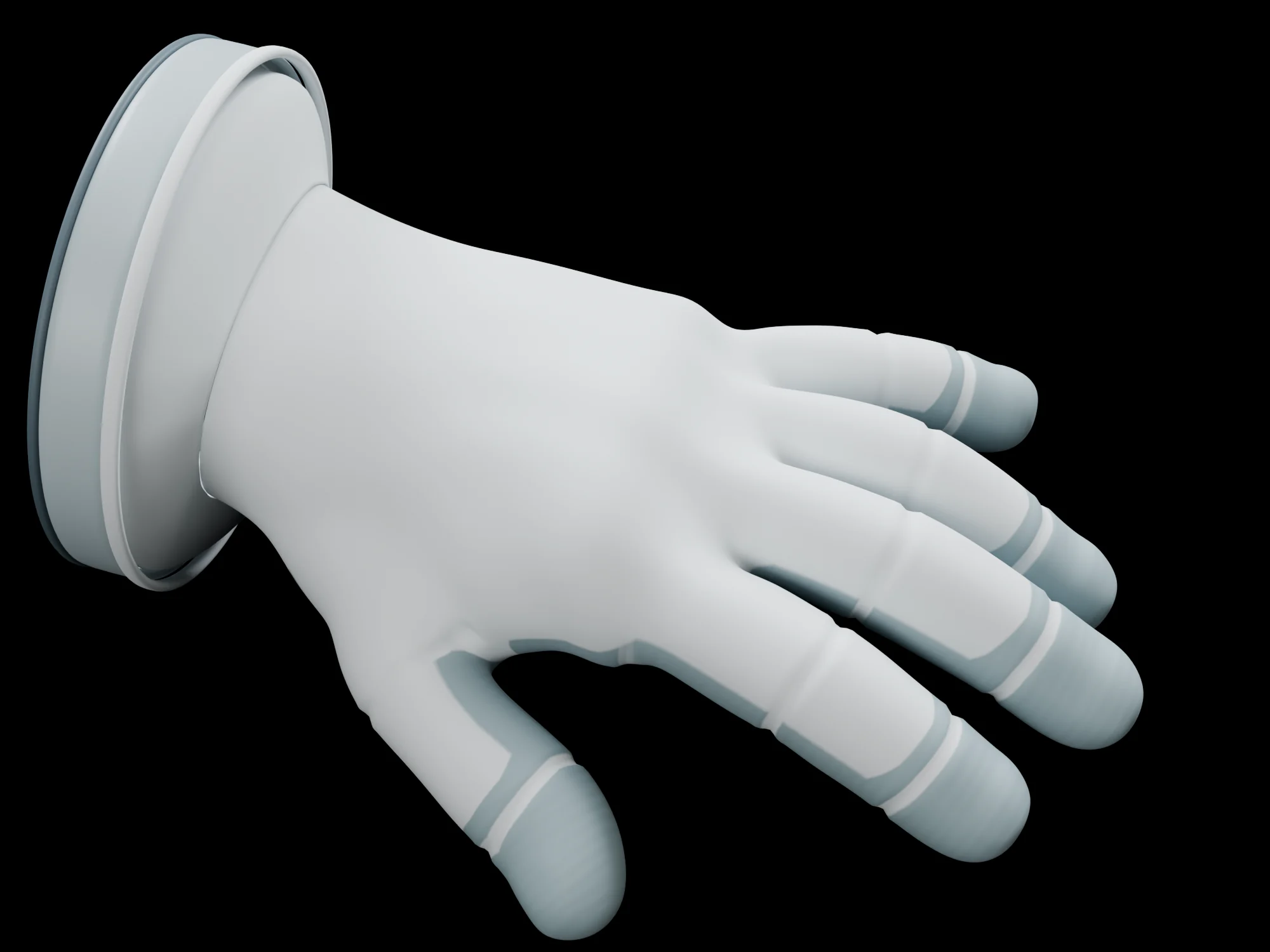
In the full suit the glove is rigid at rest. The pictures below are a separate study of the same glove on a rigged copy of the wearer’s hand. Five states pass the skin and self-intersection checks: relaxed, a moderate tool curl, a hook, a working curl and a pinch approach. The pinch stops about 1 mm short of contact. Deeper curls fail the checks and are not accepted grips. The stiffness of pressurised fabric is not simulated.
The helmet
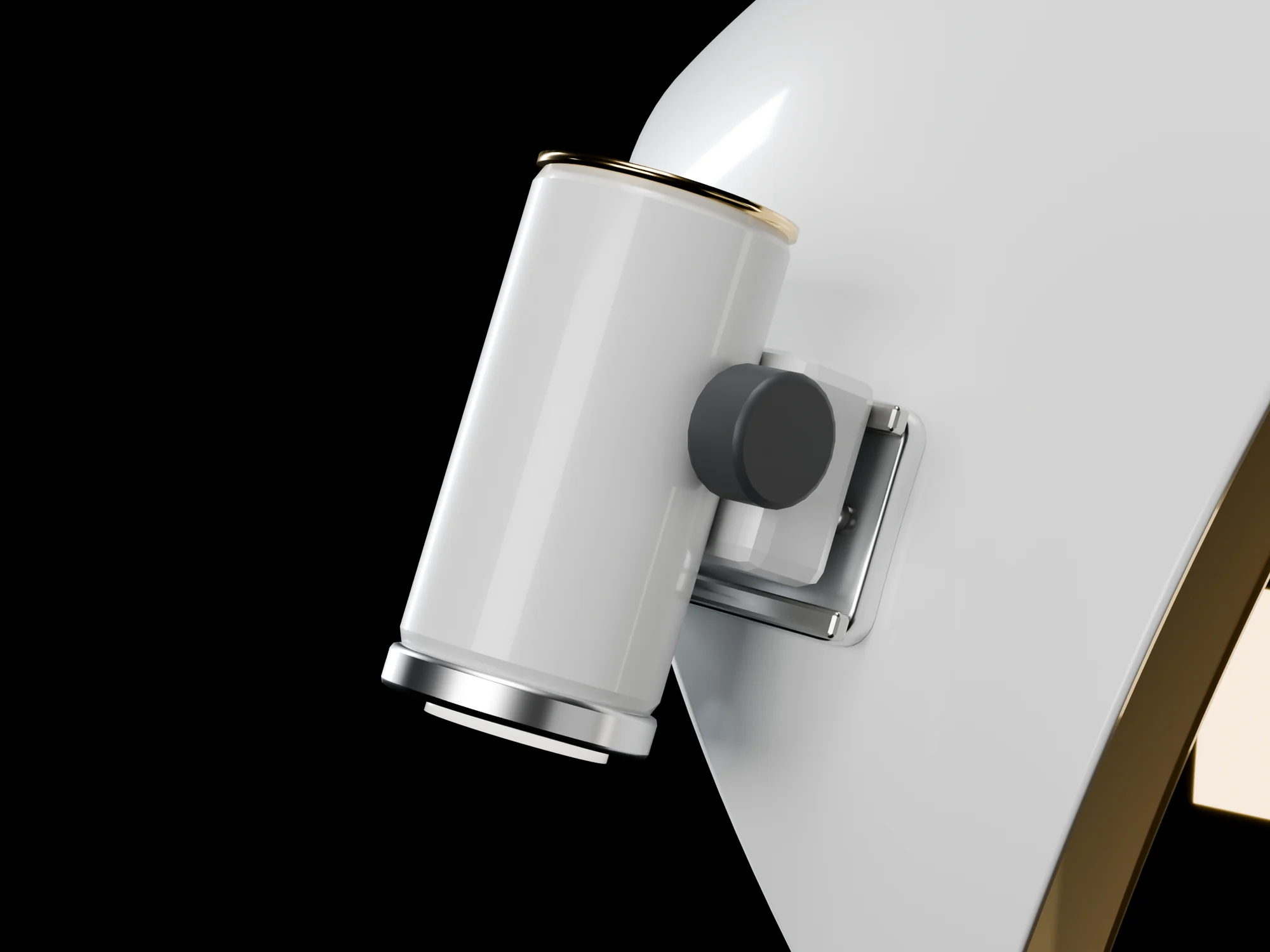
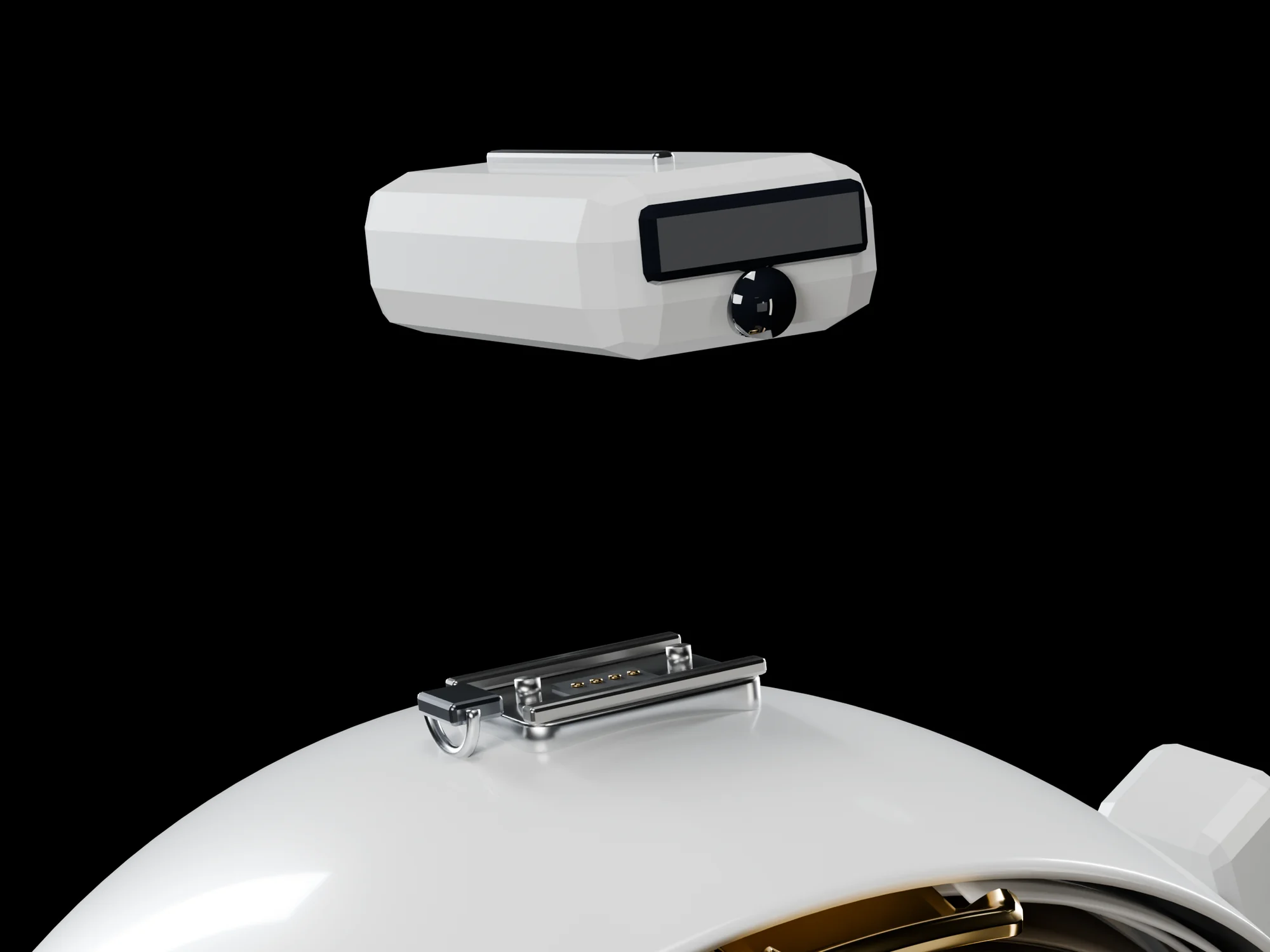
The helmet is a fixed shell with three stations for modules, a gold sun visor that rotates up and three covers that slide over it.
The three stations share one interface. A module slides onto a dovetail shoe and a spring latch holds it. Releasing it takes two actions, sliding a guard and then pressing the latch, so one slip cannot drop a module. The shoe floor carries sealed wipe contacts for power and data, recessed so that dust is scraped off as the module slides in.
Modules swap between stations. The crown takes the lidar and navigation camera. A temple takes either a pair of LED lights, one wide and one narrow, or a visual and infrared camera. In the model the light pod is at one temple and the camera pod at the other. The dust cap for an empty station and all the electronics are not modelled.
The visor
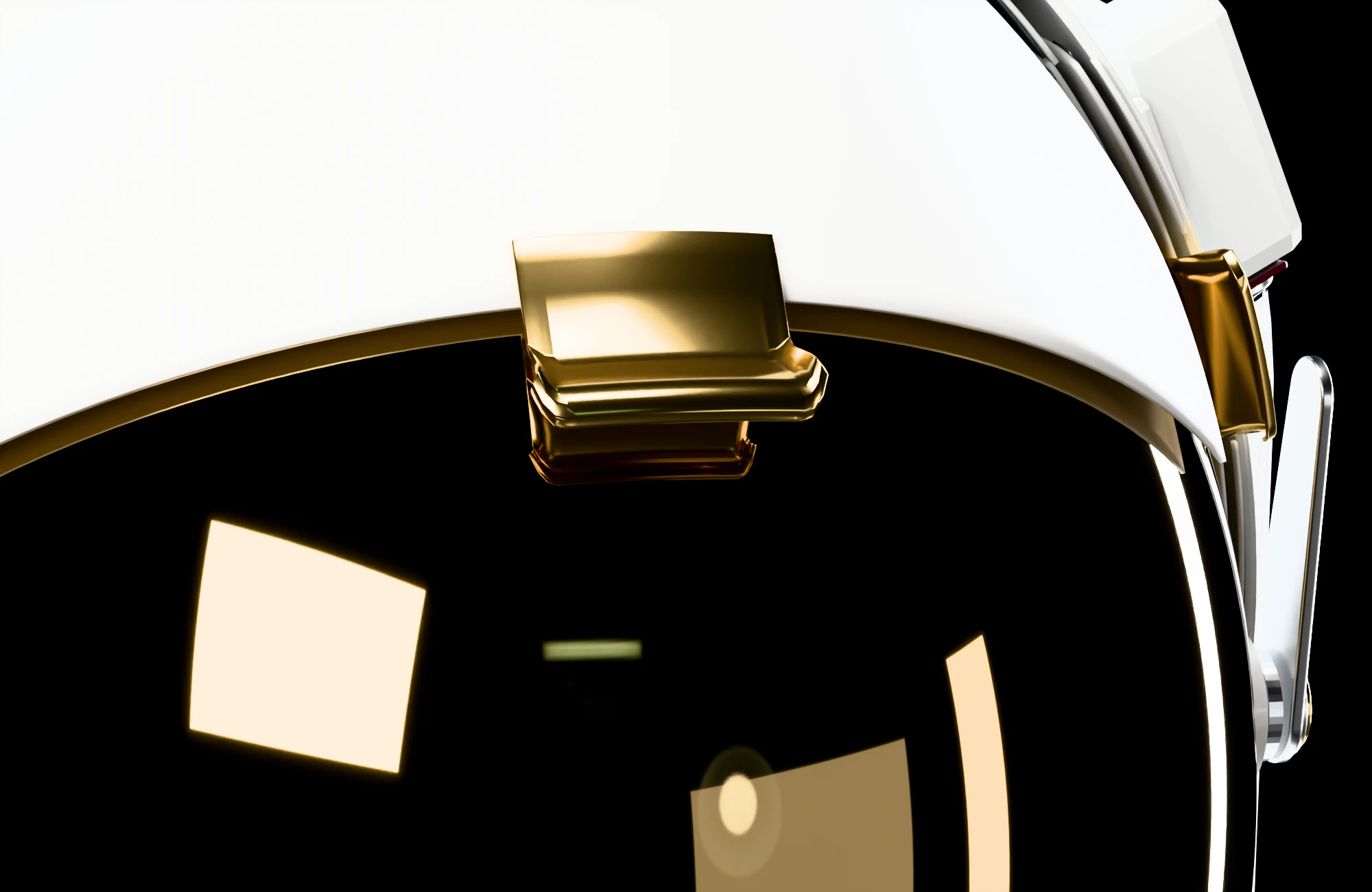
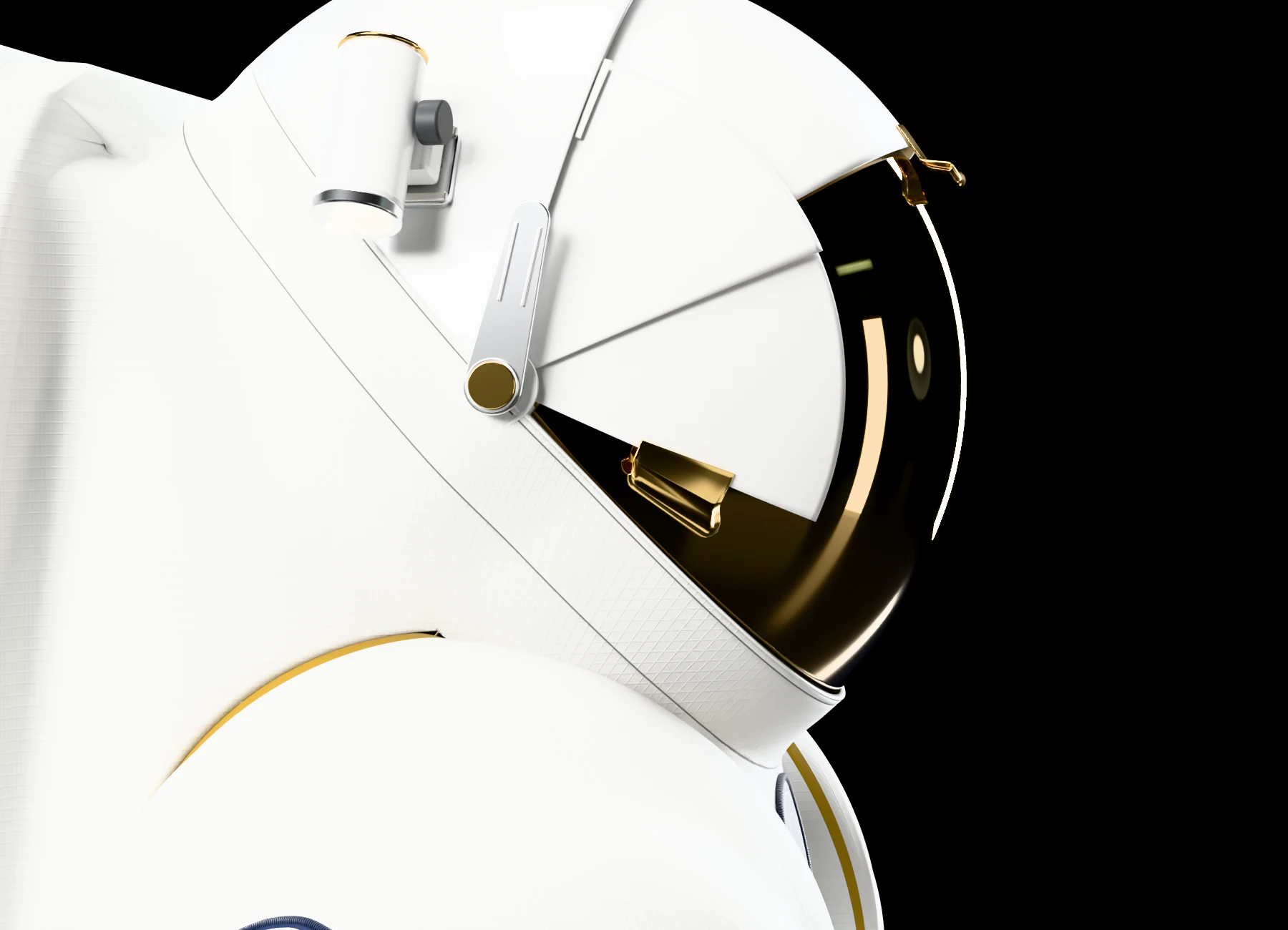
The gold layer is a reflective sun visor, a separate part from the helmet. The wearer lowers it to cut glare and rotates it up on the helmet’s common axis, under the upper cowl, to stow it. Raised, it leaves only the clear pressure bubble over the face. The head in these renders is the mannequin the suit was fitted around.
In front of the visor are three independent partial covers: one for the centre and one for each side. Each is a thin leaf that stows against the helmet rim, runs on its own guide track and has a gold pull tab. They close in any combination, so the astronaut can shade the part of the view that faces the sun and keep the rest open. The idea follows the sunshades on NASA’s xEMU, which I used as a reference.
The model shows the geometry and the motion only. Optical density, glare, fogging and heat were not studied.
The backpack
The backpack holds the oxygen, the air-treatment and cooling hardware, and the power and radio electronics. It is one rigid part shared by all six sizes, and its cover is a door that separates for inspection.
What is inside
Here the door and the casing are taken away and the pack is seen from behind. Everything is carried on one backplate.
How much oxygen
NASA’s reference loss rate for a spacewalk is 0.1 kg of oxygen per crew-hour. Over eight hours, with a 20% margin, the primary tank has to deliver 0.96 kg. For the reserve I chose an emergency case of 30 minutes at 0.9 kg per hour, also with 20% on top, which needs 0.54 kg. The figures come from NASA’s Baseline Values and Assumptions.
To see whether the tank volumes are enough I estimated the oxygen they could give between a 3,000 psig fill and a 300 psig regulator cut-off, treating the gas as ideal.
Primary tank
Reserve tank
kg of usable oxygen
- Needed
- 20% margin
- First layout
- Current layout
At 20 °C both tanks hold well over what is needed. In the 40 °C case the primary falls to 0.99 kg, only 4% above the 0.96 kg it must deliver, so that margin is thin. The first layout was worse. Even if the whole outside volume of its tank space had been gas, it would have given 0.35 kg against the 0.96 kg needed in the primary, and 0.33 kg against 0.54 kg in the reserve. That is why I rebuilt the interior around larger tanks, turned the two cartridges on their sides and stacked the electronics, at the cost of 20 mm of extra depth.
The case is one hollow shell with a stepped seat for the door. In the model the gap around the door is 1.6 mm all the way round, plus or minus 1.2 micrometres, and four identical bumpers are inlaid at the corners. All 115 internal parts sit inside the closed casing and door, and the electronics tray clears it by 7.3 mm or more.
What the model does not cover
Only the geometry is checked, in one closed pose. The model does not cover:
- Pressure seals and the interface between suit and backpack.
- Access to the radio and battery ports.
- Reach, joint effort under pressure, kneeling and walking in the new sizes.
- Glove dexterity, boot fit and the way in.
- Cooling, CO₂ removal, water and battery endurance for eight hours.
- Vessel ratings and emergency oxygen delivery.
- Tolerances, latch and door operation.
- The sun visor and the visor covers: optics, heat and the force needed to move them.
- Helmet modules, the glove’s wrist ring and the boot’s tightening access: power, data, seals, rotation and release force. They are shapes only.
- A qualified set of sizes: the six bodies are a fitting exercise.
Credits: body meshes from Blender Studio, CC0. NASA’s xEMU and Z2 models and Axiom Space’s public AxEMU photographs served as references for proportions only. NASA does not endorse this project. In the Moon renders, the regolith and rock scans come from Poly Haven (CC0) and the Earth maps from NASA Visible Earth and Solar System Scope.
Media
Watch the launch post on LinkedIn
Prize
StarKnight was one of the five winners of ESA’s 2023 spacesuit design competition. ESA’s page on the winners has the details.
- Year
- 2023–2026
- Field
- Aerospace
- Role
- Design and research
- With
- ESA Space Suit Design Competition 2023
- Status
- Competition winner, 2023. 3D model in development, 2026.