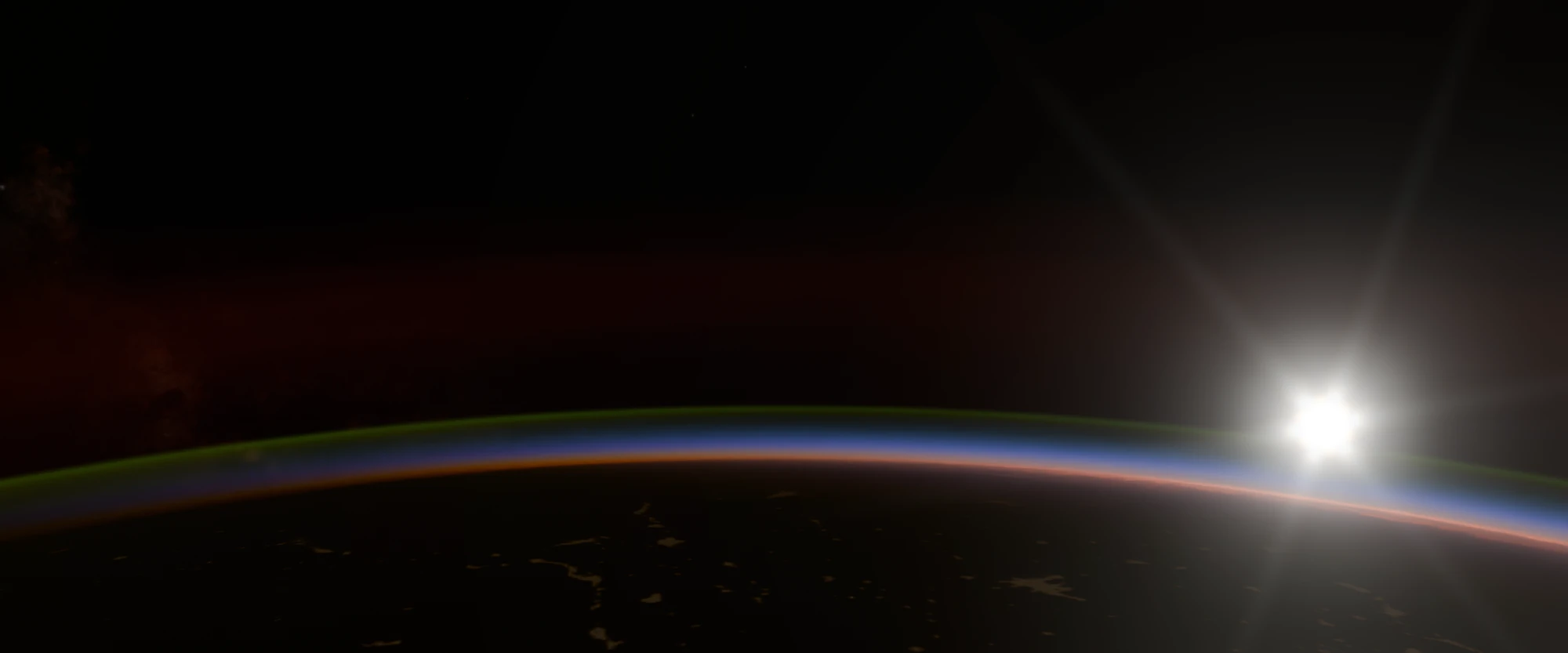
Nazaré
Autonomous space laboratory
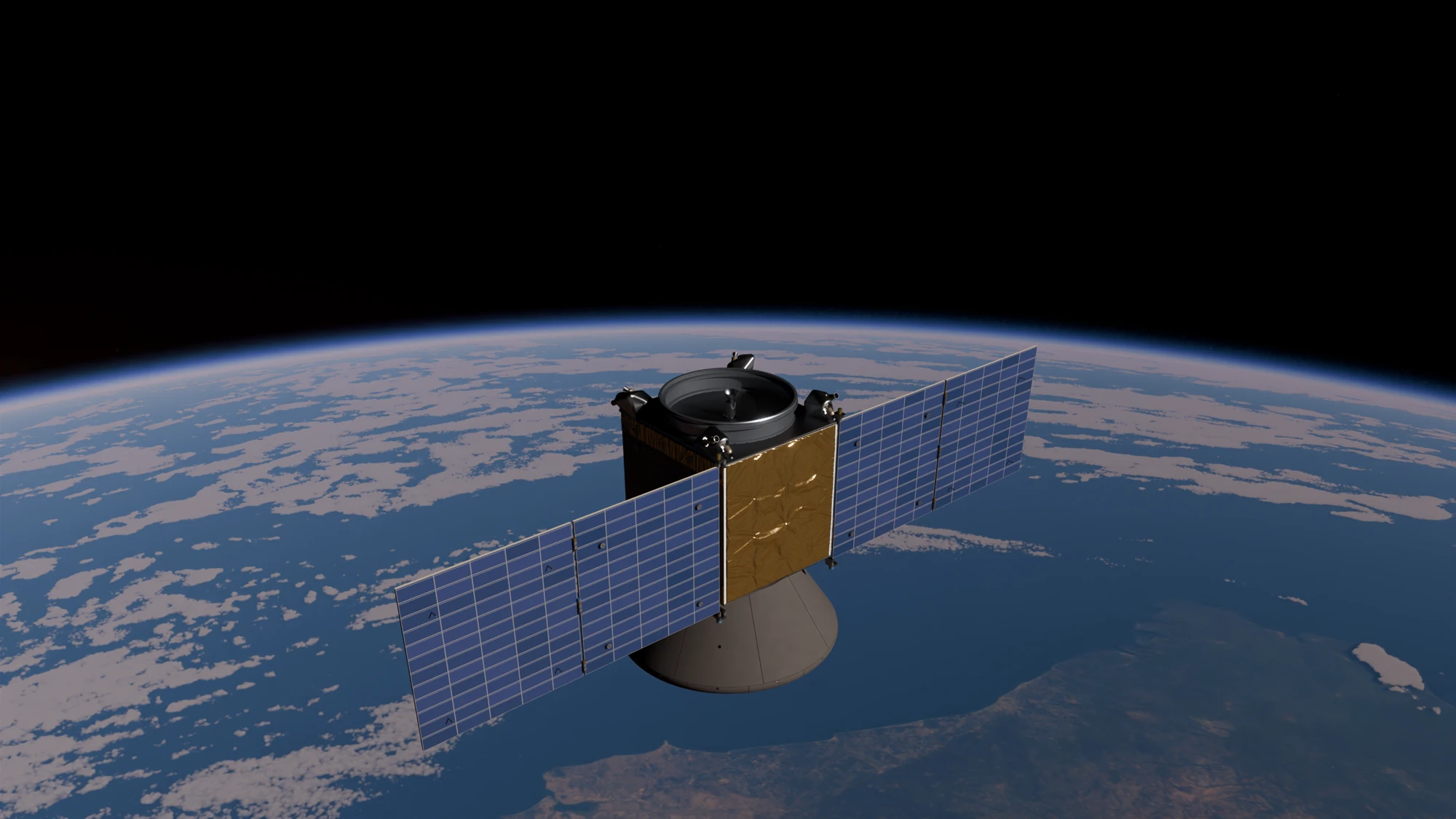
Nazaré is a spacecraft that takes a robotic laboratory to orbit and brings its products back to Earth. It runs a crystal growth study for 30 days with nobody on board, then returns the lab to the ground inside a capsule 1.14 m across.
- 30 days
- in orbit, 28 of them for science
- 48 cells
- of crystals, imaged twice a day
- 1.14 m
- return capsule, PICA heat shield
- 308 kg
- at launch, with a 25 percent reserve
A laboratory with nobody on board.
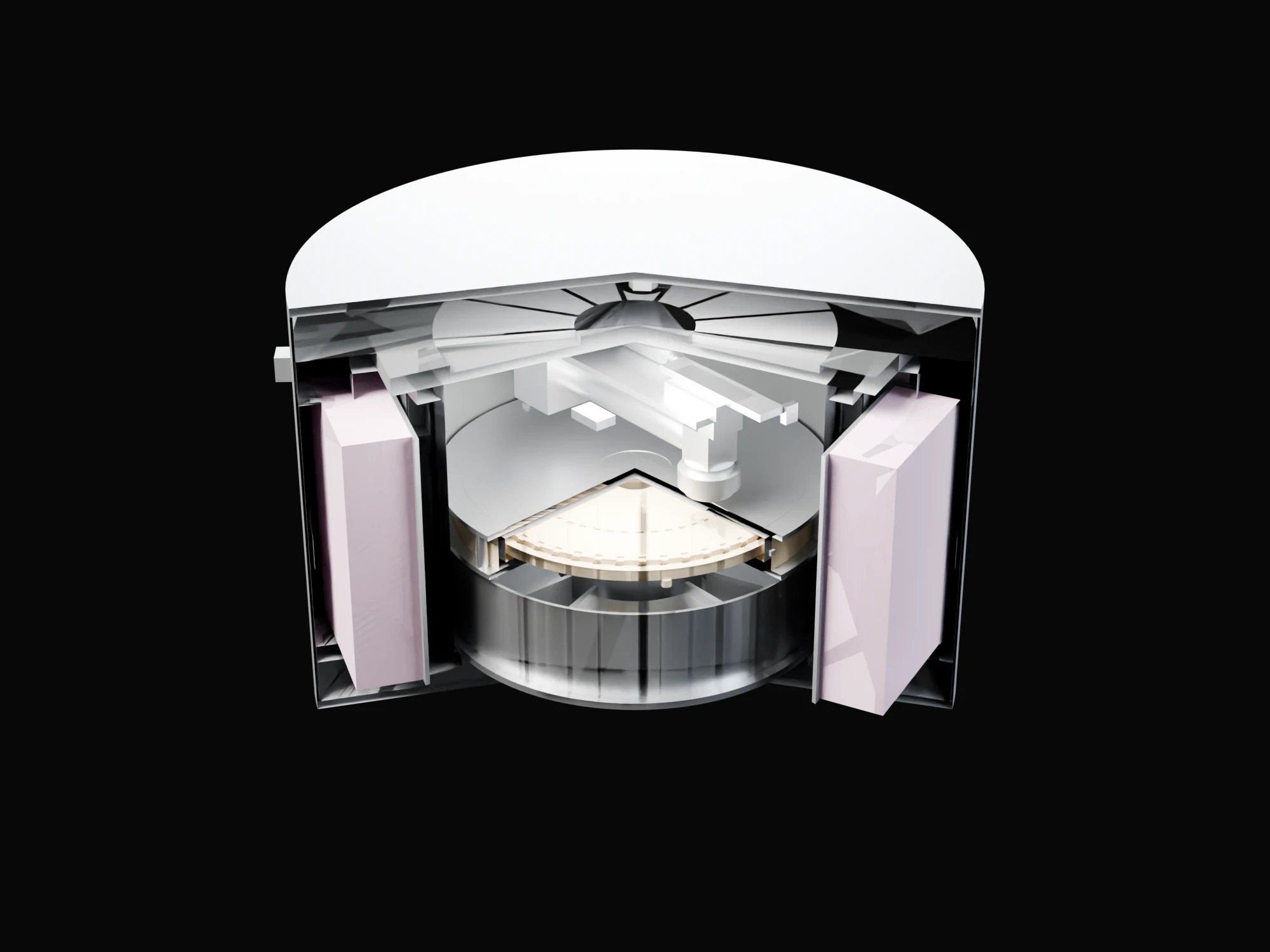
Forty-eight experiments start themselves on the first day, are photographed twice a day for a month and come home at 20 °C. No crew and no station: the lab does every step itself.
Day one: the cells start themselves.
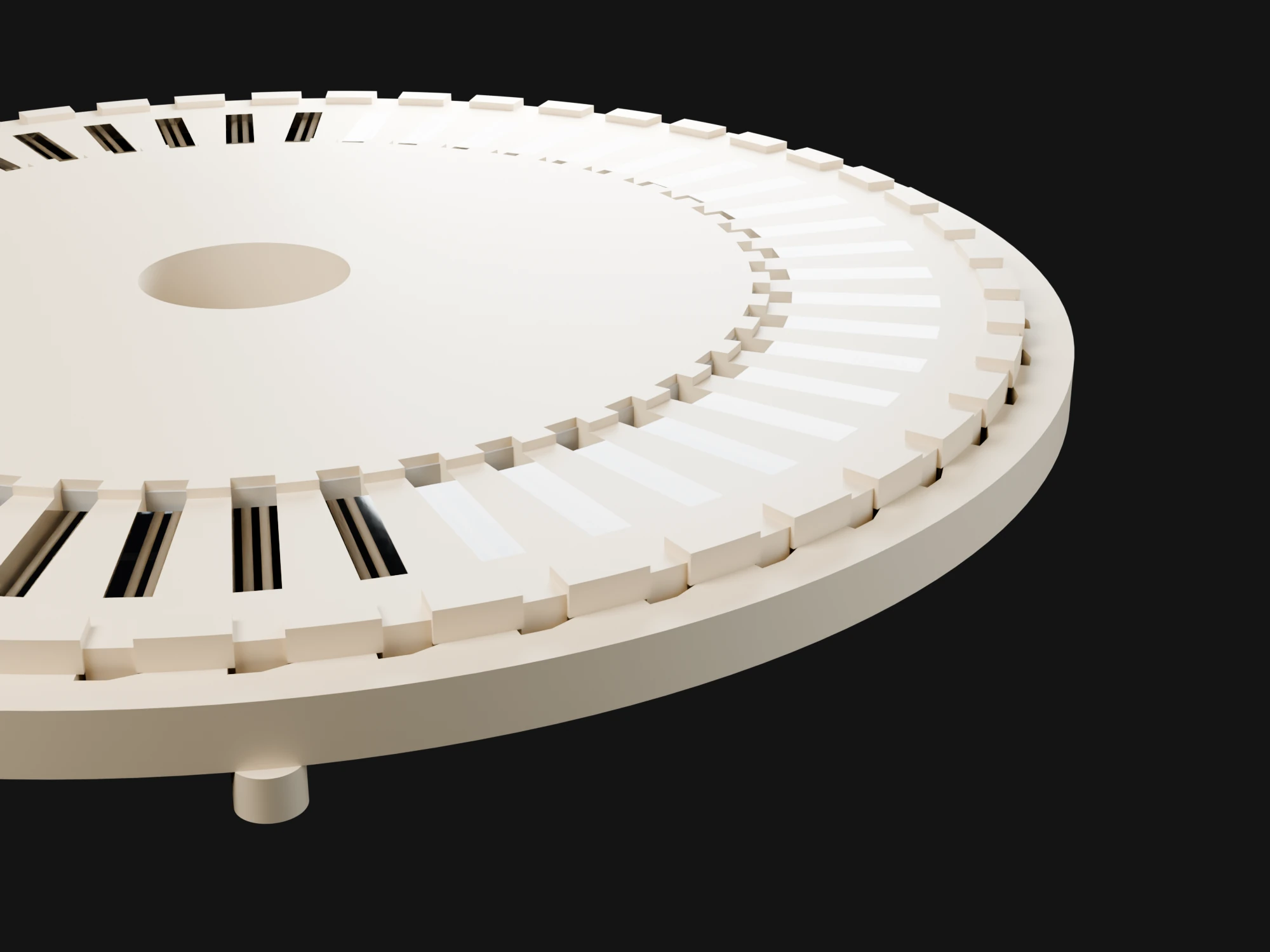
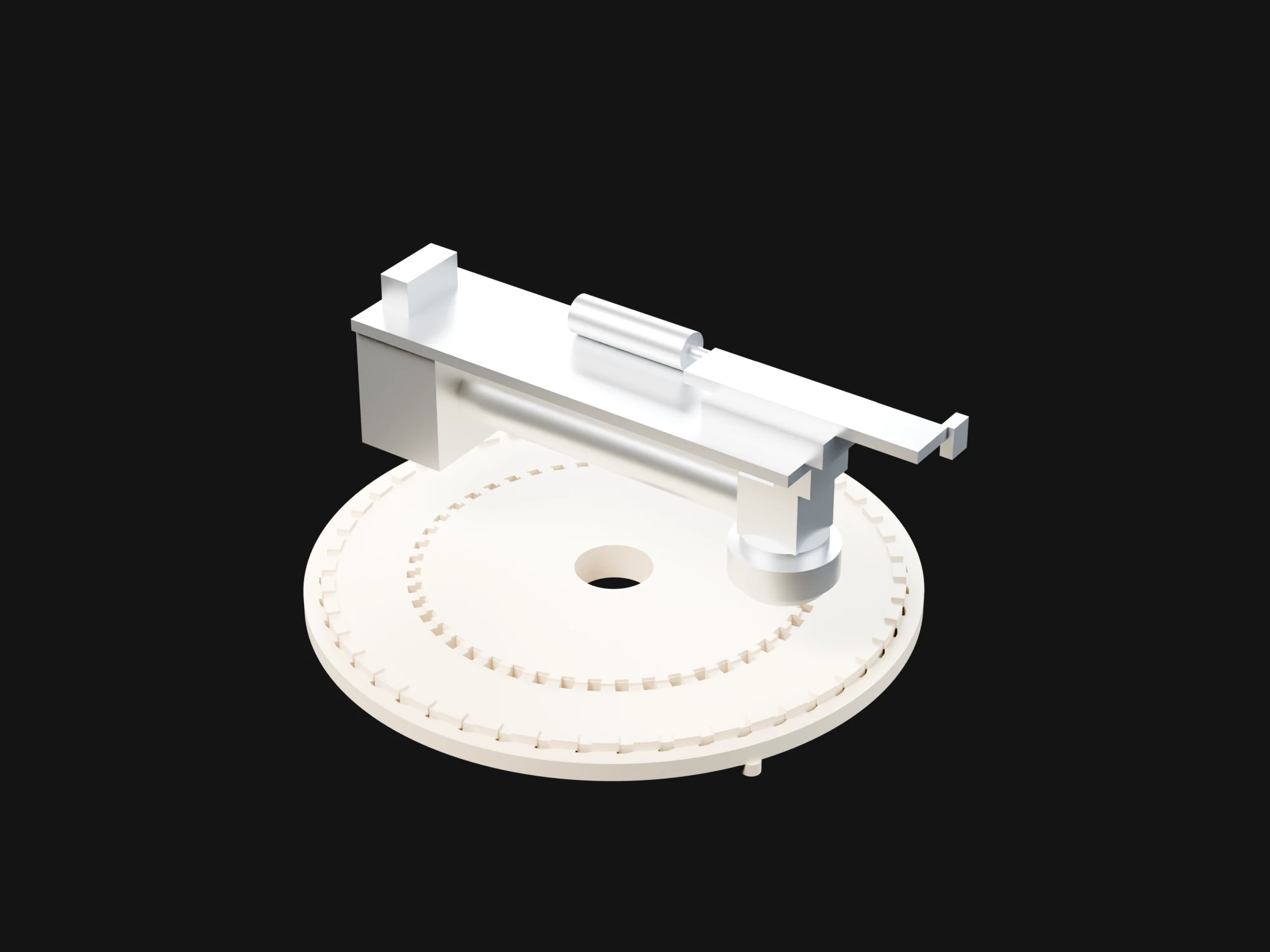
A cam ring pushes each cell's sled 5 mm, its capillaries pierce a septum and the solutions meet. Three pins hold every mechanism through launch, entry and landing.
A picture of every cell, twice a day.
The wheel steps each cell under the microscope, which images it in five tiles and three focal planes with a 4 MP camera.
20 °C, all the way home.
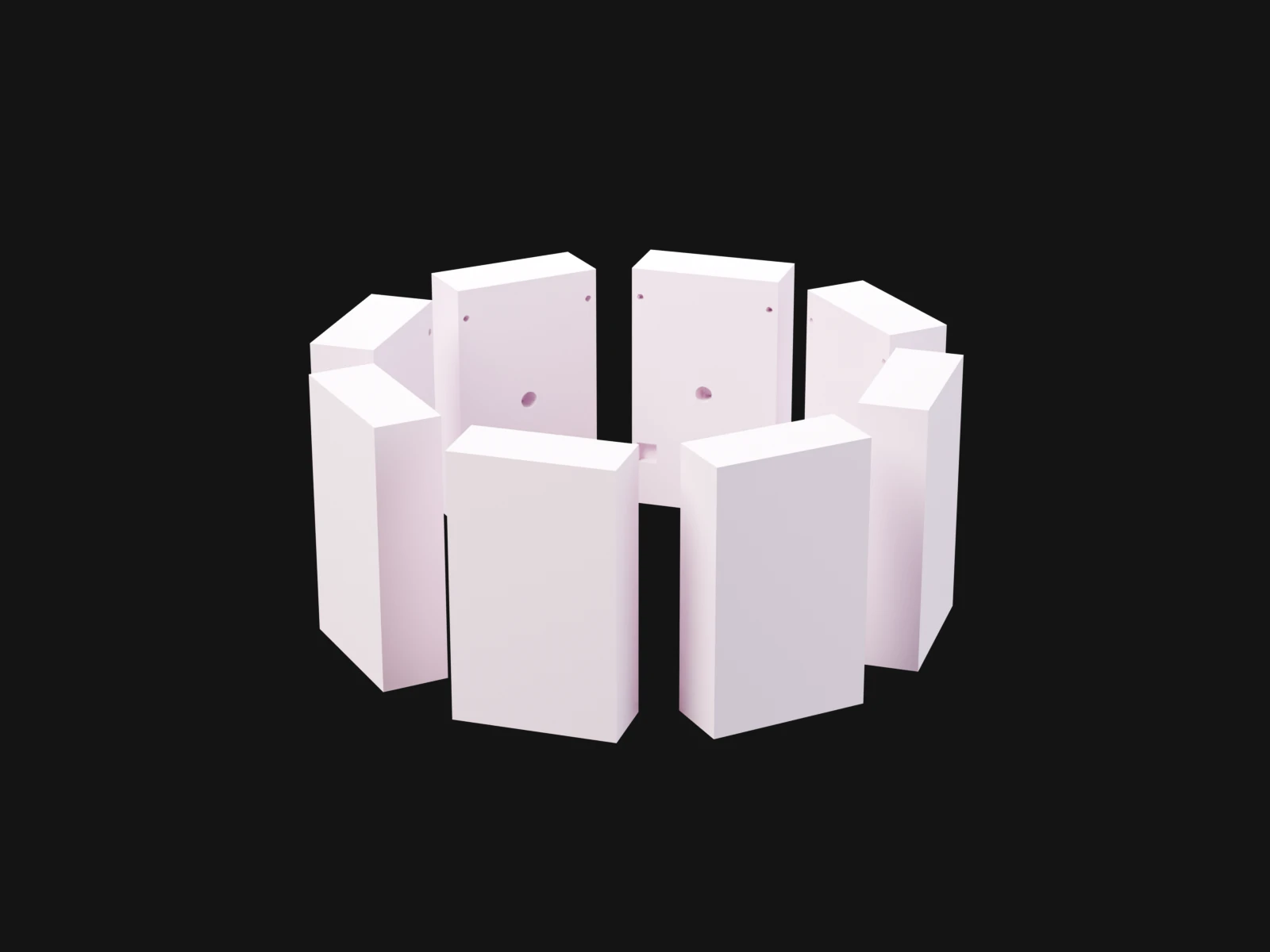
Four phase-change bricks dock on the frame beside two sensor pods. Before release the spacecraft's coolant brings the lab to 19 °C; once it is cut, the bricks hold it between 18 and 22 °C for eight hours, through entry and landing.
48 cells in one cassette.
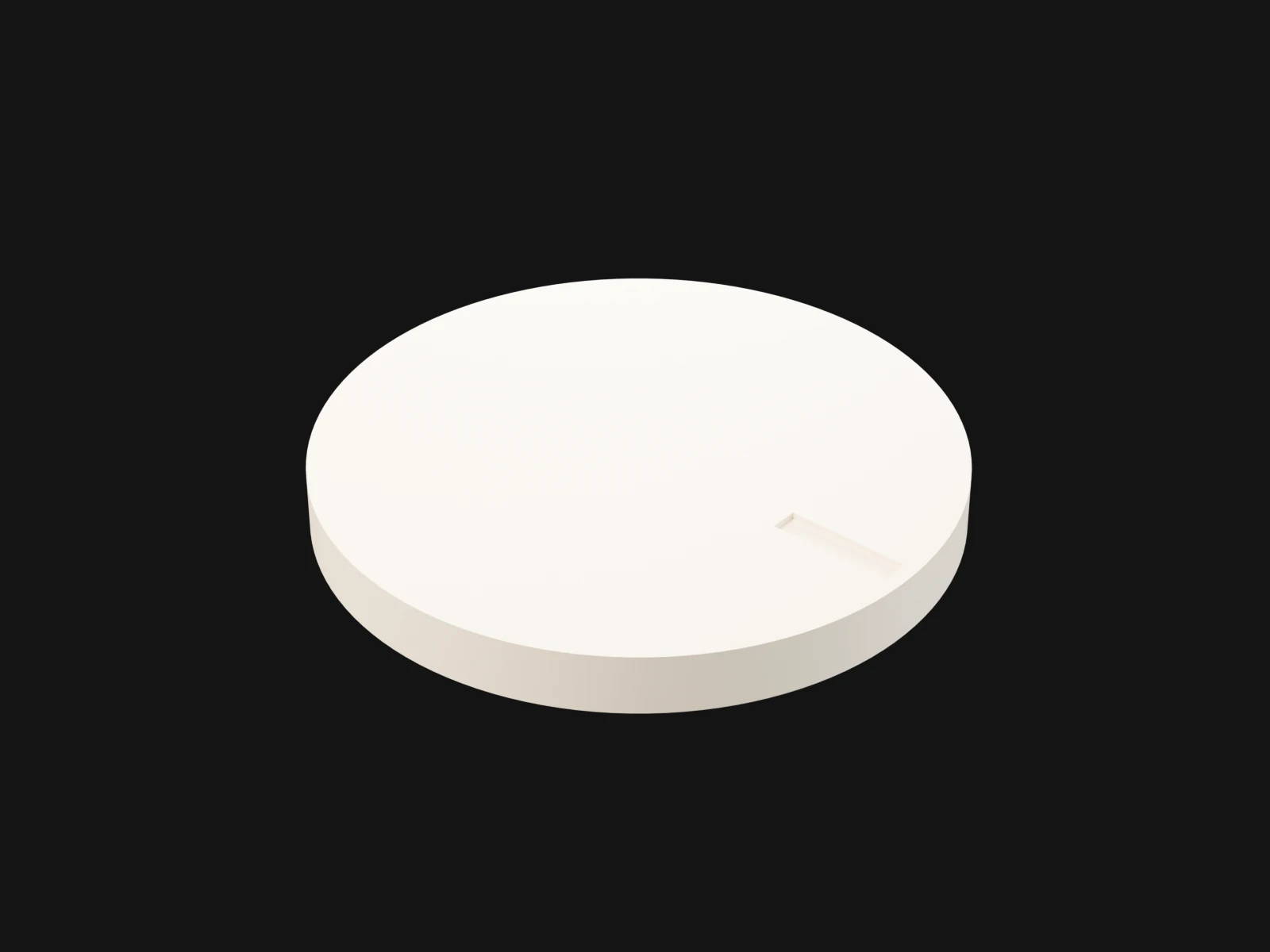
On the bench the optics lid and the thermal cap come off and the sealed cassette lifts out whole, off three locator pins.
- 48
- experiments, started on the first day
- 2,880
- cell images: 48 cells, twice a day, 30 days
- 8 h
- held between 18 and 22 °C after release
- 16
- mechanisms, swept through 584 poses without a clash
One size, not two.
In orbit, crystals grow without the settling and convection that act on them on the ground. When Merck crystallised its cancer drug pembrolizumab on the ISS, the crystals came out at one size, about 39 µm. The same conditions on the ground gave two, 13 and 102 µm, in a thicker suspension.
In orbit.
One size, about 39 µm.

On the ground.
Two sizes, about 13 and 102 µm.

Both fields are drawn at one scale, 800 µm across, from the sizes Reichert and colleagues published in npj Microgravity in 2019. They are illustrations: the crystal shape is generic, not the drug's.
What comes back.
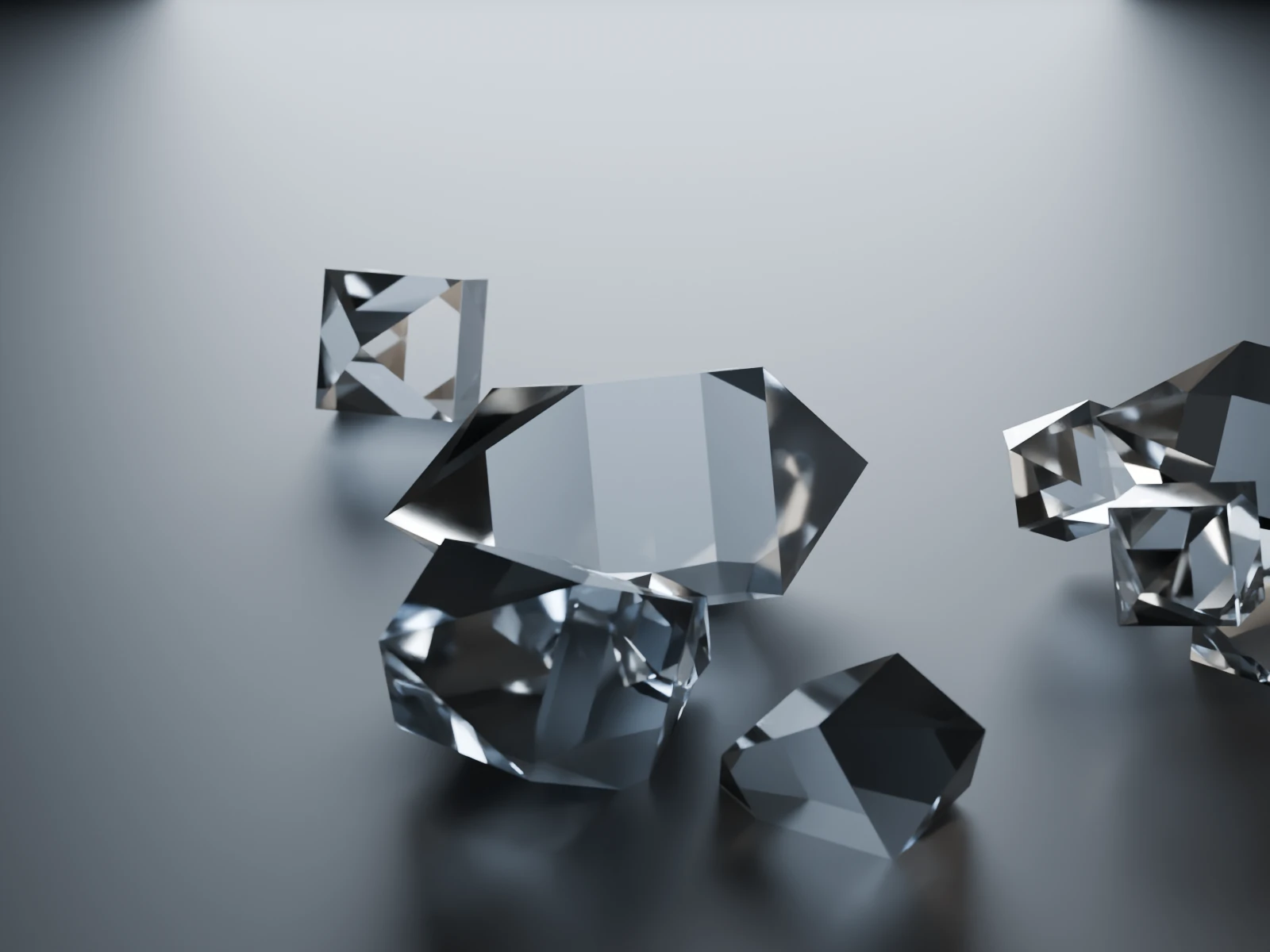
Crystals.
Grown in the 48 sealed cells and returned in their cassette, held at temperature all the way down.
43,200
frames.
Every cell, twice a day for 30 days, in five tiles and three focal planes: a time-lapse of each experiment.
The highlights.
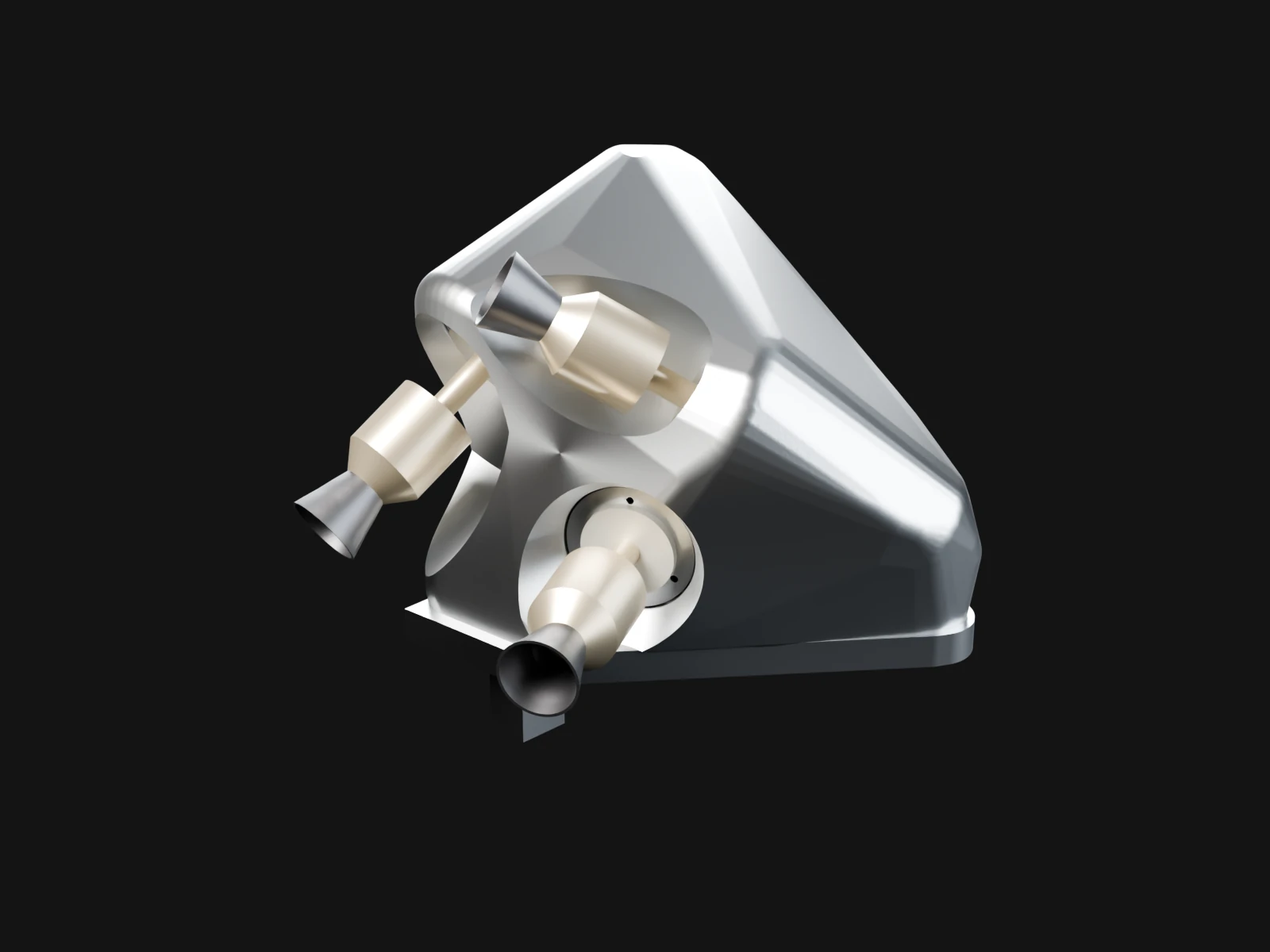
Ten thrusters. Four printed pods.
One pod at each corner of the upper deck. Four reaction wheels point the spacecraft; the thrusters steer the burn and unload the wheels.
228.2 m/s
of delta-v.
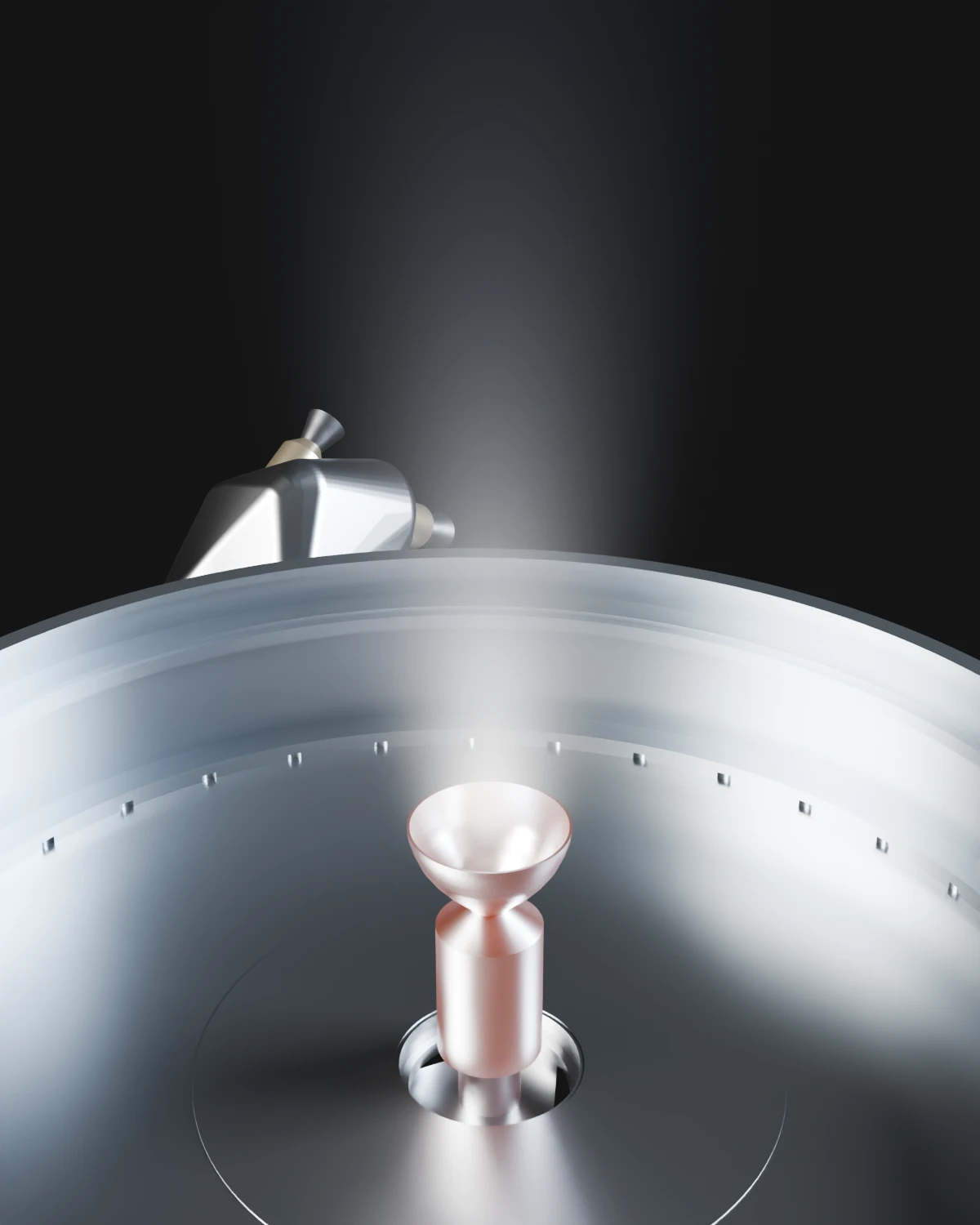
From 31.85 kg of hydrazine and an MR-107V class engine, against the 219.6 m/s needed to come home from 600 km.
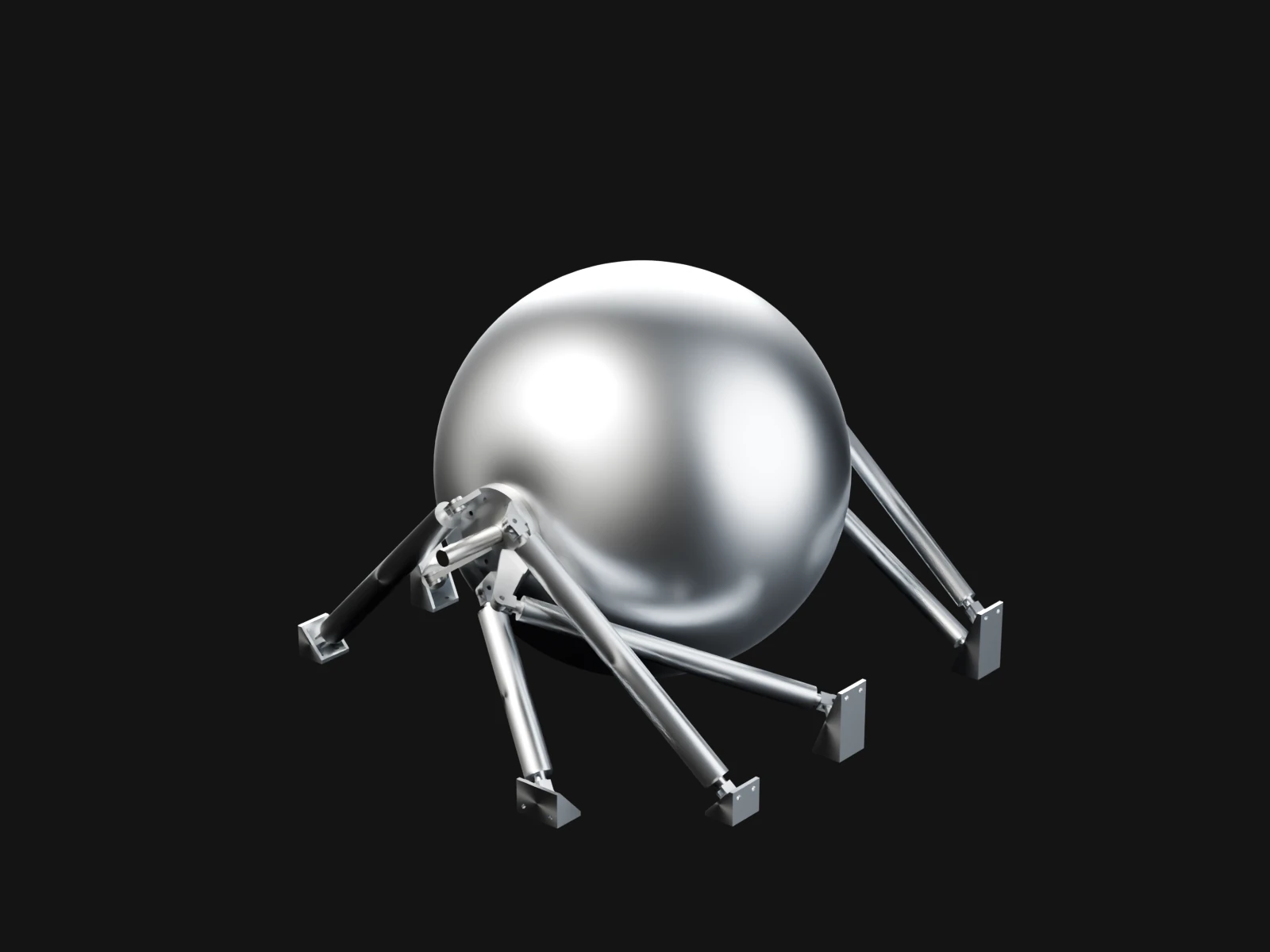
58 litres on eight struts.
Carbon fibre struts from the tank's poles out to the corners of the box.
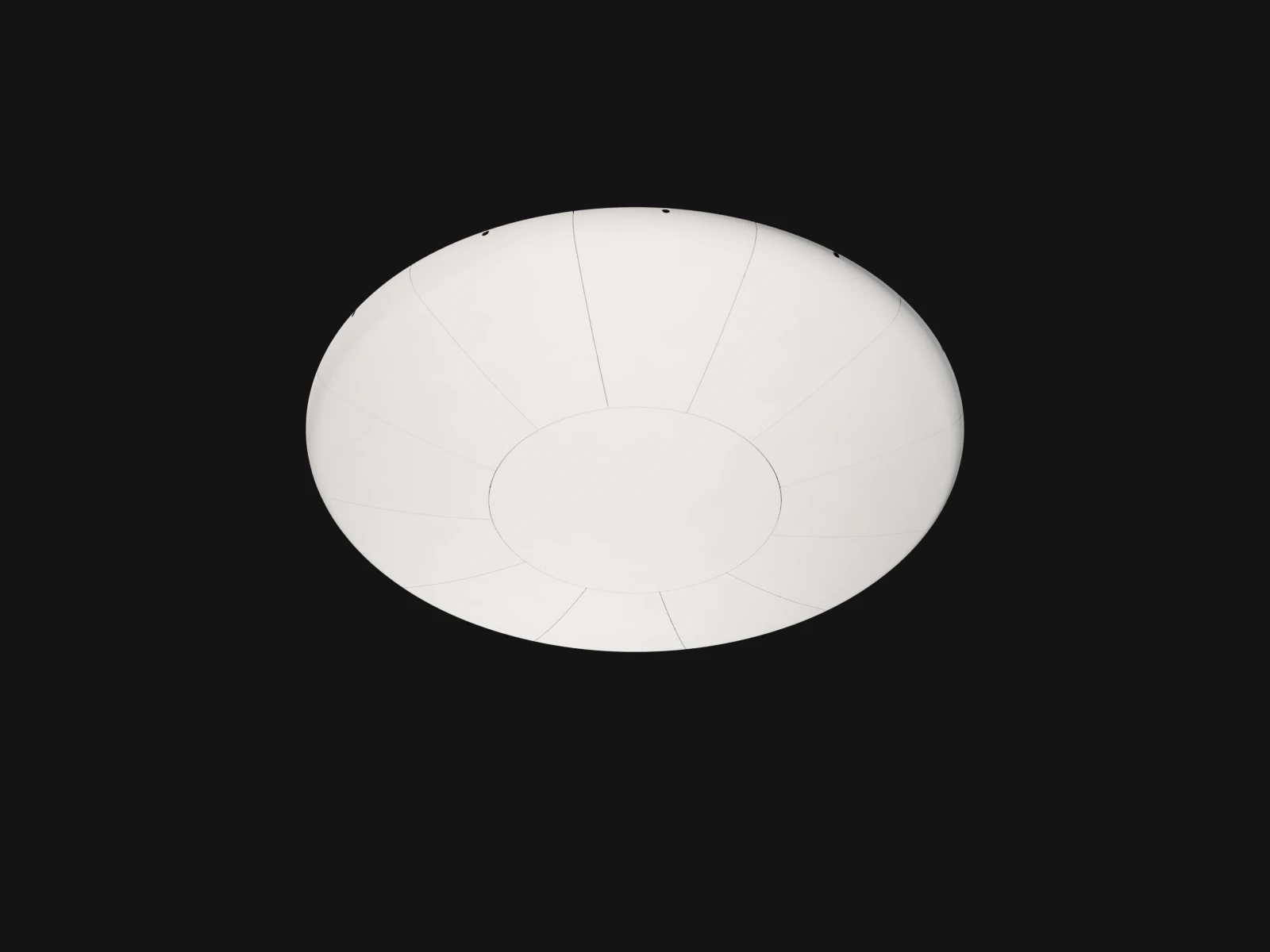
Thirteen tiles of PICA.
55 mm thick at the centre, with gaps between the tiles as on Orion.
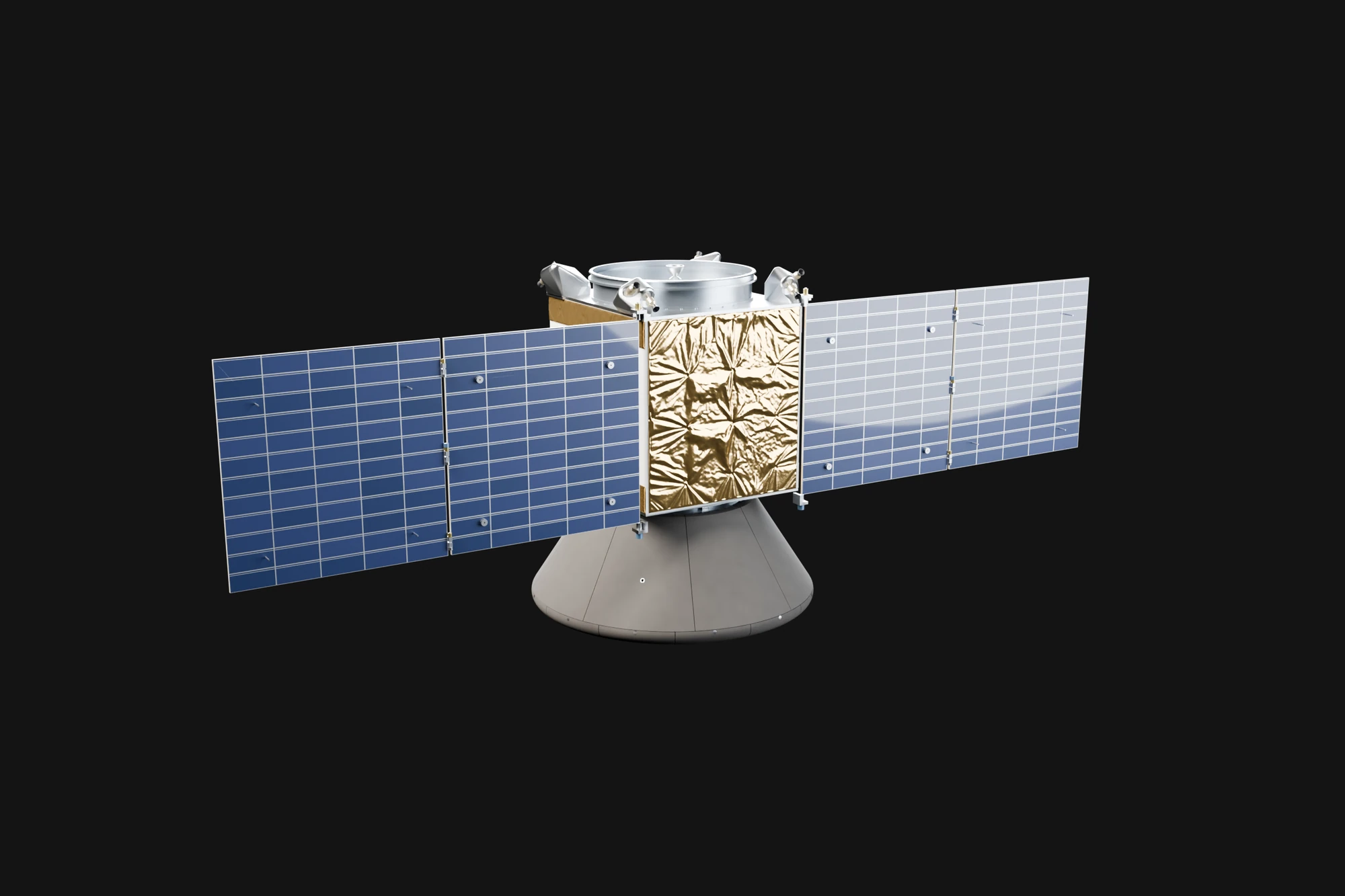
Two wings, two leaves each.
Opened in orbit by springs at the root and at the fold.
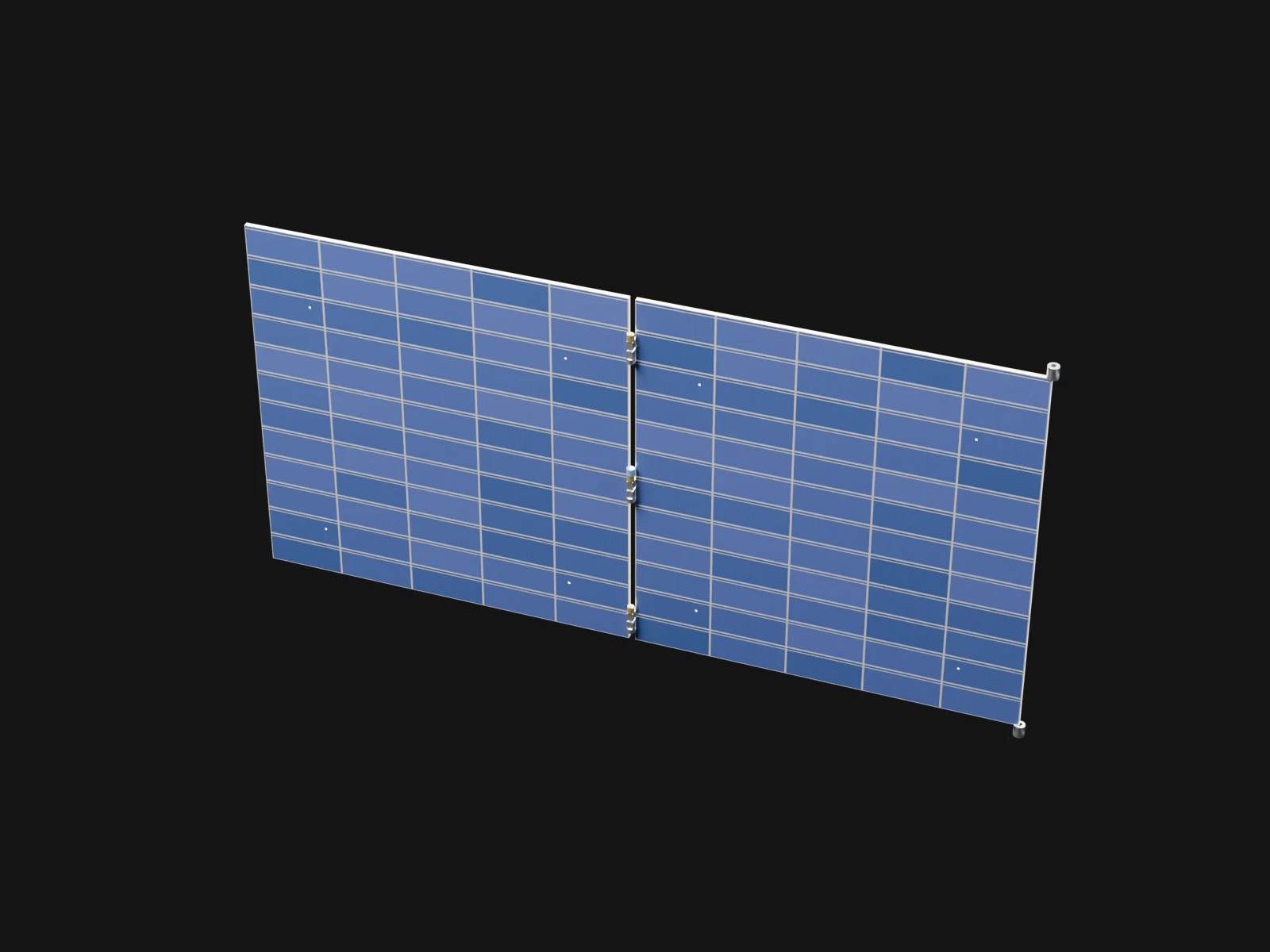
Folded for launch.
The wings lie flat against the box, held by release bolts. The stack fits the rideshare envelope with 6 mm of length to spare.
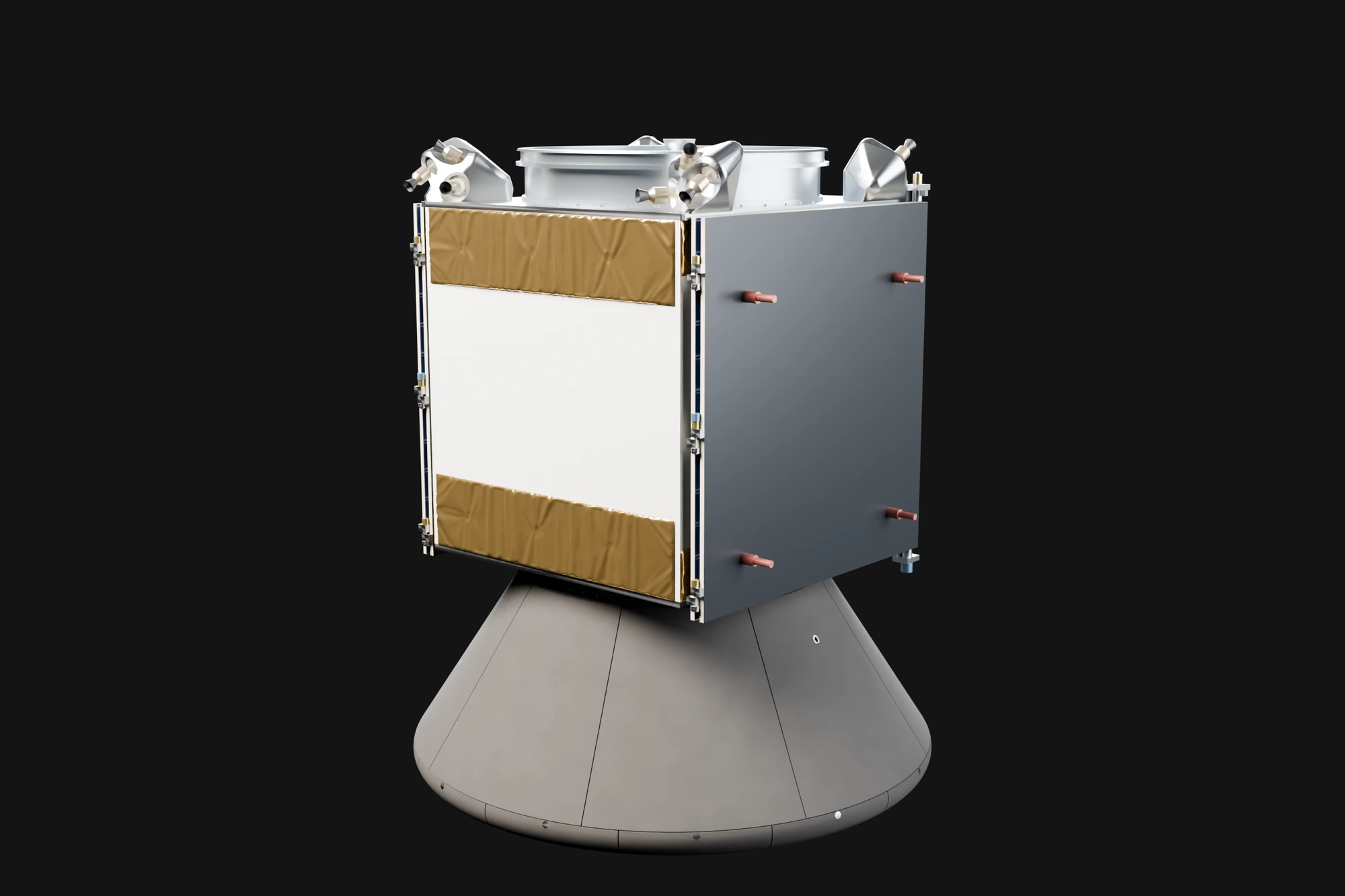
Open in orbit.
A box of honeycomb panels, 684 × 761 × 735 mm, with the capsule on a clamp band at one end and the launch ring at the other.
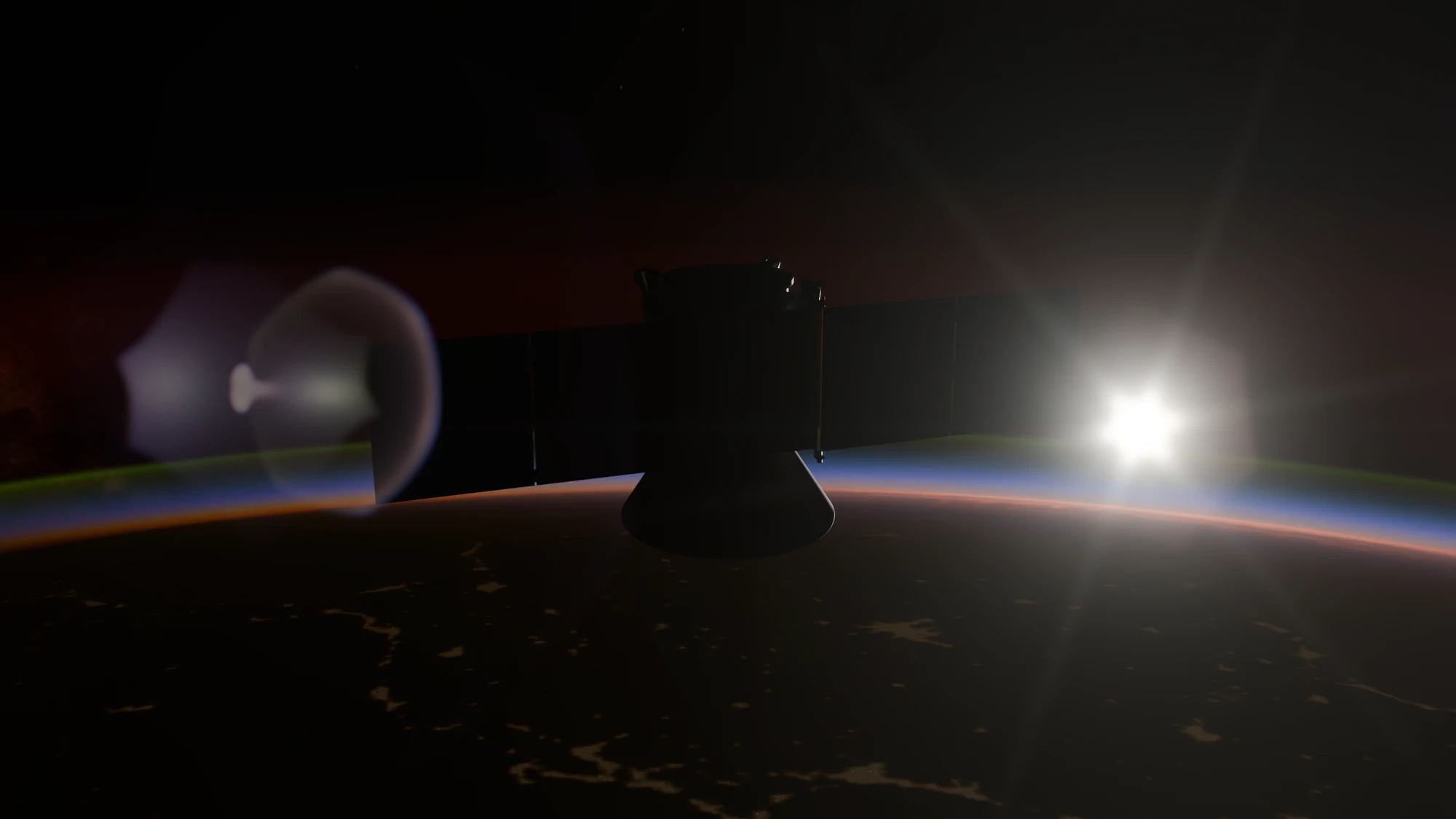
1,409 °C outside. 20 °C inside.
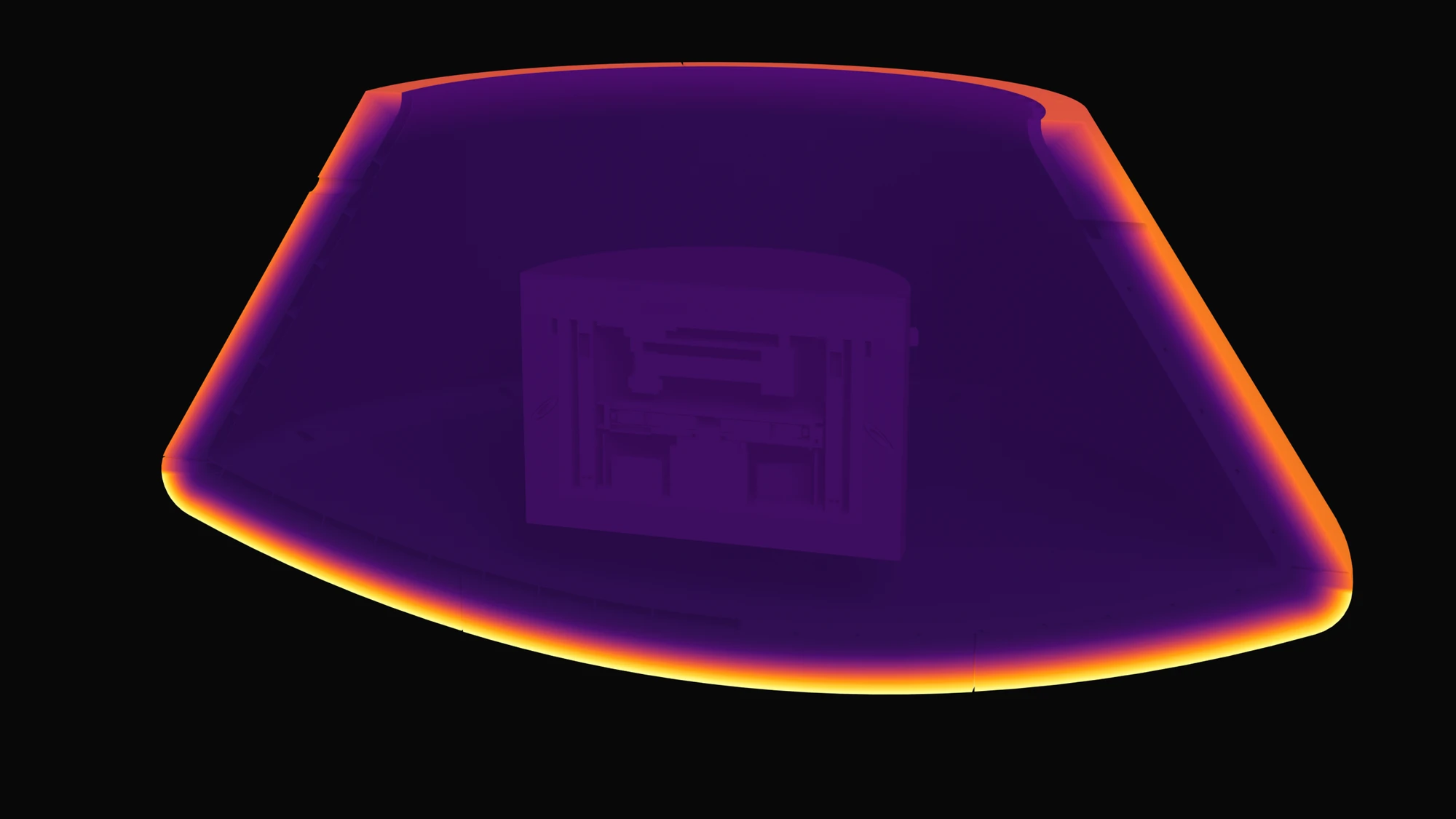
The capsule meets the atmosphere at about 7.9 km/s, heat shield first. Five minutes later the face of the shield reaches 1,409 °C at its centre. Behind 55 mm of PICA the lab never leaves 20 °C.
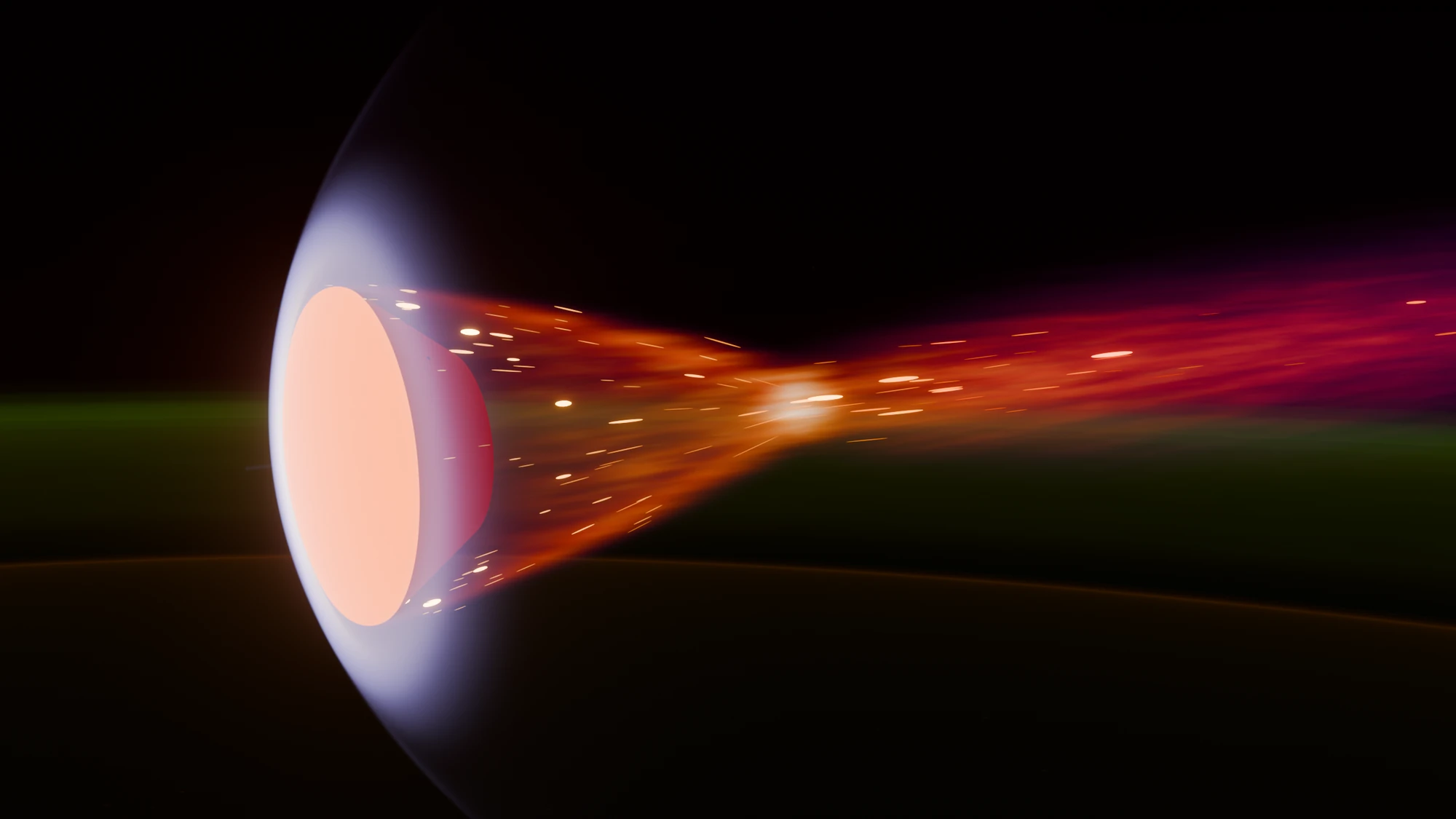
- 1,409 °C
- the shield's face at peak heating
- 513 kW/m²
- peak heating, worst simulated return
- 202 °C
- structure behind the shield, near landing
- 20 °C
- the lab, all the way down
Take a closer look.
Each shell opened a little less than the one outside it, so the tank, the wheels and the lab stay whole.
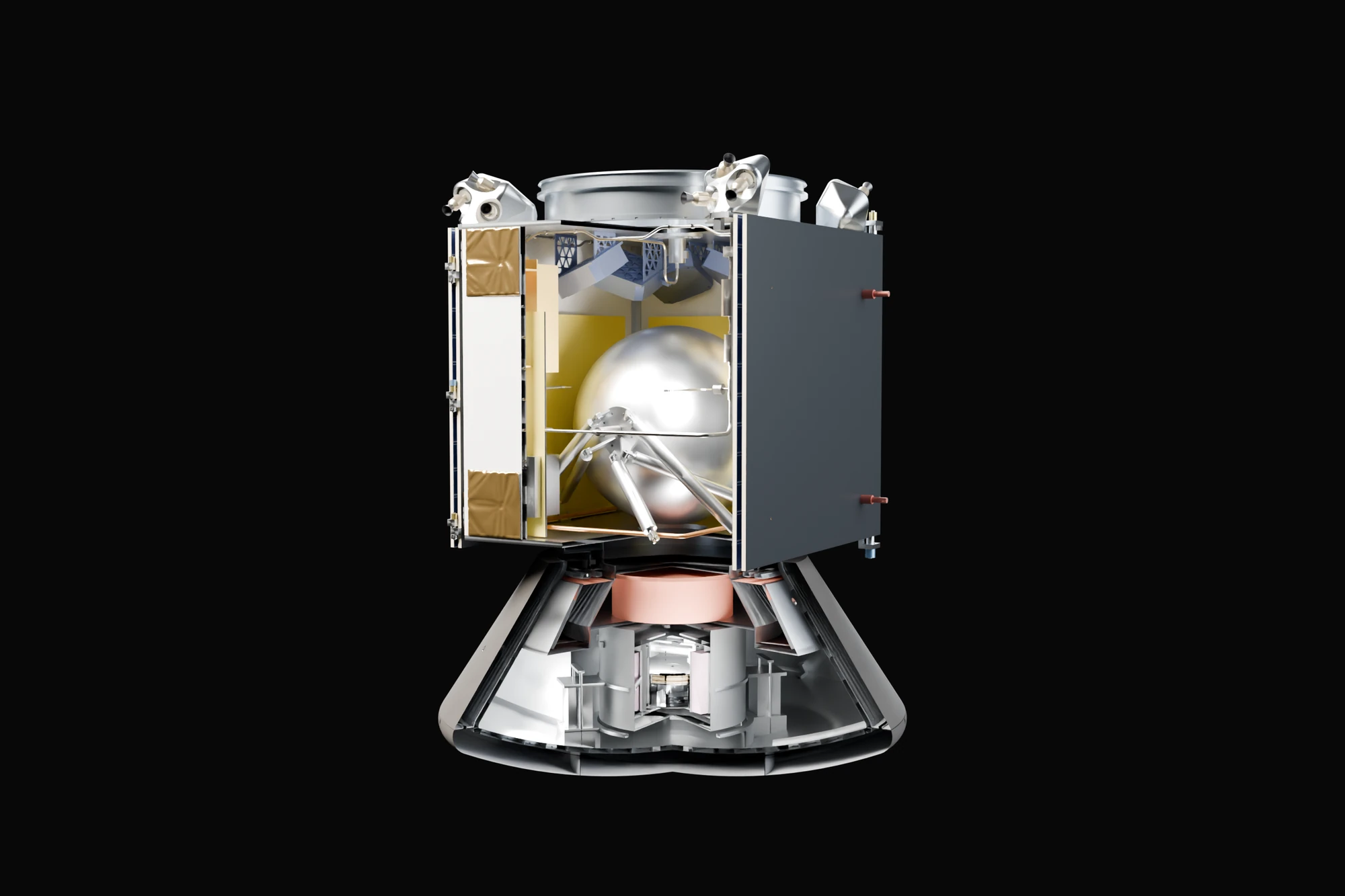
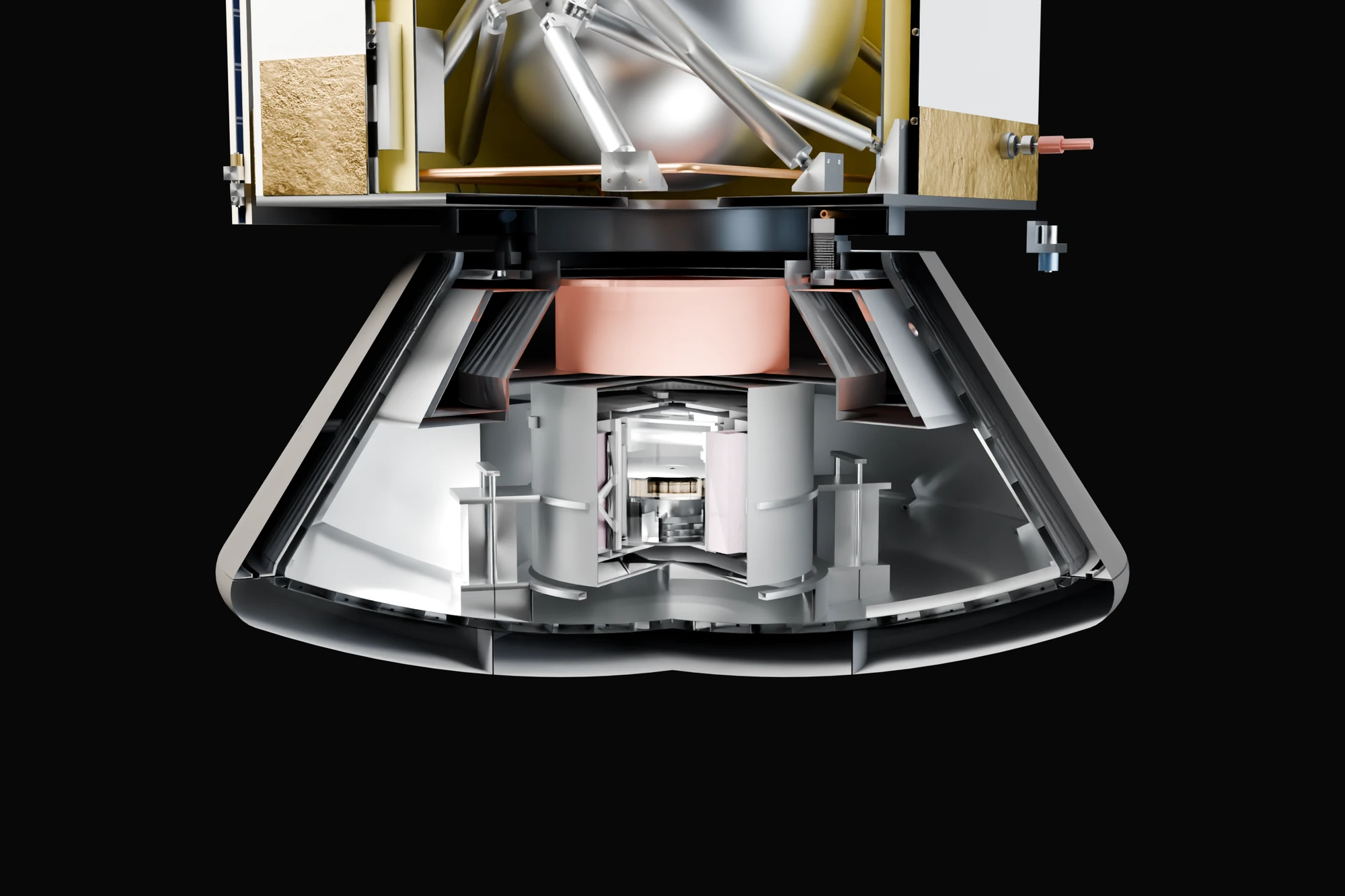
Every part.
The whole spacecraft taken apart and laid out on one floor, sorted by system.
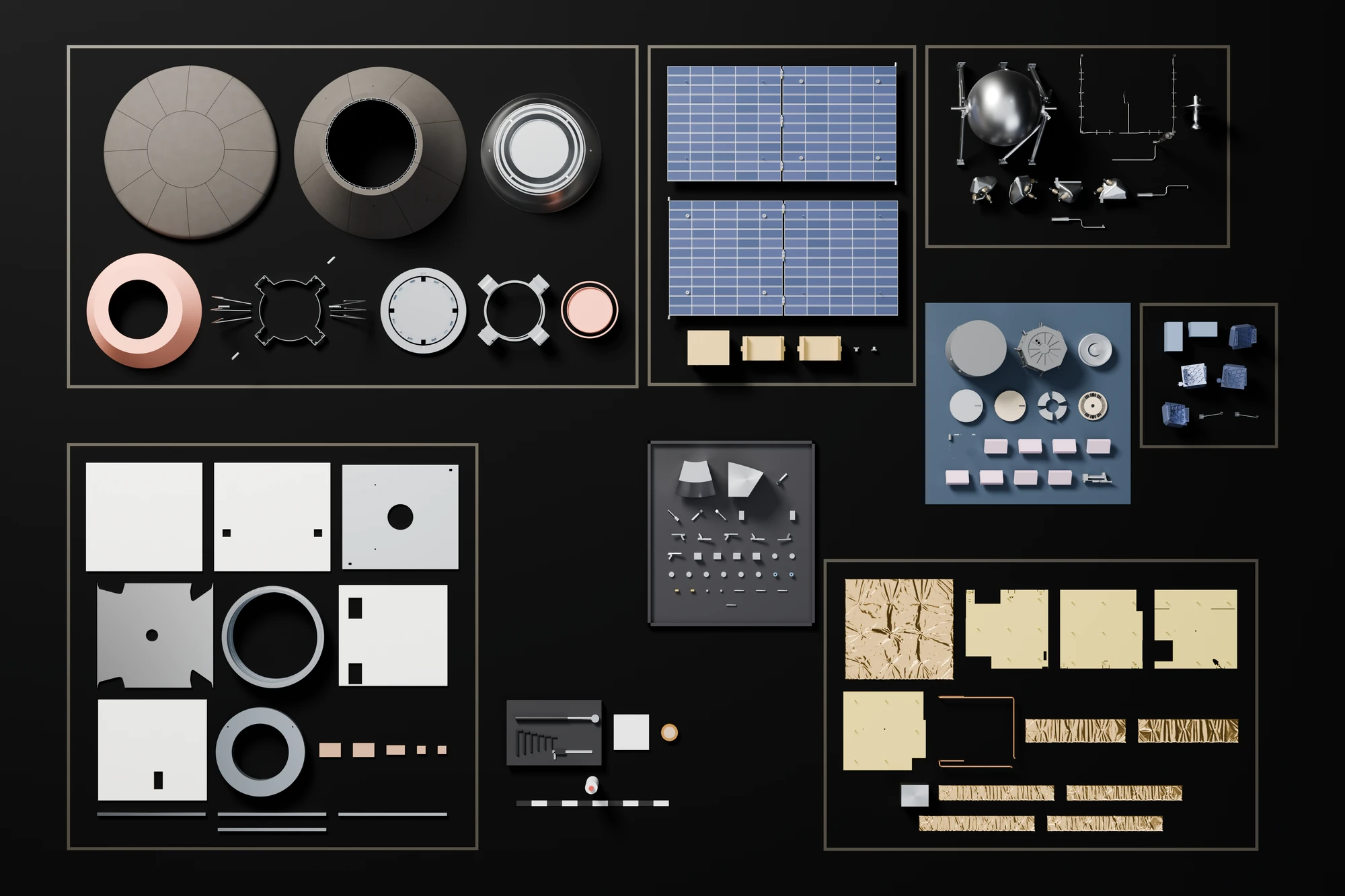
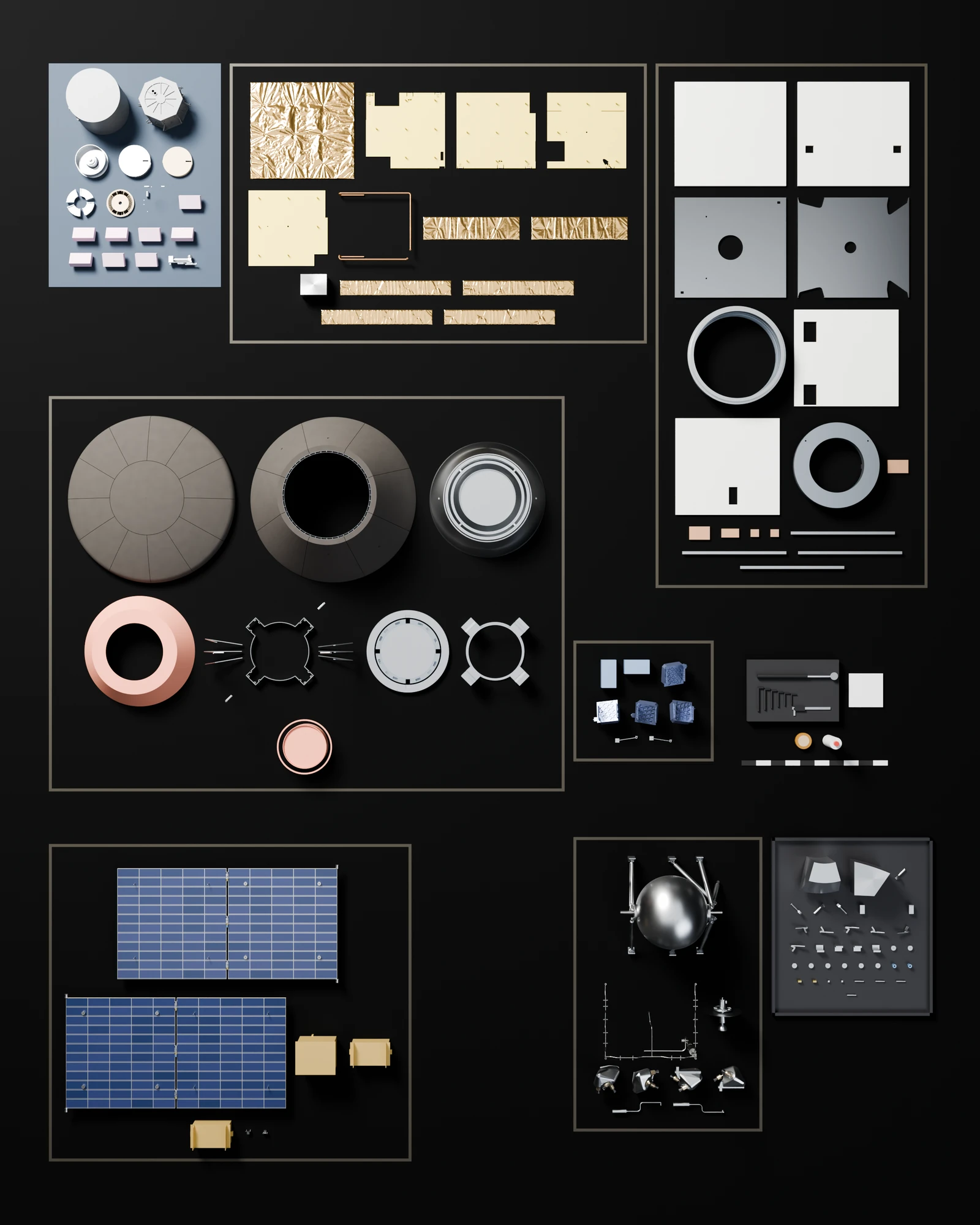
Each part on its own
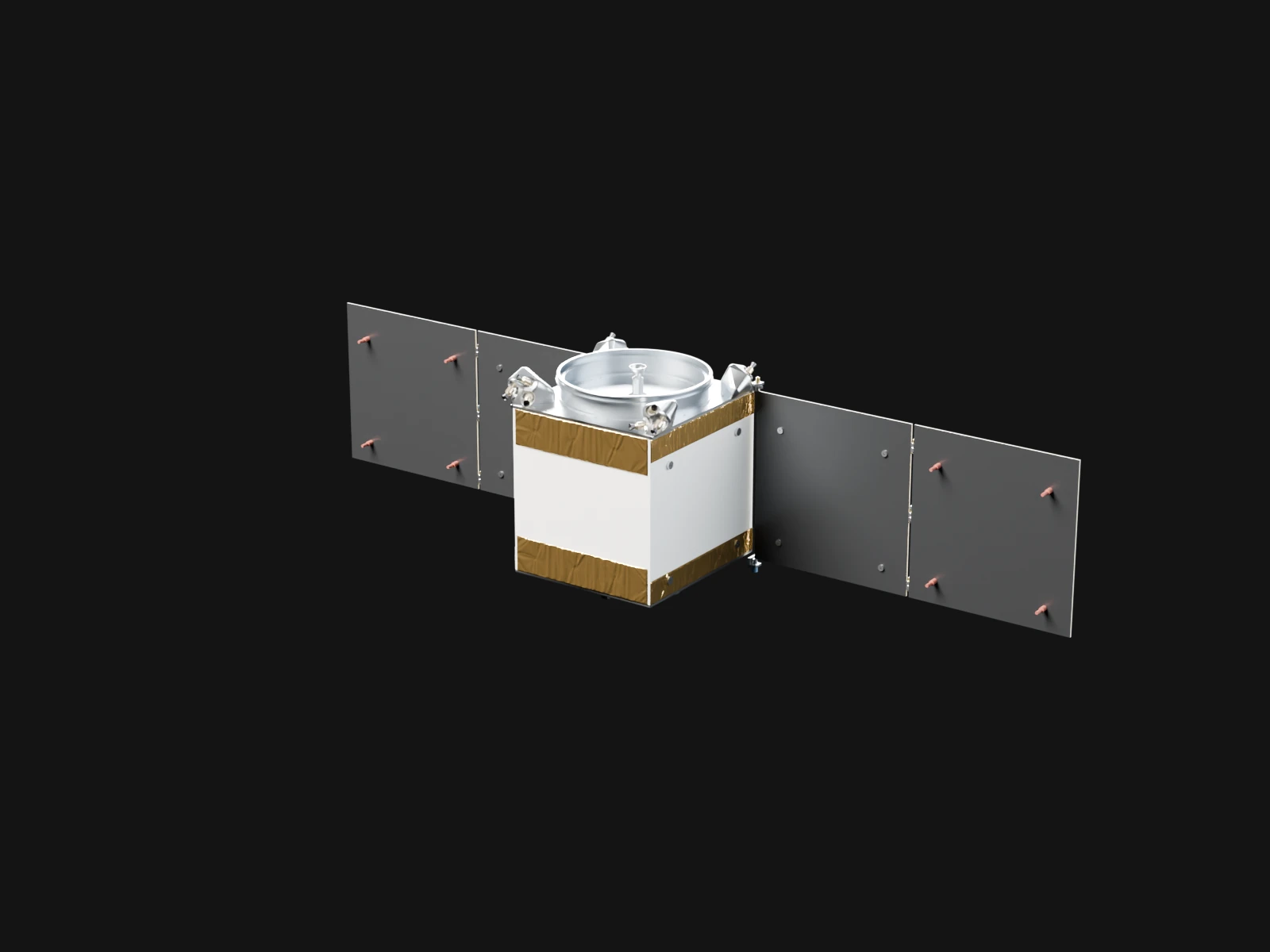
Service module
3713 × 818 × 957 mm
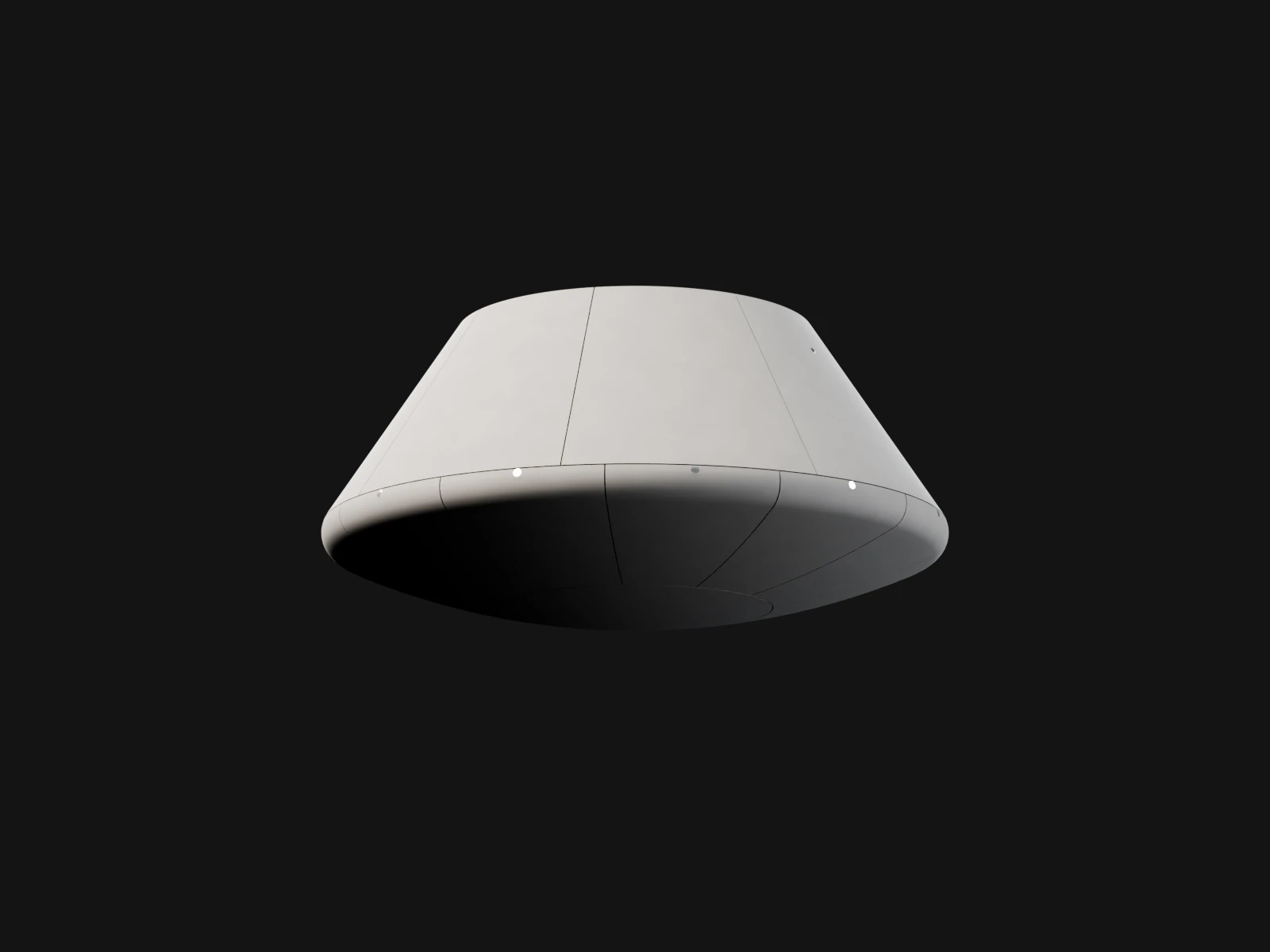
Return capsule
1158 × 1158 × 540 mm
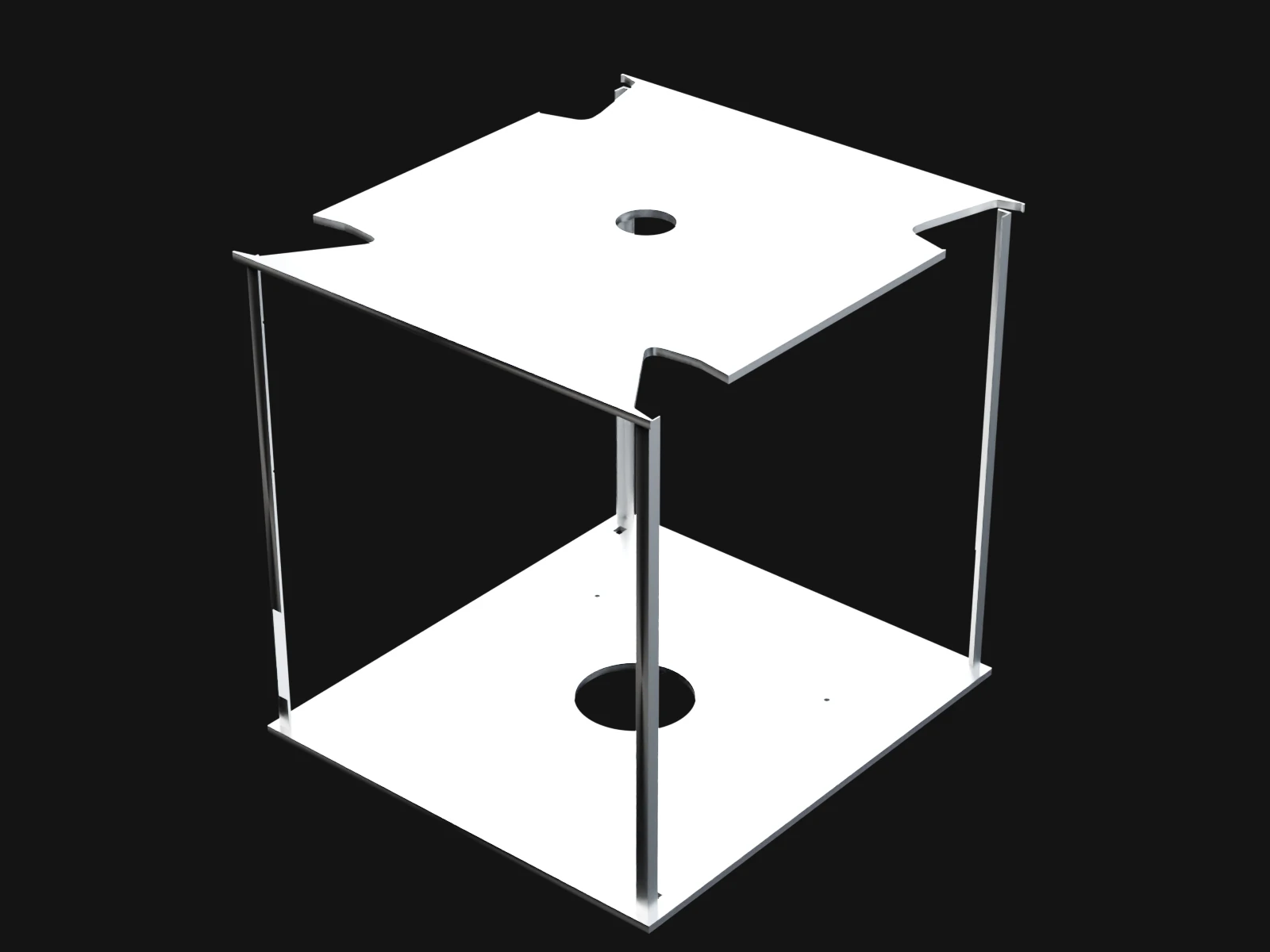
Decks
684 × 761 × 735 mm
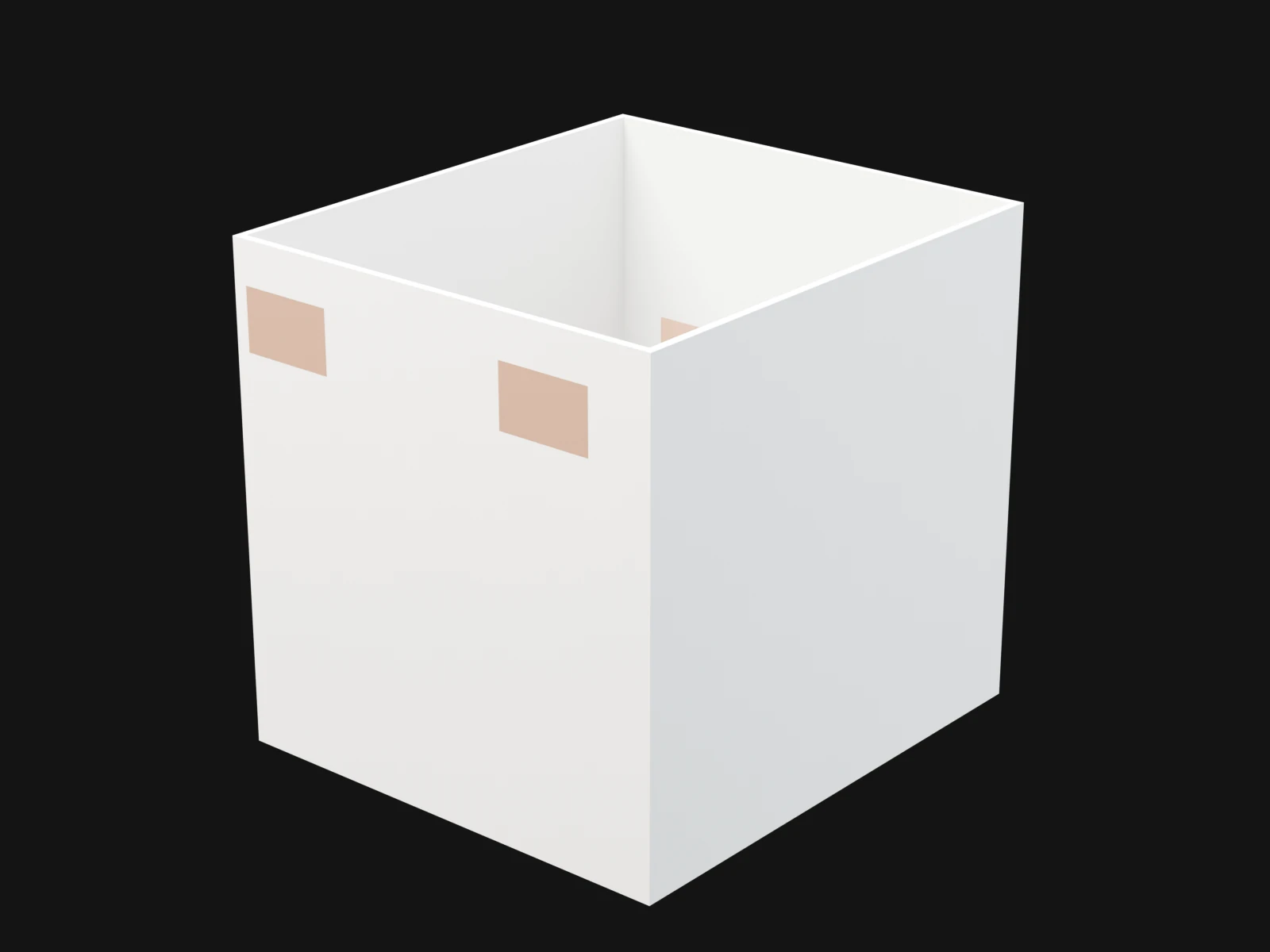
Walls
684 × 761 × 711 mm
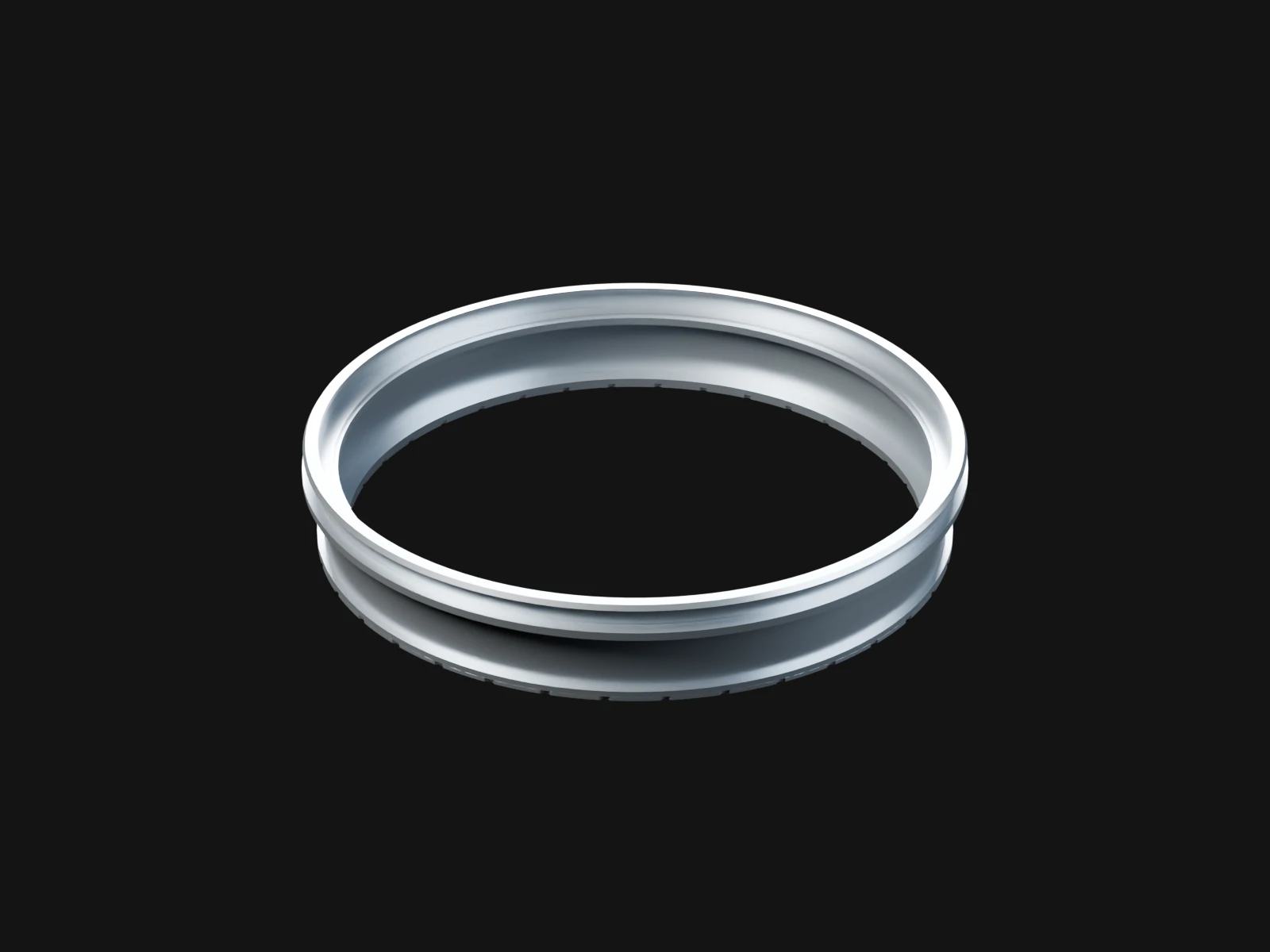
Launch ring
650 × 650 × 107 mm
Propellant tank
660 × 710 × 492 mm
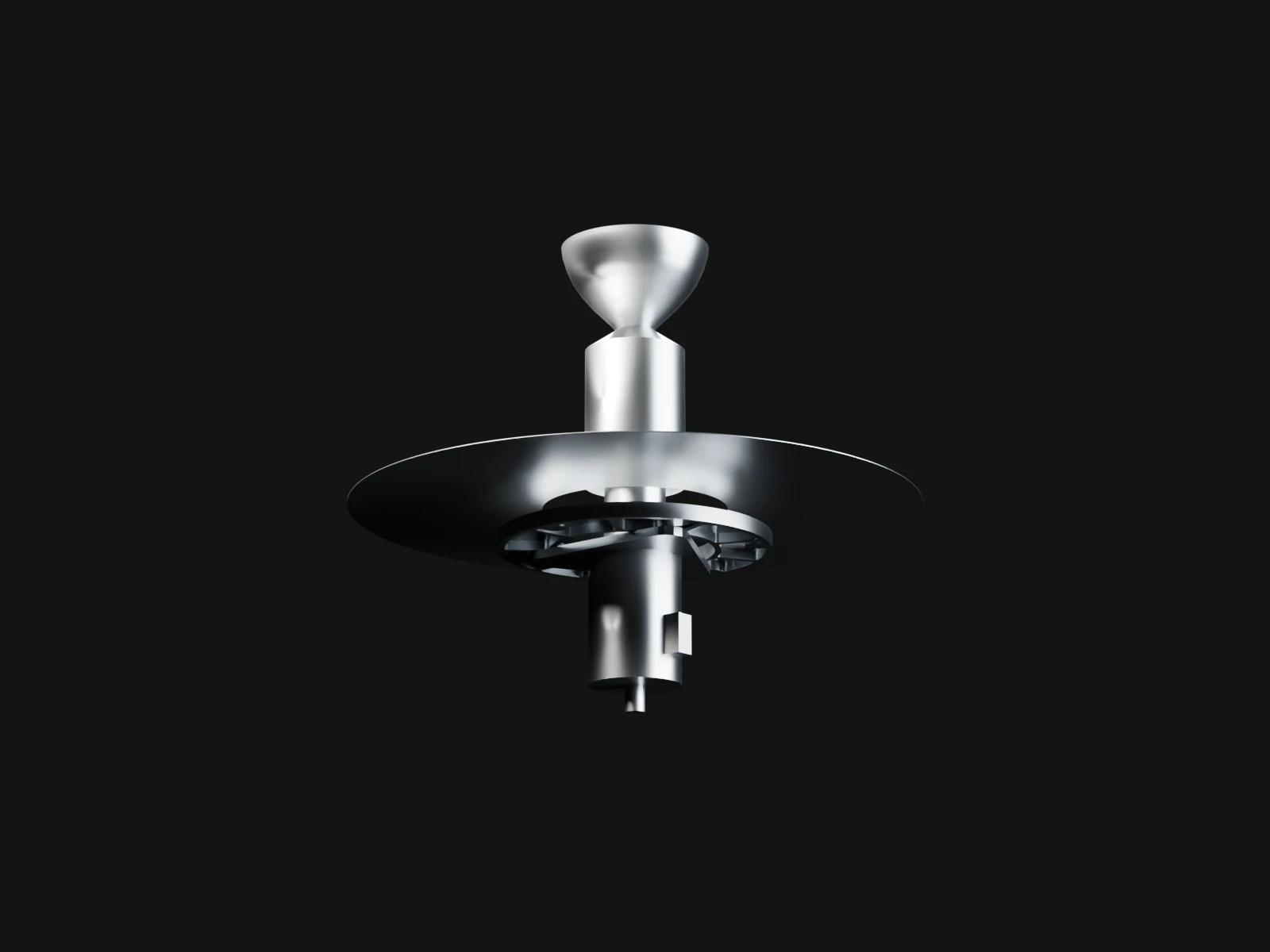
Main engine
260 × 260 × 218 mm
Thruster pod
184 × 182 × 164 mm
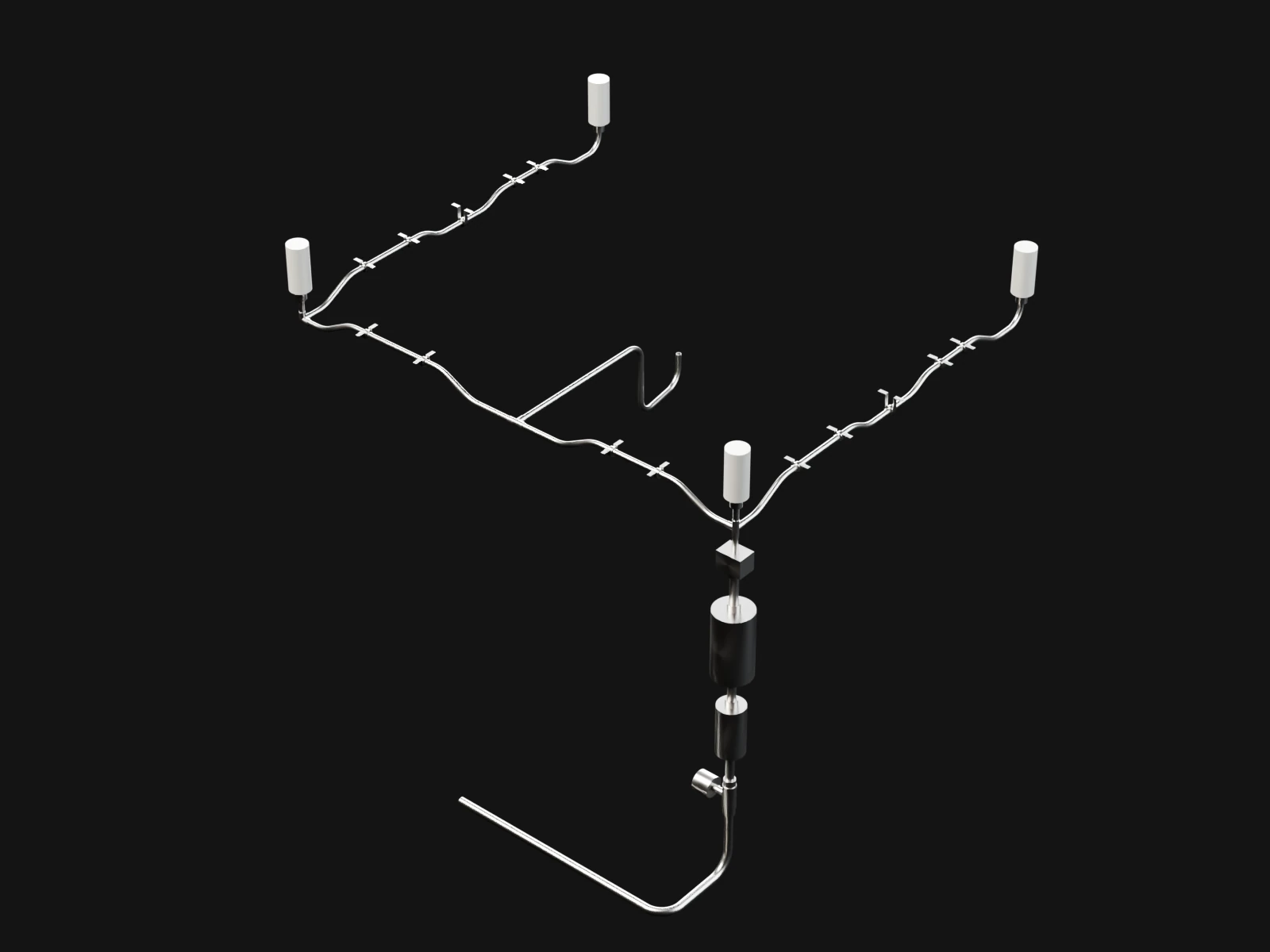
Propellant feed
622 × 603 × 533 mm
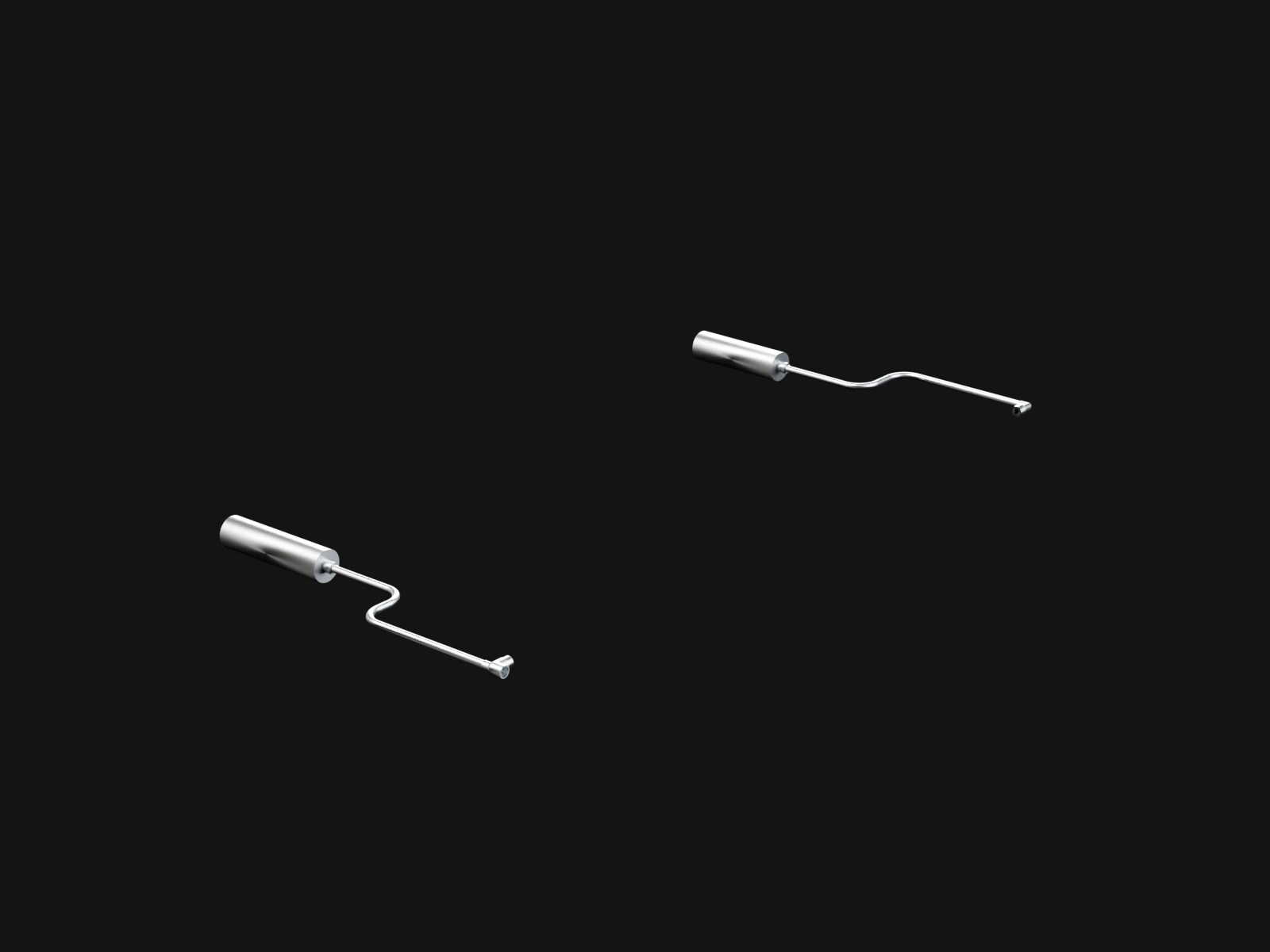
Fill and drain
347 × 721 × 28 mm
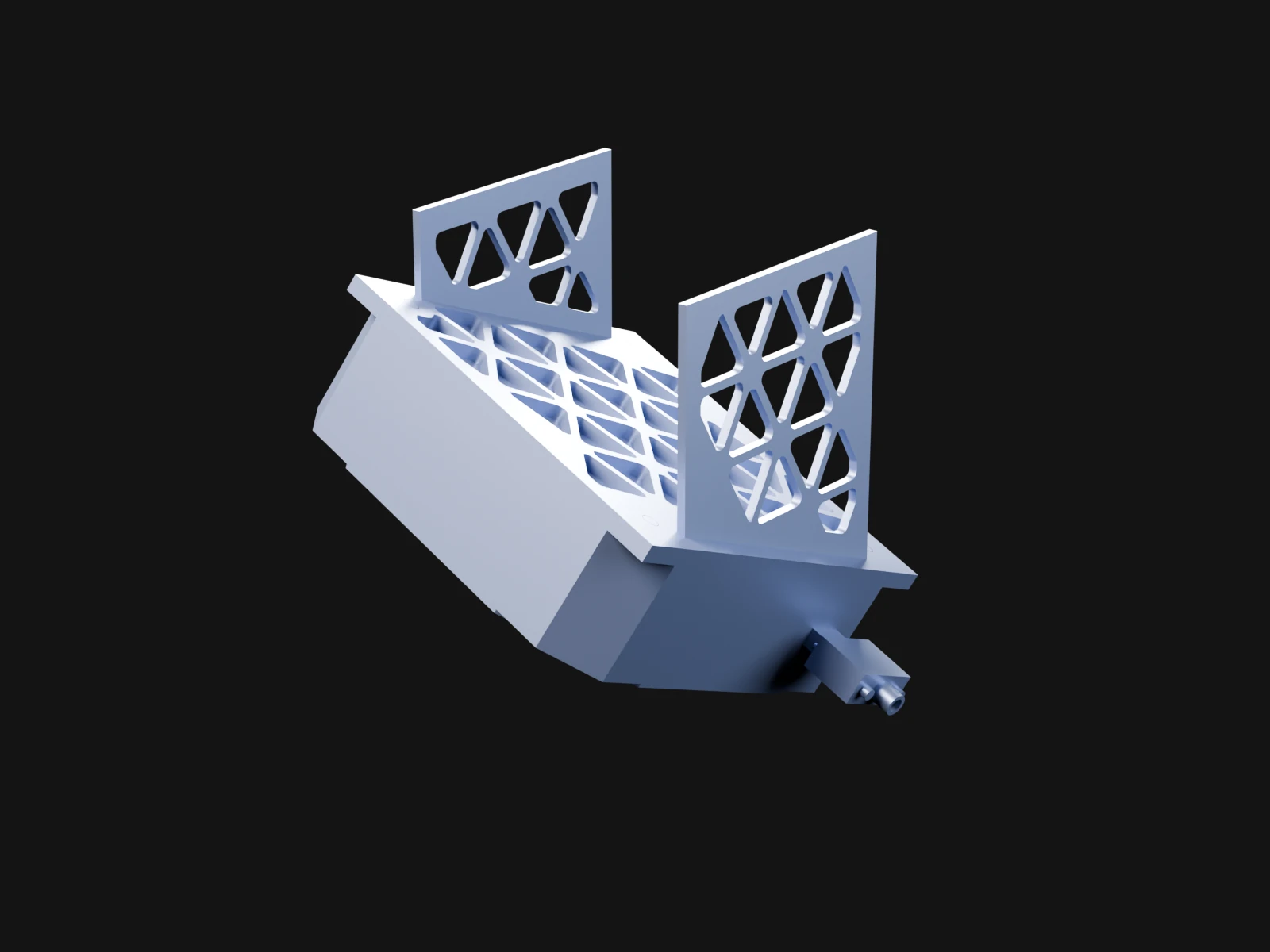
Reaction wheel
180 × 172 × 163 mm
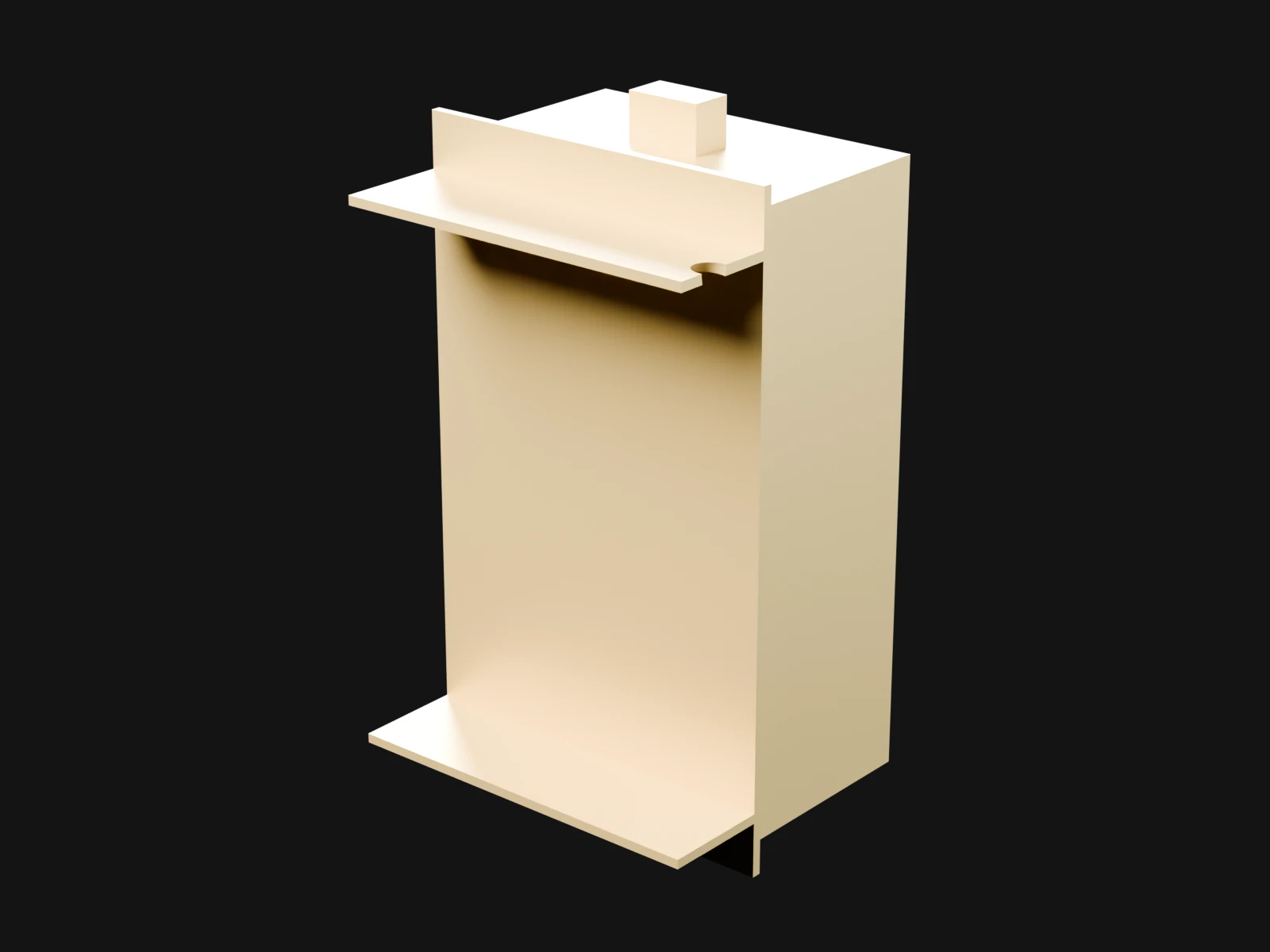
Battery
157 × 139 × 290 mm
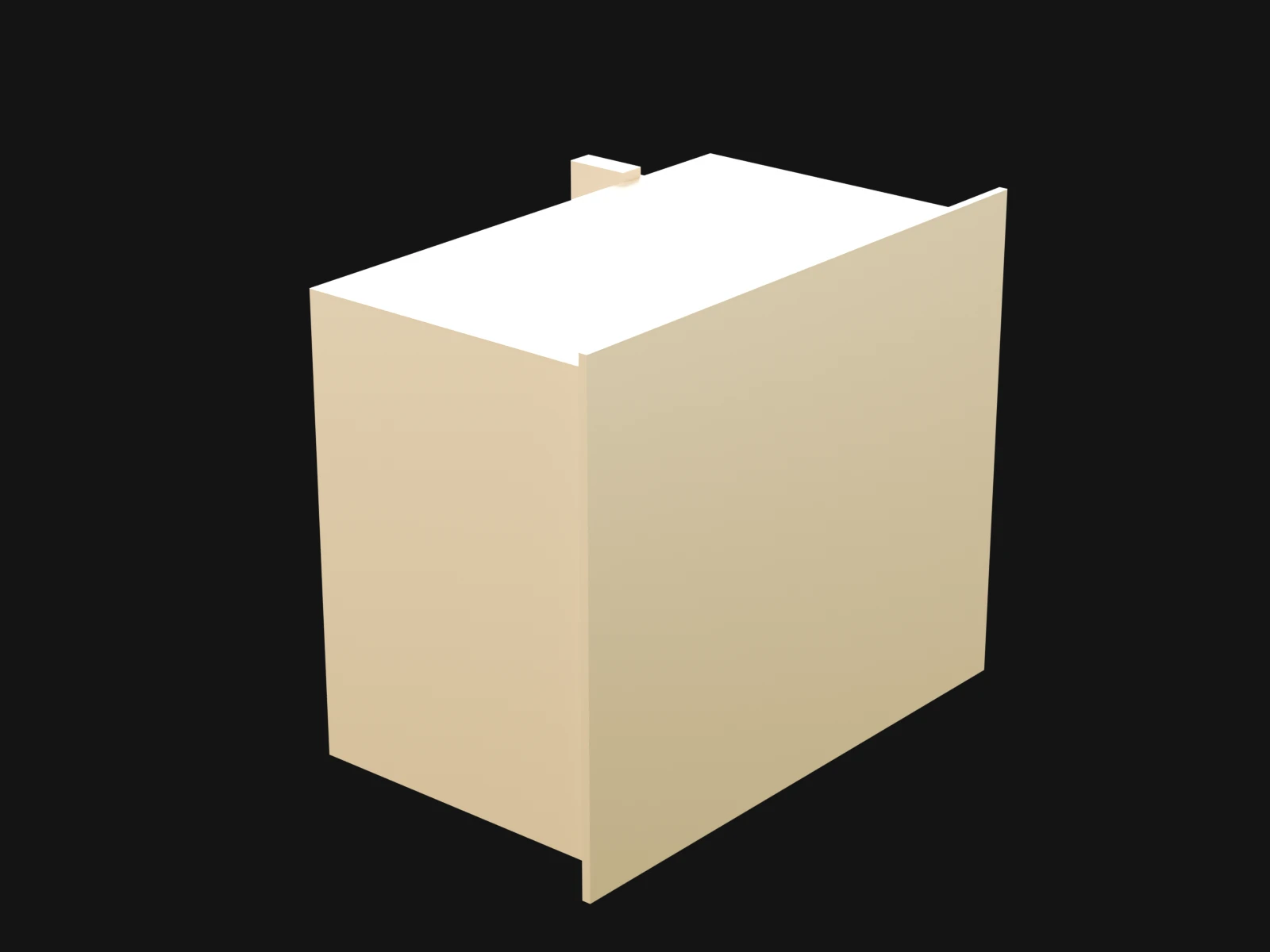
Power unit
181 × 269 × 223 mm
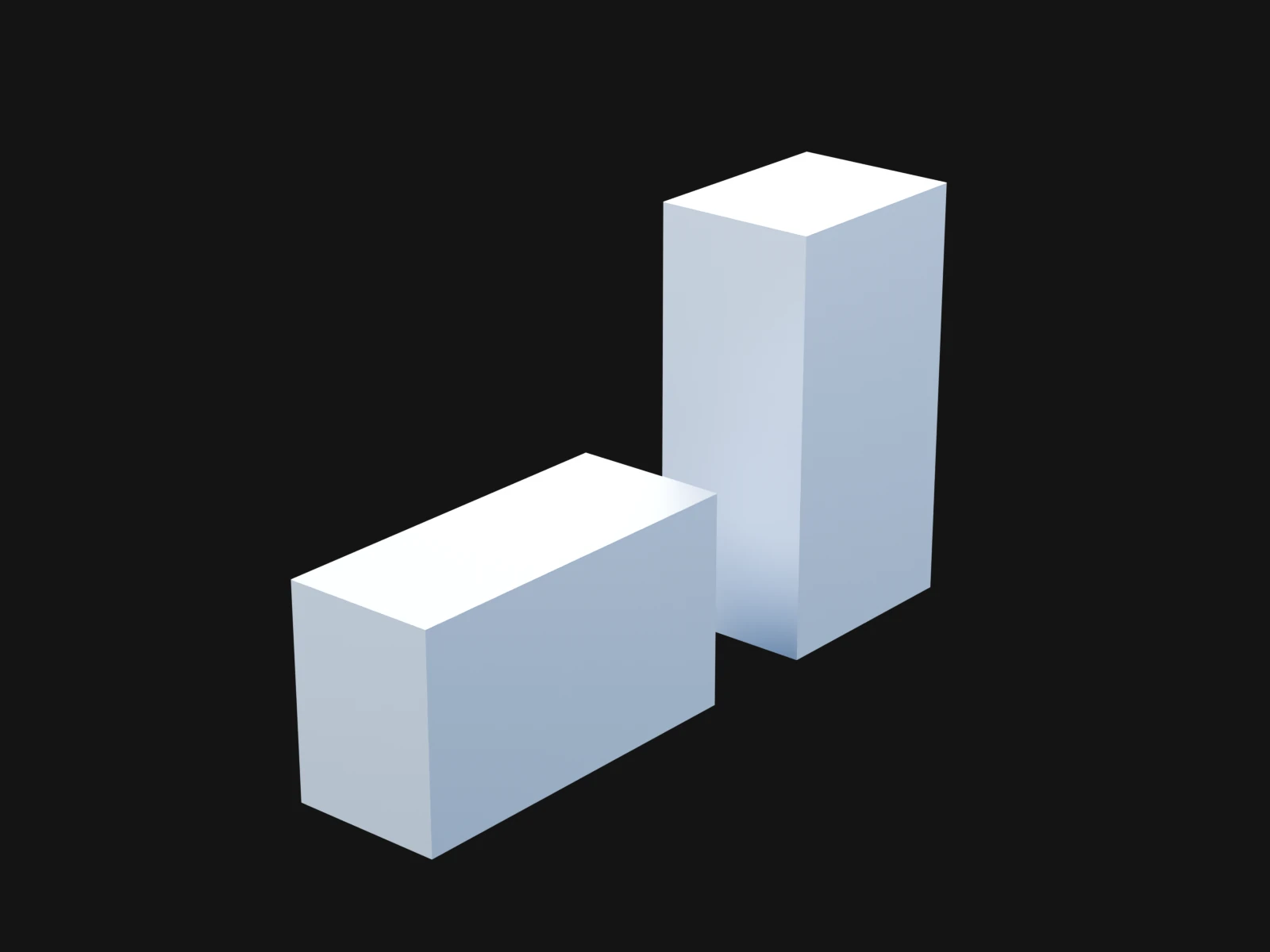
Avionics
75 × 326 × 190 mm
Solar wing
1503 × 30 × 798 mm
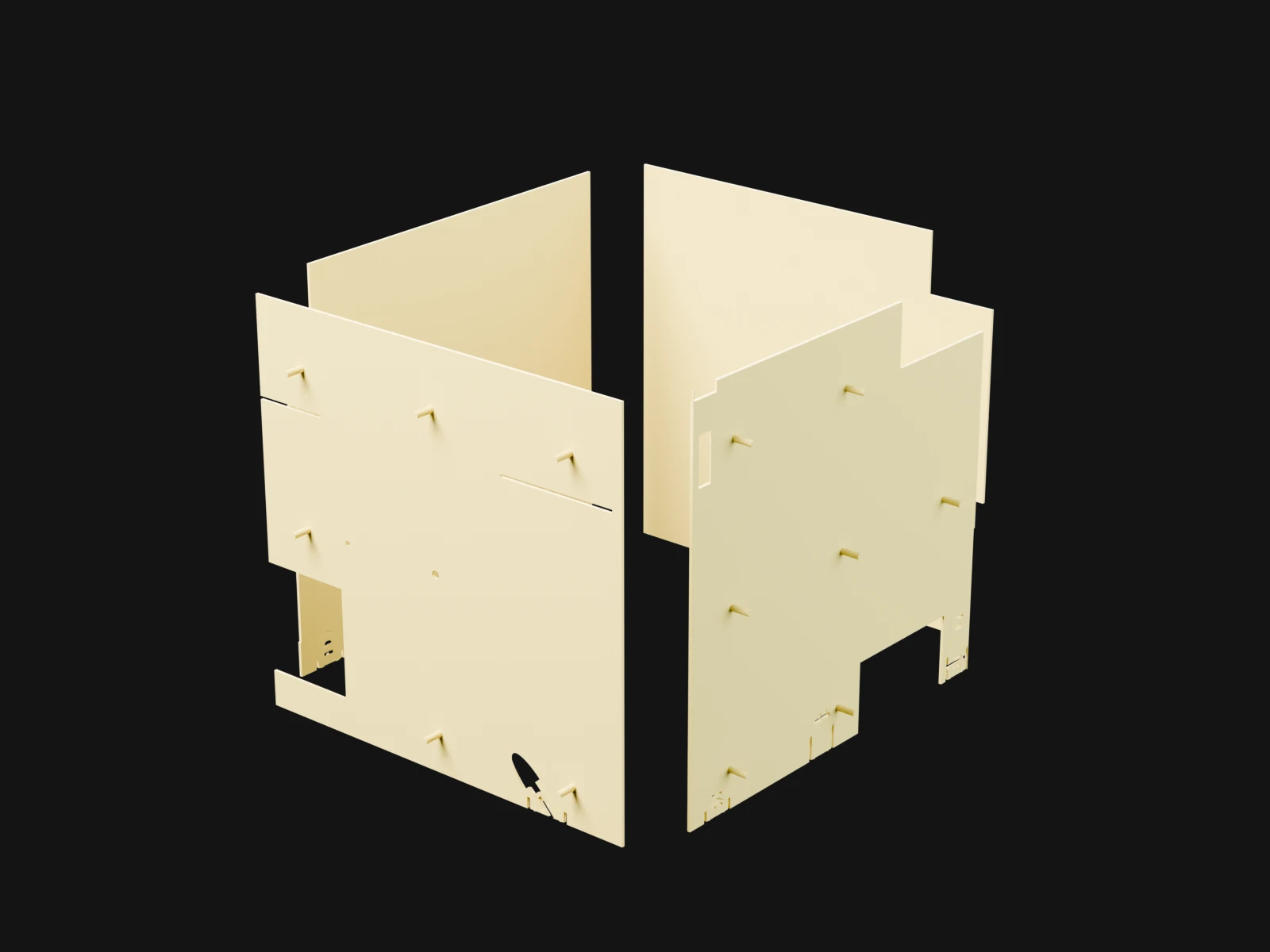
Debris shields
660 × 737 × 516 mm
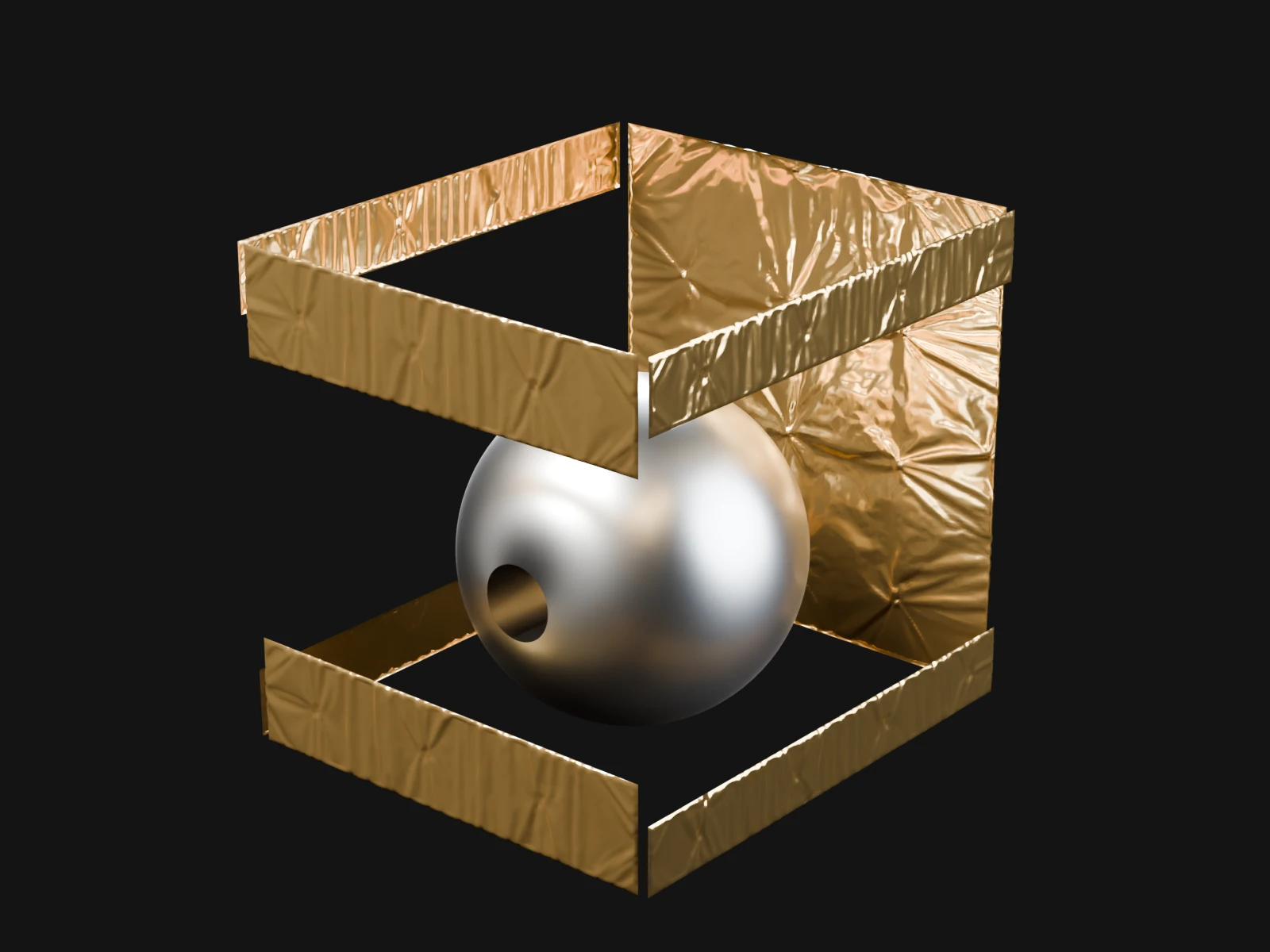
Insulation
700 × 789 × 711 mm
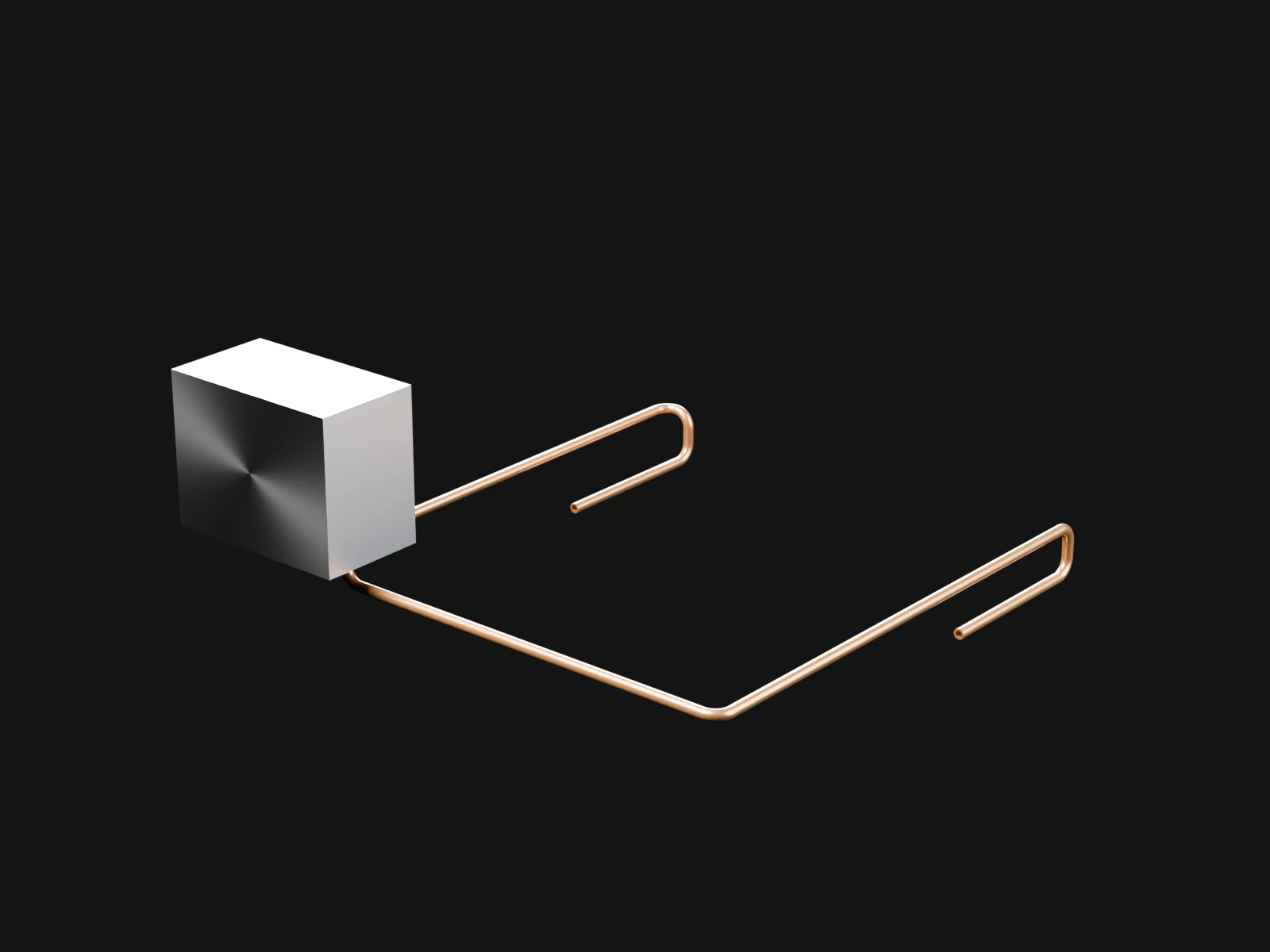
Lab pump set
543 × 538 × 216 mm
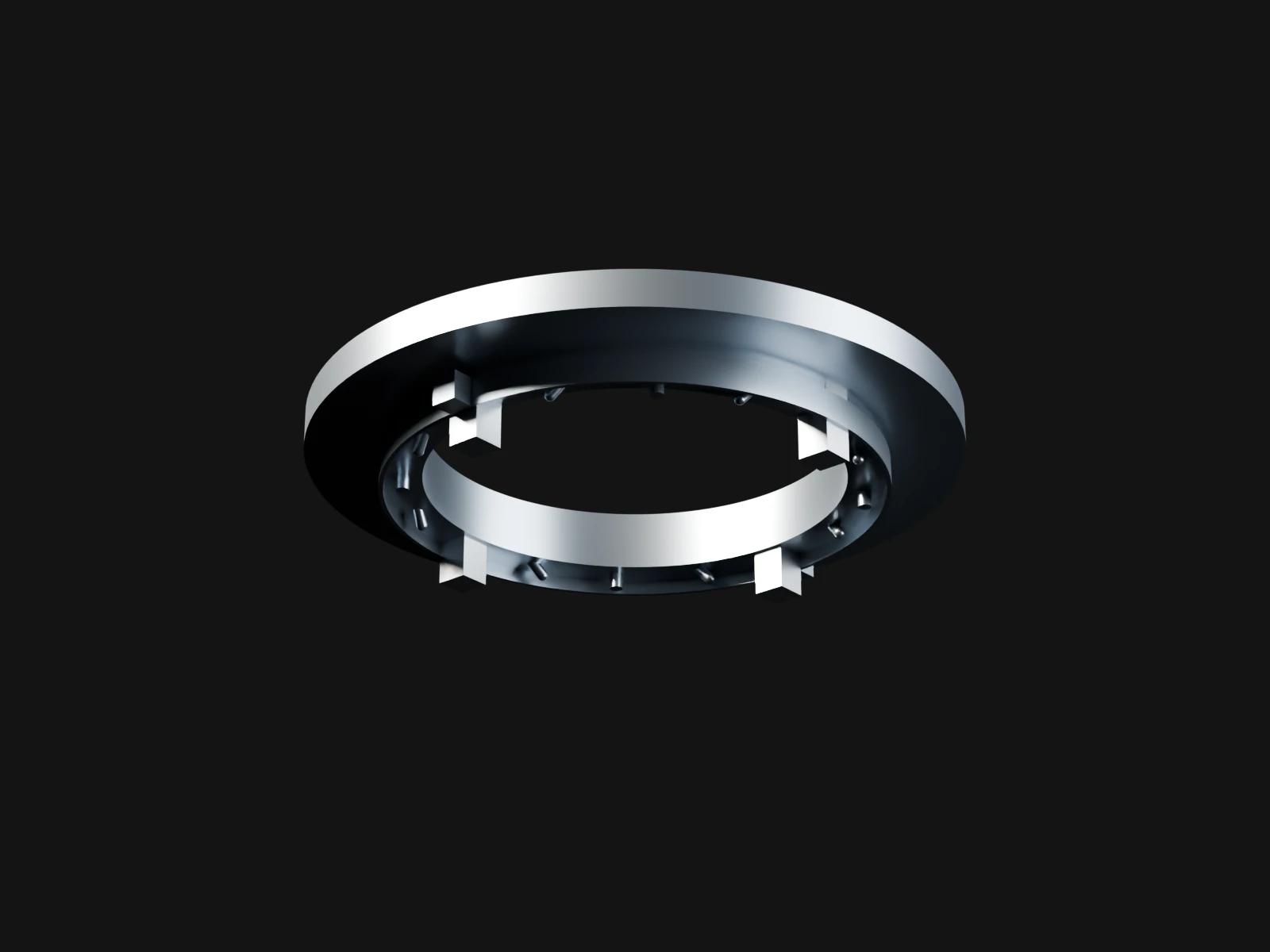
Capsule clamp
580 × 580 × 94 mm
Heat shield
1140 × 1140 × 169 mm
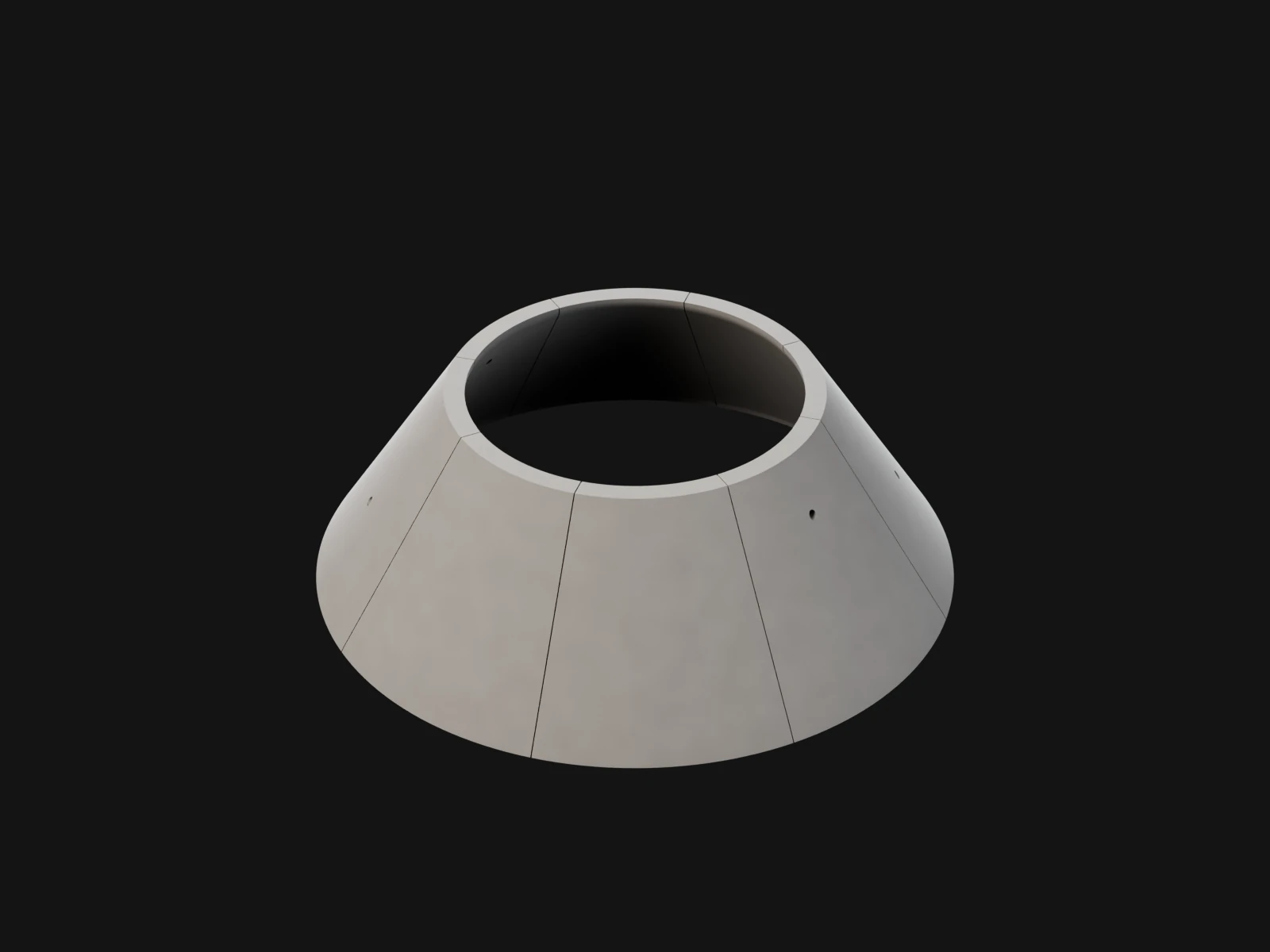
Backshell
1133 × 1133 × 369 mm
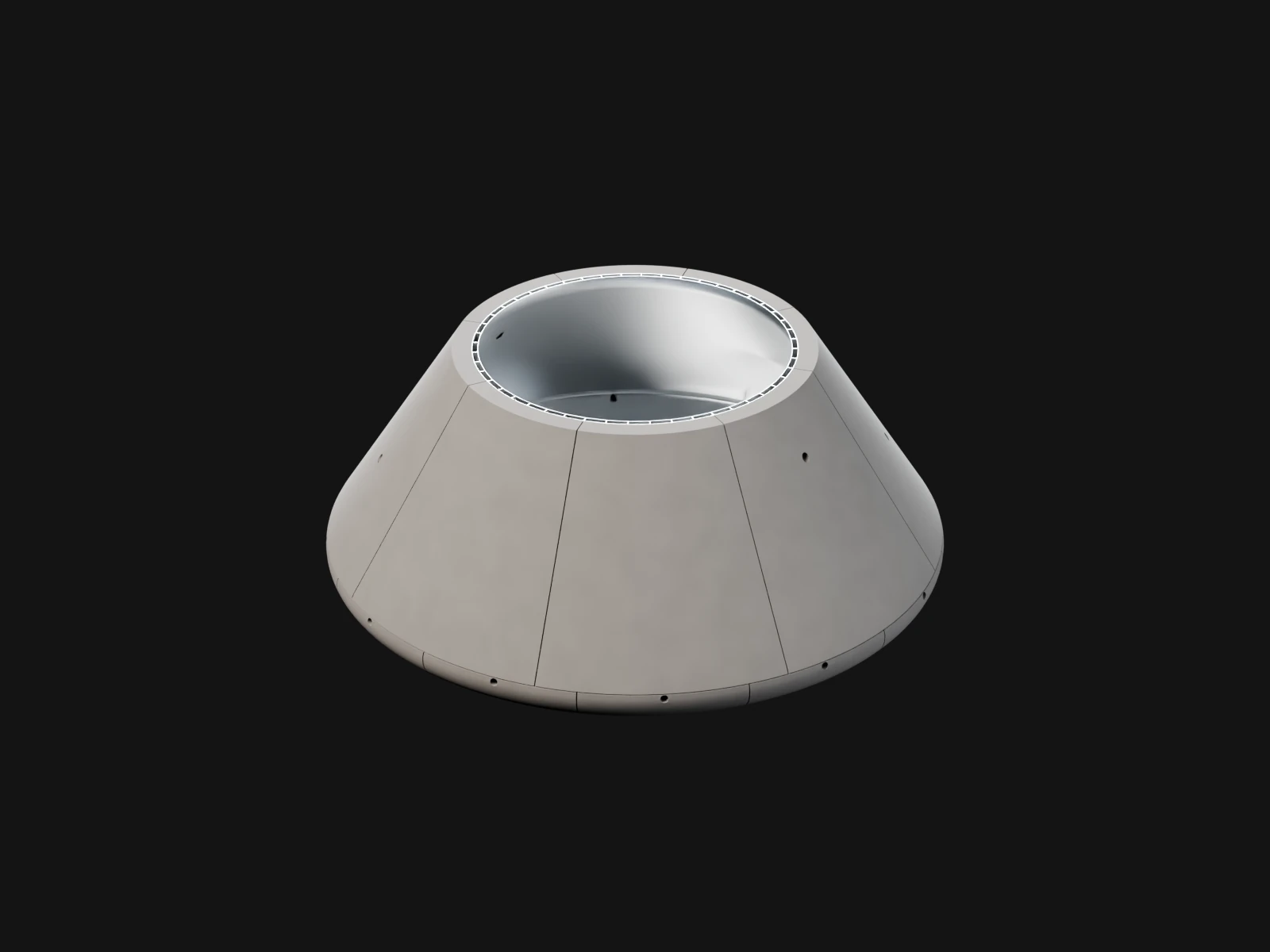
Aeroshell
1158 × 1158 × 540 mm
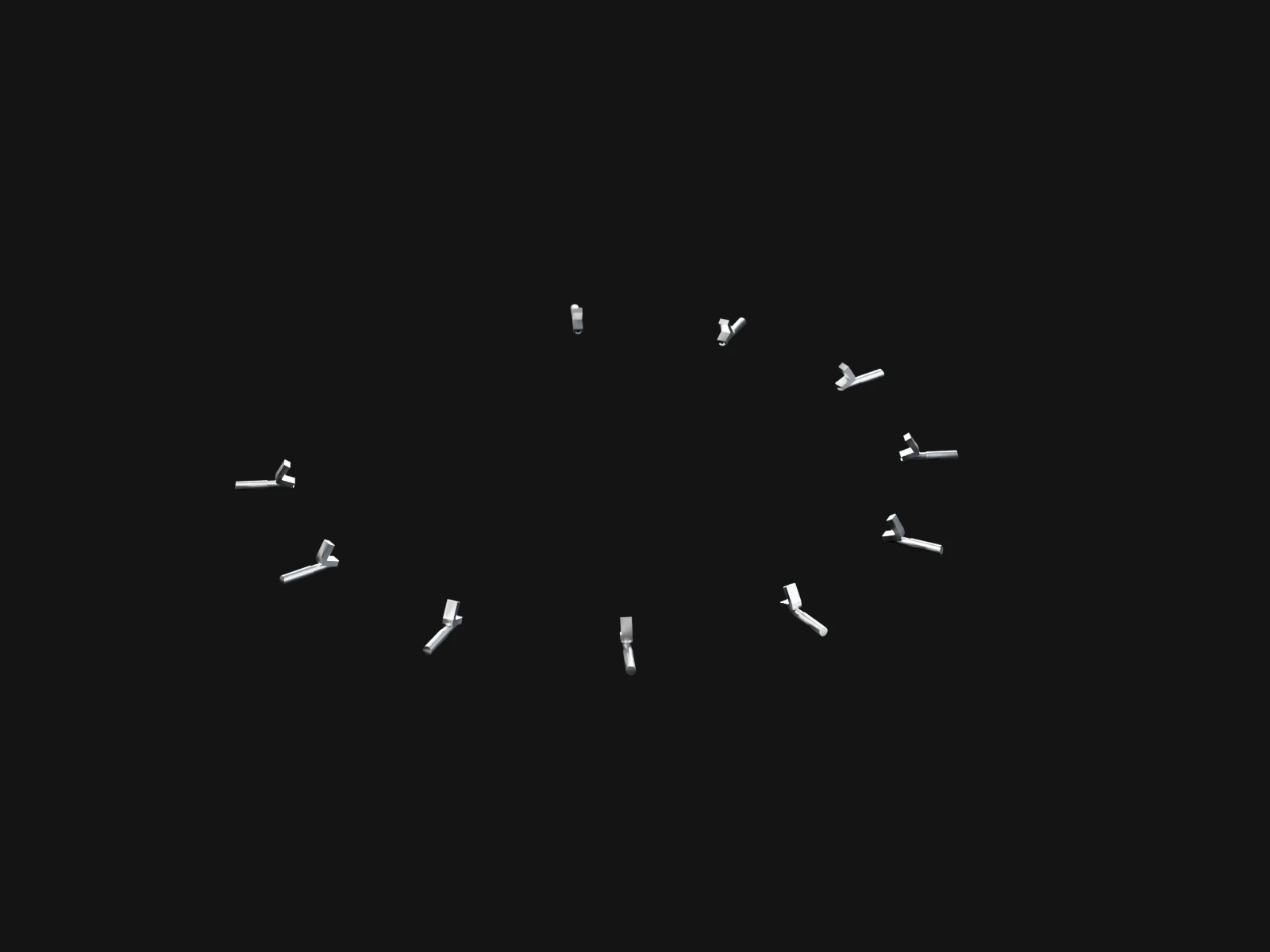
Knee joint
959 × 1104 × 46 mm
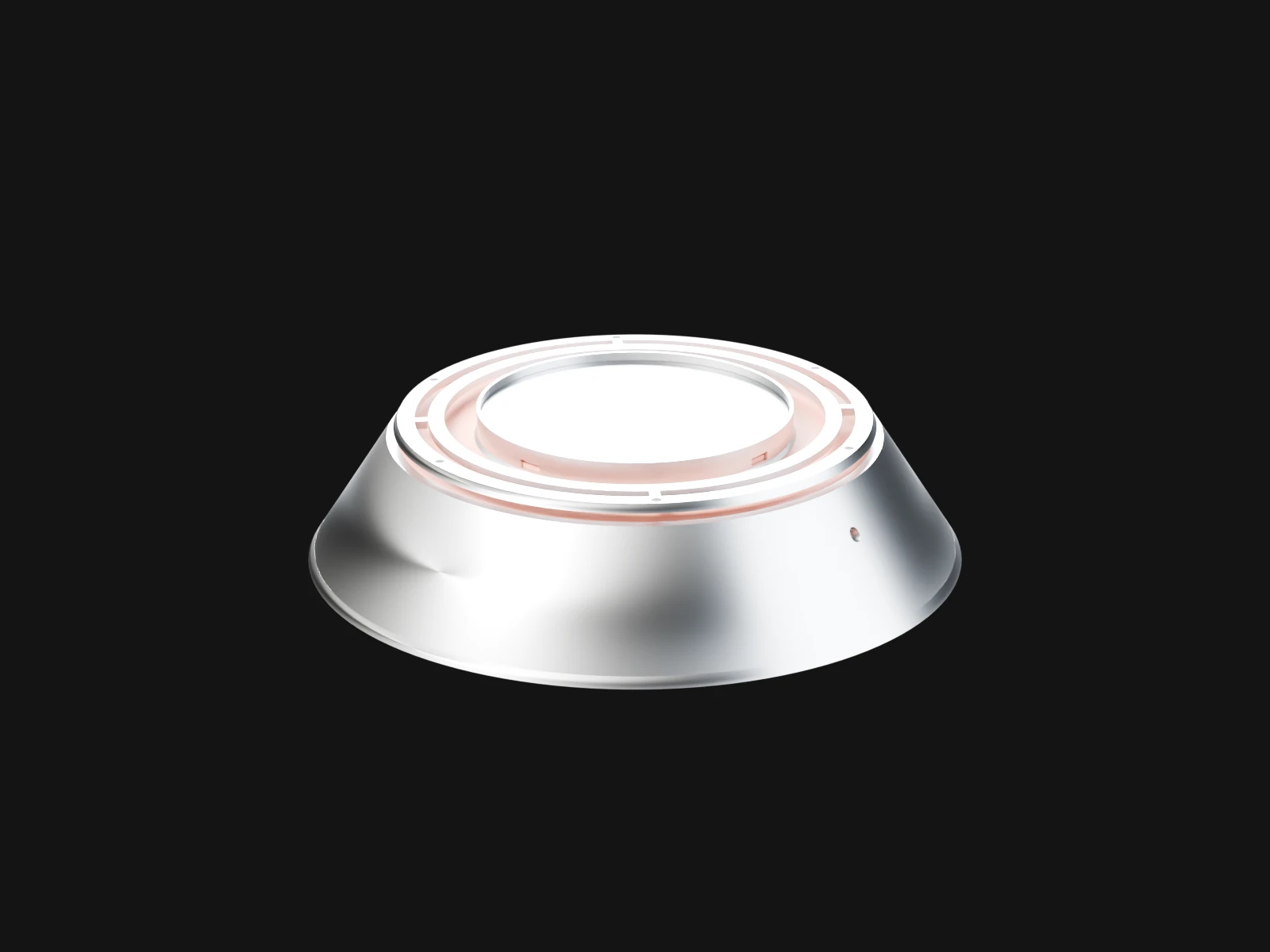
Parachute bay
795 × 795 × 186 mm
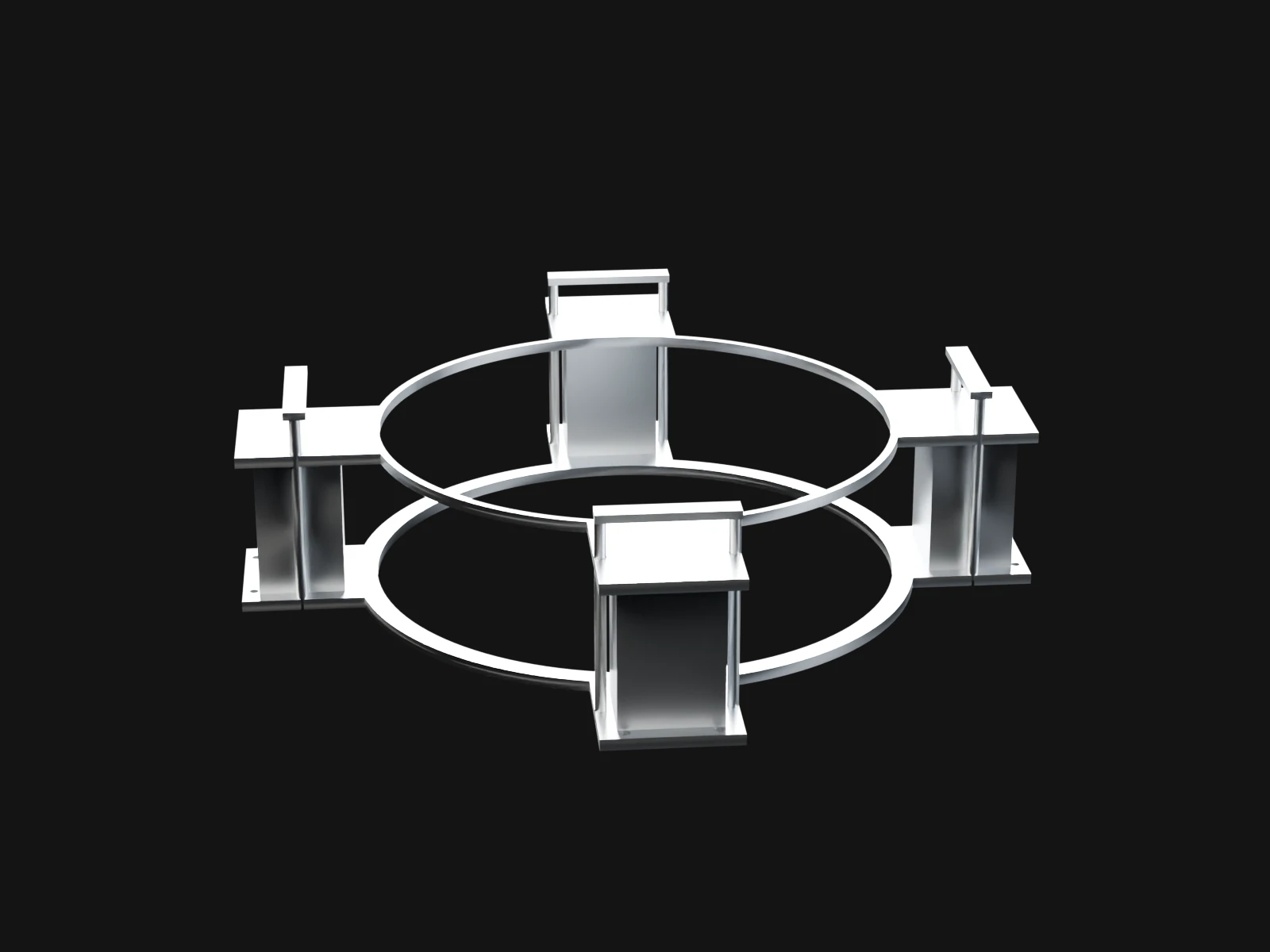
Landing carriage
462 × 462 × 148 mm
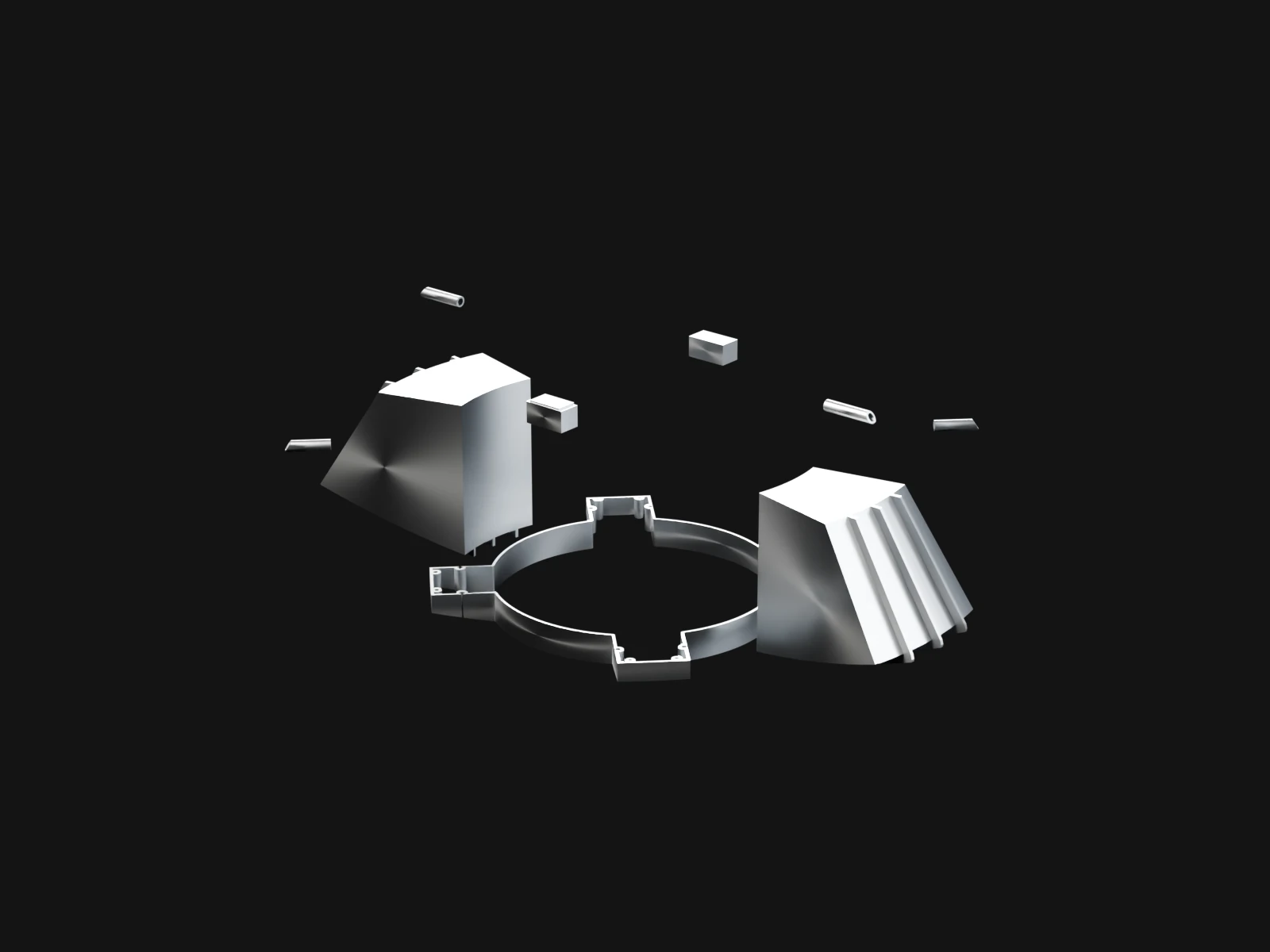
Capsule equipment
1013 × 670 × 375 mm
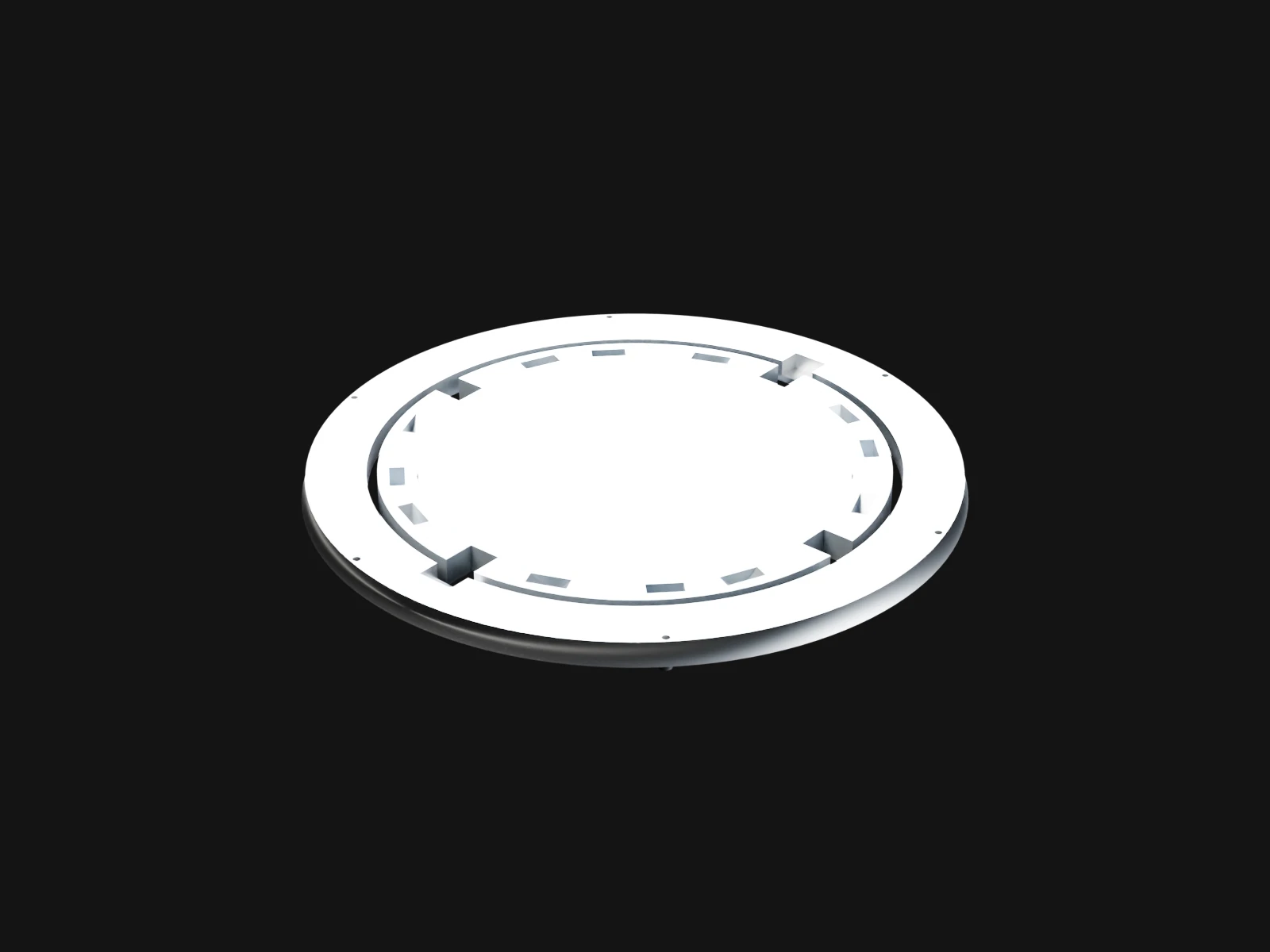
Aft cover
570 × 569 × 27 mm
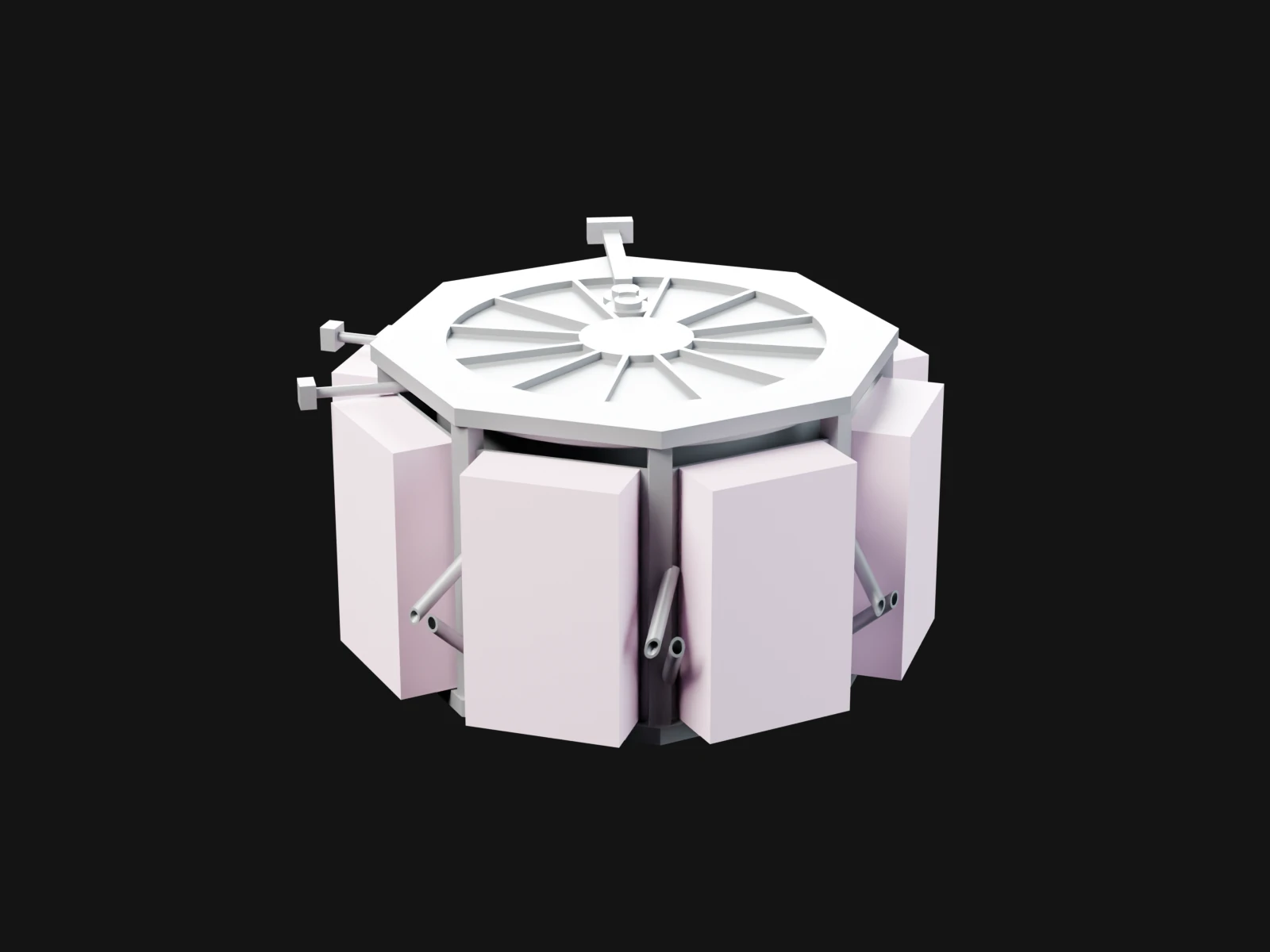
Robotic lab
354 × 352 × 191 mm
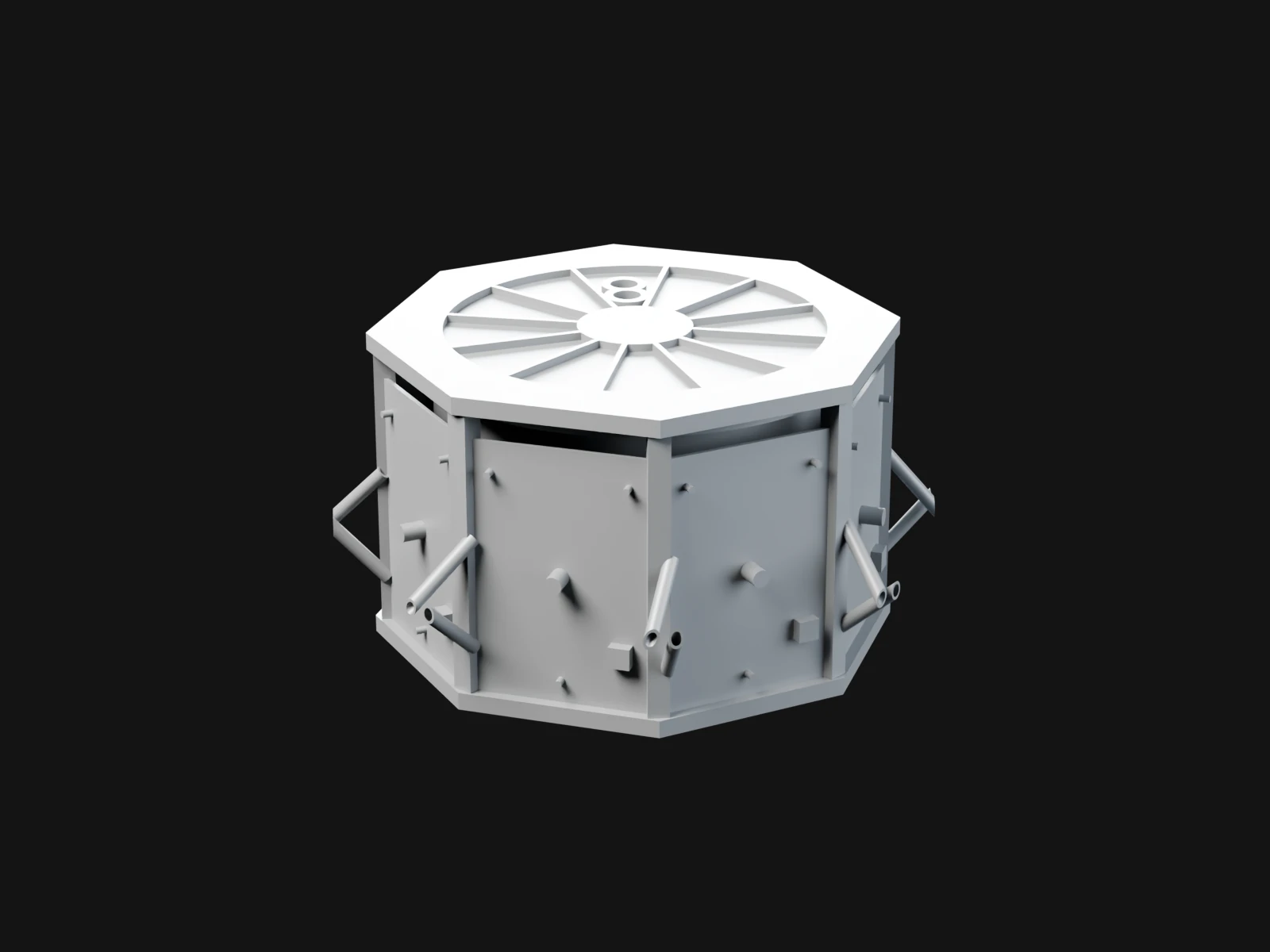
Lab frame
352 × 352 × 180 mm
Lab skin
360 × 360 × 240 mm
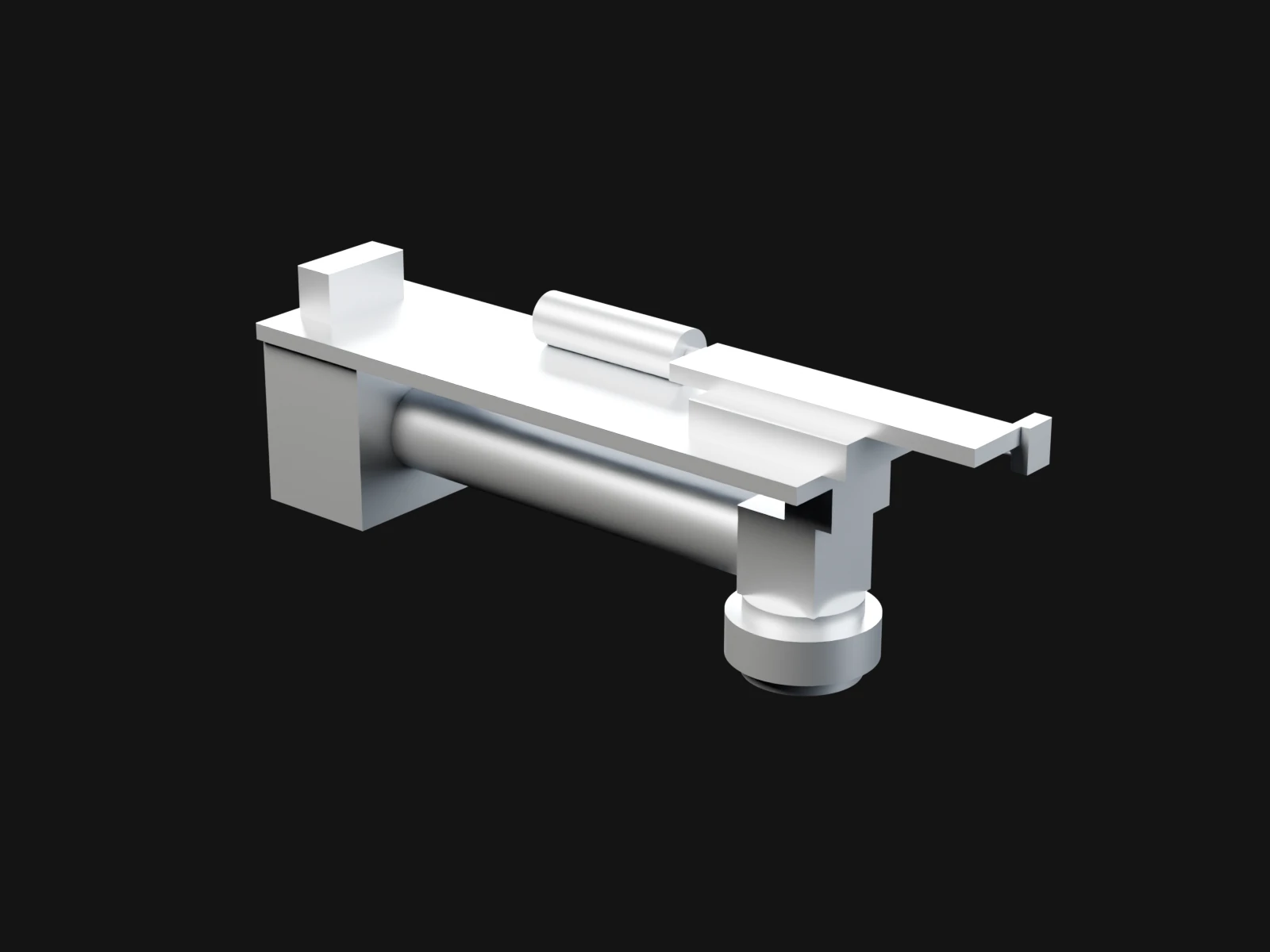
Microscope
188 × 44 × 64 mm
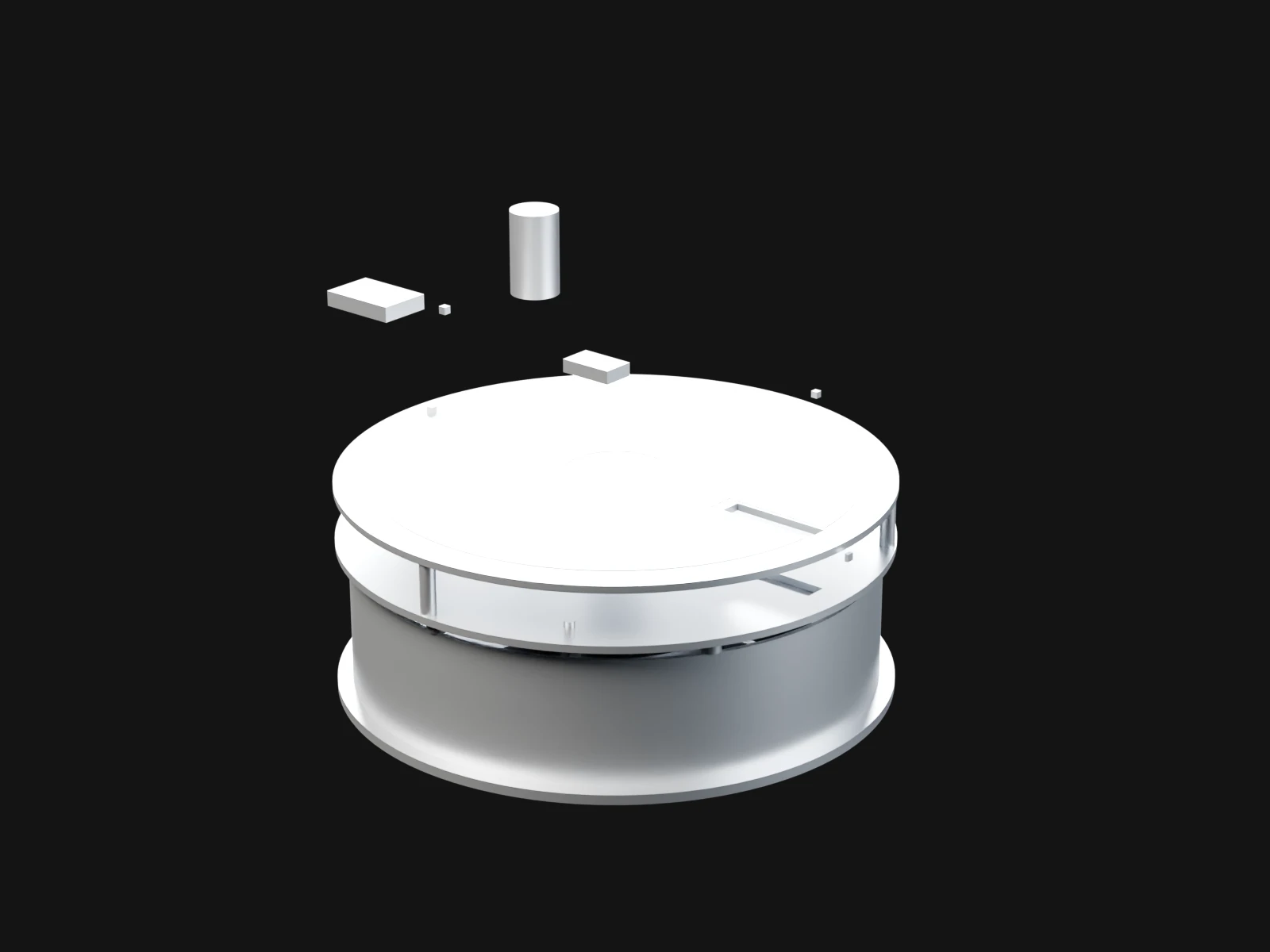
Lab core
218 × 236 × 160 mm
Cassette
203 × 200 × 20 mm
Lab modules
341 × 341 × 144 mm
Tech specs.
Mission
- Orbit
- Circular, 500 to 600 km, as a rideshare payload on a 24 inch ring
- Duration
- 30 days, 28 of them for science
- Payload
- A sealed 48-cell crystallisation study, imaged twice a day
Service module
- Box
- 684 × 761 × 735 mm, honeycomb panels
- At launch
- 307.8 kg with a 25 percent reserve; the service module 124.1 kg current best estimate
- Main engine
- MR-107V class, hydrazine
- Thrusters
- 10, MR-111G class, in four printed pods
- Propellant
- 31.85 kg of hydrazine in a 58 litre tank
- Delta-v
- 228.2 m/s available, 219.6 m/s needed from 600 km
- Attitude
- 4 reaction wheels
- Power
- 2 wings of 2 leaves, 2 batteries
Capsule
- Size
- 1.14 m across, 540 mm tall
- Mass
- 120 kg with a 15 percent growth allowance
- Heat shield
- PICA, 13 tiles and 8 gores, 55 mm thick at the centre
- Entry, 99th percentile
- 8.9 g and 510 kW/m², against limits of 10 g and 800 kW/m²
- Landing
- Drogue, main parachute, four aluminium honeycomb crush cores
Lab
- Frame
- Octagonal, eight docking faces
- Mass
- 18.0 kg, 20.4 kg with growth
- Experiment
- 48 cells on a wheel under a microscope
- Year
- 2026
- Field
- Aerospace
- Role
- Concept, design and systems engineering